
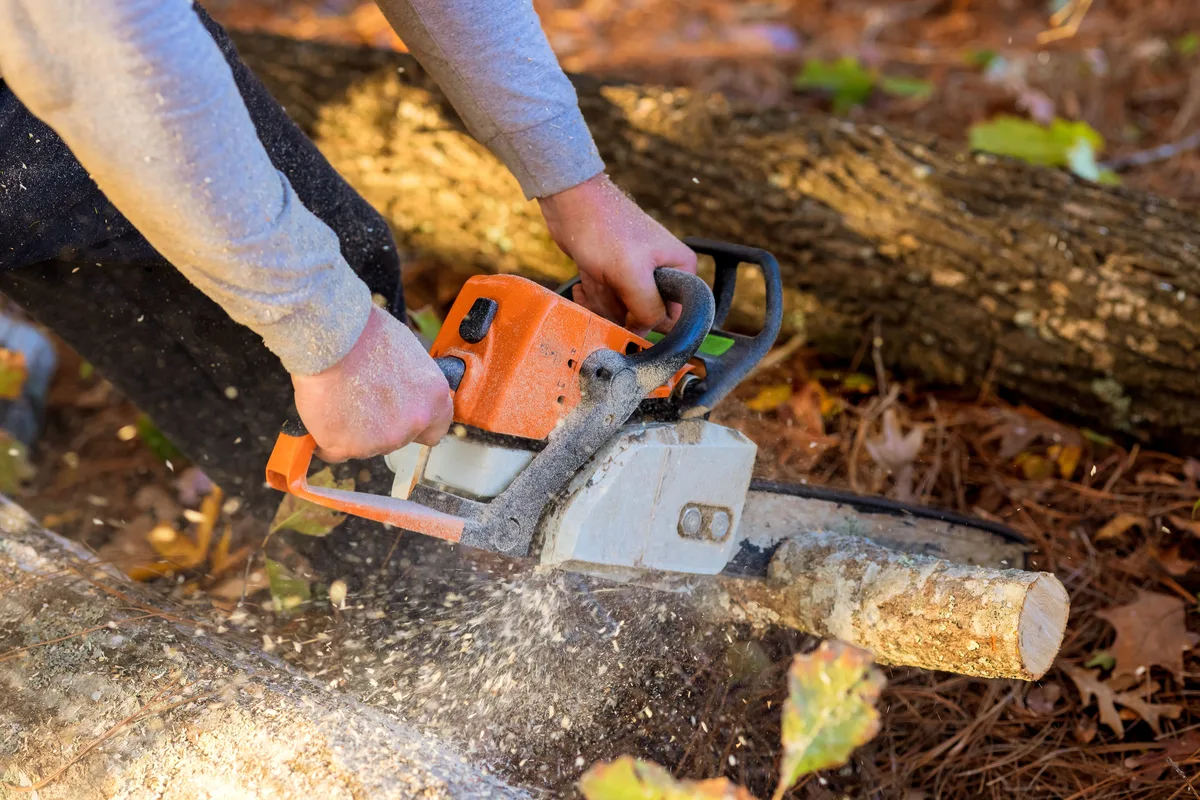
Land clearing has become one of the fastest-growing service lines in the tree care trade. Five years ago, a tree service that bought a forestry mulcher was an outlier; today, mulching heads on skid steers and compact track loaders are standard equipment for operations that quote new-construction lot prep, fence-line clearing, fire-mitigation work, and acreage cleanup. The work overlaps tree service in skills, equipment hauling, and customer base — but it has its own underwriting profile and its own claim categories.
This page is written specifically for tree service operations that perform land clearing — not for excavation or grading contractors who do clearing as part of site-prep work. The distinction matters. A tree-service-driven land clearing operation performs forestry mulching, brush clearing, lot clearing, and fence-line maintenance — taking standing vegetation down to grade-level mulch with no further ground disturbance. An excavation-driven operation does foundation prep, trenching, grading, and earth movement, often after a clearing contractor has already left the site. TreeGuard writes the first category and works with carriers who price it correctly. We don’t write pure excavation operations, and contractors searching for excavation insurance will be better served elsewhere.
The reason tree service operations need different coverage when they take on land clearing is the equipment. A tree crew with a chip truck and a chainsaw is one risk profile. The same crew with a 90-horsepower compact track loader, a $35,000 mulching head, and the ability to clear a quarter-acre of brush in an afternoon is a different account from the carrier’s perspective. Equipment values are higher, property-damage exposure is broader, and the work intersects ground-disturbance risks (underground utilities, fire ignition, adjacent property impact) that don’t exist on pure tree work.
This page covers what forestry mulching means inside a tree service insurance program, what coverage land clearing operations actually need, what the work costs to insure across solo operations and crews, and the specific state regulatory considerations that affect contractors performing this work.
Forestry Mulching Insurance Considerations
Forestry mulching is the engine driving most tree-service-into-land-clearing expansion, and it deserves its own treatment because the insurance considerations are distinct.
What Forestry Mulching Is
A forestry mulcher is a heavy rotary attachment — drum, disc, or modified flail design — mounted on a skid steer, compact track loader, or excavator. The mulcher converts standing brush, saplings, and small-diameter trees (typically up to 8–12 inches at the base, with larger heads handling material up to 14–16 inches) into mulch in a single pass. The operation eliminates the cut-haul-burn cycle of traditional clearing: instead of cutting brush, dragging it to a burn pile or chipper, and disposing of the debris, the mulcher leaves chipped material in place on the cleared ground.
The service has grown rapidly for several reasons:
- Lot prep for residential construction. Builders need previously wooded lots cleared down to manageable vegetation before foundation work. Mulching is faster and cleaner than cut-and-haul clearing.
- Fence-line maintenance. Agricultural and rural-residential customers need cleared corridors along fence lines without the cleanup labor required by chainsaw clearing.
- Fire mitigation. Defensible-space requirements in wildland-urban interface zones (particularly in California, Colorado, Oregon, Arizona, Texas Hill Country) drive substantial mulching demand.
- Right-of-way maintenance. Utility, pipeline, and easement clearing — often as subcontract work to larger right-of-way contractors.
Equipment Insurance Considerations
A mulching head alone runs $20,000–$60,000 depending on size, drum design, and tooth configuration. The host machine (compact track loader, skid steer, or excavator) adds another $40,000–$120,000. A working forestry mulching package — host machine, mulching head, and supporting trailer — frequently represents $100,000–$200,000 in equipment value tied to a single operator. Inland marine coverage with appropriate scheduled-equipment limits, replacement-cost valuation, and theft coverage isn’t optional for these operations — equipment loss without proper coverage is a business-ending event.
Carriers writing forestry mulching equipment typically ask:
- Stored where, when not in use. Locked yard, alarmed shop, or job-site trailer.
- Operated by whom. Operator experience and any specialized training.
- Manufacturer and model. Some carriers have preferred manufacturer lists based on claim experience.
- Annual maintenance documentation. Mulching heads require tooth replacement, hydraulic service, and bearing inspection on a regular cycle — operations that don’t document maintenance see equipment-failure claims and higher renewal rates.
Liability Exposure
Mulching liability runs higher than tree trimming for two structural reasons:
- Debris dispersal. Mulching heads throw chipped material at high velocity. Operations near roads, structures, or adjacent property generate debris claims similar to (and sometimes more frequent than) stump grinding.
- Ground disturbance. The mulcher’s host machine — typically 6,000–15,000 lbs — leaves track impressions, can damage drain tile and irrigation, and operates close enough to ground level to strike underground utilities the operator didn’t know were there.
Workers’ Compensation Classification
NCCI class code 0106 (Tree Pruning, Spraying, Repairing — All Operations & Drivers) covers most tree care operations, but forestry mulching operations sometimes don’t fit cleanly inside the class code. When the operation’s primary activity is mulching standing brush and small trees rather than pruning or repairing mature trees, some state jurisdictions classify the work differently — under landscape gardening (0042), site preparation (sometimes 9534 in certain states), or other classifications depending on operation specifics. The classification depends on state rules and how the operation is actually being performed, and getting it wrong in either direction creates audit exposure. We help our clients verify the right classification for their specific operation rather than defaulting to 0106 in cases where it doesn’t fit.
Coverage Land Clearing Operations Need
The coverage stack for land clearing operations looks similar to tree service but with weight shifted toward equipment and broader liability.
General Liability
General liability for land clearing operations needs to handle property damage exposures that don’t exist in pure tree service:
- Underground utility strikes — water, gas, electrical, fiber, irrigation. Underground exposures often require an XCU (explosion, collapse, underground) endorsement, which not all standard policies include by default.
- Damage to adjacent property — debris dispersal, equipment encroachment onto neighbor lots, mulcher discharge across property lines.
- Clearing the wrong area — particularly an issue on rural and acreage jobs where property boundaries aren’t clearly marked. Claims involving cleared timber on the wrong side of a property line generate severity in the $5,000–$50,000+ range depending on tree value.
- Wetland and protected-vegetation incidents — clearing into a designated wetland buffer or removing protected species can generate regulatory penalties beyond standard property-damage claims.
Workers’ Compensation
Workers’ compensation under the appropriate state class code (typically but not always 0106 — see the forestry mulching section above). Land clearing operations frequently have lower per-employee injury rates than removal-heavy tree service because operators spend more time in cabbed equipment and less time climbing or working under hung-up sections — but the equipment-strike injury category (operator struck by thrown debris while outside the cab, or pinched while servicing equipment) becomes more prominent.
Commercial Auto
Commercial auto covering trucks hauling skid steers, mulchers, and low-boy trailers. Land clearing operations typically run heavier trailer combinations than pure tree service — a tandem-axle trailer with a 12,000-lb skid steer is a different commercial auto exposure than a standard chip truck. DOT thresholds, CDL requirements, and trailer-specific endorsements come into play more frequently.
Inland Marine / Contractors Equipment
Inland marine is typically the single most important coverage line for land clearing operations because of equipment value concentration:
- Skid steers and compact track loaders: $40,000–$90,000 per unit.
- Forestry mulchers (excavator-mounted): $50,000–$150,000 per unit.
- Mulching heads (attachments): $20,000–$60,000 per head.
- Low-boy and equipment trailers: $5,000–$15,000 per trailer.
A mid-size land clearing operation can easily have $300,000–$500,000 in equipment exposure. The right inland marine coverage needs scheduled equipment with replacement-cost valuation, theft coverage with appropriate sub-limits, transit coverage (equipment in transit between job sites), and rented/borrowed equipment coverage for surge work.
Pesticide and Pollution
Pesticide and pollution liability becomes relevant when land clearing operations include chemical brush treatment — herbicide application for vegetation control, particularly common on right-of-way maintenance and large-acreage prep. Operations doing chemical work need separate licensing in most states and pollution liability coverage specifically endorsed for herbicide work.
Umbrella / Excess Liability
Umbrella limits matter more for land clearing than for many other tree service segments because of property damage severity exposure. A single mistaken-clearing claim on a high-value rural property, an underground gas line strike that triggers an evacuation, or a debris-dispersal incident on a roadway can generate claims that exceed primary GL limits. Most land clearing operations chasing commercial contracts run $2M–$5M umbrella as a baseline.
Cost of Land Clearing Insurance
Total program cost varies more for land clearing operations than for most tree service segments because equipment values and work mix vary so widely. Reasonable benchmarks:
- Solo operator with skid steer and mulcher running residential lot clearing and fence-line work: $5,000–$12,000 annually total program cost.
- Small crew operation with two or three operators, multiple host machines, and a mix of residential clearing and commercial subcontract work: $12,000–$30,000 annually.
- Mid-size land clearing operation with multiple crews, heavy-equipment fleet, right-of-way subcontract work, and meaningful commercial contracts: $30,000–$75,000+ annually, with inland marine premium often dominating the line item rather than workers’ comp.
Cost drivers that move the program up or down:
- Total insured equipment value. Inland marine premium scales directly with scheduled equipment value. A $400,000 equipment schedule rates differently from a $150,000 schedule.
- Work mix. Operations heavily weighted toward forestry mulching and brush clearing rate differently from operations doing lot clearing that includes meaningful tree removal. Adding removal work raises workers’ comp class code exposure and GL severity.
- Geographic exposure. Operations in wildfire-prone areas (significant portions of California, Colorado, Oregon, Arizona, Texas Hill Country) face specific underwriting concerns about fire-ignition liability that operations in non-fire-prone regions don’t.
- Subcontract vs. direct work. Operations working as subcontractors to right-of-way contractors typically need higher GL limits ($2M minimum, often $5M) and umbrella to satisfy prime contractor COI requirements.
- Operator experience. Equipment carriers ask about operator hours, training, and prior equipment claims. New operators on high-value equipment rate differently than experienced operators with clean equipment loss histories.
Common Land Clearing Claims
Land clearing claims cluster differently from tree removal claims, and recognizing the categories helps operations both prevent losses and structure coverage correctly.
Hitting Underground Utilities
The most common severity claim category. Forestry mulchers and skid steers operate close to or below grade — a mulcher cleaning stumps and surface roots can strike buried gas lines, water mains, fiber-optic cables, irrigation, and septic systems. The claim severity ranges from $1,000 for irrigation damage to $50,000+ for gas line strikes that trigger evacuation events and utility-restoration billing. Two underlying factors drive most of these claims:
- No 811 / Call Before You Dig ticket. Federal law requires utility location requests before mechanized ground disturbance. Operations that skip the ticket — common in rural and residential work — bear full liability when they strike a marked utility that would have been located if they’d called.
- Inaccurate or absent locate markings. Even with a call placed, locator accuracy is imperfect, and some utilities (private utility lines, decommissioned-but-still-pressurized lines) aren’t covered by the public locate system. Operations that work in areas with known private utility exposure should carry XCU endorsement.
Damage to Adjacent Property
Clearing into a neighbor’s lot, mulcher discharge across property lines, equipment tracking through a neighbor’s yard during job access, and debris damage to fences, outbuildings, or vehicles parked near the work area. Average severity: $1,000–$15,000. Particularly common on rural and acreage jobs where lot boundaries aren’t clearly marked.
Equipment Damage from Rocks, Stumps, or Buried Debris
A forestry mulcher striking a buried rock, concealed metal debris, or oversize material can cause $5,000–$25,000 in mulcher-head damage and host-machine damage. Repeated strikes on a single job (common when clearing previously developed land with construction debris or rocky soil) can total a mulcher head. These are inland marine claims, and operations without proper equipment coverage discover the cost is theirs to absorb.
Theft of Equipment from Remote Job Sites
Skid steers, mulchers, and trailers parked overnight at remote rural job sites are stolen at meaningfully higher rates than equipment in tree service yards. Recovery rates are low — equipment is often moved out of state quickly. Average severity: $30,000–$120,000 depending on equipment value. Operations doing extended-duration work at remote sites should carry inland marine with theft coverage at appropriate limits and consider mobile tracking devices on high-value equipment.
Fire Ignition During Dry-Condition Mulching
A mulcher head striking rock can produce sparks. Hydraulic systems can leak fluid onto hot surfaces. Engine exhaust can ignite dry duff. In wildfire-prone regions during dry seasons, operations have triggered wildland fires that have spread across multiple properties, generating six- and seven-figure liability claims and, in extreme cases, criminal exposure for the operator. This is the catastrophic claim category for land clearing operations in fire-prone states, and operations performing this work need: explicit pollution and contamination coverage, umbrella limits sized for the exposure, documented spark-arrestor maintenance, on-site fire suppression equipment, and adherence to state and county burn-permit restrictions.
State and Regulatory Considerations
Land clearing licensing and regulatory requirements vary substantially by state. A few examples that frequently affect operators:
Florida (state guide). Land clearing for residential and commercial development is heavily affected by environmental permitting, particularly near wetlands, mangrove zones, and protected vegetation. Florida county environmental departments often require pre-clearing permits, and clearing into wetland buffers without permit can trigger regulatory penalties measured in tens of thousands of dollars. Operations doing development-prep clearing in Florida should verify permit status before mobilizing, not after.
Texas (state guide). Land clearing for ranch development, rural-residential lot prep, and right-of-way maintenance is a substantial market. Texas has no statewide tree contractor license, but local jurisdictions (particularly municipal utility districts and incorporated cities) may impose specific clearing permits. Texas Department of Agriculture pesticide licensing applies to operations doing herbicide brush treatment. The state’s optional workers’ compensation framework requires careful structuring for land clearing operations — the non-subscriber route carries direct injury liability that most equipment-heavy operations should avoid.
California (state guide). Land clearing in California carries the heaviest regulatory and underwriting weight of any state in the country, driven by wildfire-mitigation work in the wildland-urban interface and Cal Fire considerations. Defensible-space contracting under Cal Fire programs has specific contracting and insurance requirements. Operations working under fire-mitigation contracts often need higher general liability and umbrella limits than would otherwise apply, and contractors operating during declared red-flag fire-weather warnings face heightened liability exposure for ignition events. California also requires C-49 Tree and Palm Contractor licensing for certain land clearing operations valued at $500 or more through the Contractors State License Board — the classification that replaced the older C-61/D-49 Tree Service limited specialty on January 1, 2024.
Colorado (state guide). Wildfire-mitigation work in mountain communities (Boulder, Larimer, Jefferson, Douglas Counties) drives substantial forestry-mulching demand. Local jurisdictions frequently require chipping or hauling of cleared material rather than on-site mulching during high-fire-danger periods. Operations doing this work need familiarity with each county’s defensible-space ordinances and the documentation they require for completed work.
Why TreeGuard for Land Clearing Insurance
We write tree service operations as our specialty, and forestry mulching has emerged as one of the fastest-growing service lines inside that book. We see these operations daily — solo operators expanding into mulching, established tree services adding a skid-steer crew, hybrid operations that quote both removal and clearing on the same site.
That focus matters in three concrete ways. First, we understand how to write hybrid operations — tree service plus land clearing combined — without forcing operators into one classification that doesn’t fit. Many general agents either default the whole operation to tree service (and miss the equipment-heavy exposure of the clearing work) or default it to landscaping (and miss the elevated injury exposure of tree work). Both create either gaps or overpayment. We structure programs that reflect what the operation actually does.
Second, we have carrier relationships specifically with markets that write forestry mulching equipment and land clearing liability. Some of the standard tree service markets don’t want to see a $400,000 equipment schedule on a tree service account. Some of the equipment-focused markets don’t want to see tree removal exposure on a land clearing account. We know which carriers underwrite the combination, and we go to them directly.
Third, we move quickly when a new piece of equipment lands on the schedule or a new commercial subcontract requires a specific COI. Most of our quote turnarounds run one to two business hours during business hours, and binding can be same-day when the operator has a delivery scheduled or a job starting on Monday morning.