
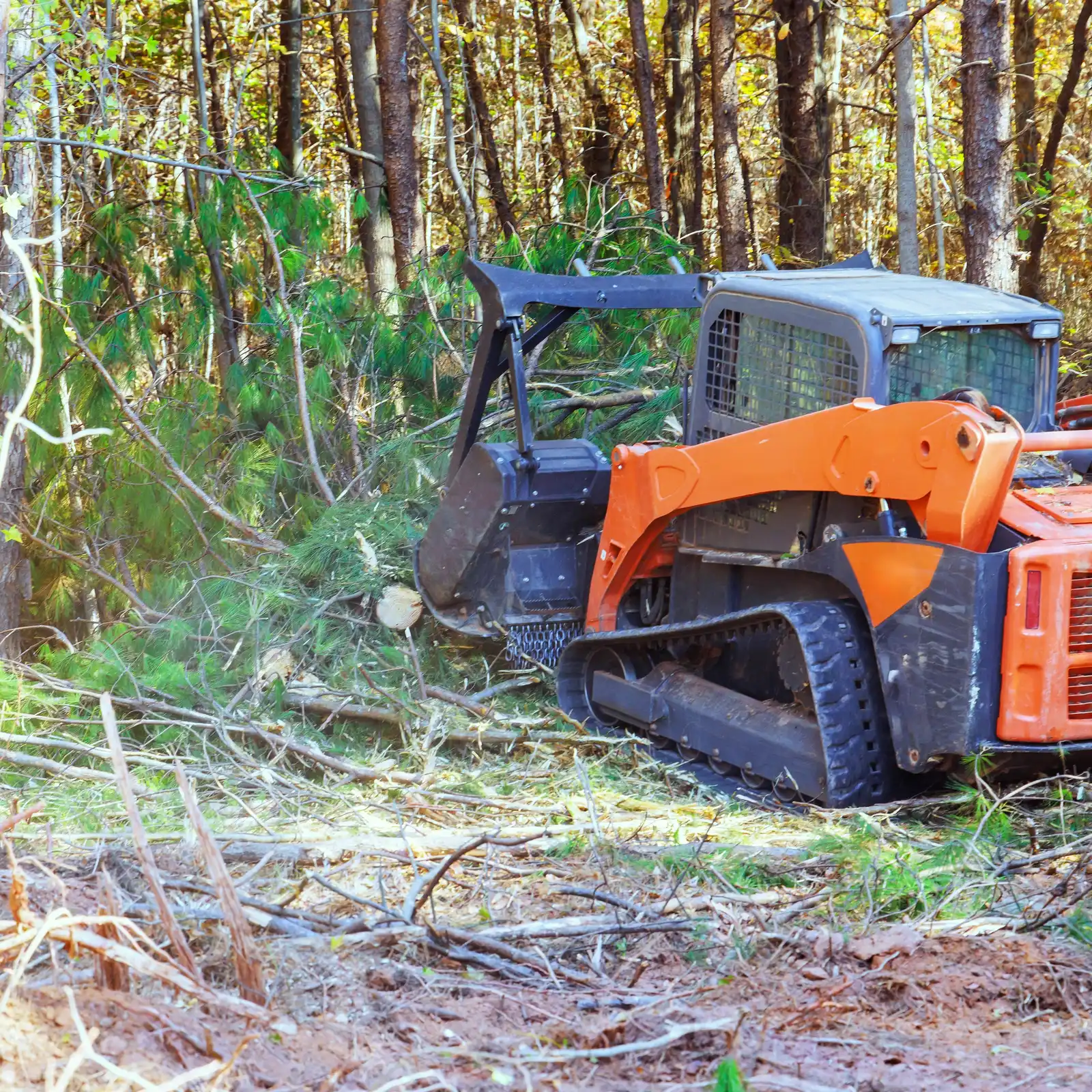
Pennsylvania tree service contractors operate in a state with distinctive features that set its insurance market apart from neighbors: Pennsylvania uses its own rating bureau (the Pennsylvania Compensation Rating Bureau, or PCRB) instead of NCCI, the state operates the State Workers’ Insurance Fund (SWIF) as a competitive carrier alongside private insurers, and home improvement contractor registration requirements affect tree service operations. Combined with substantial urban canopy in Philadelphia and Pittsburgh, deep utility infrastructure, and significant rural service territories, Pennsylvania presents underwriting considerations not found in most states.
This page covers what Pennsylvania tree service insurance typically includes, how the PCRB and SWIF systems work for tree care operations, and what carriers are actively writing Pennsylvania tree service business.
What Tree Service Insurance Costs in Pennsylvania
Pennsylvania tree service insurance pricing reflects the state’s distinctive structure: workers’ compensation rates are based on PCRB loss costs (not NCCI), and tree service operations have access to multiple private carriers plus the State Workers’ Insurance Fund (SWIF) as a competitive option.
The ranges below reflect what most Pennsylvania tree service contractors typically pay:
- General Liability Insurance: $850–$2,500 per year for typical Pennsylvania small operations. Philadelphia metro and Pittsburgh metro operations typically pay slightly higher than rural and central PA contractors.
- Workers’ Compensation Insurance: $5–$13 per $100 of payroll for Pennsylvania tree service operations under PCRB classification 0106. A crew with $200,000 of payroll typically pays $10,000–$26,000 annually. Pennsylvania uses PCRB loss costs rather than NCCI, but the practical effect for tree service operations is similar.
- Commercial Auto Insurance: $1,800–$3,800 per truck per year for chip trucks, bucket trucks, and chipper-towing pickups. Philadelphia metro pricing runs higher due to traffic density and accident frequency.
- Inland Marine (Equipment) Insurance: $400–$1,500 per year depending on total equipment value.
- Pesticide & Pollution Liability: $400–$900 per year for Pennsylvania tree services performing emerald ash borer treatments, hemlock woolly adelgid treatments, deep root feeding, or other plant health care work.
- Umbrella / Excess Liability: $500–$1,300 per year for $1M of additional coverage above primary limits. Often required for utility line clearance contracts (PECO, PPL, Duquesne Light, FirstEnergy/West Penn Power), municipal contracts, and commercial property work.
Pennsylvania’s competitive market means tree service contractors who shop their coverage with an experienced agent often save 15–25% versus their previous carrier.
Workers’ Compensation in Pennsylvania: PCRB and SWIF
This is the section every Pennsylvania tree service owner needs to understand. Pennsylvania operates differently from the NCCI states (Indiana, Kentucky, Michigan, etc.) in two important ways.
The Pennsylvania Compensation Rating Bureau (PCRB)
Pennsylvania uses the Pennsylvania Compensation Rating Bureau — a non-profit rating organization formed in 1915 — to develop loss costs and classification rules. Unlike NCCI states, where the National Council on Compensation Insurance handles these functions, Pennsylvania’s PCRB operates independently for the state’s workers’ compensation system.
Practical implications:
- PCRB classifications largely mirror NCCI classifications, but use different code numbers in some cases
- Tree service operations in Pennsylvania are classified under PCRB code 0106 (Tree Pruning, Spraying, Repairing)
- Loss cost values are set by PCRB and approved by the Pennsylvania Insurance Department
- Carriers apply their own loss cost multipliers to the PCRB loss costs to arrive at final manual rates
The State Workers’ Insurance Fund (SWIF)
Pennsylvania operates a state-run workers’ compensation carrier — the State Workers’ Insurance Fund (SWIF) — that competes alongside private carriers. SWIF is a “carrier of last resort” for businesses that can’t obtain coverage in the voluntary market, but it also writes traditional voluntary business.
For tree service operations, SWIF can be an important option in two scenarios:
- New operations without claims history that private carriers won’t write
- Operations with adverse claims experience that have been declined by multiple private carriers
Pennsylvania WC Coverage Requirements
- Pennsylvania requires workers’ compensation insurance for any business with one or more employees, full-time or part-time
- Sole proprietors, partners, and corporate officers can elect coverage but aren’t generally required to carry it on themselves
- Subcontractor liability is significant — uninsured subcontractors can be treated as employees during audits, and Act 72 requires specific contractor verification documentation
- Pennsylvania employers maintaining a state-certified workplace safety committee are eligible for a 5% premium discount
Specialty carriers like Amerisafe, focused on hazardous trades, actively write Pennsylvania tree service business and often provide the best pricing for safety-conscious operations.
Pennsylvania Home Improvement Contractor Registration
This is another Pennsylvania-specific consideration. Tree service operations performing residential work valued over $5,000 annually in the aggregate are typically required to register as Home Improvement Contractors (HIC) with the Pennsylvania Office of the Attorney General.
HIC registration requires:
- At least $50,000 in personal injury liability coverage
- At least $50,000 in property damage coverage (these are statutory minimums — most tree service operations carry significantly higher limits)
- Annual registration renewal
- Compliance with Pennsylvania’s Home Improvement Consumer Protection Act
Most Pennsylvania tree service operations performing residential work need HIC registration. We help our clients confirm their operations meet HIC registration requirements and that their insurance program satisfies the statutory minimums.
General Liability
General liability (GL) is the foundation of every Pennsylvania tree care insurance program. A properly structured GL policy covers bodily injury and property damage claims arising from your operations.
Pennsylvania tree service GL policies are typically written with:
- Occurrence-based coverage (preferred over claims-made for most contractors)
- Completed operations coverage for claims that arise after a job is finished
- Contractors’ professional liability if you provide arborist consulting or recommendations
- Limits sufficient for HIC registration ($50K minimums, but most operations carry $1M+)
Municipal contracts in Philadelphia, Pittsburgh, Allentown, Erie, Scranton, and Reading regularly require $1M–$2M per occurrence. University of Pennsylvania, Penn State, Pitt, Carnegie Mellon, and other major university campuses typically require $2M per occurrence. PECO, PPL, Duquesne Light, and West Penn Power line clearance contracts often require $5M umbrella above primary GL.
Commercial Auto
Pennsylvania tree service companies typically run pickup trucks, dump trucks, bucket trucks, chippers, and stump grinders. Every commercial vehicle — including chippers and trailers towed on Pennsylvania roads — must be scheduled on a commercial auto policy.
Common coverage gaps we see in Pennsylvania programs:
- Chippers listed as trailers but never added to the schedule — a $60,000–$90,000 chipper is uninsured if it’s not explicitly listed
- Hired and non-owned auto — required if employees ever drive personal vehicles or rented trucks for company business
- Bucket trucks — confirm your policy covers the vehicle while the aerial function is in use
- Multi-state operations — Pennsylvania operations crossing into Ohio, New York, New Jersey, Delaware, Maryland, or West Virginia need policies that handle the multi-state exposure correctly
Inland Marine / Equipment Floater
Pennsylvania crews typically carry $50,000–$200,000+ in portable equipment. An equipment floater covers your chainsaws, climbing gear, rigging, stump grinders, and other portable equipment on the job site, in transit, and in storage — filling gaps that commercial auto and GL don’t cover.
Replacement cost coverage is recommended over actual cash value for equipment you depend on daily.
Pesticide & Pollution Liability
The Pennsylvania Department of Agriculture’s Pesticide Programs licenses commercial pesticide applicators in Pennsylvania. If your operation includes herbicide treatments, soil injections, EAB or HWA treatments, or any chemical application, a standard GL policy will not respond to resulting pollution claims. Contractor’s pollution liability (CPL) fills that gap.
Pennsylvania-specific treatment markets:
- Emerald Ash Borer — EAB has killed millions of Pennsylvania ash trees, creating substantial treatment and removal markets
- Hemlock Woolly Adelgid — HWA threatens Pennsylvania’s eastern hemlock (the state tree); imidacloprid soil drench and stem injection treatments are common
- Spotted Lanternfly — recent invasive pest creating expanding treatment market across PA
- Spongy Moth (formerly gypsy moth) — periodic outbreak management
CPL is increasingly required by commercial and municipal clients in Pennsylvania as a condition of contract.
Umbrella / Excess Liability
An umbrella policy adds limits above your GL, commercial auto, and employer’s liability limits. For Pennsylvania tree service companies working on municipal right-of-way, university campuses, or utility line clearance for PECO, PPL, Duquesne Light, or West Penn Power, umbrella limits of $2M–$5M are frequently required.
A $1M umbrella typically costs a fraction of what your underlying GL costs — among the most efficient insurance purchases available.
Common Tree Service Risks in Pennsylvania
Pennsylvania’s geography and climate create distinctive risk patterns:
Severe Winter Storms
Pennsylvania winters bring ice events, heavy snow loading, and nor’easters that overload trees and create dangerous removal jobs. Northwest Pennsylvania (Erie region) experiences lake-effect snow that adds additional loading exposure.
Severe Storm and Wind Events
Pennsylvania experiences severe weather year-round including thunderstorm complexes, microbursts, derecho events, and the remnants of tropical systems pushing inland from the Atlantic. Storm response work generates revenue but is among the highest-risk work tree services perform.
Aging Urban Canopy in Eastern Cities
Philadelphia’s older neighborhoods (Center City, Society Hill, Chestnut Hill, Mount Airy, Manayunk), Pittsburgh’s historic neighborhoods (Squirrel Hill, Shadyside, Mount Lebanon, Sewickley), and the Lehigh Valley’s mature suburbs have substantial mature tree populations near high-value historic homes. Tree work near historic properties raises liability exposure.
Spotted Lanternfly Devastation
Pennsylvania is ground zero for the spotted lanternfly invasion (first identified in Berks County in 2014). The expanding invasion has created significant treatment work, removal of infested tree of heaven (Ailanthus), and ongoing management programs across eastern and central Pennsylvania.
Hemlock Decline
Eastern hemlock — Pennsylvania’s state tree — is under sustained attack from hemlock woolly adelgid. Treatment work in state forests, on private estates, and in Pennsylvania’s mountain regions creates a specialty market.
Coal Region Considerations
Pennsylvania’s anthracite region (Scranton, Wilkes-Barre, Pottsville, Hazleton) and bituminous coal region (Pittsburgh metro and southwestern PA) have specific underwriting considerations related to mine subsidence and historical land use that can complicate tree work near affected properties.
Utility Line Clearance Demand
PECO (Philadelphia metro), PPL (eastern and central PA), Duquesne Light (Pittsburgh metro), and FirstEnergy/West Penn Power (western PA) run substantial vegetation management programs. Operations doing line clearance need higher liability limits, ANSI Z133 compliance, and specialized underwriting.
Why Pennsylvania Tree Service Owners Choose TreeGuard
We understand PCRB. Most insurance agents working in Pennsylvania treat the workers’ comp system like any NCCI state — they shouldn’t. We help Pennsylvania tree service operations navigate PCRB classification, SWIF as an option for difficult-to-place risks, and the workplace safety committee discount opportunity.
We know the HIC registration requirements. Many Pennsylvania tree service operations performing residential work don’t realize they need Home Improvement Contractor registration — or don’t realize their insurance limits affect HIC compliance. We catch these issues before they become problems.
As an independent agency, we represent 16+ A-rated carriers and shop your operation across the entire market. You’re not stuck with one company’s underwriting appetite or pricing — we find the carrier that best fits your specific Pennsylvania operation.
We specialize in tree care. We don’t write the occasional tree service policy as a side line — this niche is our focus.
Quote turnaround is fast. Most Pennsylvania tree service quotes come back within 1–2 hours during business hours.
Major Pennsylvania Markets We Serve
We write tree service insurance across all of Pennsylvania, with strong concentration in:
- Philadelphia Metro: Philadelphia, plus the Main Line (Bryn Mawr, Wayne, Villanova, Ardmore), Bucks County, Chester County, Delaware County, Montgomery County.
- Pittsburgh Metro: Pittsburgh, plus Squirrel Hill, Shadyside, Mount Lebanon, Sewickley, Wexford, Cranberry Township, Robinson Township.
- Lehigh Valley: Allentown, Bethlehem, Easton, Quakertown.
- South Central PA: Harrisburg, Lancaster, York, Hershey, Carlisle, Mechanicsburg.
- Northeast PA (NEPA): Scranton, Wilkes-Barre, Hazleton, Pottsville, Stroudsburg.
- Northwest PA: Erie, Meadville, Warren, Bradford.
- Western PA: Beaver, Butler, Greensburg, Indiana, Johnstown, Altoona.
- Central PA: State College, Williamsport, Sunbury, Bloomsburg.
- Reading and Berks County: Reading, Wyomissing, Birdsboro, Pottstown.
Whether you’re a single-truck operation in the Pocono Mountains or a 50-employee crew working across the Philadelphia metro, we can write your business in Pennsylvania.