
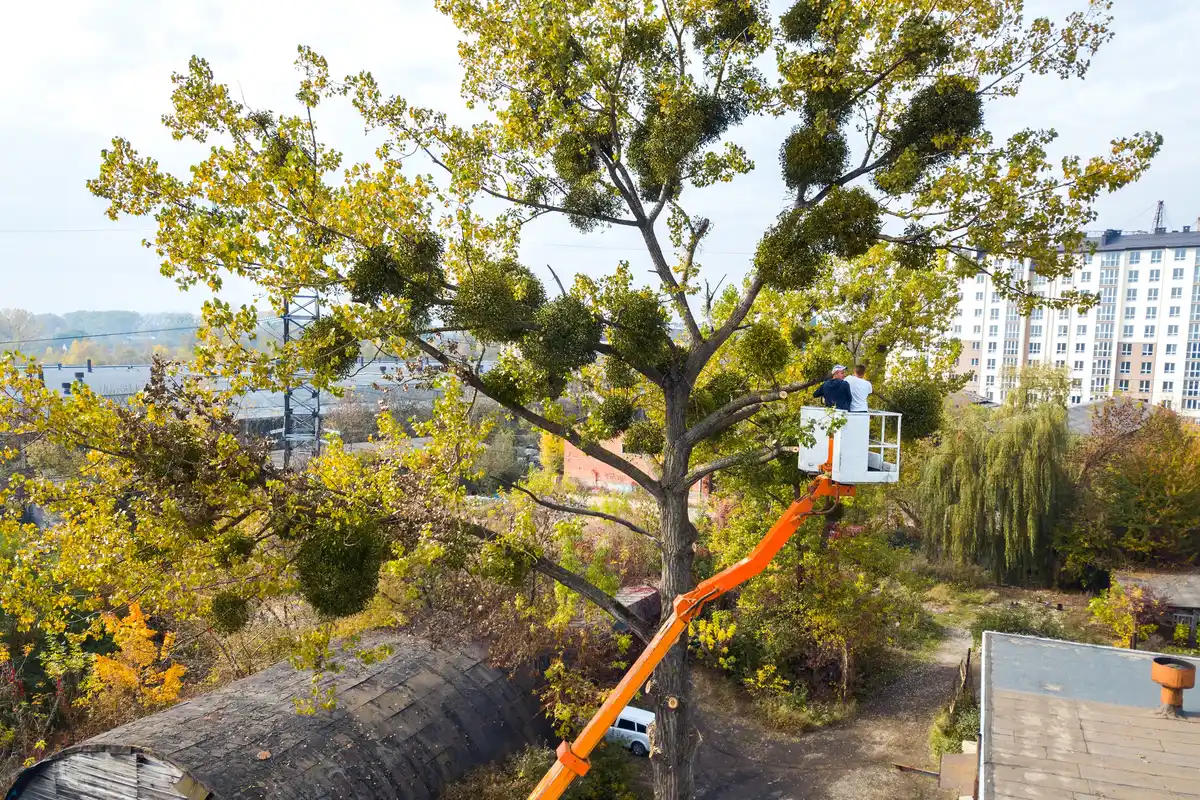
Georgia tree service contractors operate in one of the largest and fastest-growing tree care markets in the country. The combination of explosive Atlanta metro growth, year-round growing season across most of the state, hurricane exposure on the Georgia coast, and a deep Southern hardwood market creates substantial demand. Add the steady population growth driving residential and commercial development from Atlanta through Savannah, plus utility line clearance work for Georgia Power, and Georgia supports a tree care market that ranks among the top five in the United States.
This page covers what Georgia tree service insurance typically includes, how Georgia’s competitive workers’ comp market works for tree care operations, and what carriers are actively writing Georgia tree service business.
What Tree Service Insurance Costs in Georgia
Georgia operates a competitive workers’ compensation market — meaning carriers can freely set their own rates within NCCI loss cost guidelines. Combined with Georgia’s substantial market size and active carrier participation, this creates real pricing competition for tree service operations.
The ranges below reflect what most Georgia tree service contractors typically pay:
- General Liability Insurance: $850–$2,500 per year for typical Georgia small operations. Atlanta metro operations typically pay slightly higher than rural and South Georgia contractors.
- Workers’ Compensation Insurance: $7–$12 per $100 of payroll for Georgia tree service operations under class code 0106. A crew with $200,000 of payroll typically pays $14,000–$24,000 annually. Georgia is an NCCI state with a competitive market — carriers can apply credits and debits to compete on price.
- Commercial Auto Insurance: $1,900–$3,800 per truck per year for chip trucks, bucket trucks, and chipper-towing pickups. Atlanta metro pricing runs higher due to traffic density and accident frequency.
- Inland Marine (Equipment) Insurance: $400–$1,500 per year depending on total equipment value. Hurricane and wind coverage matters on the Georgia coast.
- Pesticide & Pollution Liability: $400–$900 per year for Georgia tree services performing southern pine beetle treatments, herbicide applications, deep root feeding, or other plant health care work.
- Umbrella / Excess Liability: $500–$1,300 per year for $1M of additional coverage above primary limits. Frequently required for Georgia Power line clearance contracts, municipal contracts in Atlanta and other major metros, and HOA/property management work.
Georgia’s competitive market means tree service contractors who shop their coverage with an experienced agent often save 15–25% versus their previous carrier.
Workers’ Compensation in Georgia
Georgia is one of the most competitive workers’ compensation markets in the Southeast. The Georgia State Board of Workers’ Compensation administers the system, and the state uses NCCI loss costs with carrier-specific loss cost multipliers — meaning carriers freely compete on final pricing.
Georgia WC Coverage Requirements:
- Employers with three or more part-time or full-time employees must carry workers’ compensation insurance
- Subcontractors without their own coverage are typically counted as employees during audits
- Sole proprietors, partners, and corporate officers can elect coverage but aren’t generally required to carry it on themselves
- Tree service operations are classified under NCCI class code 0106
- Most major specialty carriers (including Amerisafe) actively write Georgia tree service operations
Why Georgia Rates Can Be Competitive
Georgia’s combination of competitive market dynamics, large operational scale, and active carrier participation means tree service operations can often find better pricing than in heavily regulated rate states like Florida. Operations with strong safety programs and clean three-year claims history (low ex-mod) can see meaningful pricing differences between carriers — sometimes 20–30% spread between top and bottom quotes for the same operation.
General Liability
General liability (GL) is the foundation of every Georgia tree care insurance program. A properly structured GL policy covers bodily injury and property damage claims arising from your operations.
Georgia tree service GL policies are typically written with:
- Occurrence-based coverage (preferred over claims-made for most contractors)
- Completed operations coverage for claims that arise after a job is finished
- Contractors’ professional liability if you provide arborist consulting or recommendations
- Hurricane / windstorm coverage in coastal Georgia markets (Savannah, Brunswick, St. Marys)
Municipal contracts in Atlanta, Savannah, Augusta, Columbus, and Macon regularly require $1M–$2M per occurrence. Georgia Tech, University of Georgia, Emory, Georgia State, and other major university campuses typically require $2M per occurrence. Georgia Power line clearance contracts often require $5M umbrella above primary GL.
Commercial Auto
Georgia tree service companies typically run pickup trucks, dump trucks, bucket trucks, chippers, and stump grinders. Every commercial vehicle — including chippers and trailers towed on Georgia roads — must be scheduled on a commercial auto policy.
Common coverage gaps we see in Georgia programs:
- Chippers listed as trailers but never added to the schedule — a $60,000–$90,000 chipper is uninsured if it’s not explicitly listed
- Hired and non-owned auto — required if employees ever drive personal vehicles or rented trucks for company business
- Bucket trucks — confirm your policy covers the vehicle while the aerial function is in use
- Multi-state operations — Georgia operations crossing into Florida, Alabama, Tennessee, South Carolina, or North Carolina need policies that handle multi-state exposure correctly
- Hurricane / comprehensive coverage — Coastal Georgia operations need clear windstorm coverage on vehicles
Inland Marine / Equipment Floater
Georgia crews typically carry $50,000–$200,000+ in portable equipment. An equipment floater covers your chainsaws, climbing gear, rigging, stump grinders, and other portable equipment on the job site, in transit, and in storage.
For coastal Georgia operations (Savannah, Brunswick, St. Marys), confirm your floater addresses windstorm exposure clearly. Some policies exclude windstorm losses or apply separate hurricane deductibles in coastal counties.
Pesticide & Pollution Liability
The Georgia Department of Agriculture’s Pesticide Programs licenses commercial pesticide applicators. If your operation includes herbicide treatments, soil injections, southern pine beetle treatments, or any chemical application, a standard GL policy will not respond to resulting pollution claims. Contractor’s pollution liability (CPL) fills that gap.
Georgia-specific treatment markets:
- Southern Pine Beetle — Georgia’s pine forests face periodic SPB outbreaks; treatment and preventive removal create substantial demand
- Emerald Ash Borer — EAB has reached Georgia and continues spreading; treatment markets are growing
- Hemlock Woolly Adelgid — North Georgia mountain hemlocks are under attack from HWA
- Bagworm and Lacebug — Common ornamental pests requiring treatment in Atlanta metro
CPL is increasingly required by commercial and municipal clients in Georgia as a condition of contract.
Umbrella / Excess Liability
An umbrella policy adds limits above your GL, commercial auto, and employer’s liability limits. For Georgia tree service companies working on Georgia Power line clearance, municipal right-of-way, university campuses, or commercial property contracts, umbrella limits of $2M–$10M are frequently required.
A $1M umbrella typically costs a fraction of what your underlying GL costs — among the most efficient insurance purchases available.
Common Tree Service Risks in Georgia
Georgia’s geography and climate create distinctive risk patterns:
Atlanta Metro Storm Market
Atlanta’s frequent severe thunderstorms, occasional tornadoes, and ice storms generate substantial emergency tree work. The 2014 ice storm and the 2017 tornado outbreak are recent examples. Storm response work is high-revenue but among the highest-risk tree work performed.
Hurricane Exposure on the Georgia Coast
Savannah, Brunswick, and the Georgia coast face hurricane risk every season. Hurricane Matthew (2016), Irma (2017), Michael (2018), and Helene (2024) all generated significant Georgia coastal tree work. Operations performing post-hurricane debris removal and emergency tree work need carriers comfortable with that exposure.
Year-Round Growing Season
Most of Georgia experiences a growing season that allows tree service work year-round. There’s no winter dormancy comparable to northern states. This sustained activity means more total exposure hours and more cumulative claim risk than seasonal markets.
Aging Atlanta Canopy
Atlanta’s tree canopy — particularly in older neighborhoods like Buckhead, Druid Hills, Ansley Park, Inman Park, and Decatur — features mature hardwoods near high-value homes. Tree work in these neighborhoods raises liability exposure significantly. The 2014 ice storm destroyed thousands of mature trees and continues to drive removal work.
Southern Pine Beetle and Pine Removal
Georgia’s pine forests face periodic SPB outbreaks that create major removal markets. Loblolly, slash, and longleaf pine removal in suburban and rural areas represents a substantial revenue stream — and pine removal carries specific risks (heavy weight, brittle wood, large diameters).
North Georgia Mountain Hardwood Markets
The North Georgia mountains (Blue Ridge, Helen, Dahlonega, Ellijay) feature substantial mature hardwood populations. Tree work in mountain terrain adds access challenges and slope exposure that affect underwriting.
Utility Line Clearance Demand
Georgia Power runs one of the largest vegetation management programs in the Southeast. Operations doing line clearance need higher liability limits, ANSI Z133 compliance, and specialized underwriting.
Why Georgia Tree Service Owners Choose TreeGuard
We understand the Georgia market. From Atlanta metro to the Georgia coast to North Georgia mountains, Georgia’s tree care landscape varies significantly by region. We know which carriers fit each operational profile.
We know hurricane storm work. Georgia coastal operations doing post-storm response face underwriting challenges with some carriers — we know which carriers will write that exposure.
As an independent agency, we represent 16+ A-rated carriers and shop your operation across the entire market. You’re not stuck with one company’s underwriting appetite or pricing — we find the carrier that best fits your specific Georgia operation.
We specialize in tree care. We don’t write the occasional tree service policy as a side line — this niche is our focus.
Quote turnaround is fast. Most Georgia tree service quotes come back within 1–2 hours during business hours.
Major Georgia Markets We Serve
We write tree service insurance across all of Georgia, with strong concentration in:
- Atlanta Metro: Atlanta, Sandy Springs, Roswell, Johns Creek, Alpharetta, Marietta, Smyrna, Decatur, Brookhaven, Dunwoody, East Point, Stone Mountain, Lawrenceville, Duluth.
- North Georgia Mountains: Blue Ridge, Helen, Dahlonega, Ellijay, Cleveland, Cumming, Gainesville, Cartersville, Dalton.
- Coastal Georgia: Savannah, Brunswick, St. Simons Island, St. Marys, Hinesville, Pooler, Tybee Island.
- Middle Georgia: Macon, Warner Robins, Milledgeville, Dublin, Forsyth.
- Augusta and East Georgia: Augusta, Evans, Martinez, Grovetown, Thomson.
- South Georgia: Albany, Valdosta, Tifton, Moultrie, Bainbridge, Thomasville.
- Columbus and West Georgia: Columbus, LaGrange, Carrollton, Newnan.
- Athens Metro: Athens, Watkinsville, Winder, Monroe.
Whether you’re a single-truck operation in the North Georgia mountains or a 100-employee crew working across Atlanta metro, we can write your business in Georgia.