
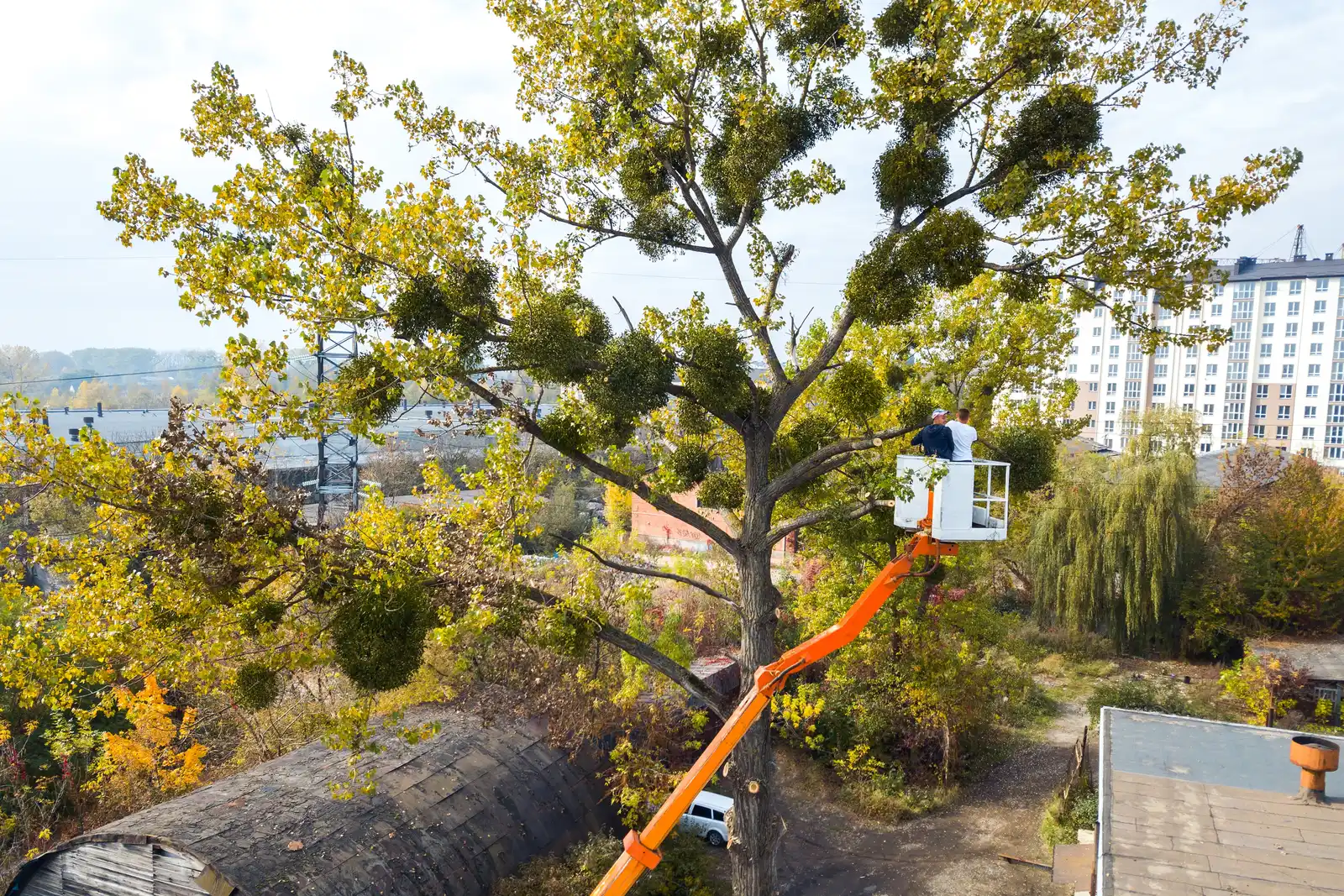
Oregon tree service contractors operate in a market shaped by three powerful forces: the Oregon Construction Contractors Board (CCB) licensing framework that imposes some of the most rigorous contractor requirements in the US, distinctive Pacific Northwest storm and wildfire exposure spanning Cascade range, Willamette Valley, Oregon coast, and southern Oregon wildfire corridor, and the Portland metro institutional and premium suburban market that creates significant commercial revenue opportunities. Oregon tree service contractors who navigate CCB licensing expertly, position properly for storm and wildfire response, and serve the Portland commercial market capture significantly higher revenue than residential-only operations.
This page covers what Oregon tree service insurance typically includes, how the Oregon Construction Contractors Board licensing framework affects coverage, how Oregon’s private-market workers’ comp environment works for tree care operations, and what carriers are actively writing Oregon tree service business.
What Tree Service Insurance Costs in Oregon
Oregon tree service insurance pricing reflects three state-specific realities: rigorous CCB licensing and bond requirements, the demanding Portland metro institutional market, and distinctive Pacific Northwest storm and wildfire exposure that affects underwriting. The ranges below reflect what most Oregon tree service contractors typically pay:
- General Liability Insurance: $750–$2,300 per year for typical Oregon small operations. Portland and Eugene commercial-market operations sometimes pay toward the higher end given premium institutional exposure.
- Workers’ Compensation Insurance: $5–$11 per $100 of payroll for Oregon tree service operations under class code 0106. A crew with $200,000 of payroll typically pays $10,000–$22,000 annually. Oregon operates a competitive private-market environment with SAIF and private carriers competing for business.
- Commercial Auto Insurance: $1,800–$4,200 per truck per year for chip trucks, bucket trucks, and chipper-towing pickups in Oregon. Portland metro pricing reflects high traffic density.
- Inland Marine (Equipment) Insurance: $400–$1,500 per year depending on total equipment value. Coastal and Cascade operations should pay particular attention to coverage during off-road and remote deployment.
- Pesticide & Pollution Liability: $400–$1,000 per year for Oregon tree services performing plant health care work.
- Umbrella / Excess Liability: $700–$1,500 per year for $1M of additional coverage above primary limits. Frequently required for Portland institutional contracts, ODOT work, and PGE / Pacific Power / Idaho Power line clearance.
- CCB Surety Bond: $20,000–$80,000 depending on contractor classification — required as a condition of CCB licensure, separate from insurance premiums.
Oregon’s combination of CCB licensing requirements, distinctive geography, and Portland metro market dynamics means tree service contractors who shop their coverage with an agent who actually understands Oregon’s regulatory environment can often save 15–30% versus generic policies.
Oregon CCB Licensing and Workers’ Compensation
Oregon’s regulatory framework for tree service contractors is among the most rigorous in the US. Two pillars define compliance: the Oregon Construction Contractors Board (CCB) licensing system and the Oregon Workers’ Compensation system. Both directly affect insurance structuring.
Oregon CCB Licensing
The Oregon Construction Contractors Board requires licensing for all construction-related contractors performing work in Oregon, including tree service operations. CCB licensing requires:
- Surety bond: $20,000 for residential general contractors, up to $80,000 for some commercial classifications
- General liability insurance: specific minimums vary by classification, commonly $500,000+
- Workers’ compensation coverage: required if the contractor has employees
- Continuing education and code compliance: ongoing requirements to maintain active licensure
- Pre-licensing education: required for new applicants
Operating without CCB licensing in Oregon is illegal and carries substantial penalties. Tree service operations must determine the correct CCB classification — typically Residential General Contractor, Commercial General Contractor, or Specialty Contractor — and maintain active licensure throughout operations.
Class Code 0106 in Oregon
Tree trimming and removal operations in Oregon fall under NCCI class code 0106. Oregon rates under 0106 reflect the high-hazard classification. The same misclassification issue we see across the country applies — operations placed under class code 0042 (landscape gardening) face back-premium audits when actual operations are discovered.
Oregon-Specific Coverage Considerations
- Coverage required for any operation with employees — Oregon requires WC coverage for any business with employees
- SAIF Corporation participation — Oregon SAIF is a state-chartered private carrier that competes with private-market carriers in the voluntary market — operations have multiple options
- CCB-WC coordination — CCB licensing requires proof of active WC coverage; lapses can result in license suspension
- Subcontractor liability — uninsured subcontractors typically count as employees for premium calculation purposes
- Multi-state crews — operations crossing into Washington need policies that handle interstate work correctly, particularly given Washington’s L&I monopolistic system
- Multi-state crews into California — operations bidding into northern California need to handle CA’s distinct C-49 framework
Specialty carriers like Amerisafe, focused on hazardous trades, actively write Oregon tree service business and often provide competitive pricing for safety-conscious operations.
Oregon’s Pacific Northwest Risk Environment
Oregon tree service operations face a distinctive risk profile shaped by Oregon’s diverse geography spanning Pacific coast, Willamette Valley, Cascade range, and high desert eastern Oregon.
Cascade Range and Willamette Valley
The Willamette Valley — running from Eugene through Salem to Portland — features mature urban canopy in residential, institutional, and commercial settings. Portland’s mature Douglas fir, big-leaf maple, and Western red cedar canopy in confined urban spaces creates removal complexity that drives up both job difficulty and insurance exposure. Cascade range storm events drop timber across wide areas during winter wind events.
Oregon Coast Exposure
The Oregon coast — Astoria, Newport, Coos Bay, Brookings — faces powerful Pacific storm systems, particularly fall through spring. Wind events that drop coastal timber create surge demand for emergency tree work but also elevated risk for operations responding in remote coastal communities.
Southern Oregon Wildfire Corridor
Medford, Grants Pass, Ashland, and southern Oregon face significant wildfire and wildfire-adjacent exposure. Vegetation management work in fire-prone areas, defensible-space removal projects, and post-fire hazard tree work all create distinctive risk profiles requiring specialized underwriting. Eastern Oregon high desert also faces wildfire exposure.
Portland Institutional and Tech Market
Portland metro features a substantial institutional and corporate ecosystem: Oregon Health & Science University (OHSU), Intel’s Hillsboro campus, Nike’s Beaverton headquarters, Portland State University, and major hospital systems (Providence, Legacy Health, Kaiser Permanente). Premium suburban markets in Lake Oswego, West Linn, Dunthorpe, and Forest Heights feature substantial estate properties.
Bend and Central Oregon Resort Market
Bend and central Oregon — Sunriver, Black Butte Ranch, Sisters — feature substantial vacation property and resort tree service work. High-altitude operations, remote-access work, and the resort-property premium market create distinctive operational considerations.
Common Coverage Gaps in Oregon Programs
- CCB-insurance coordination gaps — operations sometimes miss the specific GL minimums and bond requirements for their CCB classification
- Chippers listed as trailers but never added to the schedule — a $60,000–$90,000 chipper is uninsured if it’s not explicitly listed
- Hired and non-owned auto — required if employees ever drive personal vehicles or rented trucks for company business
- Wildfire-area exposure — operations doing defensible space or post-fire work need underwriting that recognizes the distinctive risk
- Multi-state coverage — operations bidding into Washington need policies that handle the L&I interface correctly
General Liability
General liability (GL) is the foundation of every Oregon tree care insurance program. A properly structured GL policy covers bodily injury and property damage claims arising from your operations.
Oregon tree service GL policies are typically written with occurrence-based coverage (preferred over claims-made for most contractors), completed operations coverage for claims that arise after a job is finished, and contractors’ professional liability if you provide arborist consulting or recommendations. CCB licensing minimums vary by classification — these are floors, not adequate working limits.
Municipal contracts in Portland, Salem, Eugene, and Beaverton regularly require $1M–$2M per occurrence. OHSU, Intel, Nike, and major hospital system contracts typically require $2M per occurrence. Oregon Department of Transportation (ODOT), PGE, Pacific Power, and Idaho Power line clearance contracts often require $5M umbrella above primary GL.
Inland Marine / Equipment Floater
Oregon crews typically carry $50,000–$220,000+ in portable equipment. Theft from job sites and unattended trailers is meaningful in Portland and other urban concentrations. An equipment floater covers your chainsaws, climbing gear, rigging, stump grinders, and other portable equipment on the job site, in transit, and in storage.
Replacement cost coverage is strongly recommended over actual cash value — particularly for coastal and Cascade operations where equipment may be deployed in challenging conditions.
Pesticide & Pollution Liability
The Oregon Department of Agriculture Pesticide Program administers commercial pesticide applicator certification in Oregon. Tree services performing plant health care work need pesticide and pollution liability.
Standard GL policies will not respond to pollution claims arising from chemical applications. Contractor’s pollution liability (CPL) fills that gap and is increasingly required by commercial accounts and Pacific Northwest plant health care programs.
Umbrella / Excess Liability
An umbrella policy adds limits above your GL, commercial auto, and employer’s liability limits. For Oregon tree service companies working on Portland institutional accounts, ODOT, OHSU, university campuses, or PGE / Pacific Power / Idaho Power vegetation management, umbrella limits of $2M–$5M are frequently required.
A $1M umbrella typically costs a fraction of what your underlying GL costs — among the most efficient insurance purchases available, particularly given Portland metro premium-property exposure.
Common Tree Service Risks in Oregon
Oregon’s geography, climate, and market dynamics create distinctive risk patterns:
Pacific Storm Season
Oregon experiences powerful Pacific storm systems, particularly fall through spring. Coastal storm events and Cascade west slope wind events drop mature canopy across wide areas. Storm response work generates revenue but is among the highest-risk work tree services perform.
Cascade Mountain Operations
Cascade range work — Mount Hood, the Three Sisters, Crater Lake area — presents distinctive operational challenges including elevation work, snow-loaded canopy, and remote-access patterns.
Southern Oregon Wildfire Risk
Medford, Grants Pass, Ashland, and southern Oregon face significant wildfire exposure. Eastern Oregon high desert work also faces fire-corridor exposure. Operations doing defensible space, post-fire hazard tree work, or fire-adjacent vegetation management have distinctive underwriting needs.
Coastal Operations
Oregon coast operations — Astoria to Brookings — face access, weather, and remote-deployment challenges. Salt-air corrosion affects equipment differently than inland operations.
Portland Metro Mature Canopy
Portland’s east-side neighborhoods, west hills, and historic suburbs feature 80-150+ year-old Douglas fir, big-leaf maple, and Western red cedar in confined urban spaces. Removal work involves crane operations, traffic management, and neighboring property protection.
Central Oregon Resort Market
Bend, Sunriver, Black Butte Ranch, and resort-area properties feature substantial premium estate work with mature ponderosa pine and juniper canopy. Premium-property work creates higher liability exposure on every job.
Why Oregon Tree Service Owners Choose TreeGuard
We understand Oregon’s CCB licensing framework and how it interacts with insurance. Most insurance agents from outside Oregon don’t appreciate how rigorous CCB requirements are or how CCB compliance integrates with insurance structuring. We help Oregon tree service operations build coverage that satisfies CCB requirements while providing adequate protection for actual operational risk.
We know Portland’s institutional and corporate market. The work for OHSU, Intel, Nike, and Portland metro corporate accounts requires different underwriting than residential-focused operations. We help operations transition coverage as they grow into commercial and institutional accounts.
As an independent agency, we represent 16+ A-rated carriers and shop your operation across the entire market. You’re not stuck with one company’s underwriting appetite or pricing — we find the carrier that best fits your specific Oregon operation.
We specialize in tree care. We don’t write the occasional tree service policy as a side line — this niche is our focus.
Quote turnaround is fast. Most Oregon tree service quotes come back within 1–2 hours during business hours.
Major Oregon Markets We Serve
We write tree service insurance across all of Oregon, with strong concentration in:
- Portland Metro: Portland, Beaverton, Hillsboro, Tigard, Lake Oswego, West Linn — high-density urban tree work, premium estate residential, corporate campus market.
- Westside Suburbs: Beaverton, Hillsboro, Tualatin, Tigard — Intel and Nike corporate corridor.
- Salem Region: Salem, Keizer, McMinnville — state government market, Willamette Valley agriculture.
- Eugene-Springfield: Eugene, Springfield, Corvallis — University of Oregon institutional market, southern Willamette Valley.
- Central Oregon: Bend, Redmond, Sunriver, Sisters — high desert resort and vacation property market.
- Southern Oregon: Medford, Grants Pass, Ashland — Rogue Valley, wildfire-corridor work.
- Oregon Coast: Astoria, Newport, Coos Bay, Brookings — coastal vacation and storm-response market.
- Eastern Oregon: Pendleton, La Grande, Baker City, Burns — high desert agricultural and ranching communities.
Whether you’re a single-truck operation on the Oregon coast or a 30-employee crew working across the Portland metro corporate market, we can write your business in Oregon.