
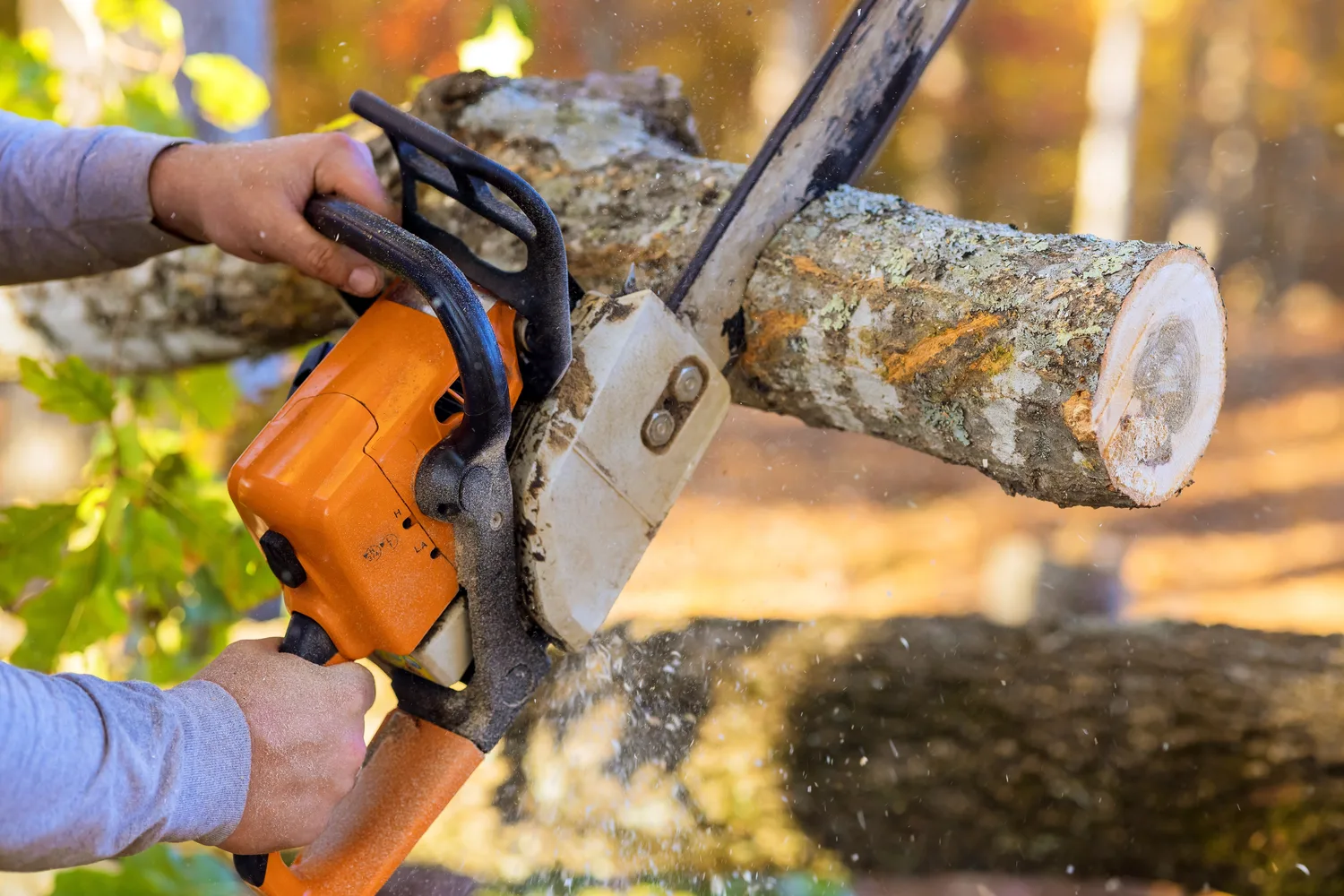
Missouri tree service contractors operate in one of the most weather-volatile tree care markets in the Midwest. Located squarely in tornado alley with the deadly history of the 2011 Joplin EF-5 and the 2019 Jefferson City tornado, regularly hit by significant ice storms (most notably the catastrophic 2007 event that left hundreds of thousands without power for weeks), and home to an aging hardwood canopy across both the Ozarks and the Mississippi Valley, Missouri produces sustained tree service demand. The Kansas City and St. Louis metros anchor the state’s commercial tree service market — flanked by the Springfield metro in the Ozarks and the Columbia / Jefferson City corridor in central Missouri.
This page covers what Missouri tree service insurance typically includes, how Missouri’s workers’ compensation system works for tree care operations, what state agencies regulate the industry, and what carriers are actively writing Missouri tree service business. For a broader walkthrough of coverage, see our coverage overview, or jump to specific pages for workers’ compensation and commercial auto.
What Tree Service Insurance Costs in Missouri
Missouri tree service insurance pricing reflects the state’s combination of severe-weather exposure, large utility line clearance market, and competitive NCCI workers’ comp environment. Pricing varies meaningfully between Kansas City metro operations, St. Louis metro operations, the Springfield/Ozarks market, and rural Missouri.
The ranges below reflect what most Missouri tree service contractors typically pay:
- General Liability Insurance: $800–$2,400 per year for typical Missouri small operations. St. Louis and Kansas City metro operations typically pay slightly higher than Springfield, Columbia, and rural markets due to claim frequency and urban canopy exposure.
- Workers’ Compensation Insurance: $7–$12 per $100 of payroll for Missouri tree service operations under class code 0106. A crew with $200,000 of payroll typically pays $14,000–$24,000 annually.
- Commercial Auto Insurance: $1,800–$3,800 per truck per year for chip trucks, bucket trucks, and chipper-towing pickups. Pricing varies by metro and driver MVR profile.
- Inland Marine (Equipment) Insurance: $400–$1,500 per year depending on total equipment value.
- Pesticide & Pollution Liability: $400–$900 per year for Missouri tree services performing EAB injections, herbicide applications, oak wilt treatments, or other plant health care work.
- Umbrella / Excess Liability: $500–$1,300 per year for $1M of additional coverage above primary limits. Routinely required for Ameren Missouri, Evergy, and municipal contracts in Kansas City, St. Louis, and Springfield.
Most tree service operations in Missouri save 20–30% by working with an independent agency that shops the entire carrier market versus accepting a single-carrier package quote.
Workers’ Compensation in Missouri
Missouri requires workers’ compensation coverage for employers with five or more employees — but with a critical exception: any employer in the construction industry must carry WC for even a single employee. Tree service operations are generally treated as construction-adjacent under Missouri’s WC interpretation, so most tree service owners should plan to carry WC regardless of crew size. Even small crews under the five-employee threshold typically carry voluntary WC because municipal, commercial, and utility contracts almost universally require it.
Tree service operations in Missouri fall under NCCI class code 0106 — one of the highest-rated codes in the WC system. Missouri is a competitive NCCI state, meaning multiple private carriers underwrite the business and compete on price. The Missouri Division of Workers’ Compensation (Department of Labor and Industrial Relations) administers the system, and the Missouri Department of Commerce and Insurance approves carrier filings.
Specialty WC carriers such as Amerisafe actively write Missouri tree service business. For Missouri operations with $150,000+ of payroll, working with a specialty WC market typically produces 20–40% premium savings versus generic commercial lines carriers.
Surge payroll from storm response deserves particular care in Missouri. After major ice storms or tornado outbreaks, tree service operations frequently see payroll spike 50–200% over normal operations. Accurate documentation of storm-response payroll, contract terms, and crew structure matters at audit. WC carriers expect surge payroll to be disclosed during the policy term — not at year-end audit.
General Liability
General liability (GL) is the foundation of every Missouri tree care insurance program. A properly structured GL policy covers bodily injury and property damage claims arising from your operations.
Missouri tree service GL policies are typically written with:
- Occurrence-based coverage (preferred over claims-made for most contractors)
- Completed operations coverage for claims that arise after a job is finished
- Contractors’ professional liability if you provide arborist consulting or written recommendations
- Hired and non-owned auto endorsement where relevant
Municipal contracts in Kansas City, St. Louis, Springfield, Columbia, and Jefferson City regularly require $1M–$2M per occurrence. The University of Missouri (Columbia), Washington University in St. Louis, Saint Louis University, UMKC, and Missouri State typically require $2M per occurrence. Ameren Missouri and Evergy utility line clearance contracts often require $5M–$10M umbrella above primary GL.
Commercial Auto
Missouri tree service companies typically run pickup trucks, dump trucks, bucket trucks, chippers, and stump grinders. Every commercial vehicle — including chippers and trailers towed on Missouri roads — must be scheduled on a commercial auto policy.
Common coverage gaps we see in Missouri programs:
- Chippers listed as trailers but never added to the schedule — a $60,000–$90,000 chipper is uninsured if it’s not explicitly listed
- Hired and non-owned auto — required if employees ever drive personal vehicles or rented trucks for company business
- Bucket trucks — confirm your policy covers the vehicle while the aerial function is in use
- Multi-state operations — Missouri operations crossing into Kansas, Iowa, Illinois, Kentucky, Tennessee, Arkansas, Oklahoma, or Nebraska need policies that extend coverage outside Missouri
- Severe-weather comprehensive coverage — Missouri’s ice storms and tornado events regularly produce vehicle damage; confirm comprehensive limits are adequate
Inland Marine / Equipment Floater
Missouri crews typically carry $50,000–$200,000+ in portable equipment. An equipment floater covers your chainsaws, climbing gear, rigging, stump grinders, and other portable equipment on the job site, in transit, and in storage.
Confirm your floater covers ice storm and tornado-related damage without exclusion. In post-storm cleanup environments, equipment is repeatedly exposed to falling limbs, unstable trees, and storm debris — and damage to equipment during storm response is a real exposure that not all floaters address cleanly.
Pesticide & Pollution Liability
The Missouri Department of Agriculture’s Pesticide Control Program licenses commercial pesticide applicators in Missouri. If your operation includes EAB injections, oak wilt treatments, herbicide applications, soil drenches, or any chemical application, a standard GL policy will not respond to resulting pollution claims. Contractor’s pollution liability (CPL) fills that gap.
Emerald Ash Borer in Missouri
EAB has spread throughout Missouri since first being detected in the state in 2008. Treatment work with systemic insecticide injections (emamectin benzoate, imidacloprid) on high-value ash trees is a substantial specialty market, particularly in St. Louis, Kansas City, and Columbia. Removal of EAB-killed ash is dangerous — dead ash becomes brittle and structurally unpredictable, complicating climbing and rigging. Operations doing significant ash treatment or removal work should carry CPL and review their GL for any tree-disease-related exclusions.
Umbrella / Excess Liability
An umbrella policy adds limits above your GL, commercial auto, and employer’s liability limits. For Missouri tree service companies working on municipal right-of-way, university campuses, or utility line clearance for Ameren Missouri or Evergy, umbrella limits of $2M–$10M are frequently required.
A $1M umbrella typically costs a fraction of what your underlying GL costs — among the most efficient insurance purchases available.
Common Tree Service Risks in Missouri
Missouri’s geography and climate create distinctive risk patterns:
Tornado Alley
Missouri sits squarely in tornado alley. The May 22, 2011 Joplin EF-5 tornado killed 158 people and produced massive cleanup work that continued for years. The 2019 Jefferson City EF-3 hit the state capital. Tornado outbreaks across the Ozarks, the I-44 corridor, and the Missouri River valley produce dangerous post-storm conditions for tree service operations responding to widespread damage and storm-stressed canopy.
Severe Ice Storms
The January 2007 ice storm is widely considered one of the most damaging weather events in modern Missouri history — extended statewide power outages, tens of thousands of downed trees, and months of cleanup work. Ice storms in 2009, 2013, and 2021 also produced significant damage. Ice-loaded trees fail unpredictably, and crews responding to ice storm damage face elevated injury and property damage exposure.
Emerald Ash Borer (EAB)
EAB has been spreading across Missouri since 2008 and is reshaping urban canopy management across the state. The Missouri Department of Conservation coordinates EAB response. Treatment and removal work represents an enormous and growing market across the Kansas City, St. Louis, Columbia, and Springfield metros.
Oak Wilt
Oak wilt has been confirmed across central and eastern Missouri. Operations performing propiconazole fungicide injections or removing infected oak should carry CPL and follow Missouri Department of Agriculture protocols for sanitation between job sites.
Mississippi and Missouri River Flooding
The river-adjacent counties — St. Louis, St. Charles, Cape Girardeau, and others along the major rivers — experience periodic significant flooding events that stress riparian canopy. Flood-damaged trees often require removal months after the flood recedes.
Aging Urban Canopy
St. Louis’s Forest Park, Central West End, Clayton, and University City; Kansas City’s Country Club Plaza, Brookside, and the Northland; Springfield’s Rountree and the historic downtown; and Columbia’s mature neighborhoods have substantial mature tree populations near high-value homes. Tree work in these neighborhoods raises property damage exposure significantly.
Utility Line Clearance Demand
Ameren Missouri (serving St. Louis and most of eastern and central Missouri) and Evergy (serving the Kansas City metro and most of western Missouri) both run substantial vegetation management programs. Operations doing line clearance need higher liability limits, ANSI Z133 compliance, and specialized underwriting.
Why Missouri Tree Service Owners Choose TreeGuard
We understand Missouri’s NCCI WC environment and the specialty carrier appetite for 0106 risks. The difference between a generic carrier quote and a specialty 0106 carrier quote can be 30%+ in premium — and we know which carriers will write Missouri tree service business at competitive rates.
We know how to handle storm-response payroll surges. Missouri tree service operations regularly see significant payroll spikes after ice storms and tornado outbreaks. We structure WC and GL programs that accommodate those surges without creating audit problems or coverage gaps.
We know Missouri utility line clearance. Ameren Missouri and Evergy vegetation management contracts have specific underwriting requirements, and we know which carriers will write them.
As an independent agency, we represent 16+ A-rated carriers and shop your operation across the entire market. You’re not stuck with one company’s underwriting appetite or pricing — we find the carrier that best fits your specific Missouri operation.
Quote turnaround is fast. Most Missouri tree service quotes come back within 1–2 hours during business hours.
Major Missouri Markets We Serve
We write tree service insurance across all of Missouri, with strong concentration in:
- Kansas City Metro (Missouri side): Kansas City, Independence, Lee’s Summit, Blue Springs, Liberty, Raytown, Gladstone, Grandview, Belton, Raymore.
- St. Louis Metro: St. Louis, St. Charles, O’Fallon, Florissant, Chesterfield, Wentzville, University City, Clayton, Kirkwood, Webster Groves, Ballwin.
- Springfield / Ozarks: Springfield, Nixa, Ozark, Republic, Branson, Joplin, Webb City, Carthage.
- Columbia / Mid-Missouri: Columbia, Jefferson City, Fulton, Mexico, Boonville.
- St. Joseph / Northwest: St. Joseph, Maryville, Cameron.
- Southeast Missouri: Cape Girardeau, Sikeston, Poplar Bluff, Farmington.
- Lake of the Ozarks: Osage Beach, Lake Ozark, Camdenton.
Whether you’re a single-truck operation in the Ozarks or a 50-employee crew working Ameren Missouri vegetation management across eastern Missouri, we can write your business in Missouri.