
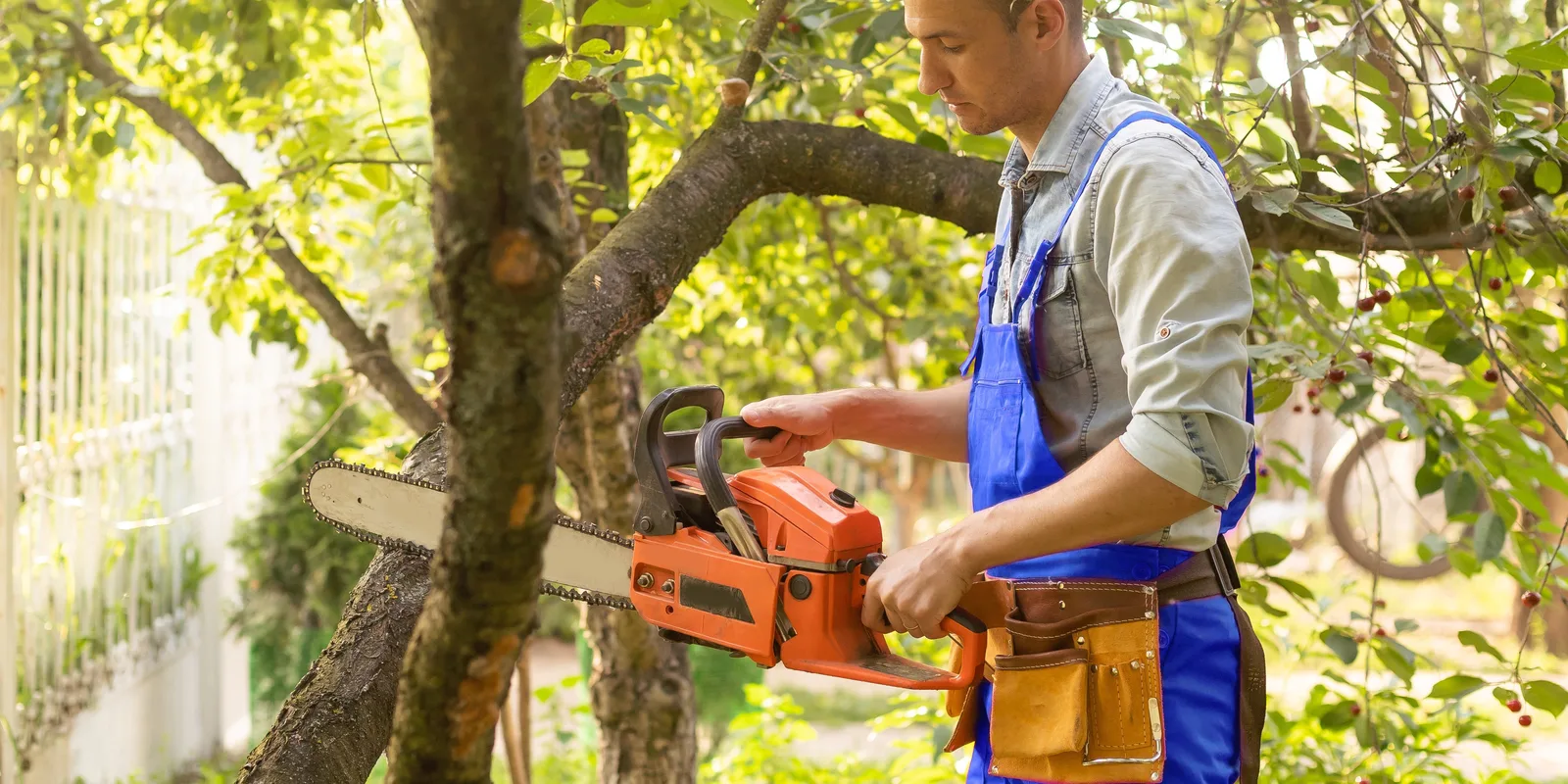
Tennessee tree service contractors operate in a market shaped by three powerful forces: severe storm patterns that drive recurring tornado and ice storm response, dense forest cover across the eastern third of the state, and the rapid population growth of Nashville, Knoxville, Chattanooga, and Memphis metro areas. Tennessee tree service contractors who position properly for storm response and commercial property management capture significantly higher revenue than residential-only operations.
This page covers what Tennessee tree service insurance typically includes, how Tennessee’s storm-response economy and growing commercial market shape coverage decisions, and what carriers are actively writing Tennessee tree service business.
What Tree Service Insurance Costs in Tennessee
Tennessee tree service insurance pricing reflects two state-specific realities: the storm-response economy (which drives both revenue opportunity and elevated risk) and Tennessee’s competitive commercial WC market. The ranges below reflect what most Tennessee tree service contractors typically pay:
- General Liability Insurance: $750–$2,200 per year for typical Tennessee small operations. Nashville commercial-market operations sometimes pay toward the higher end given commercial property management exposure.
- Workers’ Compensation Insurance: $4–$10 per $100 of payroll for Tennessee tree service operations under class code 0106. A crew with $200,000 of payroll typically pays $8,000–$20,000 annually. Tennessee operates a competitive market through private carriers.
- Commercial Auto Insurance: $1,800–$4,200 per truck per year for chip trucks, bucket trucks, and chipper-towing pickups in Tennessee.
- Inland Marine (Equipment) Insurance: $400–$1,400 per year depending on total equipment value. Storm-response operations should pay particular attention to coverage during active deployment.
- Pesticide & Pollution Liability: $400–$900 per year for Tennessee tree services performing plant health care work.
- Umbrella / Excess Liability: $600–$1,300 per year for $1M of additional coverage above primary limits. Frequently required for HOA contracts, municipal work, and TVA-adjacent vegetation management.
Tennessee’s combination of state-specific factors means tree service contractors who shop their coverage with an agent who actually understands Tennessee can often save 15–30% versus generic policies — particularly by leveraging the competitive private workers’ comp market.
Workers’ Compensation in Tennessee
Tennessee operates a competitive workers’ compensation market — multiple private carriers write tree service business. The Tennessee Bureau of Workers’ Compensation administers claims and oversees the system.
Class Code 0106 in Tennessee
Tree trimming and removal operations in Tennessee fall under NCCI class code 0106. Tennessee follows NCCI manual rules with state-specific modifications. The same misclassification issue we see across the country applies — operations placed under class code 0042 (landscape gardening) face back-premium audits when actual operations are discovered.
Tennessee-Specific Coverage Considerations
- Coverage required at 5+ employees — Tennessee requires WC coverage for any business with five or more employees
- Sole proprietor and small-operation exemptions — operations under five employees can elect out, though coverage is strongly recommended
- Subcontractor liability — uninsured subcontractors typically count as employees for premium calculation purposes
- Bureau claim process — Tennessee’s Bureau of Workers’ Compensation provides resources for both employers and employees navigating claims
Specialty carriers focused on hazardous trades actively write Tennessee tree service business and often provide the best pricing for safety-conscious operations.
Tennessee’s Storm-Response Economy
This is the section every Tennessee tree service owner needs to understand carefully — Tennessee’s storm-response economy is unlike most other states.
Tornado Alley Exposure
Tennessee sits in one of the most active tornado regions in the country. Middle and West Tennessee particularly experience recurring tornado outbreaks. The 2020 Nashville tornado, 2021 Putnam County events, and ongoing severe weather seasons consistently drive emergency tree work demand.
Ice Storm Patterns
East Tennessee and the Cumberland Plateau experience ice storms that can drop entire mature canopy across multi-county areas. Ice-loaded trees behave unpredictably, creating both surge revenue opportunity and significantly elevated injury risk for crews.
Multi-State Storm Response
Tennessee tree service contractors frequently respond to storms in Kentucky, Alabama, Mississippi, and the Carolinas. Multi-state insurance considerations apply when crews work outside Tennessee — coverage territory, workers’ comp portability, and commercial auto considerations all matter.
What This Means for Tree Service Operations
- Tennessee commercial auto and inland marine coverage should account for storm-response surge deployment
- Multi-state operations need policies that handle interstate work correctly
- Workers’ comp must follow crews crossing state lines, particularly into Kentucky, Alabama, and Mississippi
- Storm response is highest-risk work — proper underwriting matters
Common Coverage Gaps in Tennessee Programs
- Chippers listed as trailers but never added to the schedule — a $60,000–$90,000 chipper is uninsured if it’s not explicitly listed
- Hired and non-owned auto — required if employees ever drive personal vehicles or rented trucks for company business
- Multi-state workers’ comp — many operations don’t realize their WC may not extend to crews working in adjacent states
- Storm-response-period coverage gaps — surge equipment rentals and contractor agreements often fall outside primary coverage
General Liability
General liability (GL) is the foundation of every Tennessee tree care insurance program. A properly structured GL policy covers bodily injury and property damage claims arising from your operations.
Tennessee tree service GL policies are typically written with occurrence-based coverage (preferred over claims-made for most contractors), completed operations coverage for claims that arise after a job is finished, and contractors’ professional liability if you provide arborist consulting or recommendations.
Municipal contracts in Nashville, Memphis, Knoxville, and Chattanooga regularly require $1M–$2M per occurrence. Vanderbilt, University of Tennessee, and Memphis-area university contracts typically require $2M per occurrence. TVA-adjacent vegetation management contracts often require $5M umbrella above primary GL.
Inland Marine / Equipment Floater
Tennessee crews typically carry $50,000–$200,000+ in portable equipment. Theft from job sites and unattended trailers is meaningful in Memphis, Nashville, and other urban concentrations. An equipment floater covers your chainsaws, climbing gear, rigging, stump grinders, and other portable equipment on the job site, in transit, and in storage.
Replacement cost coverage is strongly recommended over actual cash value — particularly for storm-response operations that deploy equipment under high-stress conditions.
Pesticide & Pollution Liability
The Tennessee Department of Agriculture’s Pesticide & Plant Health Division licenses commercial pesticide applicators in Tennessee. Tree services performing plant health care work — including emerald ash borer treatment, deep root feeding, and disease management — need pesticide and pollution liability.
Standard GL policies will not respond to pollution claims arising from chemical applications. Contractor’s pollution liability (CPL) fills that gap and is increasingly required by commercial and municipal clients.
Umbrella / Excess Liability
An umbrella policy adds limits above your GL, commercial auto, and employer’s liability limits. For Tennessee tree service companies working on municipal right-of-way, university campuses, or TVA-adjacent vegetation management contracts, umbrella limits of $2M–$5M are frequently required.
A $1M umbrella typically costs a fraction of what your underlying GL costs — among the most efficient insurance purchases available.
Removal Work Sits Where Two Tennessee Thresholds Meet
Tennessee governs tree service operations through two separate numeric gates that owners tend to consider in isolation. Taken together they explain why two Nashville operations of similar size can have quite different compliance profiles.
The first gate is contract value, which determines when state contractor licensing attaches. Routine residential trimming sits below it comfortably. Large removals — the mature hazard tree over a house, the multi-stem takedown requiring a crane — are exactly the jobs whose value climbs toward it, and municipal or commercial work frequently clears it outright. The gate is not about the trade; it is about the size of the job you just won.
The second gate is headcount, which determines when workers’ compensation becomes mandatory rather than elective. An operation below it can decline coverage legally, and some do.
Where those two interact is the part worth thinking about. The jobs that push you over the contract-value line are also the jobs most likely to come with a customer contract demanding proof of workers’ compensation — regardless of whether the statute requires it of you. In practice, growth into higher-value removal work makes the elective decision commercially moot well before the headcount gate closes.
Three consequences for Tennessee removal operations:
- Bid the paperwork with the job. Discovering a licensing or certificate requirement after acceptance costs margin or costs the contract.
- Elective non-coverage is a customer-list decision, not just a premium decision. Declining comp narrows you toward smaller residential work.
- Storm surge scrambles both gates at once. Tornado and ice-storm response brings high-value emergency removals and temporary crew simultaneously — the precise combination that moves an operation across both lines in the same fortnight.
Common Tree Service Risks in Tennessee
Tennessee’s geography, climate, and market dynamics create distinctive risk patterns:
Severe Storm Season
Tennessee experiences severe weather year-round including thunderstorm complexes, tornado outbreaks, derecho events, and damaging wind storms. Storm response work generates revenue but is among the highest-risk work tree services perform.
Ice Storm Country
The Cumberland Plateau and East Tennessee experience severe ice storms that drop mature canopy across wide areas. Ice-loaded trees behave unpredictably and create elevated injury risk.
Diverse Forest Mix
Eastern Tennessee features mountainous terrain with mature hardwoods (oak, hickory, poplar). Middle Tennessee has flatter agricultural land with mixed canopy. West Tennessee transitions to flatter delta land with cottonwood and softer hardwoods. Equipment and crew specialization varies significantly across regions.
Nashville Commercial Growth
Nashville’s commercial real estate boom has created strong demand for property management tree maintenance contracts, particularly multi-family complexes and commercial campuses. Operations serving this market need robust commercial auto and umbrella coverage.
Smoky Mountains and Tourism Markets
Gatlinburg, Pigeon Forge, and East Tennessee mountain communities feature both vacation property tree work and ongoing wildfire-recovery removal work following the 2016 fires. Tourism-property work creates specific liability and access challenges.
TVA and Utility Vegetation Management
Tennessee Valley Authority and local utility vegetation management programs across Tennessee create demand for line clearance work. Operations doing utility line work need higher liability limits, ANSI Z133 compliance, and specialized underwriting.
Why Tennessee Tree Service Owners Choose TreeGuard
We understand Tennessee storm response. Most insurance agents treat Tennessee like any other state — they shouldn’t. We help Tennessee tree service operations structure coverage that handles surge deployment, multi-state response work, and the elevated risk of storm-driven operations.
We know Nashville’s growing commercial market. The commercial property management work in Nashville requires different underwriting than residential-focused operations. We help operations transition coverage as they grow into commercial accounts.
As an independent agency, we represent 16+ A-rated carriers and shop your operation across the entire market. You’re not stuck with one company’s underwriting appetite or pricing — we find the carrier that best fits your specific Tennessee operation.
We specialize in tree care. We don’t write the occasional tree service policy as a side line — this niche is our focus.
Quote turnaround is fast. Most Tennessee tree service quotes come back within 1–2 hours during business hours.
Major Tennessee Markets We Serve
We write tree service insurance across all of Tennessee, with strong concentration in:
- Nashville Metro: Nashville, Brentwood, Franklin, Murfreesboro, Hendersonville — strongest commercial property management market in the state.
- Memphis Metro: Memphis, Germantown, Collierville, Bartlett — flat delta terrain, storm response market.
- Knoxville Region: Knoxville, Farragut, Maryville — mountainous terrain, residential focus, university market.
- Chattanooga Area: Chattanooga, Hixson, East Ridge — mixed urban/suburban, growing commercial demand.
- Tri-Cities: Johnson City, Kingsport, Bristol — Northeast Tennessee mountain communities.
- Clarksville/Fort Campbell: military and growing residential market.
- Smoky Mountains: Gatlinburg, Pigeon Forge, Sevierville — tourism property and post-fire recovery work.
- West Tennessee: Jackson and surrounding agricultural and small-city markets.
Whether you’re a single-truck operation in the Smokies or a 30-employee crew working across the Nashville metro, we can write your business in Tennessee.