
Connecticut tree service contractors operate in one of the most regulated and storm-exposed tree care markets in the Northeast. The state has a long-standing arborist licensing requirement (administered by the State Entomologist at the Department of Energy and Environmental Protection), a strict one-employee workers’ compensation mandate, a mature urban canopy stressed by emerald ash borer and spongy moth, and recurring severe-weather events — most memorably the October 2011 nor’easter that buried Connecticut in heavy wet snow on still-leafy trees, and Tropical Storm Irene (August 2011) and Sandy (October 2012) that produced widespread tree damage across the state. The combination has built a high-end, regulated tree care market with substantial Eversource and United Illuminating vegetation management demand.
This page covers what Connecticut tree service insurance typically includes, how Connecticut’s strict one-employee workers’ comp threshold and Licensed Arborist program affect tree care operations, what state agencies regulate the industry, and what carriers are actively writing Connecticut tree service business. For a broader walkthrough of coverage, see our coverage overview, or jump to workers’ compensation and general liability.
What Tree Service Insurance Costs in Connecticut
Connecticut tree service insurance pricing reflects three state-specific realities: the strict one-employee workers’ comp threshold, the Licensed Arborist regulatory requirement, and the high cost of doing business across Fairfield County and the New York commuter corridor. Pricing varies between Fairfield County operations, the Hartford / Capital Region, the New Haven shoreline, and the eastern and northwestern Connecticut markets.
The ranges below reflect what most Connecticut tree service contractors typically pay:
- General Liability Insurance: $950–$2,800 per year for typical Connecticut small operations. Fairfield County (Greenwich, Westport, Darien, New Canaan) and the high-value New Haven shoreline (Madison, Guilford, Branford) typically pay higher than the rest of the state due to property values and claim history.
- Workers’ Compensation Insurance: $8–$14 per $100 of payroll for Connecticut tree service operations under class code 0106 — among the highest 0106 rates in the country. A crew with $200,000 of payroll typically pays $16,000–$28,000 annually.
- Commercial Auto Insurance: $2,000–$4,100 per truck per year for chip trucks, bucket trucks, and chipper-towing pickups. Connecticut commercial auto rates are among the highest in the Northeast.
- Inland Marine (Equipment) Insurance: $400–$1,500 per year depending on total equipment value.
- Pesticide & Pollution Liability: $400–$1,000 per year for Connecticut tree services performing EAB injections, spongy moth treatments, herbicide applications, or other plant health care work.
- Umbrella / Excess Liability: $600–$1,500 per year for $1M of additional coverage above primary limits. Routinely required for Eversource, UI, and municipal contracts across Fairfield County and the major Hartford-area towns.
Connecticut’s strict WC mandate combined with high-hazard 0106 rates means workers’ compensation is typically the single largest insurance line for tree service operations — making carrier selection and ex-mod management financially critical.
Workers’ Compensation in Connecticut
Connecticut has one of the strictest workers’ compensation mandates in the country. Every Connecticut employer — regardless of size — must carry WC coverage for any employee. There is no small-employer exemption. A single-employee tree service operation in Connecticut is legally required to carry WC.
Tree service operations in Connecticut fall under NCCI class code 0106 — one of the highest-rated codes in the WC system. Connecticut rates for 0106 sit among the highest in the country, reflecting both the state’s loss cost environment and the severity of tree service injuries. The Connecticut Workers’ Compensation Commission administers the system, and the Connecticut Insurance Department approves carrier filings.
Specialty WC carriers focused on hazardous trades actively write Connecticut tree service business. For Connecticut operations with $150,000+ of payroll, working with a specialty WC market typically produces 20–40% premium savings versus generic commercial lines carriers — and given Connecticut’s elevated 0106 rates, the dollar savings can be substantial.
Storm-response payroll deserves particular care in Connecticut. After major nor’easters or tropical storm events, tree service operations frequently see payroll spike 50–200% over normal operations. Accurate documentation of storm-response payroll, contract terms, and crew structure matters at audit.
General Liability
General liability (GL) is the foundation of every Connecticut tree care insurance program. A properly structured GL policy covers bodily injury and property damage claims arising from your operations.
Connecticut tree service GL policies are typically written with:
- Occurrence-based coverage (preferred over claims-made for most contractors)
- Completed operations coverage for claims that arise after a job is finished
- Contractors’ professional liability if you provide arborist consulting or written recommendations (particularly important for Licensed Arborists providing written tree assessments)
- Hired and non-owned auto endorsement where relevant
Municipal contracts in Bridgeport, New Haven, Stamford, Hartford, Waterbury, and the Fairfield County towns regularly require $1M–$2M per occurrence. Yale, UConn, Wesleyan, Trinity, and the major Connecticut private schools and prep academies typically require $2M per occurrence — and Fairfield County estate work routinely calls for $5M GL minimums. Eversource and UI utility line clearance contracts often require $5M–$10M umbrella above primary GL.
Commercial Auto
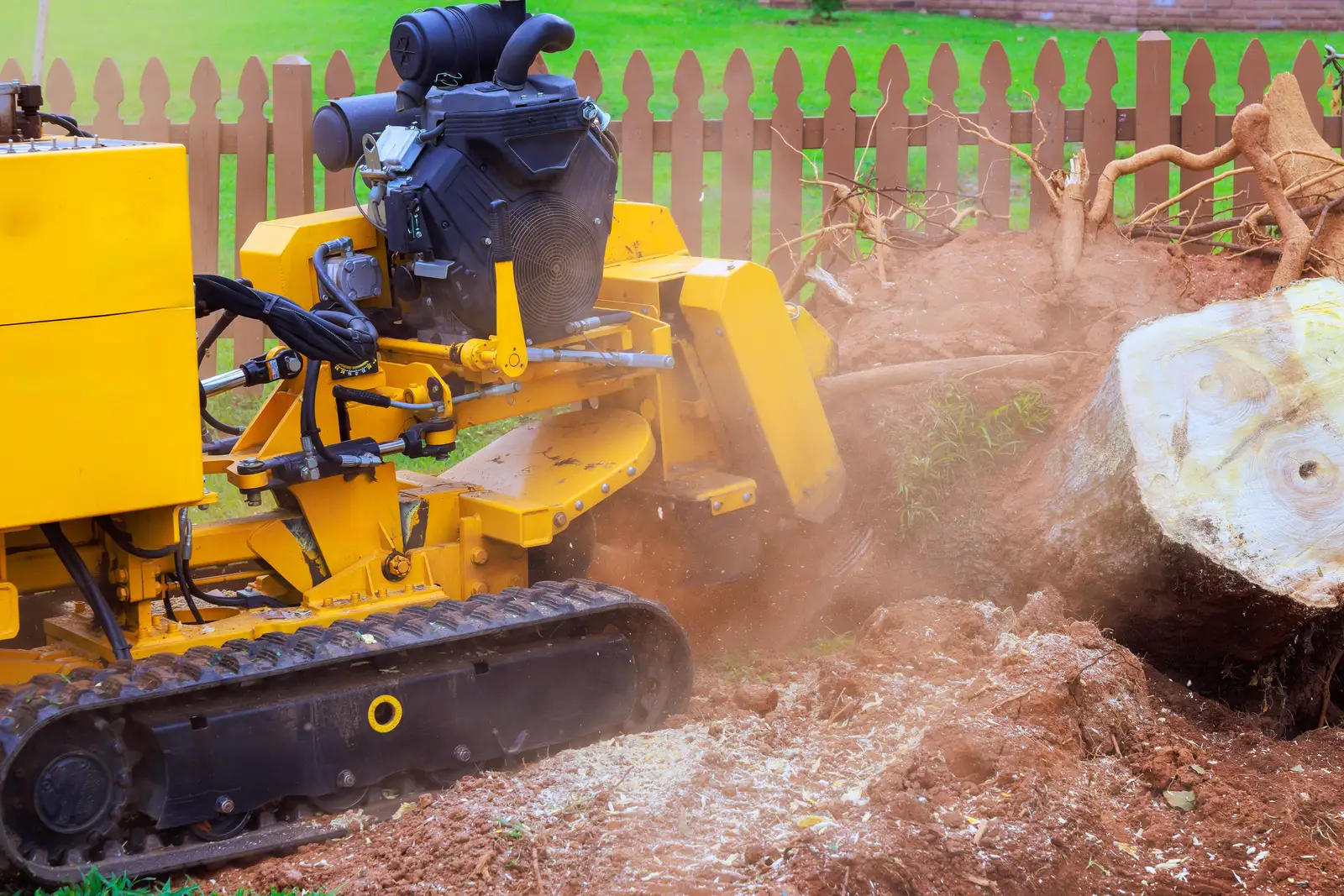
Connecticut tree service companies typically run pickup trucks, dump trucks, bucket trucks, chippers, and stump grinders. Every commercial vehicle — including chippers and trailers towed on Connecticut roads — must be scheduled on a commercial auto policy.
Common coverage gaps we see in Connecticut programs:
- Chippers listed as trailers but never added to the schedule — a $60,000–$90,000 chipper is uninsured if it’s not explicitly listed
- Hired and non-owned auto — required if employees ever drive personal vehicles or rented trucks for company business
- Bucket trucks — confirm your policy covers the vehicle while the aerial function is in use
- Multi-state operations — Connecticut operations crossing into Massachusetts, New York, or Rhode Island need policies that extend coverage outside Connecticut (the Fairfield County / Westchester corridor in particular generates substantial cross-state work)
- Snow load and nor’easter comprehensive coverage — confirm comprehensive limits adequate for severe winter storm exposure
Inland Marine / Equipment Floater
Connecticut crews typically carry $50,000–$200,000+ in portable equipment. An equipment floater covers your chainsaws, climbing gear, rigging, stump grinders, and other portable equipment on the job site, in transit, and in storage.
Confirm your floater covers nor’easter snow load, ice storm, and tropical-remnant damage without exclusion. The October 2011 nor’easter and Tropical Storm Irene each produced significant equipment exposure across Connecticut — crews working multi-day storm response should have clean inland marine coverage that responds to severe-weather operations.
Pesticide & Pollution Liability
The Connecticut Department of Energy and Environmental Protection (DEEP) Pesticide Management Program licenses commercial pesticide applicators in Connecticut. If your operation includes EAB injections, spongy moth treatments, herbicide applications, soil drenches, or any chemical application, a standard GL policy will not respond to resulting pollution claims. Contractor’s pollution liability (CPL) fills that gap.
Emerald Ash Borer and Spongy Moth in Connecticut
EAB has been confirmed across Connecticut since 2012 and is reshaping urban canopy management throughout the state. Spongy moth (Lymantria dispar dispar, formerly gypsy moth) outbreaks recur on a cyclical basis, particularly affecting oak across the state. Operations performing systemic insecticide injections, dormant oil applications, or Bt treatments should carry CPL — particularly when working under municipal, university, or Fairfield County estate contracts.
Umbrella / Excess Liability
An umbrella policy adds limits above your GL, commercial auto, and employer’s liability limits. For Connecticut tree service companies working on municipal right-of-way, university campuses, Fairfield County estate work, or utility line clearance for Eversource or UI, umbrella limits of $2M–$10M are frequently required.
A $1M umbrella typically costs a fraction of what your underlying GL costs — among the most efficient insurance purchases available. Fairfield County operations doing significant estate work typically carry $5M minimum.
Connecticut Is a Licensing State — Plan the Coverage Around That
Most of the country leaves arboriculture unlicensed at state level and lets municipalities fill the gap. Connecticut does not. Commercial tree work here runs through a state licensing regime administered by the Department of Energy and Environmental Protection, with examination and demonstrated experience behind it, and operating outside that regime is treated as a genuine offense rather than a paperwork lapse.
That changes the shape of an insurance program in ways worth planning for rather than discovering:
License status is a live condition, not a one-time hurdle. Carriers verify at binding and expect validity throughout the term. A lapse mid-term is a problem with the state and a problem with the carrier at the same moment, and the second one is frequently the more expensive.
Supervision structure becomes an underwriting question. Where the state expects licensed oversight of commercial work, underwriters reasonably ask who is providing it and whether that person is on site or nominally attached. Operations running multiple crews with one licensed individual should be able to describe how supervision actually functions in the field.
Licensure narrows the field, which cuts both ways. A regulated trade tends to produce better-run operations and gives carriers something concrete to underwrite. It also means an unlicensed competitor undercutting you on price is carrying a risk you are not, and their eventual claim is not your problem to price.
Connecticut’s storm exposure sits on top of all of this. Nor’easters and tropical remnants moving up the coast produce concentrated call-out demand across Fairfield County and the shoreline towns, and surge work brings unfamiliar properties, fatigued crews, and structurally compromised trees together in the same week.
Common Tree Service Risks in Connecticut
Connecticut’s geography, climate, and ecology create distinctive risk patterns:
The October 2011 Nor’easter and Storm Irene
The October 29–30, 2011 nor’easter dumped heavy wet snow on Connecticut trees that still held most of their leaves — producing one of the most damaging tree events in modern state history. Combined with Tropical Storm Irene two months earlier (August 2011) and Sandy the following year (October 2012), the 2011–2012 storm cycle reshaped Connecticut’s tree service market and Eversource’s vegetation management program. Severe-weather response is high-revenue but among the highest-risk tree work performed.
Nor’easters and Coastal Storms
Connecticut’s Long Island Sound coastline is exposed to nor’easter winds, storm surge, and the New England effects of Atlantic hurricanes. The shoreline towns from Greenwich through Stonington see recurring coastal-storm tree damage during October–March.
Emerald Ash Borer (EAB)
EAB has been confirmed in Connecticut since 2012 and is reshaping urban canopy management across the state. Treatment work with systemic injections and removal of declining ash represents an enormous and growing market.
Spongy Moth (Gypsy Moth)
Spongy moth outbreaks recur on a cyclical basis across Connecticut, particularly affecting oak through the central and eastern parts of the state. Defoliation events stress oak stands, and follow-on oak decline drives substantial removal work years later.
Aging Urban Canopy in Fairfield County
Greenwich, Westport, Darien, New Canaan, Wilton, Westport, and the surrounding Fairfield County towns have substantial mature tree populations near very-high-value homes. Tree work on Fairfield County estates raises property damage exposure significantly — and the operations doing this work routinely carry $5M+ liability limits as a matter of standard practice.
Asian Longhorned Beetle Watch
Asian longhorned beetle (ALB) infestations in Worcester, Massachusetts (2008) and earlier New York City detections have put Connecticut on watch. Operations doing maple, elm, willow, and birch work should follow Connecticut Agricultural Experiment Station guidance on ALB symptoms.
Utility Line Clearance Demand
Eversource (formerly Connecticut Light & Power) and United Illuminating run substantial vegetation management programs across Connecticut — Eversource serving most of the state and UI serving the New Haven and Bridgeport area. Both have ramped vegetation management investment significantly since the 2011 storm cycle. Operations doing line clearance need higher liability limits, ANSI Z133 compliance, Licensed Arborist supervision, and specialized underwriting.
Why Connecticut Tree Service Owners Choose TreeGuard
We understand Connecticut’s strict one-employee WC mandate and the elevated 0106 rate environment. Connecticut WC pricing is among the highest in the country for tree service — and the difference between a generic carrier quote and a specialty 0106 carrier quote can be 30%+ in premium. We know which carriers will write Connecticut tree service business at competitive rates.
We understand the Licensed Arborist program and the professional liability exposure for Connecticut Licensed Arborists. Most general-purpose commercial agents have no familiarity with the licensing requirement — we do, and we structure coverage accordingly.
We know Connecticut utility line clearance. Eversource and UI vegetation management contracts have specific underwriting requirements, including Licensed Arborist supervision and ANSI Z133 compliance, and we know which carriers will write them.
We understand Fairfield County estate work exposures. Working on Greenwich or Westport estates with seven- and eight-figure home values requires liability limit structure and contract terms that most insurance agents don’t think about. We do.
As an independent agency, we represent 16+ A-rated carriers and shop your operation across the entire market. You’re not stuck with one company’s underwriting appetite or pricing — we find the carrier that best fits your specific Connecticut operation.
Quote turnaround is fast. Most Connecticut tree service quotes come back within 1–2 hours during business hours.
Major Connecticut Markets We Serve
We write tree service insurance across all of Connecticut, with strong concentration in:
- Fairfield County: Greenwich, Stamford, Norwalk, Westport, Darien, New Canaan, Wilton, Ridgefield, Fairfield, Bridgeport, Trumbull, Easton, Weston, Redding.
- New Haven County: New Haven, Hamden, West Haven, Branford, Guilford, Madison, Cheshire, Wallingford, North Haven, Milford, Meriden.
- Hartford / Capital Region: Hartford, West Hartford, Glastonbury, Manchester, East Hartford, Farmington, Avon, Simsbury, Wethersfield, Newington, Bristol.
- Litchfield County / Northwest Corner: Litchfield, Torrington, Washington, Roxbury, Kent, New Milford.
- Eastern Connecticut: New London, Groton, Norwich, Mystic, Stonington, Old Lyme, Old Saybrook.
- Tolland / Windham: Storrs, Mansfield, Vernon, Willimantic.
- Waterbury / Naugatuck Valley: Waterbury, Naugatuck, Watertown, Southbury, Middlebury.
Whether you’re a single-truck operation in the Northwest Corner or a 50-employee crew working Eversource vegetation management and Fairfield County estate work, we can write your business in Connecticut.