
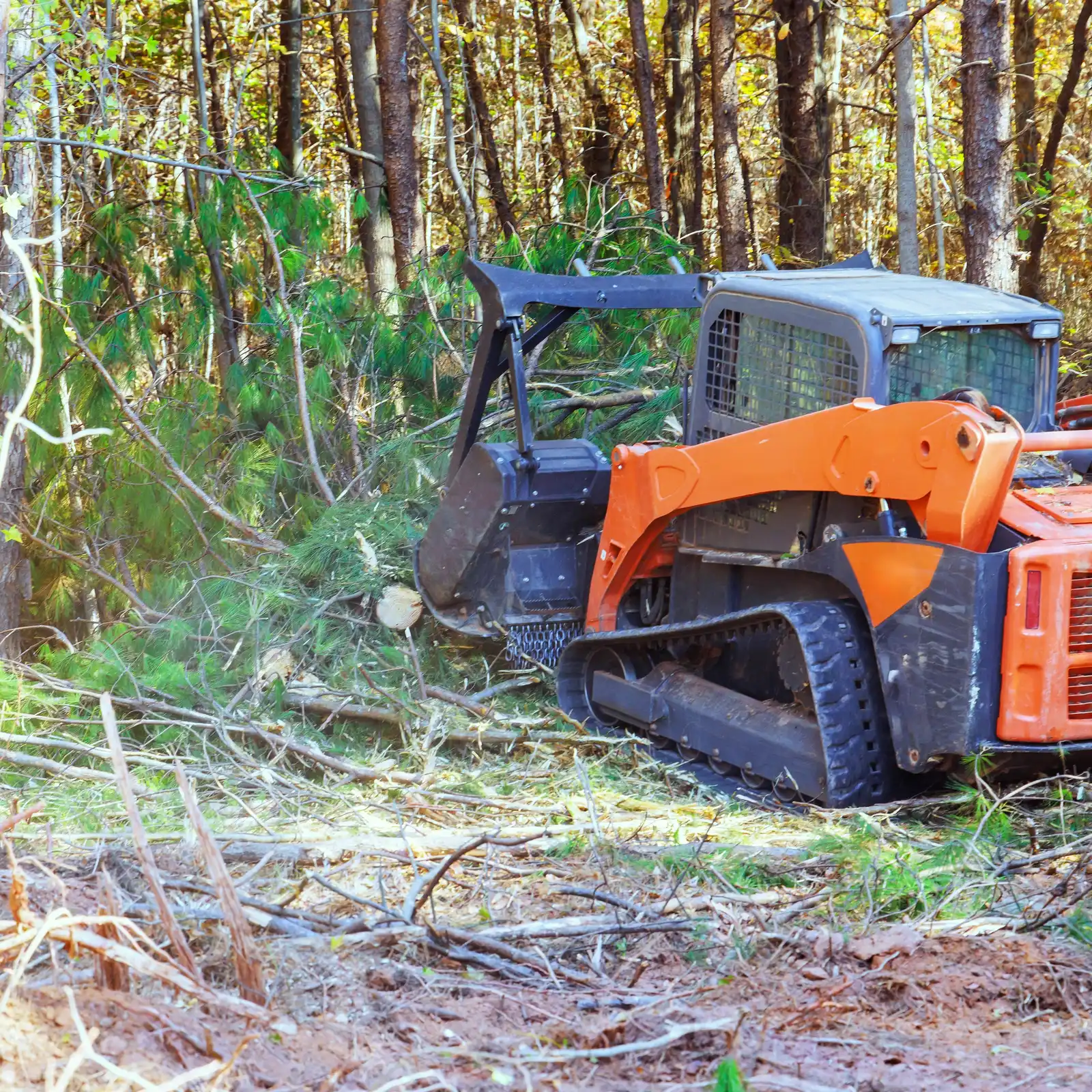
Alabama tree service contractors operate in one of the most weather-volatile tree care markets in the Southeast. Coastal hurricane exposure along Mobile Bay and the Gulf, EF-5 tornado risk across the central state, ice storm damage in the northern counties, and a year-round growing season for pines and hardwoods produce sustained tree work demand — and serious underwriting considerations. Major metros in Birmingham, Huntsville, Mobile, and Montgomery anchor the state’s commercial tree service market.
This page covers what Alabama tree service insurance typically includes, how Alabama’s workers’ compensation system works for tree care operations, what state agencies regulate the industry, and what carriers are actively writing Alabama tree service business. For a broader walkthrough of coverage, see our coverage overview, or jump to specific pages for general liability and workers’ compensation.
What Tree Service Insurance Costs in Alabama
Alabama tree service insurance pricing reflects the state’s combination of severe weather exposure, large utility line clearance market, and competitive NCCI workers’ comp market. Pricing varies meaningfully between Gulf Coast operations (Mobile, Baldwin County), tornado-prone central counties, and the more stable northern markets around Huntsville.
The ranges below reflect what most Alabama tree service contractors typically pay:
- General Liability Insurance: $850–$2,400 per year for typical Alabama small operations. Mobile and coastal operations typically pay slightly higher than Huntsville and Montgomery due to windstorm exposure and post-hurricane catastrophe claim history.
- Workers’ Compensation Insurance: $7–$13 per $100 of payroll for Alabama tree service operations under class code 0106. A crew with $200,000 of payroll typically pays $14,000–$26,000 annually. Alabama is a competitive NCCI state — experience modification and carrier selection drive substantial pricing variance.
- Commercial Auto Insurance: $1,900–$3,900 per truck per year for chip trucks, bucket trucks, and chipper-towing pickups. Pricing varies by metro, fleet age, driver MVR history, and whether vehicles operate near the coast.
- Inland Marine (Equipment) Insurance: $400–$1,500 per year depending on total equipment value. Coastal operations should verify windstorm coverage on equipment floaters.
- Pesticide & Pollution Liability: $400–$900 per year for Alabama tree services performing herbicide applications, pine bark beetle treatments, or other plant health care work.
- Umbrella / Excess Liability: $500–$1,300 per year for $1M of additional coverage above primary limits. Routinely required for Alabama Power, TVA, and municipal contracts in Birmingham, Mobile, and Huntsville.
Most tree service operations in Alabama save 20–30% by working with an independent agency that shops the entire carrier market versus accepting a single-carrier package quote.
Workers’ Compensation in Alabama
Alabama requires workers’ compensation coverage for most employers with five or more employees (full-time or part-time, regular or casual). Most tree service operations meet this threshold quickly — and even small crews under the five-employee threshold typically carry voluntary WC because municipal, commercial, and utility contracts almost universally require it.
Tree service operations in Alabama fall under NCCI class code 0106 — one of the highest-rated codes in the WC system. Alabama is a competitive NCCI state, meaning multiple private carriers underwrite the business and compete on price. The Alabama Department of Labor’s Workers’ Compensation Division administers the system and approves carrier filings.
Specialty WC carriers such as Amerisafe actively write Alabama tree service business. For most Alabama tree service operations with $150,000+ of payroll, working with a specialty WC market produces 20–40% premium savings versus generic commercial lines carriers.
Experience modification (your “ex-mod”) plays a significant role. A clean three-year claims history can lower your ex-mod below 1.00, while frequent small claims push it above. Tree service ex-mods above 1.25 substantially limit carrier appetite and pricing options — making safety, training, and proper claim management financially important.
General Liability
General liability (GL) is the foundation of every Alabama tree care insurance program. A properly structured GL policy covers bodily injury and property damage claims arising from your operations — the standard exposures being a struck homeowner, a damaged vehicle, fence or structure damage from a falling limb, or property damage from a removal gone wrong.
Alabama tree service GL policies are typically written with:
- Occurrence-based coverage (preferred over claims-made for most contractors)
- Completed operations coverage for claims that arise after a job is finished
- Contractors’ professional liability if you provide arborist consulting or written recommendations
- Hurricane and windstorm coverage for Gulf Coast operations
- Hired and non-owned auto endorsement where relevant
Municipal contracts in Birmingham, Mobile, Huntsville, Montgomery, and Tuscaloosa regularly require $1M–$2M per occurrence. The University of Alabama, Auburn University, UAB, and the major Birmingham-area private schools typically require $2M per occurrence. Alabama Power and TVA vegetation management contracts often require $5M–$10M umbrella above primary GL.
Commercial Auto
Alabama tree service companies typically run pickup trucks, dump trucks, bucket trucks, chippers, and stump grinders. Every commercial vehicle — including chippers and trailers towed on Alabama roads — must be scheduled on a commercial auto policy.
Common coverage gaps we see in Alabama programs:
- Chippers listed as trailers but never added to the schedule — a $60,000–$90,000 chipper is uninsured if it’s not explicitly listed
- Hired and non-owned auto — required if employees ever drive personal vehicles or rented trucks for company business
- Bucket trucks — confirm your policy covers the vehicle while the aerial function is in use
- Multi-state operations — Alabama operations crossing into Tennessee, Georgia, Florida, or Mississippi need policies that extend coverage outside Alabama
- Hurricane / comprehensive coverage — Gulf Coast Alabama operations need clear windstorm coverage on vehicles
Inland Marine / Equipment Floater
Alabama crews typically carry $50,000–$200,000+ in portable equipment. An equipment floater covers your chainsaws, climbing gear, rigging, stump grinders, and other portable equipment on the job site, in transit, and in storage.
For Gulf Coast Alabama operations, confirm your inland marine floater covers windstorm losses without exclusion or excessive named-storm deductibles. North Alabama operations should confirm the floater covers ice-storm and tornado-related damage during the December–April severe weather season.
Pesticide & Pollution Liability
The Alabama Department of Agriculture and Industries licenses commercial pesticide applicators in Alabama. If your operation includes pine bark beetle treatments, herbicide applications, soil injections, or any chemical application, a standard GL policy will not respond to resulting pollution claims. Contractor’s pollution liability (CPL) fills that gap.
The Alabama Cooperative Extension System publishes guidance on southern pine beetle, ips beetle, hypoxylon canker, and other pest pressures driving treatment work across the state. Operations performing systemic injections or soil drenches in oak, magnolia, or pine should carry CPL — especially when working on commercial campuses or municipal trees where contract requirements explicitly call it out.
Umbrella / Excess Liability
An umbrella policy adds limits above your GL, commercial auto, and employer’s liability limits. For Alabama tree service companies working on municipal right-of-way, university campuses, or utility line clearance for Alabama Power or TVA, umbrella limits of $2M–$10M are frequently required.
A $1M umbrella typically costs a fraction of what your underlying GL costs — among the most efficient insurance purchases available. Crews working on the major Alabama Power and TVA vegetation management contracts should plan for $5M minimum.
Common Tree Service Risks in Alabama
Alabama’s geography and climate create distinctive risk patterns:
Gulf Coast Hurricane Exposure
Mobile, Baldwin County, and the Eastern Shore sit in major hurricane corridors. Hurricane Sally (2020), Hurricane Ivan (2004), and earlier storms have repeatedly generated massive post-hurricane debris removal and tree work. Storm response is high-revenue but among the highest-risk tree work performed — and Mobile-area operations need clear windstorm coverage on vehicles and equipment.
Tornado Alley
Central Alabama sits in “Dixie Alley,” with frequent EF-3 to EF-5 tornado events. The April 2011 super outbreak (notably the Tuscaloosa-Birmingham tornado) and more recent events create dangerous post-storm conditions for tree service operations responding to widespread damage. Storm chasing into devastated zones requires careful contract documentation and elevated liability limits.
Ice Storms in North Alabama
The northern counties — Huntsville, Decatur, Florence, and the Tennessee Valley — periodically see significant ice storms. The 2014 and 2021 events generated extensive limb breakage and downed trees. Ice-loaded trees are dangerous to work on, and crews working ice-storm cleanup should confirm their GL and workers’ comp respond to severe-weather operations.
Southern Pine Beetle and Pine Bark Beetle
Alabama’s loblolly, longleaf, and slash pine stands face recurring pressure from southern pine beetle (SPB) and ips beetle. Treatment work and dead pine removal represent a substantial market, particularly across timber-rich North and Central Alabama counties. Removal of beetle-killed pine is dangerous because of structural compromise — these trees fail unpredictably.
Utility Line Clearance Demand
Alabama Power (most of the state south of the Tennessee Valley) and TVA (north Alabama service area) both run substantial vegetation management programs. Operations doing line clearance need higher liability limits, ANSI Z133 compliance, and specialized underwriting.
Aging Urban Canopy
Birmingham’s Mountain Brook, Vestavia Hills, and Homewood neighborhoods, Mobile’s Spring Hill and Old Dauphin Way historic districts, Montgomery’s Cloverdale and Old Cloverdale, and Huntsville’s Five Points area have substantial mature tree populations near high-value homes. Tree work in these neighborhoods raises property damage exposure significantly.
Why Alabama Tree Service Owners Choose TreeGuard
We understand Alabama’s workers’ comp market. The difference between a generic carrier quote at $11/$100 and a specialty 0106 carrier quote at $8/$100 is the difference between marginal and healthy profitability — and we know which carriers will write Alabama tree service business at competitive rates.
We know Alabama utility line clearance. Alabama Power and TVA vegetation management contracts have specific underwriting requirements, and we know which carriers will write them with the required limits and endorsements.
As an independent agency, we represent 16+ A-rated carriers and shop your operation across the entire market. You’re not stuck with one company’s underwriting appetite or pricing — we find the carrier that best fits your specific Alabama operation.
We specialize in tree care. We don’t write the occasional tree service policy as a side line — this niche is our focus. We understand class code 0106, ANSI Z133 documentation, crane operations, climber exposure, and the specific endorsements tree contractors need.
Quote turnaround is fast. Most Alabama tree service quotes come back within 1–2 hours during business hours, and we can usually have full proposals ready within one business day.
Major Alabama Markets We Serve
We write tree service insurance across all of Alabama, with strong concentration in:
- Birmingham Metro: Birmingham, Hoover, Vestavia Hills, Mountain Brook, Homewood, Bessemer, Trussville, Pelham, Alabaster, Helena, Gardendale.
- Huntsville / Tennessee Valley: Huntsville, Madison, Athens, Decatur, Florence, Muscle Shoals, Tuscumbia, Hartselle.
- Mobile / Gulf Coast: Mobile, Saraland, Daphne, Fairhope, Spanish Fort, Foley, Gulf Shores, Orange Beach, Bay Minette.
- Montgomery / River Region: Montgomery, Prattville, Wetumpka, Millbrook, Pike Road.
- Tuscaloosa / West Alabama: Tuscaloosa, Northport, Demopolis.
- Auburn-Opelika: Auburn, Opelika, Phenix City.
- Wiregrass / Southeast: Dothan, Enterprise, Ozark, Eufaula.
- Anniston / Gadsden: Anniston, Oxford, Gadsden.
Whether you’re a single-truck operation in the Wiregrass or a 30-employee crew working Alabama Power’s transmission line clearance in Central Alabama, we can write your business in Alabama.