
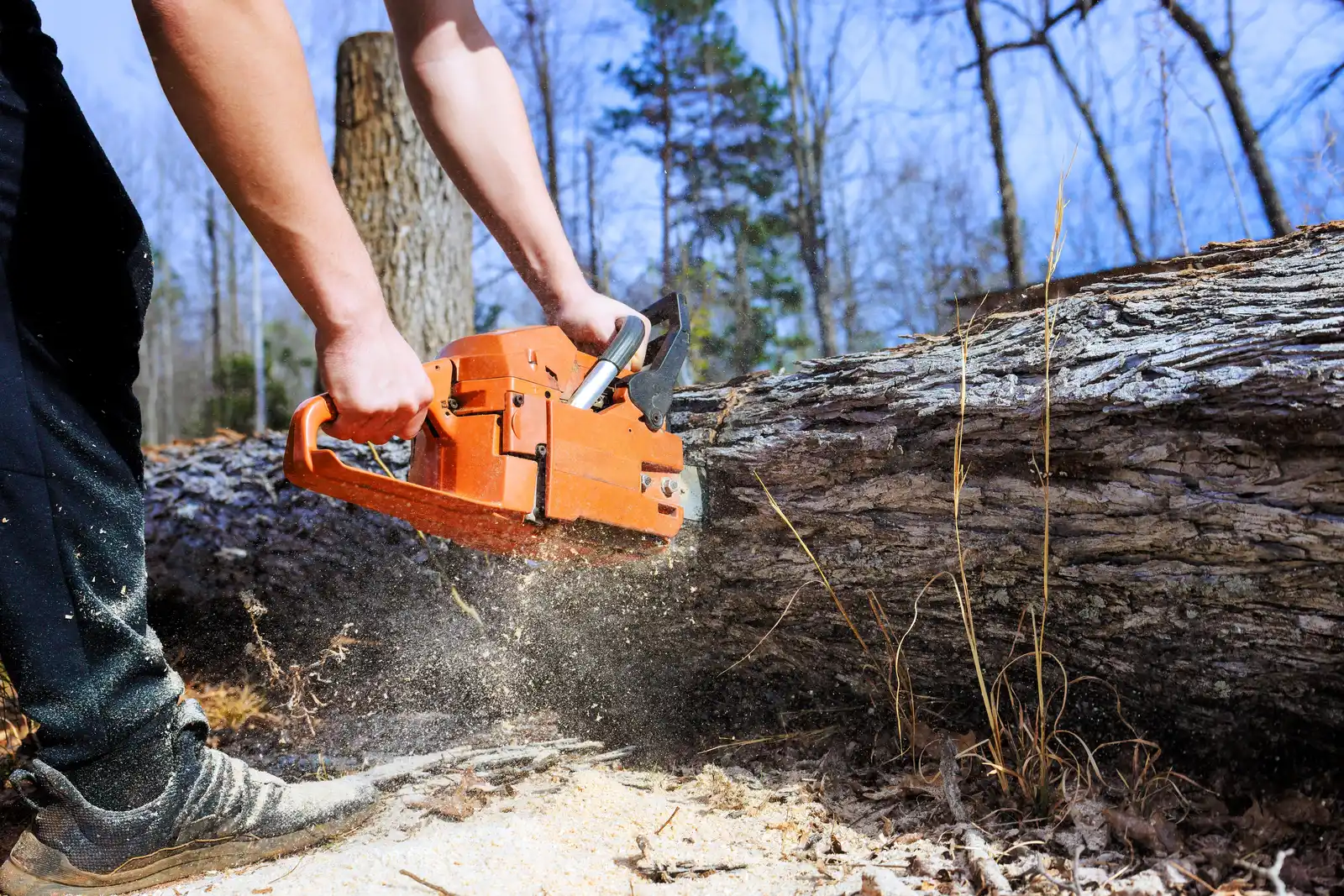
Massachusetts tree service contractors operate in one of the most institutionally demanding tree care markets in the country. Mature canopy across Boston, Cambridge, and the Greater Boston suburbs frequently includes 80-200 year-old trees on properties with $1M-$10M+ valuations. The Massachusetts Certified Arborist (MCA) credential is the de facto standard for premium residential and institutional work. And Massachusetts General Law Chapter 87 — one of the oldest tree protection laws in the United States — establishes the Tree Warden system that governs all public shade tree work. Tree service contractors who understand MCA credentialing, Chapter 87 compliance, and institutional contract requirements can capture some of the most lucrative tree service revenue in the country.
This page covers what Massachusetts tree service insurance typically includes, how MCA credentialing and MGL Chapter 87 shape coverage decisions, how Massachusetts workers’ comp environment works for tree care operations, and what carriers are actively writing Massachusetts tree service business.
What Tree Service Insurance Costs in Massachusetts
Massachusetts tree service insurance pricing reflects three state-specific realities: the premium institutional market (Harvard, MIT, BU, BC, Tufts, Wellesley) requiring high coverage limits, mature high-value canopy with substantial property exposure, and elevated WC rates under class code 0106. The ranges below reflect what most Massachusetts tree service contractors typically pay:
- General Liability Insurance: $1,200–$3,400 per year for typical Massachusetts small operations. Greater Boston operations sometimes pay toward the higher end given premium institutional and residential exposure.
- Workers’ Compensation Insurance: $9–$18 per $100 of payroll for Massachusetts tree service operations under class code 0106. A crew with $200,000 of payroll typically pays $18,000–$36,000 annually. Massachusetts rates are among the higher-cost states in the nation.
- Commercial Auto Insurance: $2,000–$5,200 per truck per year for chip trucks, bucket trucks, and chipper-towing pickups in Massachusetts. Boston metro pricing reflects high traffic density and severity.
- Inland Marine (Equipment) Insurance: $500–$1,800 per year depending on total equipment value. Boston metro operations should pay particular attention to overnight storage, theft prevention, and high replacement costs.
- Pesticide & Pollution Liability: $500–$1,200 per year for Massachusetts tree services performing plant health care work. MDAR documentation standards make this coverage particularly important.
- Umbrella / Excess Liability: $800–$2,000 per year for $1M of additional coverage above primary limits. Frequently required for university contracts, hospital systems, MassDOT, and major municipal vegetation management.
Massachusetts’s combination of state-specific factors means tree service contractors who shop their coverage with an agent who actually understands MCA credentialing and the institutional market dynamics can often save 15–30% versus generic policies.
Workers’ Compensation in Massachusetts
Massachusetts operates a state-directed workers’ compensation environment. The Massachusetts Department of Industrial Accidents (DIA) administers claims, oversees the system, and enforces compliance strictly. The Workers’ Compensation Rating and Inspection Bureau of Massachusetts (WCRIBMA) manages classification and rating.
Class Code 0106 in Massachusetts
Tree trimming and removal operations in Massachusetts fall under NCCI class code 0106. Massachusetts rates under 0106 are among the higher-cost states in the nation due to industry claims experience. The same misclassification issue we see across the country applies — operations placed under class code 0042 (landscape gardening) face back-premium audits when actual operations are discovered.
Massachusetts-Specific Coverage Considerations
- Coverage required for virtually all employees — Massachusetts requires WC coverage for any operation with employees, including part-time and seasonal workers
- Strict DIA enforcement — penalties for noncompliance can be substantial and DIA actively investigates the construction trades, including tree care
- Subcontractor liability — uninsured subcontractors typically count as employees for premium calculation purposes
- Massachusetts Assigned Risk Pool — operations unable to qualify for voluntary coverage may face significantly higher rates in the assigned risk pool
Specialty carriers focused on hazardous trades actively write Massachusetts tree service business and often provide the best voluntary-market pricing for safety-conscious operations with proper MCA credentialing.
MCA Credentialing and MGL Chapter 87
This is the section every Massachusetts tree service owner needs to understand carefully — Massachusetts has the most institutionally formalized tree care framework in the country, anchored by MCA credentialing and the Tree Warden system.
The Massachusetts Certified Arborist (MCA) Credential
The Massachusetts Arborists Association administers the Massachusetts Certified Arborist credential. Established to address the specific needs of New England tree care, the MCA is widely recognized as the industry standard and is frequently required by municipal contracts, university campuses, hospital systems, and premium residential clients. To earn MCA, candidates must complete the required experience, pass a comprehensive examination, and maintain continuing education.
Many Massachusetts tree service operations also hold ISA Certified Arborist credentialing. While ISA is the international standard, MCA is the regional standard that municipal procurement officers and institutional facilities managers most often look for in Massachusetts contracts.
MGL Chapter 87: The Tree Warden System
Massachusetts General Law Chapter 87 governs work on public shade trees — trees in public ways (roads, sidewalks, parkland) under municipal authority. Established in 1899, it’s one of the oldest tree protection frameworks in the United States.
Each Massachusetts municipality designates a Tree Warden with authority over public shade tree decisions: which trees can be removed, what work requires public hearings, what permits are necessary. Tree service contractors performing public shade tree work must coordinate directly with the local Tree Warden.
What This Means for Tree Service Operations
- Massachusetts tree service insurance is structurally tied to the institutional market — coverage gaps directly affect ability to bid premium work
- Operations crossing state lines into New York, Connecticut, or Rhode Island need policies that handle the transition correctly
- Choice of MCA-credentialed staff affects underwriting profile and insurability
- Working with an agent who understands the MA institutional market matters more here than in other states
Common Coverage Gaps in Massachusetts Programs
- Chippers listed as trailers but never added to the schedule — a $60,000–$90,000 chipper is uninsured if it’s not explicitly listed
- Hired and non-owned auto — required if employees ever drive personal vehicles or rented trucks for company business
- Bucket trucks — confirm your policy covers the vehicle while the aerial function is in use, not just driving
- Institutional contract documentation — many policies don’t include the specific certificate language required for Harvard, MIT, BU, BC, Tufts, and similar accounts
General Liability
General liability (GL) is the foundation of every Massachusetts tree care insurance program. A properly structured GL policy covers bodily injury and property damage claims arising from your operations.
Massachusetts tree service GL policies are typically written with occurrence-based coverage (preferred over claims-made for most contractors), completed operations coverage for claims that arise after a job is finished, and contractors’ professional liability if you provide MCA-level arborist consulting or recommendations.
Municipal contracts in Boston, Cambridge, Worcester, Springfield, and Newton regularly require $1M–$2M per occurrence. Harvard, MIT, BU, BC, Tufts, and Wellesley contracts typically require $2M–$5M per occurrence with strict documentation requirements. MassDOT and major hospital system contracts often require $5M–$10M umbrella above primary GL.
Inland Marine / Equipment Floater
Massachusetts crews typically carry $50,000–$250,000+ in portable equipment. Theft from job sites and unattended trailers is meaningful in Boston, Cambridge, and other urban concentrations. An equipment floater covers your chainsaws, climbing gear, rigging, stump grinders, and other portable equipment on the job site, in transit, and in storage.
Replacement cost coverage is strongly recommended over actual cash value — particularly given Massachusetts’s high replacement costs and supply chain dynamics for specialized New England tree care equipment.
Pesticide & Pollution Liability
The Massachusetts Department of Agricultural Resources (MDAR) Pesticide Program administers commercial pesticide applicator certification in Massachusetts. Tree services performing plant health care work — including hemlock woolly adelgid treatment, emerald ash borer treatment, deep root feeding, and disease management — need pesticide and pollution liability that meets MDAR documentation standards.
Standard GL policies will not respond to pollution claims arising from chemical applications. Contractor’s pollution liability (CPL) fills that gap and is increasingly required by commercial accounts, hospital systems, and major property managers — particularly given Massachusetts’s strict environmental enforcement and the proximity of watershed protection areas.
Umbrella / Excess Liability
An umbrella policy adds limits above your GL, commercial auto, and employer’s liability limits. For Massachusetts tree service companies working on Harvard, MIT, BU, BC, Tufts, Wellesley, hospital systems, or major MassDOT contracts, umbrella limits of $5M–$10M are frequently required.
A $1M umbrella typically costs a fraction of what your underlying GL costs — among the most efficient insurance purchases available, particularly given the high property values and institutional liability standards across Massachusetts.
”Arborist Insurance” in a State That Credentials Arborists
Massachusetts has an unusually developed professional culture around arboriculture, and that creates a specific confusion: operators assume the credential and the insurance are connected. They are not. Holding a recognized arborist credential does not create coverage, does not change which policy you buy, and does not by itself satisfy a customer’s contractual insurance requirement.
What the credential does affect is how an underwriter reads the account. Carriers writing this trade have very little to go on beyond loss runs and narrative, and a documented professional standard is one of the few pieces of narrative evidence available. It matters most exactly when the loss data is thin — a newer operation, or one recovering from a bad year.
Three practical consequences for Massachusetts operations:
- Buy on the work, not the title. An operation that markets plant health care and diagnostics but also takes down storm-damaged oaks is rated on the takedowns. The credential does not soften that.
- Keep the credential current and say so on the submission. Lapsed credentials listed as active are the kind of small inaccuracy that damages an underwriter’s trust in everything else on the application.
- Municipal and institutional work has its own paperwork. Public shade tree work, campus contracts, and town work in Massachusetts routinely specify limits and additional-insured status well above what a residential operation carries by default. Read the contract’s insurance exhibit before bidding, not after winning.
For operations working the dense eastern corridor, expect the same access questions that apply to any old, tightly built New England housing stock: narrow lots, mature canopy overhanging structures, and rigging as the norm rather than the exception.
Common Tree Service Risks in Massachusetts
Massachusetts’s geography, institutional environment, and market dynamics create distinctive risk patterns:
Mature Institutional Canopy
Boston Common, the Public Garden, Harvard Yard, MIT campus, Boston Public Garden, and similar institutional landscapes feature 80-200+ year-old heritage trees. Tree work near these specimens raises liability exposure dramatically — historical and ecological significance often exceeds simple replacement value.
High Property Values
Single property damage claims in Brookline, Wellesley, Lexington, Concord, Cambridge, or Beacon Hill routinely exceed $500,000. North Shore and Cape Cod premium markets feature $1M-$10M+ property values. Robust general liability coverage is essential.
Storm-Driven Recurring Demand
Nor’easters, hurricane remnants reaching New England, and ice storms create predictable surge demand. Operations positioned for storm response capture significant emergency revenue but face elevated risk during active weather. The 1991 “Perfect Storm” and Hurricane Bob (1991) remain reference points for Massachusetts storm exposure.
MGL Chapter 87 Compliance Risk
Improperly performed work on public shade trees creates both liability exposure and regulatory enforcement risk. Tree Warden coordination, public hearing requirements, and documentation standards must be observed.
Premium Institutional Market
Boston-area universities, hospital systems, and major institutional clients create some of the highest-margin tree service revenue opportunities in the country — for properly insured and credentialed operations. Procurement standards are demanding and certificate documentation is rigorous.
New England Forest Pest Pressure
Hemlock woolly adelgid, emerald ash borer, gypsy moth, and other forest pests create significant plant health care work across Massachusetts. Pesticide and treatment work creates specific environmental exposure and underwriting considerations.
Why Massachusetts Tree Service Owners Choose TreeGuard
We understand MCA credentialing and the institutional market. Most insurance agents treat Massachusetts contractor coverage like any other state — they shouldn’t. We help Massachusetts tree service operations understand how MCA credentialing affects underwriting and how to structure coverage that meets institutional contract requirements.
We know the MGL Chapter 87 environment. Public shade tree work creates specific liability exposure that most insurance agents don’t appreciate. We help operations structure coverage that addresses the unique Tree Warden coordination and Chapter 87 compliance landscape.
As an independent agency, we represent 16+ A-rated carriers and shop your operation across the entire market. You’re not stuck with one company’s underwriting appetite or pricing — we find the carrier that best fits your specific Massachusetts operation.
We specialize in tree care. We don’t write the occasional tree service policy as a side line — this niche is our focus.
Quote turnaround is fast. Most Massachusetts tree service quotes come back within 1–2 hours during business hours.
Major Massachusetts Markets We Serve
We write tree service insurance across all of Massachusetts, with strong concentration in:
- Greater Boston: Boston, Cambridge, Brookline, Newton, Somerville — high-density urban tree work, strict commercial requirements, institutional market.
- MetroWest: Wellesley, Weston, Lincoln, Concord, Lexington — premium residential markets, mature heritage canopy.
- North Shore: Salem, Marblehead, Beverly, Gloucester — coastal exposure, premium estates, hurricane corridor.
- South Shore: Quincy, Hingham, Cohasset, Plymouth — coastal premium residential, growing commercial market.
- Cape Cod and Islands: Hyannis, Falmouth, Chatham, Nantucket, Martha’s Vineyard — vacation property market, coastal exposure.
- Worcester County: Worcester, Westborough, Shrewsbury — central Massachusetts hub, growing institutional market.
- Pioneer Valley: Springfield, Northampton, Amherst — Five College institutional market, mixed residential.
- The Berkshires: Pittsfield, Lenox, Stockbridge — premium estate market, cultural institution properties.
Whether you’re a single-truck MCA-credentialed operation in Worcester County or a 30-employee crew working across the Greater Boston institutional market, we can write your business in Massachusetts.