
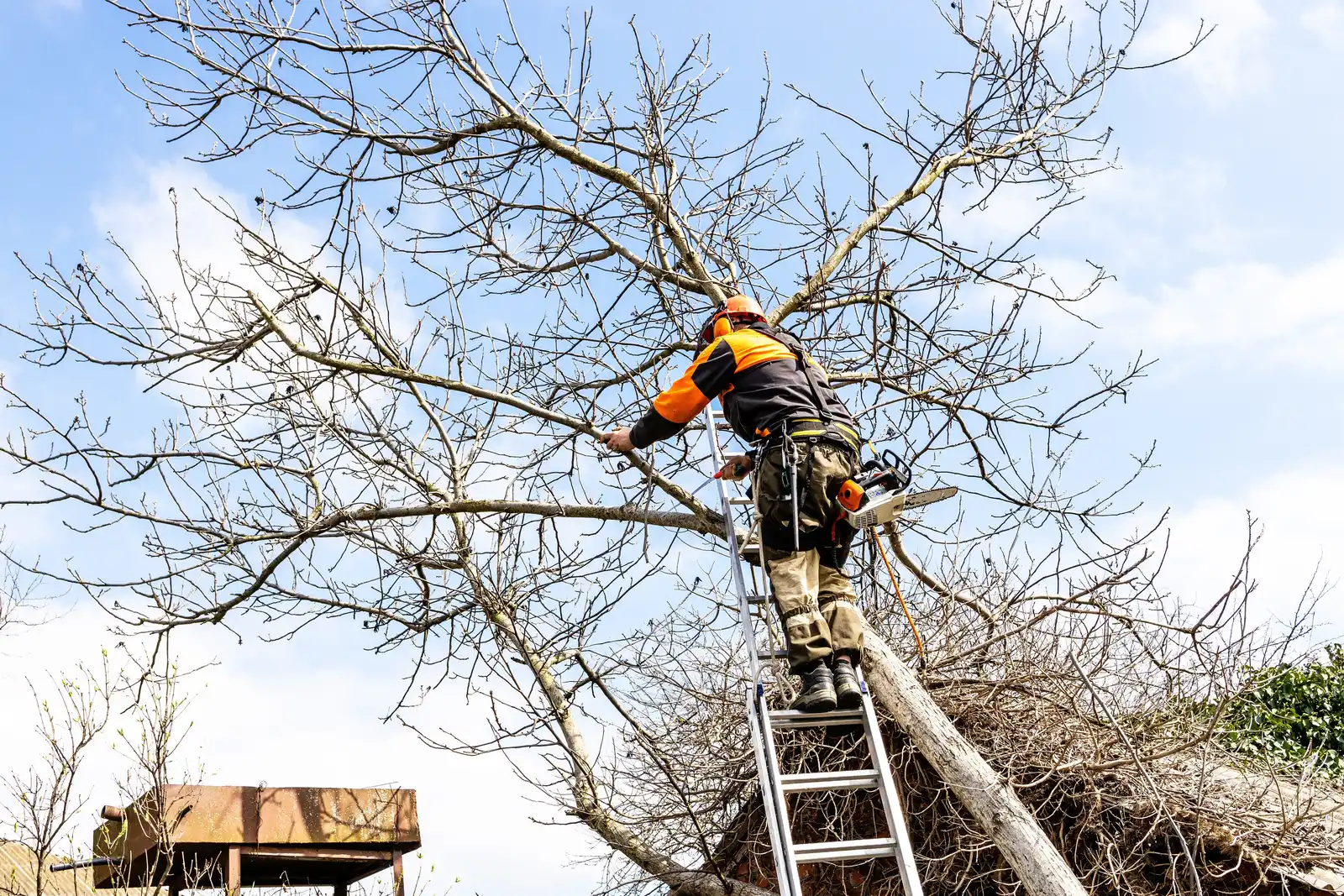
Tree removal is the highest-risk service in the tree care trade — and the work most likely to generate a claim. According to the Bureau of Labor Statistics, tree workers face a fatality rate of approximately 110 per 100,000, roughly 30 times the national average across all occupations. The Tree Care Industry Association tracked 243 tree care fatalities over four calendar years (2020–2023), averaging about 61 deaths per year, with contact with objects/equipment and falls accounting for roughly 70% of those deaths.
For tree service contractors who perform removals, this risk profile means insurance carriers price coverage accordingly. A landscaping policy that covers “tree work” by mentioning the words is not enough — and that’s the gap that catches contractors at claim time.
This page covers what tree removal insurance includes, what it costs, what coverage gaps to watch for, and what carriers actively write removal-focused operations.
What Tree Removal Insurance Costs
Tree removal contractors typically need a coverage program built from 5–6 distinct policies. Each policy addresses a different exposure, and a gap in any one of them can leave a contractor exposed.
Typical annual costs for tree removal contractors:
- General Liability Insurance: $1,500–$4,500 per year for $1M per occurrence / $2M aggregate. Larger removal operations doing crane work or commercial contracts often need $2M–$5M per occurrence ($3,500–$8,000+).
- Workers’ Compensation Insurance: $7–$15 per $100 of payroll under NCCI class code 0106. A typical 4-person crew with $200,000 of payroll pays $14,000–$30,000 annually. Workers’ comp is the single largest line item for most removal operations because of the extreme injury risk profile.
- Commercial Auto Insurance: $1,900–$3,800 per truck per year. Bucket trucks insure higher than chip trucks because of the hydraulic boom value and rollover risk.
- Inland Marine (Equipment) Insurance: $400–$1,500 per year for typical equipment fleets. Operations running cranes, large stump grinders, or multiple bucket trucks can pay $2,000+.
- Pesticide & Pollution Liability: $400–$900 per year if the operation includes plant health care work, herbicide treatments, or hydraulic fluid spill exposure.
- Umbrella / Excess Liability: $500–$2,500 per year for $1M of additional coverage. Removal operations chasing commercial contracts almost always need $2M–$10M umbrella.
For most small-to-mid removal operations, total program cost runs $20,000–$45,000 annually. For larger operations with multiple crews, line clearance work, or crane operations, total program cost runs $50,000–$200,000+.
Class Code 0106: The Foundation of Tree Removal Underwriting
Workers’ compensation class code 0106 (Tree Pruning, Spraying, Repairing — All Operations & Drivers) is the classification that drives the largest single line item in most removal operations’ insurance budgets. Understanding how it works directly affects what you pay.
What class code 0106 covers:
The classification applies to contractors who use tools and equipment to prune, spray, trim, fumigate, or repair trees, including incidental tree removal, chipping, cleanup, and the hauling of limbs and debris. Work performed at ground level, on ladders, or in bucket trucks all falls under 0106 if any worker on the job goes off the ground.
What’s NOT classified under 0106:
- Pure ground-level lawn care and shrub pruning (typically class code 0042 or 9102)
- Logging or timber harvesting on standing forests (class code 2702 — different higher rate)
- Stump removal as the exclusive operation (sometimes 0106, sometimes treated separately)
The Split-Payroll Opportunity (and Trap)
Some carriers will allow ground-only crew payroll to be split into class code 0042 (Landscape Gardening) when no work happens above ground level on those specific jobs. The rate difference can be substantial — sometimes 40–60% cheaper for 0042 versus 0106. However, the rule is strict: if any crew member goes above ground level on a job, the entire crew’s payroll for that job typically stays in 0106. Misclassifying climbers as ground crew to save premium is insurance fraud — it leads to claim denial, policy cancellation, and audit deficiency assessments.
We classify tree removal operations correctly the first time, and we work with carriers that allow proper split-payroll classification when warranted.
General Liability for Tree Removal: What Coverage Gaps Catch Contractors
General liability is the foundation of every tree removal program — but tree removal contractors face specific GL coverage gaps that catch operations at claim time:
1. The “Landscaping Policy” Trap
A general landscaping or BOP policy may use words like “tree work” but exclude actual removal operations. Read the form carefully. Look for explicit coverage for: tree felling, aerial work, climbing operations, rigging, and equipment-assisted removal. If those operations aren’t named, your removal claim could be denied.
2. Completed Operations
A tree you removed three months ago could still cause a claim. The most common scenario: stump or root system that becomes a trip hazard, or a tree section that wasn’t fully removed and falls later. Make sure your GL policy includes products and completed operations coverage with appropriate aggregate limits.
3. Professional Liability for Tree Assessments
If your operation provides written tree health assessments, removal recommendations, or arborist consulting, standard GL doesn’t cover claims arising from that professional advice. Common scenarios: you recommend keeping a tree that later fails and damages property, or you recommend removing a tree the homeowner says was healthy and the homeowner’s appraisal disagrees. Errors & Omissions (Professional Liability) coverage handles these claims.
4. Watercraft, Aircraft, and Crane Exclusions
Many off-the-shelf policies exclude crane operations entirely. If you do crane-assisted removals, your policy must specifically endorse crane work or you’re uninsured for the highest-value piece of your operation.
5. Contractor-Specific Limits
Municipal contracts in major metros routinely require $1M–$2M per occurrence. Universities and hospital systems require $2M+. Utility line clearance contracts require $5M–$10M umbrella. Federal facility work requires specific certificate language including additional insured status, primary/non-contributory wording, and waivers of subrogation. Verify your limits and certificate-of-insurance language matches what your contracts demand.
Common Tree Removal Claims We See
Tree removal claims tend to cluster in predictable categories. Understanding them helps operations protect against the patterns that drive carrier underwriting decisions.
Falling Section Hits a Structure
The single most common removal claim. A tree section is dropped or rigged improperly and impacts a roof, vehicle, fence, or other structure. Typical claim severity: $5,000–$80,000. Driving factors: improper rigging, inadequate work zone setup, miscommunication between climber and ground crew. Carriers reward operations with documented ANSI Z133 compliance and ISA certifications because these correlate with lower claim frequency.
Bystander or Property Owner Injury
A property owner stays in the work zone despite being asked to leave. A bystander walks through the drop zone. A neighbor is hit by debris that traveled outside the property line. These claims can be catastrophic — some involve severe injury or death. This is why $1M GL is the baseline minimum and umbrella coverage is essentially mandatory.
Equipment-Caused Property Damage
A bucket truck outrigger sinks into wet soil and damages a driveway. A crane outrigger crushes underground utilities. A wood chipper accidentally feeds debris into a window. A skid steer damages turf or hardscape. These claims average $3,000–$25,000 and are extremely common.
Power Line Contact
A tree section or climbing line contacts an energized utility line. This can cause power outages affecting hundreds of properties, fires, electrocution, or all three. Even brief contact with energized lines can generate claims exceeding $100,000 — and operations doing utility-adjacent work without specific endorsement may find their claim denied entirely.
Worker Falls and Struck-By Incidents
These are workers’ comp claims rather than GL, but they drive up the experience modification rate (EMR) which directly affects premium for years. A single serious worker injury can increase premium 30–60% for the following three years.
Completed-Operations Claims
A tree section was felled into a yard and a piece was missed. A homeowner trips on a partially-buried root weeks later. A previously-removed tree’s root system causes foundation damage as it decomposes. These claims arrive months after the job is closed — which is why explicit completed-operations coverage matters.
Why Tree Removal Operations Choose TreeGuard
We understand class code 0106. Most general agents working with tree service operations don’t fully understand the class code, when split-payroll applies, or how to properly position an operation with carriers. We do — because tree care is our specialty.
We have access to specialty markets. Many standard carriers won’t write tree removal at all. We have direct relationships with carriers like Amerisafe and West Bend that specifically write tree care operations. We also have access to the Excess & Surplus (E&S) market for operations that standard carriers decline.
We know what contracts require. Federal facility certificates require specific language. Utility line clearance contracts require specific limits. Municipal contracts require specific endorsements. We help our clients structure programs that pass these requirements without paying for unnecessary coverage.
We specialize in tree care. We don’t write the occasional tree service policy as a side line — this niche is our focus. We write removal operations from solo operators to crews running multiple bucket trucks and cranes.
Quote turnaround is fast. Most tree removal quotes come back within 1–2 hours during business hours.