
It’s one of the most common conversations I have with tree service owners who’ve been in business for a few years: they started out doing light landscaping work, picked up a policy along the way, and gradually grew into doing tree removal, aerial work, and large-scale pruning — but never updated their coverage.
The problem isn’t that they don’t have insurance. The problem is that their insurance was never built to cover what they actually do.
Landscaping policies and tree service policies are not the same thing. The difference matters enormously when a claim happens — and finding out your policy doesn’t apply is a lesson that usually arrives at the worst possible moment.
Why Insurers Treat Landscaping and Tree Service Differently
From an underwriting perspective, landscaping and tree service are fundamentally different risk profiles.
Landscaping involves ground-level work: mowing, planting, mulching, irrigation, light shrub trimming. The equipment is relatively low-powered. The injury risk is real but manageable. A customer tripping over a sprinkler head is a very different claim than a crew member falling 40 feet from a tree.
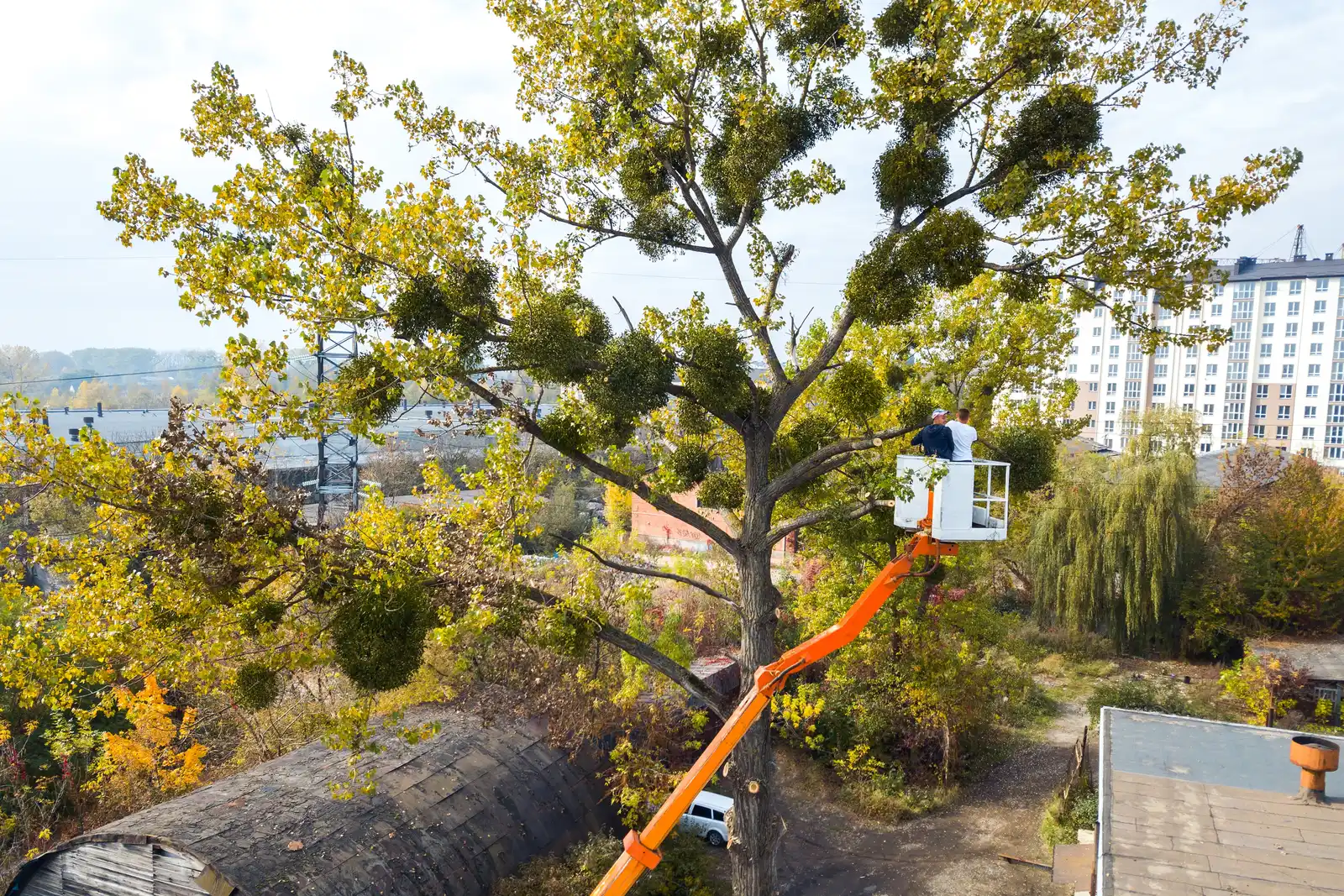
Tree service involves aerial work, chainsaws, heavy rigging, large equipment, and the physics of falling timber. The liability exposure — to third parties, to the employee, to neighboring property — is dramatically higher. The Tree Care Industry Association documents a serious injury rate in tree care that far exceeds most trades, and the general liability claims reflect that reality.
Carriers know this. When they write a landscaping policy, they price it for landscaping risk — and they typically write exclusions to make sure they’re not accidentally covering tree service risk they didn’t price for.
Common Exclusions in Landscaping Policies
If you’ve got a general liability policy that classifies your business as a landscaper, look carefully for any of these exclusions:
Height Restrictions
Many landscaping GL policies include language that limits coverage to work performed below a certain height — typically 15 feet or 30 feet. Work above that threshold is simply excluded.
Think about what that means in practice. Any climbing operation, any bucket truck work, any pruning of a mature tree — potentially excluded. The moment your crew is up a ladder or in a harness, coverage disappears.
Aerial Work Exclusions
Some policies go further with blanket aerial work exclusions covering any work performed from elevated positions — lifts, bucket trucks, climbing harnesses, or ladders above a certain height. If the exclusion is broad enough, even work from a 12-foot orchard ladder could fall outside the coverage.
Tree Felling and Removal Exclusions
This one surprises people the most. A policy written for “lawn care and landscaping” may explicitly exclude tree felling, tree removal, or the operation of chainsaws. The policy is designed for someone maintaining a yard — not someone taking down a 60-foot oak.
Equipment Exclusions
Chipper trucks, stump grinders, bucket trucks, and tracked vehicles may not be properly scheduled on a landscaping policy. If equipment isn’t listed or isn’t covered under the right form, damage to or caused by that equipment may fall outside the coverage. This is where proper inland marine and commercial auto coverage become essential — and where a generic landscaping policy often falls short.
How to Read Your Declarations Page
Your declarations page (the “dec page”) is the summary document at the front of your policy. Here’s what to look for:
Business description / classification. This is how your insurer categorized your business when they priced the policy. Look for words like “landscaping,” “lawn care,” or “groundskeeping.” If you see those but not “tree service,” “arborist,” or “tree removal,” the policy probably wasn’t built for your actual operations.
Premium basis and operations description. The insurer uses this to define the scope of covered work. If the described operations are materially different from what you actually do, you have a mismatch.
Endorsements. Endorsements modify the base policy. Look for any attached forms with titles including words like “exclusion,” “limitation,” “restriction,” or “height.” Read these carefully — they often contain the specific carve-outs that would affect a tree service claim.
Your agent should be able to explain every exclusion. If you ask “does this cover aerial tree work?” and get a vague answer, push harder. Get the answer in writing if you can.
When Claims Get Denied
Here are the types of situations where this coverage gap creates real problems:
The rooftop branch removal. A homeowner wants a large branch removed that’s overhanging their roof. Your crew goes up, the branch drops — and clips the roof on the way. The property damage claim comes in. Your carrier investigates and finds the work was performed at 35 feet, above the height limit in your policy. Claim denied.
The crew member fall. An employee falls from a tree during a removal job and sustains a serious injury. Workers’ comp kicks in for the employee, but the general liability carrier — which would cover your legal defense if the employee also sues — investigates and finds the policy excluded aerial work. The defense and indemnity you expected aren’t there.
The neighbor’s fence. A tree falls on a neighboring property during a removal job, taking out a fence and damaging a detached garage. The neighbor files a claim. Your carrier sees “tree removal” in the claim description, checks the policy operations, and finds the policy only covers “lawn maintenance and light landscaping.” The neighbor’s attorney is now contacting you directly.
The Insurance Information Institute estimates that the majority of small business coverage disputes arise from a mismatch between actual operations and the policy’s described business — exactly the scenario above.
What Proper Tree Service Insurance Looks Like
A policy built for tree service operations looks different from a landscaping policy in several key ways:
The GL policy is written under a tree service classification — not lawn care, not landscaping, not general contractor. The classification drives how the carrier underwrites the risk and what they’re agreeing to cover.
There are no aerial work height exclusions. Your crew should be covered doing work at any reasonable height using appropriate methods.
Tree removal and felling are explicitly within scope. The policy description of operations should match what you actually do.
Equipment is properly scheduled. Your chipper, your bucket truck, your stump grinder — all on the right forms, with the right values, under the right coverage.
Workers’ comp is written under code 0106 — not a landscaping code. (For a deep dive on that, see our post on class code 0106.)
Inland marine covers your equipment off the job site. A trailer full of climbing gear and chainsaws that gets stolen from a parking lot — your general liability and commercial auto probably don’t cover that. Inland marine does.
The Bottom Line
If your business does tree work — even occasionally, even as a small percentage of your revenue — and your policy was written as a landscaping policy, you have a gap. The question isn’t whether an exclusion applies; it’s whether you’ll find out before or after a significant claim.
The good news: getting properly covered isn’t complicated. It requires working with an agent who understands the tree care classification system and has access to carriers who actually write tree service — not one who’s retrofitting a landscaping policy and hoping for the best.
Have questions about whether your current policy covers your tree work? We offer free policy reviews with no obligation. We’ll look at what you have, identify any gaps, and let you know where you stand before a claim finds out for you.

More from Coverage Explained
Ready to get properly covered?
Tell us about your tree care operation and we'll compare options across our carrier network. Quote response within 1–2 hours during business hours.
Independent agency · 16+ A-rated carriers · Licensed in 48 states