
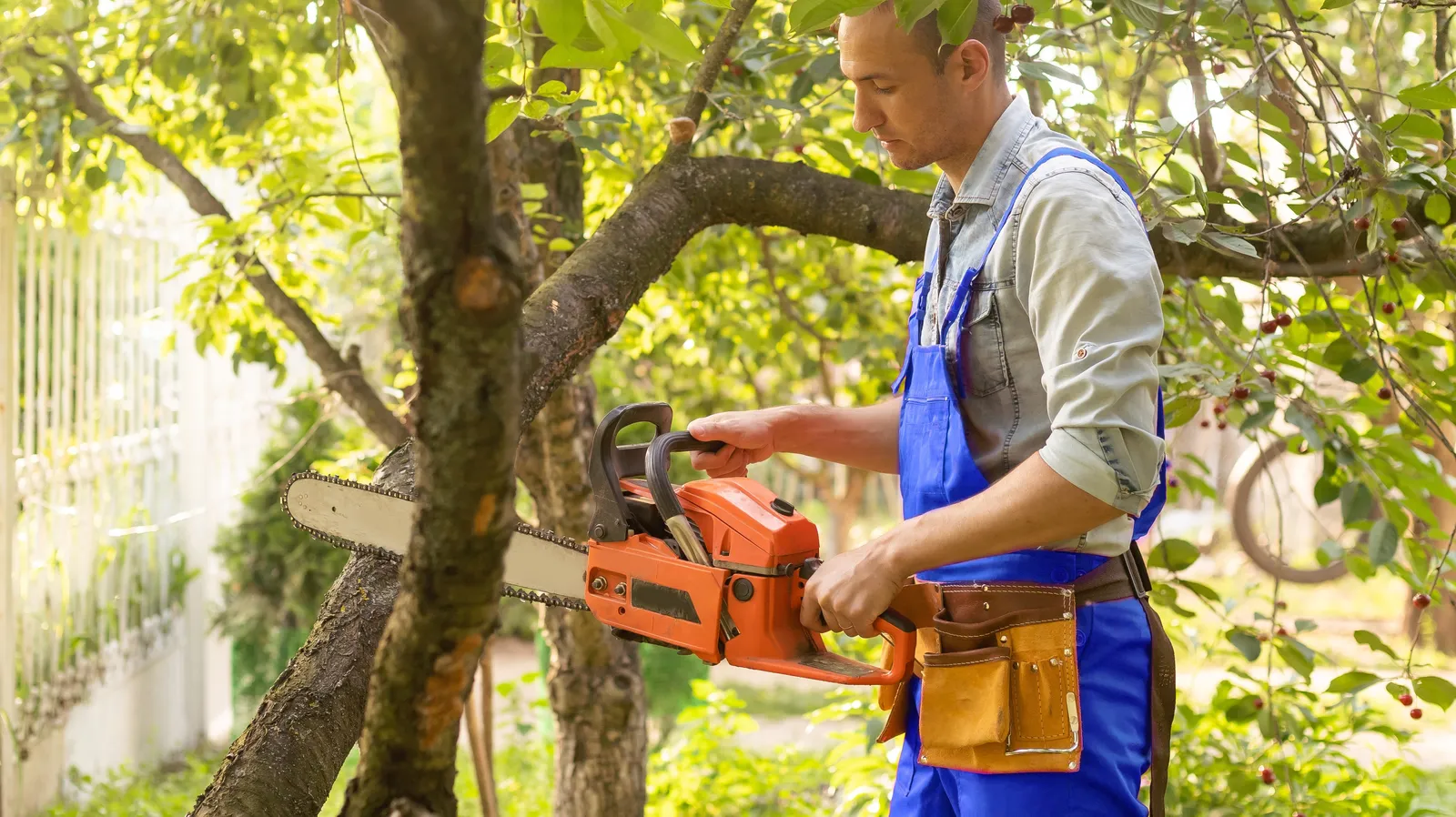
New York tree service contractors operate in one of the most regulated and economically demanding markets in the country. Mature urban canopy, high-density residential property values, aggressive enforcement of permitting requirements, and the regulatory split between New York State (which has no specific tree contractor license) and New York City (which has substantial additional permit and insurance requirements) make New York one of the most demanding insurance markets for tree service contractors. Operations that meet New York’s coverage requirements command premium pricing; operations that don’t can’t legally bid commercial work.
This page covers what New York tree service insurance typically includes, how the NYC vs. statewide regulatory split affects coverage, how the New York State Workers’ Compensation Board environment works for tree care operations, and what carriers are actively writing New York tree service business.
What Tree Service Insurance Costs in New York
New York tree service insurance pricing reflects two state-specific realities: the NYC vs. statewide regulatory split (which affects required limits and underwriting) and New York’s high WC rates under class code 0106. The ranges below reflect what most New York tree service contractors typically pay:
- General Liability Insurance: $1,200–$3,500 per year for typical New York small operations. NYC and Long Island commercial-market operations sometimes pay significantly higher given premium-market exposure.
- Workers’ Compensation Insurance: $11–$22 per $100 of payroll for New York tree service operations under class code 0106. A crew with $200,000 of payroll typically pays $22,000–$44,000 annually. New York rates are among the highest in the nation.
- Commercial Auto Insurance: $2,200–$5,500 per truck per year for chip trucks, bucket trucks, and chipper-towing pickups in New York. NYC and metro-NY pricing reflects high traffic density and severity.
- Inland Marine (Equipment) Insurance: $500–$1,800 per year depending on total equipment value. NYC operations should pay particular attention to overnight storage, theft prevention, and high replacement costs.
- Pesticide & Pollution Liability: $500–$1,200 per year for New York tree services performing plant health care work. NYSDEC documentation standards make this coverage particularly important.
- Umbrella / Excess Liability: $800–$2,200 per year for $1M of additional coverage above primary limits. Frequently required for NYC commercial work, REITs, hospital systems, and university contracts.
New York’s combination of state-specific factors means tree service contractors who shop their coverage with an agent who actually understands the NYC vs. statewide split can often save 15–30% versus generic policies.
Workers’ Compensation in New York
New York operates a state-directed workers’ compensation environment. The New York State Workers’ Compensation Board administers claims, oversees the system, and enforces compliance strictly — penalties for noncompliance can exceed $25,000 plus daily fines.
Class Code 0106 in New York
Tree trimming and removal operations in New York fall under NCCI class code 0106. New York rates under 0106 are among the highest in the nation due to industry claims experience, particularly in the NYC metro. The same misclassification issue we see across the country applies — operations placed under class code 0042 (landscape gardening) face back-premium audits when actual operations are discovered.
New York-Specific Coverage Considerations
- Coverage required for virtually all employees — New York requires WC coverage for any operation with employees, including part-time and seasonal workers
- NYC additional registration — operations working in NYC must register with the NYC Workers’ Compensation Board
- Strict enforcement — Workers’ Compensation Board penalties for noncompliance can exceed $25,000 plus daily fines
- Subcontractor liability — uninsured subcontractors typically count as employees for premium calculation purposes
- NYS Insurance Fund — the state operates an Insurance Fund as a major WC carrier; private carriers also actively write tree service business
Specialty carriers focused on hazardous trades actively write New York tree service business and often provide the best private-market pricing for safety-conscious operations.
NYC vs. Statewide Regulatory Split
This is the section every New York tree service owner needs to understand carefully — New York’s regulatory environment varies dramatically depending on whether you work primarily within NYC limits or across upstate and Long Island markets.
State-Level Requirements (Statewide)
New York State does not require a specific tree service contractor license. However, several layered requirements apply: general business registration with the state and county of operation, NYSDEC pesticide applicator certification for any plant health care work, workers’ compensation insurance for any operation with employees, and commercial auto registration and DOT compliance for trucks meeting weight thresholds.
NYC Additional Requirements
New York City adds significant additional requirements. NYC Department of Parks & Recreation tree work permits are required for work on or near street trees and parkland trees. NYC Department of Buildings permits may be required for tree work involving construction-adjacent operations. Higher insurance limits are typically required: $2M general liability minimum for most NYC commercial work, often $5M+. NYC Workers’ Compensation Board registration applies for operations working within city limits.
NYSDEC Pesticide Oversight
The New York State Department of Environmental Conservation administers pesticide regulations that are among the strictest in the nation. Plant health care operations must maintain robust pesticide and pollution coverage and meticulous documentation. NYC and Long Island enforcement is particularly active.
What This Means for Tree Service Operations
- Operations bidding NYC commercial work must maintain higher coverage limits than statewide operations
- Certificate of Insurance management is an active operational discipline — named additional insureds, waivers of subrogation, and primary/non-contributory wording are routinely required
- Commercial property managers, REITs, and government contracts in New York demand rigorous COI documentation
- NYC street tree and parkland work requires Parks & Rec coordination separate from insurance
Common Coverage Gaps in New York Programs
- Chippers listed as trailers but never added to the schedule — a $60,000–$90,000 chipper is uninsured if it’s not explicitly listed
- Hired and non-owned auto — required if employees ever drive personal vehicles or rented trucks for company business
- NYC additional insured wording — many policies don’t include the specific language required for NYC commercial accounts
- NYSDEC pollution coverage gaps — many GL policies exclude pollution from pesticide applications
General Liability
General liability (GL) is the foundation of every New York tree care insurance program. A properly structured GL policy covers bodily injury and property damage claims arising from your operations.
New York tree service GL policies are typically written with occurrence-based coverage (preferred over claims-made for most contractors), completed operations coverage for claims that arise after a job is finished, and contractors’ professional liability if you provide arborist consulting or recommendations.
NYC commercial property managers, REITs, and major hospital systems regularly require $2M–$5M per occurrence. NYU, Columbia, Cornell, and other major university contracts typically require $2M–$5M per occurrence. Major property management firms and government contracts often require $5M–$10M umbrella above primary GL.
Inland Marine / Equipment Floater
New York crews typically carry $50,000–$250,000+ in portable equipment. Theft from job sites and unattended trailers is meaningful in NYC, Long Island, and metro-area concentrations. An equipment floater covers your chainsaws, climbing gear, rigging, stump grinders, and other portable equipment on the job site, in transit, and in storage.
Replacement cost coverage is strongly recommended over actual cash value — particularly given New York’s high replacement costs and supply chain dynamics.
Pesticide & Pollution Liability
The New York State Department of Environmental Conservation (NYSDEC) Pesticide Bureau administers commercial pesticide applicator certification in New York. Tree services performing plant health care work — including emerald ash borer treatment, deep root feeding, and disease management — need pesticide and pollution liability.
Standard GL policies will not respond to pollution claims arising from chemical applications. Contractor’s pollution liability (CPL) fills that gap and is increasingly required by NYC commercial accounts, hospital systems, and major property managers — particularly given NYSDEC’s strict enforcement and documentation requirements.
Umbrella / Excess Liability
An umbrella policy adds limits above your GL, commercial auto, and employer’s liability limits. For New York tree service companies working on NYC commercial accounts, university campuses, hospital systems, or REIT-owned property portfolios, umbrella limits of $5M–$10M are frequently required.
A $1M umbrella typically costs a fraction of what your underlying GL costs — among the most efficient insurance purchases available, particularly given the high value of New York commercial properties.
Brooklyn and the Five Boroughs: What Changes Inside the City Line
Workers’ compensation is mandatory in New York for essentially every employer with employees, and the New York State Insurance Fund exists alongside the private market as a competitive option rather than a monopoly. That much is uniform statewide. What is not uniform is the job itself.
A removal in Brooklyn is a different piece of work from the same removal in Dutchess County, and the difference shows up in underwriting long before it shows up in a claim:
- There is nowhere to drop wood. Row-house streets, alternate-side parking, and zero setback mean rigging is the default rather than the exception. Sectional lowering over parked cars, sheds, and neighboring roofs multiplies the property-damage paths on a single job.
- Street occupancy is a permitted activity. Closing a lane, staging a chipper, or setting outriggers on a city street pulls in permitting and, frequently, contractual insurance requirements naming the city. Crews that improvise this on the day are exactly the crews that generate the claims underwriters remember.
- The third-party bystander is always present. Pedestrian density in Kings County has no upstate equivalent. Drop-zone control is the whole safety program in that environment.
- Access dictates method. Where a bucket truck cannot be positioned, the work is climbed. Boroughs push operations toward the higher-exposure access method for reasons that have nothing to do with preference.
Operations working across the city line in both directions should expect underwriters to ask which boroughs they actually work and how often. Answering “all of New York” to that question is not a neutral answer — it is read as the highest-exposure one.
Common Tree Service Risks in New York
New York’s geography, regulatory environment, and market dynamics create distinctive risk patterns:
Mature Urban Canopy
NYC, Westchester, Long Island, and upstate New York’s older neighborhoods feature 80-150+ year-old trees in confined urban spaces. Removal jobs frequently involve crane operations, traffic management, and neighboring property protection — driving up both job complexity and insurance exposure.
High Property Values
A single property damage claim in Manhattan, Brooklyn, or Westchester County can easily exceed $500,000. Long Island and Hudson Valley markets routinely feature $1M+ property values. Robust general liability coverage is essential.
Storm-Driven Recurring Demand
Nor’easters, hurricane remnants reaching the Northeast, and ice storms create predictable surge demand. Operations positioned for storm response capture significant emergency revenue but face elevated risk during active weather. Hurricane Ida (2021) and Sandy (2012) demonstrated the magnitude of storm-response opportunity and exposure.
Strict Pesticide Oversight
NYSDEC pesticide regulations are among the strictest in the nation. Plant health care operations must maintain robust pesticide and pollution coverage and meticulous documentation. Enforcement actions against improperly documented applications can be substantial.
Premium Commercial Market
NYC commercial property managers, premium residential markets in Westchester and Long Island, and Hudson Valley estate properties create some of the highest-margin tree service revenue opportunities in the country — for properly insured operations.
Aging Northeast Infrastructure
Tree work near aging utility infrastructure, historic properties, and dense urban services creates specific liability exposure. Con Edison, National Grid, NYSEG, and PSEG-Long Island vegetation management programs require operations with appropriate underwriting.
Why New York Tree Service Owners Choose TreeGuard
We understand the NYC vs. statewide split. Most insurance agents treat New York commercial tree work like any other state — they shouldn’t. We help New York tree service operations structure coverage that meets NYC requirements while remaining cost-effective for statewide work.
We know NYSDEC compliance. New York’s pesticide regulations are among the strictest in the country. We help operations performing plant health care work structure pesticide and pollution coverage that meets NYSDEC documentation standards.
As an independent agency, we represent 16+ A-rated carriers and shop your operation across the entire market. You’re not stuck with one company’s underwriting appetite or pricing — we find the carrier that best fits your specific New York operation.
We specialize in tree care. We don’t write the occasional tree service policy as a side line — this niche is our focus.
Quote turnaround is fast. Most New York tree service quotes come back within 1–2 hours during business hours.
Major New York Markets We Serve
We write tree service insurance across all of New York, with strong concentration in:
- New York City: Manhattan, Brooklyn, Queens, the Bronx, Staten Island — five boroughs, highest regulatory complexity in the state.
- Long Island: Nassau and Suffolk counties — premium residential markets, hurricane corridor exposure.
- Westchester County: White Plains, Yonkers, Scarsdale, Bronxville — high-value estates, strong commercial market.
- Hudson Valley: Rockland, Orange, Putnam, Dutchess counties — mixed residential and rural estate work.
- Capital District: Albany, Schenectady, Troy — state government, university market.
- Western New York: Buffalo, Rochester — mature urban canopy, growing commercial market.
- Central New York: Syracuse, Utica — university and regional commercial work.
- North Country: Adirondack region forestry-adjacent work, lake country, vacation properties.
Whether you’re a single-truck operation in upstate New York or a 40-employee crew working across the NYC metro, we can write your business in New York.