
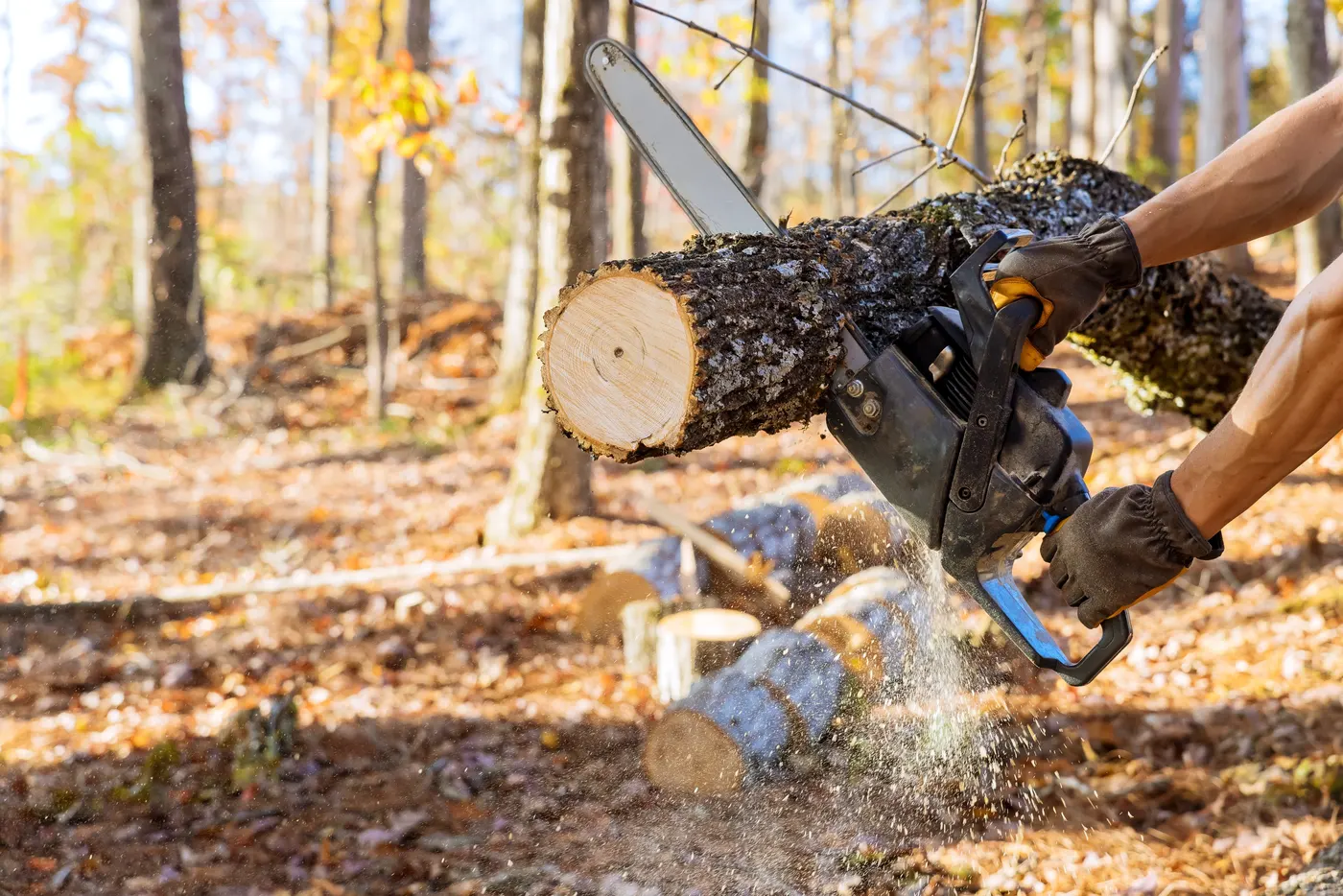
Maryland tree service contractors operate in one of the most distinctive tree care markets in the Mid-Atlantic. The state combines dense urban canopy in Baltimore and the DC suburbs, mature oak-tulip poplar hardwood forests across the Piedmont, loblolly pine on the Eastern Shore, and Appalachian hardwoods in Garrett and Allegany counties. Maryland is also one of the few states with a state-level licensing requirement for tree care professionals — the Maryland Licensed Tree Expert (LTE) program administered by the Maryland Department of Natural Resources — making it a regulatory environment unlike most of the country.
This page covers what Maryland tree service insurance typically includes, how Maryland’s strict one-employee workers’ comp threshold and LTE licensing requirement affect tree care operations, what state agencies regulate the industry, and what carriers are actively writing Maryland tree service business. For a broader walkthrough of coverage, see our coverage overview, or jump to workers’ compensation and pesticide and pollution for state-specific details.
What Tree Service Insurance Costs in Maryland
Maryland tree service insurance pricing reflects three state-specific realities: the strict one-employee workers’ comp threshold, the state-level LTE licensing requirement that limits the universe of competing operations, and the high cost of doing business in the Baltimore-DC corridor. Pricing varies meaningfully between DC suburban operations, Baltimore metro operations, the Eastern Shore, and Western Maryland.
The ranges below reflect what most Maryland tree service contractors typically pay:
- General Liability Insurance: $900–$2,700 per year for typical Maryland small operations. Montgomery County, Howard County, Anne Arundel County, and Baltimore City operations typically pay slightly higher than Western Maryland and the Eastern Shore due to claim frequency and high-value-property exposure.
- Workers’ Compensation Insurance: $7–$13 per $100 of payroll for Maryland tree service operations under class code 0106. A crew with $200,000 of payroll typically pays $14,000–$26,000 annually.
- Commercial Auto Insurance: $1,900–$3,900 per truck per year for chip trucks, bucket trucks, and chipper-towing pickups. Pricing varies by metro, fleet age, and driver MVR profile.
- Inland Marine (Equipment) Insurance: $400–$1,500 per year depending on total equipment value.
- Pesticide & Pollution Liability: $400–$1,000 per year for Maryland tree services performing EAB injections, spongy moth treatments, herbicide applications, or other plant health care work.
- Umbrella / Excess Liability: $500–$1,400 per year for $1M of additional coverage above primary limits. Routinely required for BGE, Pepco, Delmarva Power, and municipal contracts in Baltimore, Annapolis, Rockville, and the major DC-suburban counties.
Maryland’s strict WC mandate combined with high-hazard 0106 rates means workers’ compensation is typically the single largest insurance line for tree service operations — making carrier selection and ex-mod management financially critical.
Workers’ Compensation in Maryland
Maryland has one of the strictest workers’ compensation mandates in the country. Every Maryland employer — regardless of size — must carry WC coverage for any employee. There is no small-employer exemption. A single-employee tree service operation in Maryland is legally required to carry WC.
Tree service operations in Maryland fall under NCCI class code 0106 — one of the highest-rated codes in the WC system. Maryland is a competitive NCCI state, meaning multiple private carriers underwrite the business and compete on price. The Maryland Workers’ Compensation Commission administers the system, and the Maryland Insurance Administration approves carrier filings.
Specialty WC carriers such as Amerisafe actively write Maryland tree service business. Chesapeake Employers’ Insurance (a Maryland quasi-state insurer formerly known as IWIF) also writes a meaningful share of 0106 risks. For Maryland operations with $150,000+ of payroll, it’s worth shopping both Chesapeake and the specialty private market — pricing differences of 20–40% between markets are common.
General Liability
General liability (GL) is the foundation of every Maryland tree care insurance program. A properly structured GL policy covers bodily injury and property damage claims arising from your operations.
Maryland tree service GL policies are typically written with:
- Occurrence-based coverage (preferred over claims-made for most contractors)
- Completed operations coverage for claims that arise after a job is finished
- Contractors’ professional liability if you provide arborist consulting or written recommendations (particularly important for LTEs providing written tree assessments)
- Hired and non-owned auto endorsement where relevant
Municipal contracts in Baltimore, Annapolis, Rockville, Gaithersburg, Frederick, Bowie, and the major counties (Montgomery, Howard, Anne Arundel, Baltimore County, Prince George’s) regularly require $1M–$2M per occurrence. Johns Hopkins University, University of Maryland (College Park), Loyola Maryland, and the U.S. Naval Academy typically require $2M per occurrence. BGE and Pepco utility line clearance contracts often require $5M–$10M umbrella above primary GL.
Commercial Auto
Maryland tree service companies typically run pickup trucks, dump trucks, bucket trucks, chippers, and stump grinders. Every commercial vehicle — including chippers and trailers towed on Maryland roads — must be scheduled on a commercial auto policy.
Common coverage gaps we see in Maryland programs:
- Chippers listed as trailers but never added to the schedule — a $60,000–$90,000 chipper is uninsured if it’s not explicitly listed
- Hired and non-owned auto — required if employees ever drive personal vehicles or rented trucks for company business
- Bucket trucks — confirm your policy covers the vehicle while the aerial function is in use
- Multi-state operations — Maryland operations crossing into Virginia, Pennsylvania, West Virginia, Delaware, or DC need policies that extend coverage outside Maryland
- Hurricane and nor’easter comprehensive coverage — confirm comprehensive limits adequate for severe coastal storm exposure
Inland Marine / Equipment Floater
Maryland crews typically carry $50,000–$200,000+ in portable equipment. An equipment floater covers your chainsaws, climbing gear, rigging, stump grinders, and other portable equipment on the job site, in transit, and in storage.
Confirm your floater covers hurricane, nor’easter, and derecho-related damage without exclusion. The June 2012 derecho produced significant equipment exposure across Maryland — crews working multi-day storm response should have clean inland marine coverage that responds to severe-weather operations.
Pesticide & Pollution Liability
The Maryland Department of Agriculture’s Pesticide Regulation Section licenses commercial pesticide applicators in Maryland. If your operation includes EAB injections, spongy moth (formerly gypsy moth) treatments, herbicide applications, soil drenches, or any chemical application, a standard GL policy will not respond to resulting pollution claims. Contractor’s pollution liability (CPL) fills that gap.
Emerald Ash Borer and Spongy Moth
EAB has been confirmed across Maryland since 2003 (the state was an early epicenter) and is reshaping urban canopy management. Spongy moth (Lymantria dispar dispar, formerly known as gypsy moth) is also a recurring pressure across the state. Operations performing systemic insecticide injections, dormant oil applications, or Bt treatments should carry CPL — particularly when working under municipal, university, or commercial-property contracts that require it.
Umbrella / Excess Liability
An umbrella policy adds limits above your GL, commercial auto, and employer’s liability limits. For Maryland tree service companies working on municipal right-of-way, university campuses, or utility line clearance for BGE, Pepco, Delmarva, or Potomac Edison, umbrella limits of $2M–$10M are frequently required.
A $1M umbrella typically costs a fraction of what your underlying GL costs — among the most efficient insurance purchases available.
Common Tree Service Risks in Maryland
Maryland’s geography and climate create distinctive risk patterns:
Hurricane Remnants and Nor’easters
Hurricane Isabel (2003) produced widespread Chesapeake Bay flooding and statewide tree damage. Hurricane Sandy (2012) hit hard across the Eastern Shore and southern Maryland. Tropical storms and hurricane remnants repeatedly affect the state, and Mid-Atlantic nor’easters produce significant snow loading and limb breakage from December through March.
Derecho Events
The June 29, 2012 derecho is the most damaging non-hurricane wind event in modern Maryland history — straight-line winds exceeding 80 mph caused widespread tree failure across the entire state, multi-week power outages, and months of cleanup work. Derecho-style events are infrequent but produce concentrated, dangerous tree damage when they hit.
Emerald Ash Borer (EAB)
EAB has been spreading across Maryland for over two decades and is reshaping urban canopy management. Treatment and removal work represents an enormous and ongoing market — particularly across Baltimore County, Howard County, Montgomery County, and Anne Arundel County.
Spongy Moth (Gypsy Moth)
Spongy moth outbreaks recur across Maryland on a cyclical basis, particularly affecting oak across the western counties and the Piedmont. Defoliation events stress oak stands, and follow-on oak decline is a recurring driver of removal work.
Aging Urban Canopy
Baltimore’s Roland Park, Guilford, Mount Vernon, Federal Hill, and Canton neighborhoods; Annapolis’s historic downtown; the DC suburbs including Chevy Chase, Bethesda, Potomac, and Silver Spring; and Frederick’s historic district have substantial mature tree populations near high-value homes. Tree work in these neighborhoods raises property damage exposure significantly.
Eastern Shore Loblolly Pine and Coastal Exposure
The Eastern Shore tree market includes substantial loblolly pine harvesting, hazard removal, and Chesapeake Bay shoreline work. Salt exposure, hurricane risk, and the unique structural characteristics of mature loblolly inform the work and the underwriting.
Utility Line Clearance Demand
BGE (Baltimore Gas and Electric), Pepco, Delmarva Power, and Potomac Edison run substantial vegetation management programs. Operations doing line clearance need higher liability limits, ANSI Z133 compliance, and specialized underwriting.
Why Maryland Tree Service Owners Choose TreeGuard
We understand Maryland’s strict one-employee WC mandate and the Chesapeake-vs-specialty-carrier market. Most insurance agents quote WC mechanically — we shop Chesapeake and the specialty private market to find the best fit for your operation, claims history, and payroll profile.
We understand the LTE licensing requirement and the professional liability exposure for Maryland Licensed Tree Experts. Most general-purpose commercial agents have no familiarity with the LTE program — we do, and we structure coverage accordingly.
We know Maryland utility line clearance. BGE, Pepco, Delmarva Power, and Potomac Edison vegetation management contracts have specific underwriting requirements, and we know which carriers will write them.
As an independent agency, we represent 16+ A-rated carriers and shop your operation across the entire market. You’re not stuck with one company’s underwriting appetite or pricing — we find the carrier that best fits your specific Maryland operation.
Quote turnaround is fast. Most Maryland tree service quotes come back within 1–2 hours during business hours.
Major Maryland Markets We Serve
We write tree service insurance across all of Maryland, with strong concentration in:
- Baltimore Metro: Baltimore, Towson, Catonsville, Dundalk, Pikesville, Owings Mills, Cockeysville, Parkville, Essex, Glen Burnie.
- Montgomery County / DC Suburbs: Rockville, Gaithersburg, Bethesda, Silver Spring, Germantown, Potomac, Chevy Chase, Wheaton, Kensington.
- Prince George’s / Howard: Bowie, College Park, Hyattsville, Greenbelt, Laurel, Columbia, Ellicott City, Clarksville.
- Anne Arundel: Annapolis, Severna Park, Pasadena, Edgewater, Crofton, Severn.
- Frederick / Western Maryland: Frederick, Hagerstown, Cumberland, Westminster, Mount Airy.
- Southern Maryland: Waldorf, La Plata, Lexington Park, California, Prince Frederick.
- Eastern Shore: Salisbury, Ocean City, Cambridge, Easton, Chestertown.
Whether you’re a single-truck operation in Western Maryland or a 50-employee crew working BGE vegetation management across the Baltimore metro, we can write your business in Maryland.