
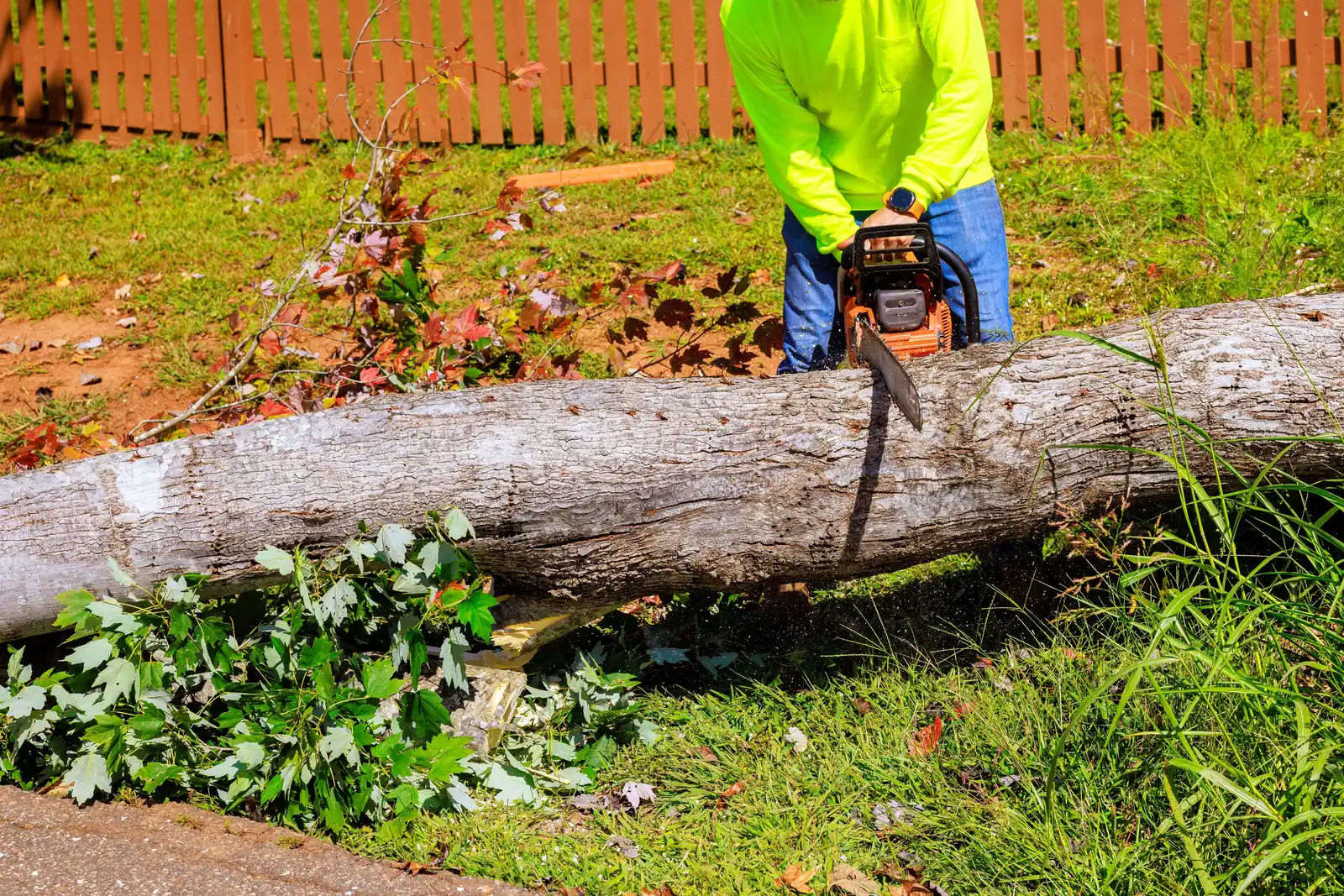
Indiana tree service contractors face a specific set of risks that standard commercial insurance — the kind a landscaper or roofer might carry — often doesn’t address well. The state’s mix of residential density in the Indianapolis metro, mature urban canopy in older neighborhoods across Fort Wayne and Evansville, and significant commercial and municipal tree work creates liability exposures that require policies structured specifically for arborists and tree care companies.
This page covers what Indiana tree service insurance typically includes, what the state requires, and what carriers are actively writing Indiana tree care operations.
What Tree Service Insurance Costs in Indiana
Most Indiana tree service businesses carry several insurance policies that work together to protect the operation. Total premium depends on services performed, crew size, equipment value, claims history, and how long you’ve been in business.
The ranges below reflect what most Indiana tree service contractors typically pay. Your actual quote may fall higher or lower based on your specific operation.
- General Liability Insurance: $800–$2,400 per year for typical Indiana small operations. Covers property damage and bodily injury claims when work goes wrong — like a limb falling on a customer’s roof or a pedestrian being injured during removal.
- Workers’ Compensation Insurance: $4–$11 per $100 of payroll for Indiana tree service operations under class code 0106. A crew with $200,000 of payroll typically pays $8,000–$22,000 annually. Indiana operates a competitive workers’ comp market, which rewards safe operations with better rates over time.
- Commercial Auto Insurance: $1,800–$3,500 per truck per year for chip trucks, bucket trucks, and chipper-towing pickups in Indiana. Premiums vary by vehicle type, driving records, and service area.
- Inland Marine (Equipment) Insurance: $400–$1,500 per year depending on total equipment value. Covers chippers, stump grinders, climbing gear, chainsaws, and other tools when they’re at job sites, in transit, or stored overnight.
- Pesticide & Pollution Liability: $400–$900 per year for Indiana tree services performing emerald ash borer treatments, deep root feeding, or other plant health care work.
- Umbrella / Excess Liability: $500–$1,200 per year for $1M of additional coverage above primary limits. Often required for municipal contracts or commercial property work.
Indiana’s competitive insurance market means tree service contractors who shop their coverage with an independent agency often save 15–30% versus their previous carrier.
Workers’ Compensation in Indiana
Indiana requires most employers — including those with part-time or seasonal workers — to carry workers’ compensation insurance. Tree service is classified under NCCI class code 0106, which covers lawn maintenance operations including tree pruning and removal. This is one of the higher-hazard class codes in commercial insurance, reflecting the real risks of chainsaw injuries, falls from elevation, struck-by incidents, and equipment accidents.
Indiana operates a competitive workers’ compensation market, meaning multiple private carriers compete for tree service business. Unlike monopolistic state fund states (Ohio, Washington, Wyoming, North Dakota), Indiana tree service owners can shop their workers’ comp coverage between carriers — which directly benefits operations with strong safety records. Specialty carriers like Amerisafe, which focus on high-hazard trades, are among the options available to Indiana tree service contractors.
Key things Indiana tree service operators need to know:
- Coverage is required starting with the first employee, whether full-time, part-time, or seasonal
- Subcontractors without their own coverage may be treated as employees under a premium audit — which can result in significant additional premium
- Owner exclusions are available but must be properly documented with the carrier before a claim occurs
- Experience modification (X-mod) affects your rate once you’ve had three or more years of claims history — a clean safety record directly reduces premium over time
Indiana workers’ comp claims are administered through the Indiana Workers’ Compensation Board. Carriers handle claims directly; the IWCB handles disputes and hearings.
The Class Code 0042 vs. 0106 Misclassification Issue
Tree trimming and tree removal operations in Indiana fall under NCCI class code 0106. This is different from class code 0042 (landscape gardening) — and the difference matters financially. Code 0042 base rates are significantly lower than 0106, which leads some Indiana tree service contractors to be misclassified initially under landscape codes. The problem: when a workers’ comp audit reveals the actual operations, contractors face significant back-premium bills, often $5,000–$25,000 or more.
We make sure Indiana tree service contractors are classified correctly from day one.
General Liability
General liability (GL) is the foundation of every Indiana tree care insurance program. A properly structured GL policy covers bodily injury and property damage claims arising from your operations — a branch landing on a parked car, a client tripping over debris, or a tree falling onto a neighboring structure.
Indiana tree service GL policies are typically written with:
- Occurrence-based coverage (preferred over claims-made for most contractors)
- Completed operations coverage for claims that arise after a job is finished
- Contractors’ professional liability if you provide arborist consulting or recommendations
Municipal contracts in Indianapolis, Carmel, and other larger Indiana cities regularly require $1M–$2M per occurrence. HOA contracts and property management accounts often require $2M per occurrence. For utility line clearance or work near high-value commercial properties, umbrella limits of $2M–$5M are common.
Commercial Auto
Indiana tree service companies typically run pickup trucks, dump trucks, bucket trucks, chippers, and stump grinders. Every commercial vehicle — including chippers and trailers towed on public roads — must be scheduled on a commercial auto policy. Personal auto policies exclude business use, and Indiana carriers enforce that exclusion aggressively.
Common coverage gaps we see in Indiana programs:
- Chippers listed as trailers but never added to the schedule — a $60,000–$90,000 chipper is uninsured if it’s not explicitly listed
- Hired and non-owned auto — required if employees ever drive personal vehicles or rented trucks for company business
- Bucket trucks — confirm your policy covers the vehicle while the aerial function is in use, not just driving
Inland Marine / Equipment Floater
Indiana crews typically carry $50,000–$200,000+ in portable equipment. Chainsaw theft from an unattended trailer is one of the most common inland marine claims in tree care. An equipment floater covers your chainsaws, climbing gear, rigging, stump grinders, and other portable equipment on the job site, in transit, and in storage — filling gaps that commercial auto and GL don’t cover.
Ask whether your floater is written on a replacement cost or actual cash value basis. For equipment you depend on daily, replacement cost coverage is worth the added premium.
Pesticide & Pollution Liability
The Office of the Indiana State Chemist (OISC) licenses commercial pesticide applicators in Indiana. If your operation includes herbicide treatments, soil injections, or any chemical application, a standard GL policy will not respond to resulting pollution claims. Contractor’s pollution liability (CPL) fills that gap. CPL is also increasingly required by commercial and municipal clients as a condition of contract.
Umbrella / Excess Liability
An umbrella policy adds limits above your GL, commercial auto, and employer’s liability limits. For Indiana tree service companies working on municipal right-of-way, commercial properties, or utility line clearance, umbrella limits of $1M–$5M are frequently required by contract. A $1M umbrella typically costs a fraction of what your underlying GL costs — it’s one of the most efficient insurance purchases available.
Common Tree Service Risks in Indiana
Indiana’s climate creates specific risk patterns that influence tree service insurance pricing:
Severe Storm Season (April–September)
Indiana experiences a long severe weather season with high winds, hail, and the occasional derecho event. Storm work — emergency removals, downed tree cleanup, and limb cutting — accounts for a significant portion of revenue for many Indiana tree service operations. It’s also some of the highest-risk work, with poor visibility, unstable trees, and emergency working conditions.
Winter Ice Storms
Indiana winters bring ice events that overload tree branches. Limb breakage and uprooted trees create dangerous removal jobs throughout late December through March. Operations doing winter work need carriers comfortable with the risk profile.
Emerald Ash Borer Devastation
EAB has killed millions of Indiana ash trees since arriving in the state in 2004. Treatment work (using pesticide injections like emamectin benzoate) and removal of dead ash trees has become a substantial market. Indiana tree services performing EAB treatment need pesticide and pollution liability — general liability does not cover application errors or environmental contamination.
Aging Urban Canopy
Indianapolis, Carmel, Bloomington, and other Indiana cities have substantial mature tree populations requiring ongoing professional maintenance. The dense urban canopy in central Indiana creates demand but also concentrates risk — tree work near buildings, vehicles, and people raises liability exposure.
Spring Tornado Risk
Central Indiana sits in tornado alley. Storm response after tornadoes generates emergency work but also creates dangerous conditions with damaged or unstable trees that drop unpredictably during cleanup.
Why Indiana Tree Service Owners Choose TreeGuard
We’re headquartered in Greenwood, Indiana — about 15 minutes south of Indianapolis. We know the Indiana tree service market because we work in it every day.
As an independent insurance agency, we represent 16+ A-rated carriers and shop your operation across the entire market. You’re not stuck with one company’s underwriting appetite or pricing — we find the carrier that best fits your specific Indiana operation.
We specialize in tree care. We don’t write the occasional tree service policy as a side line — this niche is our focus. That focus shows up in proper class code assignment, accurate quotes, fast certificate turnaround, and underwriters who actually understand aerial work.
Quote turnaround is fast. Most Indiana tree service quotes come back within 1–2 hours during business hours. Many bind same-day.
Major Indiana Markets We Serve
We write tree service insurance across all of Indiana, with strong concentration in:
- Indianapolis Metro: The state’s largest tree service market, with dense urban canopy in Indianapolis, Carmel, Fishers, Greenwood, Noblesville, and Westfield.
- Northern Indiana: Fort Wayne, South Bend, Mishawaka, Elkhart, and surrounding areas.
- Central Indiana: Bloomington, Anderson, Muncie, Lafayette, Kokomo.
- Southern Indiana: Evansville, Terre Haute, Jeffersonville, New Albany.
- Northwest Indiana: Hammond, Gary, Merrillville, Valparaiso — including the Chicago metro spillover market.
Whether you’re a single-truck operation in a rural county or a 20-employee crew working across the Indianapolis metro, we can write your business in Indiana.