
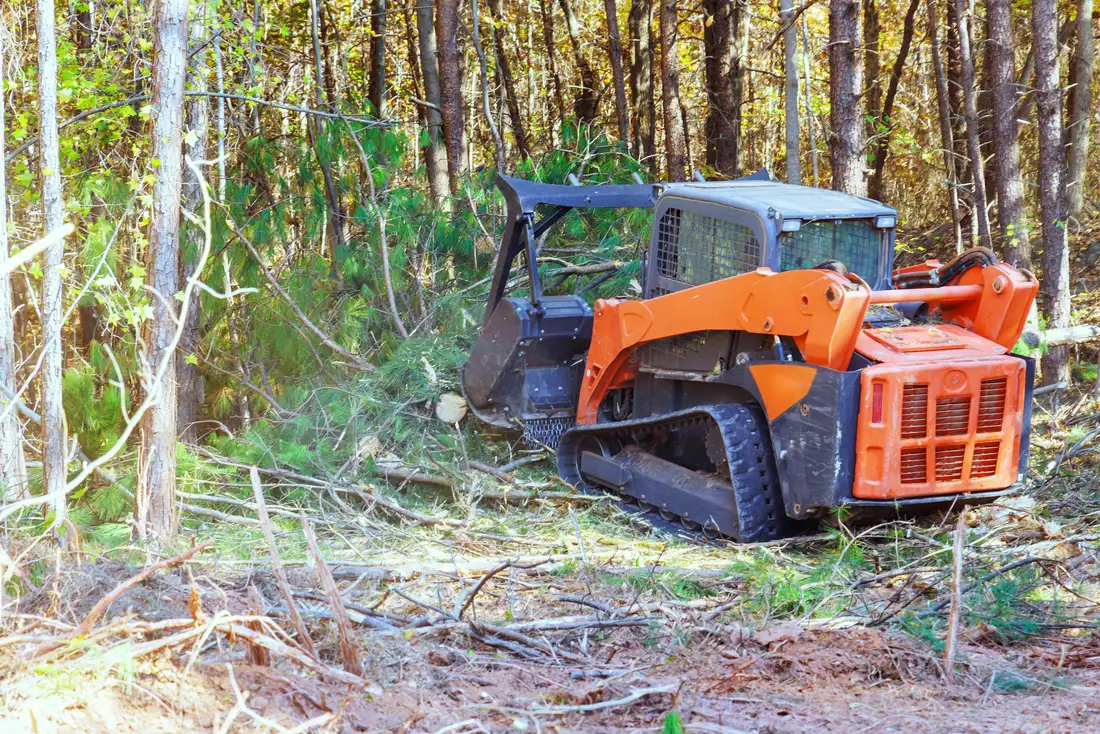
Emergency tree removal is the work that happens at 2 a.m. in a thunderstorm, on Christmas morning after an ice load, or for 90 straight days after a hurricane. The service line looks like normal tree removal from the outside — but underwriters see a meaningfully different account when an operation builds itself around 24/7 dispatch, after-hours hazard work, or post-storm surge response.
There are two kinds of operations that buy emergency tree removal insurance. The first is a standard tree service that takes the occasional after-hours hazard call from existing customers — a homeowner whose tree split during a thunderstorm, an insurance adjuster who needs a tree off a roof tonight. The second is an operation purpose-built for emergency response: a 24/7 dispatch number, on-call crews, mutual-aid agreements with property managers or municipal customers, and a meaningful share of annual revenue coming from storm events, hurricane response, or after-hours hazard tree work. The first type can typically be written on standard tree service forms. The second type triggers different underwriting questions, different rate factors, and in many cases different carrier markets entirely.
This page is for the second type — and for operators in the first type who are growing into the second. It covers what makes emergency tree removal insurance different from standard tree service insurance, what storm-response operations actually pay, which coverages carry the heaviest weight, and what carriers want to see before they bind a 24/7 operation.
What Makes Emergency Tree Removal Insurance Different
The standard tree removal claim curve assumes daylight work, dry conditions, planned removals, and crews who slept the night before. Emergency response inverts most of those assumptions, and underwriters price the difference.
Elevated Risk Profile on Every Job
After-hours and storm-condition work concentrates several risk factors that are normally distributed across the year:
- Visibility. Headlamps, vehicle floodlights, and flares replace daylight. Drop zones are harder to clear, hazards are harder to spot, and bystanders are harder to keep out.
- Weather. Active wind, rain, lightning, and freezing precipitation are present on the job — not avoided by waiting for a better day.
- Fatigue. Crews working 16-hour days during a storm event, or running on a few hours of sleep on a 2 a.m. call, make different decisions than crews on a normal Monday morning.
- Compromised trees. Storm-damaged trees behave unpredictably. Hung-up sections, internal cracking, and partial uproots create rigging hazards that don’t exist on a healthy planned removal.
General liability carriers know all of this. The claim severity for emergency-condition work runs higher than for planned removals on the same operation.
A Different Commercial Auto Exposure
Emergency response means crews driving on damaged roads in active weather, often to addresses they’ve never been to, often pulling chip trucks and trailers in conditions that aren’t safe. Commercial auto loss runs disproportionately into storm-response operations — single-vehicle wrecks on flooded roads, collisions in low-visibility conditions, debris strikes on parked trucks staged near job sites. Operations doing significant emergency work typically need higher-than-baseline commercial auto limits and clean MVR documentation for every driver.
Claim Frequency Spikes During Named Events
A single named hurricane or major derecho can compress what would be three months of tree removal work into ten days. Claim frequency follows the work. Underwriters look at five-year loss histories rather than rolling 12-month windows specifically because storm-response operations have lumpy claim experience — clean years followed by event years with multiple claims.
Surge Crews and 1099 Subcontractors
When a Cat-3 hurricane hits, operations don’t go from four employees to forty by Tuesday. They bring in 1099 climbers, traveling crews, and subcontractor teams under temporary agreements. This creates two underwriting concerns that don’t exist in standard tree service: undisclosed 1099 payroll that shows up at audit, and additional-insured certificate requirements running in both directions (prime contractor needs the sub on the COI; the sub needs the prime named to satisfy contract terms). Both have to be set up correctly before mobilization, not after the first claim.
Out-of-State Mobilization
A Florida-based operation pulling work in North Carolina after a hurricane, or an Indiana crew responding to an ice storm in Tennessee, runs into carrier territory questions, nonresident producer issues, and contractor licensing thresholds that don’t exist for local-only work. The COI a property manager in another state wants to see may not match what’s automatically issued by the home-state policy.
Coverage Emergency Tree Removal Operations Need
The core coverage stack is the same as standard tree service, but the limits, endorsements, and underwriting questions shift meaningfully.
General Liability
General liability for emergency work typically runs $1M/$2M as a baseline, but $2M/$4M is increasingly the floor for operations doing meaningful commercial or municipal storm-response work. Specific endorsements that matter more for emergency operations:
- Explosion, collapse, and underground (XCU) coverage if any work touches damaged utilities or unstable structures.
- Power-line proximity coverage for trees fallen on or near energized lines — a common storm scenario.
- Action over and completed operations language reviewed carefully, because storm work generates more “tree we touched fell again three weeks later” claims than planned removal.
Workers’ Compensation
Workers’ comp under NCCI class code 0106 covers tree pruning, spraying, and repairing operations including all operations and drivers. Storm-response payroll is fully within 0106 — the after-hours surcharge isn’t reflected in the class code itself, it shows up in carrier-level rate selection and experience modification factors. Operations doing significant storm work should expect:
- Higher modifier sensitivity to single large claims, because storm-condition incidents tend toward catastrophic severity.
- Audit attention to 1099 labor. If subcontractors don’t carry their own workers’ comp certificates, the carrier will reclassify them as employees at audit and bill premium retroactively — often including the surge payroll the operator never expected to pay comp on.
- Out-of-state payroll handling. Crews mobilizing across state lines need workers’ comp coverage that follows them. Most monoline state-fund policies don’t.
Commercial Auto
Commercial auto for emergency operations typically needs $1M combined single-limit minimum, with $2M increasingly required for commercial and municipal contracts. Key endorsements:
- Hired and non-owned auto — crews driving rented trucks, subcontractor vehicles, or personal vehicles during a surge response.
- Symbol 1 auto liability wherever available, so any auto used in the business is covered rather than only scheduled vehicles.
- Towing and labor coverage for stuck or disabled trucks on damaged roads.
Inland Marine and Equipment
Inland marine coverage for emergency operations needs to handle gear that travels — chainsaws, climbing kits, rigging, generators, light towers, and portable equipment that’s loaded out for storm response. The blanket limit needs to cover the full mobilization inventory, not just the standing fleet. Theft from staging areas during storm response is a real loss category; equipment left overnight at a remote work site behaves differently from equipment in a locked yard.
Umbrella and Excess Liability
Umbrella limits for emergency operations should generally start at $2M and run to $5M or higher depending on contract requirements. Municipal storm-response contracts, FEMA-subcontract work, and large property-manager mutual-aid agreements routinely require $5M umbrella, and some specify $10M for utility-adjacent work. The cost gap between $1M and $5M umbrella is small relative to a single severity claim.
Cost of Emergency Tree Removal Insurance
Total program cost varies more for emergency operations than for standard tree service because the work mix varies more. A few benchmarks:
- Solo operator who takes occasional after-hours calls but isn’t structured around emergency response — costs run similar to standard tree service, with a modest surcharge if the carrier rates after-hours work separately. Total program: $6,000–$15,000 annually depending on payroll and vehicles.
- Small crew built around storm response (two or three trucks, 24/7 dispatch, mutual-aid agreements with property managers or insurance adjusters) — $8,000–$20,000 annually for the smaller end, up to $30,000+ if the operation runs out of state during named events.
- Mid-size storm-response operation with multiple crews, dedicated dispatch, FEMA-eligible mobilization, and meaningful commercial contracts — $20,000–$50,000+ annually, with workers’ compensation premium dominating the line item.
Cost drivers that matter more for emergency operations than for standard tree service:
- Percentage of revenue from emergency vs. scheduled work. Carriers ask this question on the application. A 90/10 split (mostly emergency) prices differently from a 20/80 split (occasional after-hours).
- 24/7 dispatch operations. Whether the operation actually staffs a 24/7 phone line — and how that’s documented — affects underwriting.
- Out-of-state mobilization frequency. Carriers want to know whether crews regularly cross state lines for storm work, and whether the operation has nonresident licensing in those states.
- Fleet size and driver records. Commercial auto rates compound quickly when drivers have storm-condition claims on their MVRs.
- Subcontractor use. Operations that rely on 1099 climbers for surge capacity see audit-driven premium swings that operations with W-2 crews don’t.
State Licensing and Emergency Response Considerations
Emergency tree removal isn’t licensed differently from standard tree work in most states, but several state and local factors meaningfully affect storm-response operations.
Florida (state guide). The single largest hurricane-response market in the country. Florida has no statewide tree contractor license, but counties and municipalities frequently require local business tax receipts and may impose post-disaster registration requirements for contractors operating in declared-emergency zones. Price-gouging statutes apply during declared emergencies, and contractors who run afoul of them face Florida AG action that no insurance policy will cover. Florida also operates the state’s own workers’ comp framework, which affects how out-of-state crews are written when mobilizing in.
Texas (state guide). Hurricane Harvey, Hurricane Beryl, and the 2024 derecho events created repeat storm-response markets across Houston, the Gulf Coast, and East Texas. Texas has no state contractor license for tree work, but commercial pesticide application — common when storm cleanup includes chemical brush treatment — requires Texas Department of Agriculture licensing. The state’s optional workers’ compensation framework creates a fork: operations that elect non-subscriber status give up the comp shield and become directly liable for employee injury. For storm-response operations exposed to severe-injury frequency, the non-subscriber route is almost always the wrong call.
North Carolina (state guide). Hurricane response (Florence, Helene, Matthew) generates substantial out-of-state mobilization into the state. North Carolina General Contractor licensing requirements kick in for contracts above $30,000, which captures a lot of post-storm commercial and municipal cleanup work. Operations mobilizing into North Carolina for storm response often need general contractor licensure that doesn’t apply to their normal scheduled tree work back home.
Louisiana (state guide). Recurring hurricane-response market with specific contractor registration requirements under the Louisiana State Licensing Board for Contractors when contract values cross statutory thresholds. Post-disaster, the state has periodically imposed expedited registration paths for emergency-response contractors, but operating without proper registration on contracts above the threshold creates both regulatory exposure and insurance complications when an out-of-state insurer asks whether the work was performed legally.
Underwriting Realities for Emergency Operations
Carriers don’t decline storm-response operations because they’re inherently uninsurable — they decline operations where the file doesn’t show evidence the work is being done professionally. What underwriters look for, in order of importance:
- Documented dispatch and crew procedures for after-hours work. A written protocol covering fatigue limits, two-person minimum on hazard work, supervisor approval for night climbing, and weather-stand-down criteria carries real underwriting weight.
- Fatigue management policy. Operations that work crews 18 hours straight during storm events generate the catastrophic claims. Carriers want to see written hours-of-work limits and rotating crew schedules during surge periods.
- Driver MVR review process. Annual MVR review on every driver, with documented criteria for removing drivers from emergency dispatch after at-fault incidents.
- Equipment inspection schedule. Pre-mobilization checks on chippers, chainsaws, rigging hardware, and aerial gear documented in writing. Equipment failures cause incidents; carriers want to see that the operation knows that.
- Subcontractor agreements and certificate management. Written sub agreements requiring matching limits, additional-insured wording on a primary/non-contributory basis, and waiver of subrogation. A current COI from every 1099 sub on file before they’re dispatched.
- ANSI Z133 compliance. Documented training and adherence to the industry safety standard for arboricultural operations.
What gets emergency operations declined or surcharged:
- High claim frequency, particularly storm-period severity claims.
- No documented dispatch procedures, or “we just call whoever is available” as the after-hours protocol.
- Undisclosed subcontractor use revealed at audit.
- Significant out-of-state mobilization with no nonresident licensing.
- Drivers with multiple at-fault commercial auto incidents.
Why TreeGuard for Emergency Tree Removal Insurance
We write storm-response operations as part of our core book — not as the occasional account a generalist agent stumbles into. That experience matters in three concrete ways.
First, we understand seasonal payroll. Storm operations don’t have a flat W-2 number on January 1 that’s still accurate in October after a hurricane response. We help structure programs that handle the audit reality of surge payroll without leaving the operator exposed during the surge or hit with a retroactive premium bill after.
Second, we know which carriers actually write 24/7 dispatch operations. Some carriers in the standard tree service market quietly decline once the application discloses that emergency work is the operation’s primary business model. We don’t waste a contractor’s time submitting to those markets — we go to the carriers who write storm-response operations on purpose.
Third, quote turnaround matters more for emergency operators than for almost any other tree service segment. When a property manager calls in May asking for a $5M umbrella endorsement before hurricane season starts, or when a new municipal contract requires a specific COI before mobilization, “I’ll get back to you next week” doesn’t work. Most of our quotes come back within one to two business hours during normal business hours, and we structure binding to move quickly when storm season requires it.