
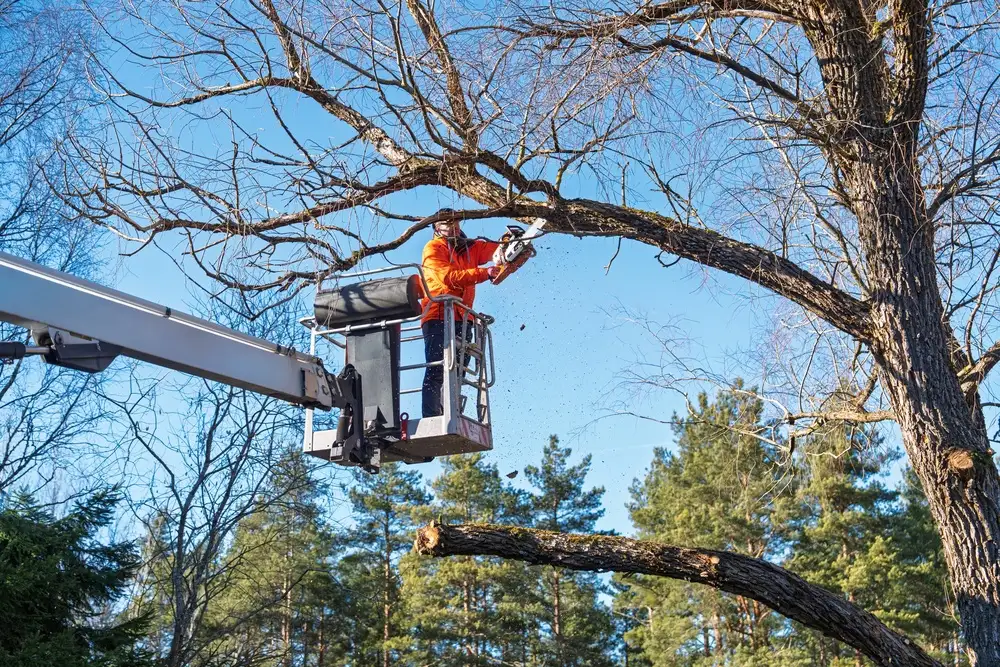
Michigan tree service contractors face an insurance environment shaped by some of the most distinctive factors in the country: Michigan’s unique no-fault auto law, lake-effect weather along the western coast and Upper Peninsula, the catastrophic impact of emerald ash borer (which originated in Michigan), and a competitive workers’ comp market overseen by the Michigan Worker’s Disability Compensation Agency. Detroit, Grand Rapids, Lansing, and Ann Arbor each support substantial tree service markets — and each has its own underwriting considerations.
This page covers what Michigan tree service insurance typically includes, how Michigan’s no-fault auto law and workers’ comp environment work for tree care operations, and what carriers are actively writing Michigan tree service business.
What Tree Service Insurance Costs in Michigan
Michigan tree service insurance pricing reflects two state-specific realities: Michigan’s no-fault auto law (which affects commercial auto pricing differently than any other state) and the competitive workers’ comp market overseen by the Worker’s Disability Compensation Agency.
The ranges below reflect what most Michigan tree service contractors typically pay:
- General Liability Insurance: $850–$2,500 per year for typical Michigan small operations. Detroit metro operations sometimes pay toward the higher end given urban density.
- Workers’ Compensation Insurance: $5–$12 per $100 of payroll for Michigan tree service operations under class code 0106. A crew with $200,000 of payroll typically pays $10,000–$24,000 annually. Michigan operates a competitive market through private carriers.
- Commercial Auto Insurance: $2,000–$4,500 per truck per year for chip trucks, bucket trucks, and chipper-towing pickups in Michigan. Pricing reflects Michigan’s no-fault system, which historically drove some of the highest commercial auto premiums in the country (recent reform has moderated this somewhat).
- Inland Marine (Equipment) Insurance: $400–$1,500 per year depending on total equipment value. Detroit metro operations should pay particular attention to overnight storage and theft prevention.
- Pesticide & Pollution Liability: $400–$900 per year for Michigan tree services performing emerald ash borer treatments, deep root feeding, or other plant health care work. EAB market in Michigan is substantial — this coverage matters here.
- Umbrella / Excess Liability: $600–$1,400 per year for $1M of additional coverage above primary limits. Frequently required for municipal contracts, university work, and DTE Energy line clearance.
Michigan’s combination of state-specific factors means tree service contractors who shop their coverage with an agent who actually understands Michigan can often save 15–30% versus generic policies.
Workers’ Compensation in Michigan
Michigan operates a competitive workers’ compensation market — multiple private carriers write tree service business. The Michigan Worker’s Disability Compensation Agency (WDCA) administers claims and oversees the system.
Class Code 0106 in Michigan
Tree trimming and removal operations in Michigan fall under NCCI class code 0106. Michigan follows NCCI manual rules with state-specific modifications. The same misclassification issue we see across the country applies — operations placed under class code 0042 (landscape gardening) face back-premium audits when actual operations are discovered.
Michigan-Specific Coverage Considerations
- Coverage required starting with the first employee — Michigan requires WC coverage for any business with one or more employees, including part-time and seasonal workers
- Sole proprietor exemptions — Michigan allows sole proprietors to elect out, though coverage is recommended given physical risks
- Subcontractor liability — uninsured subcontractors typically count as employees for premium calculation purposes
- WDCA claim process — Michigan’s WDCA provides resources for both employers and employees navigating claims
Specialty carriers like Amerisafe, focused on hazardous trades, actively write Michigan tree service business and often provide the best pricing for safety-conscious operations.
Michigan No-Fault Auto Law and Commercial Auto
This is the section every Michigan tree service owner needs to understand carefully — Michigan’s commercial auto environment is unlike any other state.
Background
Michigan operates under a no-fault auto insurance system, the most comprehensive in the country. The 2019 reform legislation made meaningful changes, but the no-fault structure remains. For commercial auto policies, this affects pricing, coverage structure, and claim handling differently than any other state.
Personal Injury Protection (PIP)
Michigan commercial auto policies include PIP coverage, which pays for medical expenses and wage loss for injured occupants regardless of fault. Since the 2019 reform, businesses can now choose PIP medical limits ranging from $50,000 to unlimited. Tree service operations should evaluate this carefully — choosing higher PIP limits costs more upfront but provides better protection in serious accidents.
Property Protection Insurance (PPI)
Michigan commercial auto policies also include $1M of PPI coverage, which pays for damage your vehicles cause to other people’s property (other than other vehicles).
What This Means for Tree Service Operations
- Michigan commercial auto premiums typically run higher than most states, even after 2019 reform
- Operations crossing state lines into Ohio, Indiana, or Wisconsin need policies that handle the transition correctly
- Choice of PIP medical limits is a real decision — not just a formality
- Working with an agent who understands Michigan no-fault matters more here than in other states
Common Coverage Gaps in Michigan Programs
- Chippers listed as trailers but never added to the schedule — a $60,000–$90,000 chipper is uninsured if it’s not explicitly listed
- Hired and non-owned auto — required if employees ever drive personal vehicles or rented trucks for company business
- Bucket trucks — confirm your policy covers the vehicle while the aerial function is in use, not just driving
- PIP limit selection — many operations carry default PIP limits without evaluating whether higher limits make sense
General Liability
General liability (GL) is the foundation of every Michigan tree care insurance program. A properly structured GL policy covers bodily injury and property damage claims arising from your operations.
Michigan tree service GL policies are typically written with:
- Occurrence-based coverage (preferred over claims-made for most contractors)
- Completed operations coverage for claims that arise after a job is finished
- Contractors’ professional liability if you provide arborist consulting or recommendations
Municipal contracts in Detroit, Grand Rapids, Warren, and Lansing regularly require $1M–$2M per occurrence. University of Michigan and Michigan State campus contracts typically require $2M per occurrence. DTE Energy and Consumers Energy line clearance contracts often require $5M umbrella above primary GL.
Inland Marine / Equipment Floater
Michigan crews typically carry $50,000–$200,000+ in portable equipment. Theft from job sites and unattended trailers is meaningful in the Detroit metro and other urban areas. An equipment floater covers your chainsaws, climbing gear, rigging, stump grinders, and other portable equipment on the job site, in transit, and in storage.
Replacement cost coverage is strongly recommended over actual cash value.
Pesticide & Pollution Liability
The Michigan Department of Agriculture & Rural Development’s Pesticide & Plant Pest Management Division licenses commercial pesticide applicators in Michigan. Given Michigan’s central role in the EAB epidemic — the insect was first identified in southeast Michigan in 2002 — pesticide and pollution liability is particularly relevant for Michigan tree services.
Standard GL policies will not respond to pollution claims arising from chemical applications. Contractor’s pollution liability (CPL) fills that gap and is increasingly required by commercial and municipal clients.
Umbrella / Excess Liability
An umbrella policy adds limits above your GL, commercial auto, and employer’s liability limits. For Michigan tree service companies working on municipal right-of-way, university campuses, or DTE Energy / Consumers Energy contracts, umbrella limits of $2M–$5M are frequently required.
A $1M umbrella typically costs a fraction of what your underlying GL costs — among the most efficient insurance purchases available.
Common Tree Service Risks in Michigan
Michigan’s geography and climate create distinctive risk patterns:
Lake-Effect Weather (Western Michigan and Upper Peninsula)
Grand Rapids, Muskegon, Holland, Traverse City, and the entire western coast experience heavy lake-effect snow and ice events. The Upper Peninsula sees some of the most extreme winter weather in the lower 48. Tree work in these conditions generates demand but also concentrates risk — ice-loaded trees drop unpredictably.
Severe Storm Season
Michigan experiences severe weather year-round including thunderstorm complexes, derecho events, and damaging wind storms. Storm response work generates revenue but is among the highest-risk work tree services perform.
Emerald Ash Borer Ground Zero
EAB was first identified in southeast Michigan in 2002 and has since killed an estimated 30+ million Michigan ash trees. Michigan was the original front line of the EAB epidemic, and tree services here have decades of experience with treatment and removal. The ongoing EAB market is substantial, and pesticide and pollution liability is essential for operations performing treatments.
Aging Urban Canopy
Detroit’s neighborhoods (Boston-Edison, Indian Village, Palmer Woods), the Grand Rapids historic districts, Ann Arbor, and the Lansing area have substantial mature tree populations. Tree work near historic properties raises liability exposure.
Utility Line Clearance Demand
DTE Energy and Consumers Energy run substantial vegetation management programs across Michigan. Operations doing line clearance work need higher liability limits, ANSI Z133 compliance, and specialized underwriting — many standard GL policies exclude or limit utility work.
Lake Country Tree Work
Michigan has more inland lake shoreline than any other state. Tree work on lake properties — often involving tree removal near water, septic systems, or boat docks — creates specific environmental and access challenges that affect insurance pricing.
Why Michigan Tree Service Owners Choose TreeGuard
We understand Michigan no-fault. Most insurance agents treat Michigan commercial auto like any other state — they shouldn’t. We help Michigan tree service operations understand PIP limit choices, the impact of 2019 reform, and how to structure auto coverage correctly.
We know the EAB market. Michigan’s EAB experience is older and deeper than most states. We understand the pesticide and pollution liability needs of operations doing emerald ash borer treatment work.
As an independent agency, we represent 16+ A-rated carriers and shop your operation across the entire market. You’re not stuck with one company’s underwriting appetite or pricing — we find the carrier that best fits your specific Michigan operation.
We specialize in tree care. We don’t write the occasional tree service policy as a side line — this niche is our focus.
Quote turnaround is fast. Most Michigan tree service quotes come back within 1–2 hours during business hours.
Major Michigan Markets We Serve
We write tree service insurance across all of Michigan, with strong concentration in:
- Detroit Metro: Detroit, Dearborn, Warren, Sterling Heights, Livonia, Troy, Royal Oak, Birmingham, Bloomfield Hills — the densest tree service market in Michigan.
- West Michigan: Grand Rapids, Holland, Muskegon, Kalamazoo, Battle Creek.
- Mid-Michigan: Lansing, East Lansing, Jackson, Mt. Pleasant.
- Ann Arbor / Washtenaw: Ann Arbor, Ypsilanti, Saline.
- Northern Lower Michigan: Traverse City, Petoskey, Cadillac, Gaylord.
- Upper Peninsula: Marquette, Sault Ste. Marie, Escanaba.
- Tri-Cities / Saginaw Valley: Saginaw, Bay City, Midland.
- Flint / Genesee County: Flint, Burton, Grand Blanc.
Whether you’re a single-truck operation in the Upper Peninsula or a 40-employee crew working across the Detroit metro, we can write your business in Michigan.