
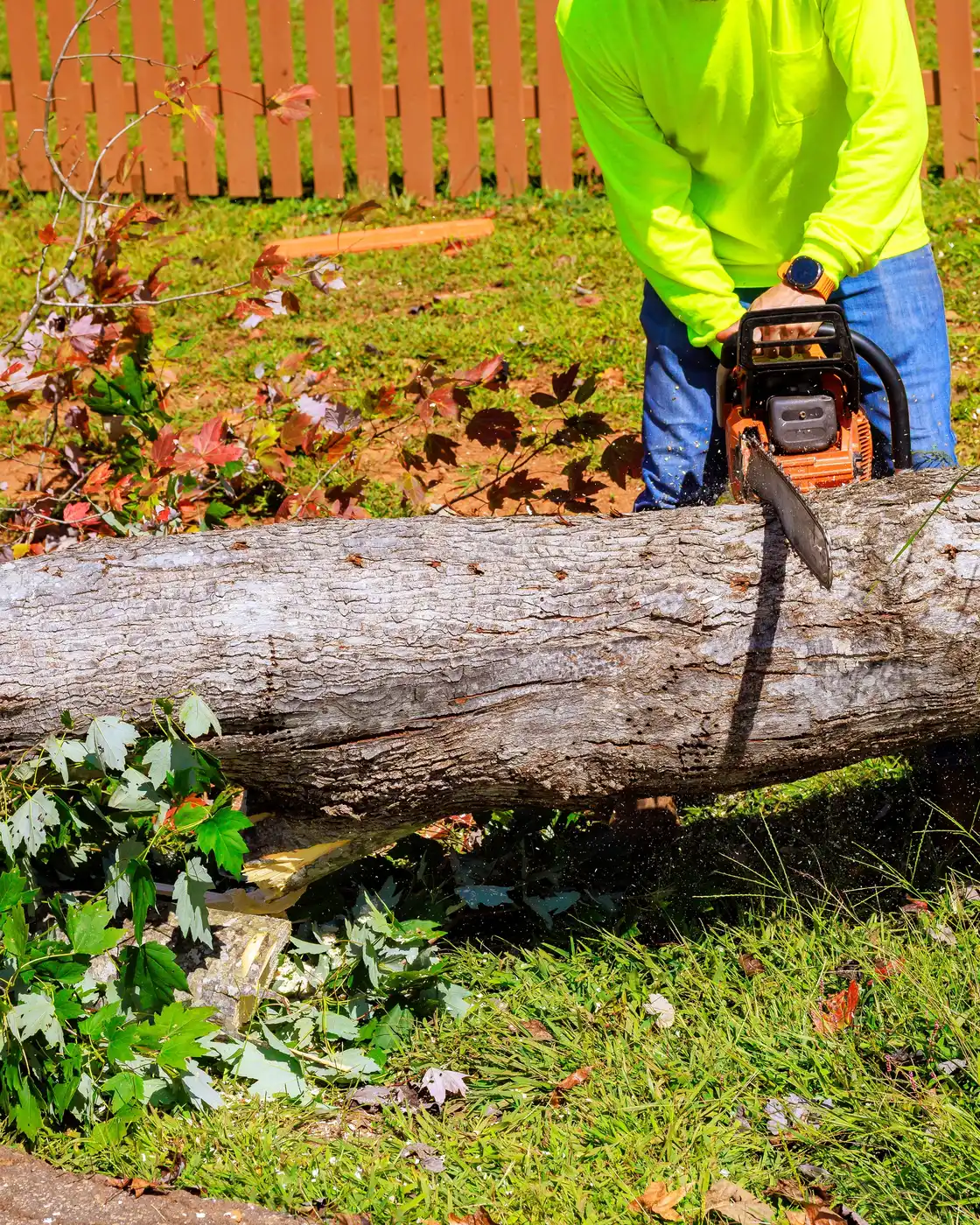
Ohio tree service contractors operate in a state with one of the largest urban tree canopies in the Midwest — Cincinnati’s hill neighborhoods, Cleveland’s East Side suburbs, and Columbus’s tree-lined streets all create steady demand. Ohio also has unique insurance dynamics that don’t exist in most states: workers’ compensation is administered exclusively through the Ohio Bureau of Workers’ Compensation (BWC), not private carriers. That single fact changes how Ohio tree service insurance programs are structured and priced.
This page covers what Ohio tree service insurance typically includes, how Ohio’s BWC system works for tree care operations, and what carriers are actively writing Ohio tree service business.
What Tree Service Insurance Costs in Ohio
Most Ohio tree service businesses carry several insurance policies that work together to protect the operation. Total premium depends on services performed, crew size, equipment value, claims history, and how long you’ve been in business.
Ohio’s costs are slightly different from neighboring states because workers’ compensation is paid to the BWC rather than a private carrier. The ranges below reflect what most Ohio tree service contractors typically pay across the full insurance program.
- General Liability Insurance: $850–$2,500 per year for typical Ohio small operations. Covers property damage and bodily injury claims when work goes wrong — a limb falling on a customer’s roof, a pedestrian injured during removal, a tree dropped on a neighboring structure.
- Workers’ Compensation (Ohio BWC): Tree service operations under manual classification 0106 typically pay base rates of $5–$13 per $100 of payroll, before group rating, retrospective rating, or experience modifier discounts. A crew with $200,000 of payroll typically pays $10,000–$26,000 annually before discounts. Ohio’s BWC offers significant premium reductions through group rating programs that we help our clients access.
- Commercial Auto Insurance: $1,900–$3,800 per truck per year for chip trucks, bucket trucks, and chipper-towing pickups in Ohio. Premiums reflect Ohio’s mix of urban and highway driving exposures.
- Inland Marine (Equipment) Insurance: $400–$1,500 per year depending on total equipment value. Covers chippers, stump grinders, climbing gear, chainsaws, and other tools when they’re at job sites, in transit, or stored overnight.
- Pesticide & Pollution Liability: $400–$900 per year for Ohio tree services performing emerald ash borer treatments, deep root feeding, or other plant health care work.
- Umbrella / Excess Liability: $500–$1,300 per year for $1M of additional coverage above primary limits. Often required for municipal contracts in Columbus, Cleveland, Cincinnati, or work near commercial properties.
Ohio’s mix of state-administered workers’ comp and competitive private liability markets means an experienced agent can often save Ohio tree service operations 15–30% by managing both sides correctly.
Workers’ Compensation in Ohio: Understanding the BWC
This is the section every Ohio tree service owner needs to read carefully. Ohio is one of only four monopolistic workers’ compensation states — along with Washington, Wyoming, and North Dakota. What that means in practice:
You cannot buy workers’ compensation insurance from a private carrier in Ohio. Coverage must be purchased through the Ohio Bureau of Workers’ Compensation (BWC), a state agency. There are no exceptions for tree service operations.
This is fundamentally different from how workers’ comp works in 46 other states — and it’s why Ohio tree service owners need an agent who actually understands the BWC system, not someone who treats it as an afterthought.
Manual Classification 0106 in Ohio
Ohio’s BWC uses NCCI-style manual classifications. Tree trimming, pruning, and removal operations are classified under manual 0106 (“Lawn Maintenance — Including Weed Control, Lawn Spraying & Tree Pruning”). Like the standard NCCI version, this is a high-hazard classification — meaning Ohio BWC base rates for tree service work are significantly higher than for landscape gardening operations (manual 0042).
BWC Discount Programs That Save Money
The BWC’s published base rates are not what most well-run tree service operations actually pay. Ohio offers substantial premium discount programs that informed agents help clients access:
- Group Rating — Tree service operations that join a sponsored group can reduce BWC premium by 30–50% if their group qualifies. Eligibility depends on safety record and group composition.
- Group Retrospective Rating — Pays back a portion of premium based on group claims experience over a 3-year window. Higher upside than group rating but requires patience and clean claims.
- Industry Specific Safety Program (ISSP) — Tree service operations that complete BWC-approved safety training can earn additional discounts.
- Drug-Free Safety Program (DFSP) — Premium discount for documented drug-free workplace policies.
- Destination: Excellence Programs — Multi-tier safety and risk management programs offering progressive discounts.
Most Ohio tree service owners we work with are missing at least one or two of these discount opportunities. A proper Ohio insurance review identifies what’s available and what’s been left on the table.
Employer’s Liability and Stop-Gap Coverage
Because Ohio BWC is monopolistic, it covers statutory workers’ compensation benefits but does NOT include employer’s liability coverage in the same way private workers’ comp policies do in other states. Employer’s liability protects against lawsuits brought by injured employees, third-party-over actions, or family members alleging negligence beyond the workers’ comp claim.
Ohio tree service operations need Stop-Gap Coverage — typically endorsed onto your general liability policy — to fill this employer’s liability gap. Without it, you’re exposed to lawsuits the BWC won’t defend or pay.
We make sure every Ohio tree service client has stop-gap coverage in place. This is a routine gap on Ohio policies written by agents who don’t specialize in the state’s unique system.
General Liability
General liability (GL) is the foundation of every Ohio tree care insurance program. A properly structured GL policy covers bodily injury and property damage claims arising from your operations — a branch landing on a parked car, a client tripping over debris, or a tree falling onto a neighboring structure.
Ohio tree service GL policies are typically written with:
- Occurrence-based coverage (preferred over claims-made for most contractors)
- Completed operations coverage for claims that arise after a job is finished
- Stop-Gap (Employer’s Liability) endorsement — see above
- Contractors’ professional liability if you provide arborist consulting or recommendations
Municipal contracts in Columbus, Cleveland, Cincinnati, and Toledo regularly require $1M–$2M per occurrence. HOA contracts and property management accounts often require $2M per occurrence. For utility line clearance work, especially around FirstEnergy, AEP Ohio, or Duke Energy infrastructure, umbrella limits of $2M–$5M are common.
Commercial Auto
Ohio tree service companies typically run pickup trucks, dump trucks, bucket trucks, chippers, and stump grinders. Every commercial vehicle — including chippers and trailers towed on Ohio roads — must be scheduled on a commercial auto policy. Personal auto policies exclude business use.
Common coverage gaps we see in Ohio programs:
- Chippers listed as trailers but never added to the schedule — a $60,000–$90,000 chipper is uninsured if it’s not explicitly listed
- Hired and non-owned auto — required if employees ever drive personal vehicles or rented trucks for company business
- Bucket trucks — confirm your policy covers the vehicle while the aerial function is in use, not just driving
- Multi-state operations — Ohio operations working across the river into Kentucky or West Virginia need policies that extend coverage outside Ohio
Inland Marine / Equipment Floater
Ohio crews typically carry $50,000–$200,000+ in portable equipment. Chainsaw theft from an unattended trailer is one of the most common inland marine claims in tree care, particularly in the Cleveland and Cincinnati metros. An equipment floater covers your chainsaws, climbing gear, rigging, stump grinders, and other portable equipment on the job site, in transit, and in storage — filling gaps that commercial auto and GL don’t cover.
Ask whether your floater is written on a replacement cost or actual cash value basis. For equipment you depend on daily, replacement cost coverage is worth the added premium.
Pesticide & Pollution Liability
The Ohio Department of Agriculture’s Pesticide & Fertilizer Regulation Section licenses commercial pesticide applicators in Ohio. If your operation includes herbicide treatments, soil injections, EAB treatments, or any chemical application, a standard GL policy will not respond to resulting pollution claims. Contractor’s pollution liability (CPL) fills that gap. CPL is also increasingly required by commercial and municipal clients as a condition of contract.
Umbrella / Excess Liability
An umbrella policy adds limits above your GL, commercial auto, and stop-gap (employer’s liability) limits. For Ohio tree service companies working on municipal right-of-way, commercial properties, or utility line clearance, umbrella limits of $1M–$5M are frequently required by contract. A $1M umbrella typically costs a fraction of what your underlying GL costs — it’s one of the most efficient insurance purchases available.
Common Tree Service Risks in Ohio
Ohio’s geography and climate create specific risk patterns that influence tree service insurance pricing:
Lake-Effect Weather (Northeast Ohio)
Cleveland, Akron, Lorain, and the entire I-90 corridor experience lake-effect snow and ice events that overload trees with weight and create dangerous removal jobs throughout late November through March. Ice loading is one of the most underestimated tree service risks in Ohio.
Severe Storm and Wind Events
Ohio sits in a corridor that gets meaningful severe weather year-round — tornadoes in the spring, wind events in the summer, derechos like the historic 2012 storm that knocked out trees across the entire state. Storm response work generates revenue but is also among the highest-risk work tree services perform.
Emerald Ash Borer Devastation
Ohio was one of the earliest and hardest-hit states by EAB, which arrived around 2003. Treatment work (using pesticide injections like emamectin benzoate) and removal of dead ash trees has become a substantial market segment. Ohio tree services performing EAB treatment need pesticide and pollution liability — general liability does not cover application errors or environmental contamination.
Aging Urban Canopy
Cincinnati’s hillsides, Cleveland’s East Side, and Columbus’s older neighborhoods (German Village, Clintonville, Bexley) have substantial mature tree populations requiring ongoing professional maintenance. The dense urban canopy creates demand but also concentrates risk — tree work near buildings, vehicles, and people raises liability exposure.
Utility Line Clearance Demand
Ohio has substantial utility right-of-way clearance work driven by FirstEnergy, AEP Ohio, Duke Energy, and Dayton Power & Light contracts. Operations doing line clearance need higher liability limits and specific underwriting — many standard GL policies exclude or limit this work.
Why Ohio Tree Service Owners Choose TreeGuard
We understand the BWC. Most insurance agents treat Ohio workers’ comp as an afterthought — they hand you a BWC application and move on. We actively help Ohio tree service operations navigate group rating, retrospective rating, and the safety discount programs that meaningfully reduce premium.
We get the stop-gap right. Many Ohio tree service operations carry policies with no employer’s liability coverage at all because their previous agent didn’t endorse stop-gap. We catch this gap routinely.
As an independent agency, we represent 16+ A-rated carriers and shop your operation across the entire market. You’re not stuck with one company’s underwriting appetite or pricing — we find the carrier that best fits your specific Ohio operation.
We specialize in tree care. We don’t write the occasional tree service policy as a side line — this niche is our focus. That focus shows up in proper class code assignment, accurate quotes, fast certificate turnaround, and underwriters who actually understand aerial work.
Quote turnaround is fast. Most Ohio tree service quotes come back within 1–2 hours during business hours.
Major Ohio Markets We Serve
We write tree service insurance across all of Ohio, with strong concentration in:
- Columbus Metro: Ohio’s largest and fastest-growing tree service market, with dense canopy in Bexley, Upper Arlington, Worthington, Westerville, Dublin, and the city’s older neighborhoods.
- Cleveland Metro: Cleveland, Lakewood, Shaker Heights, Cleveland Heights, Beachwood, Solon, and the entire East Side suburbs — historically Ohio’s densest tree care market.
- Cincinnati Metro: Cincinnati’s hill neighborhoods, plus Mason, West Chester, Blue Ash, and Hyde Park have substantial mature canopy.
- Northeast Ohio: Akron, Canton, Youngstown, Warren — manufacturing belt cities with established tree service markets.
- Northwest Ohio: Toledo, Bowling Green, Findlay, Lima.
- Southwest Ohio: Dayton, Springfield, Middletown, Hamilton.
Whether you’re a single-truck operation in a rural county or a 30-employee crew working across the Columbus or Cleveland metro, we can write your business in Ohio.