
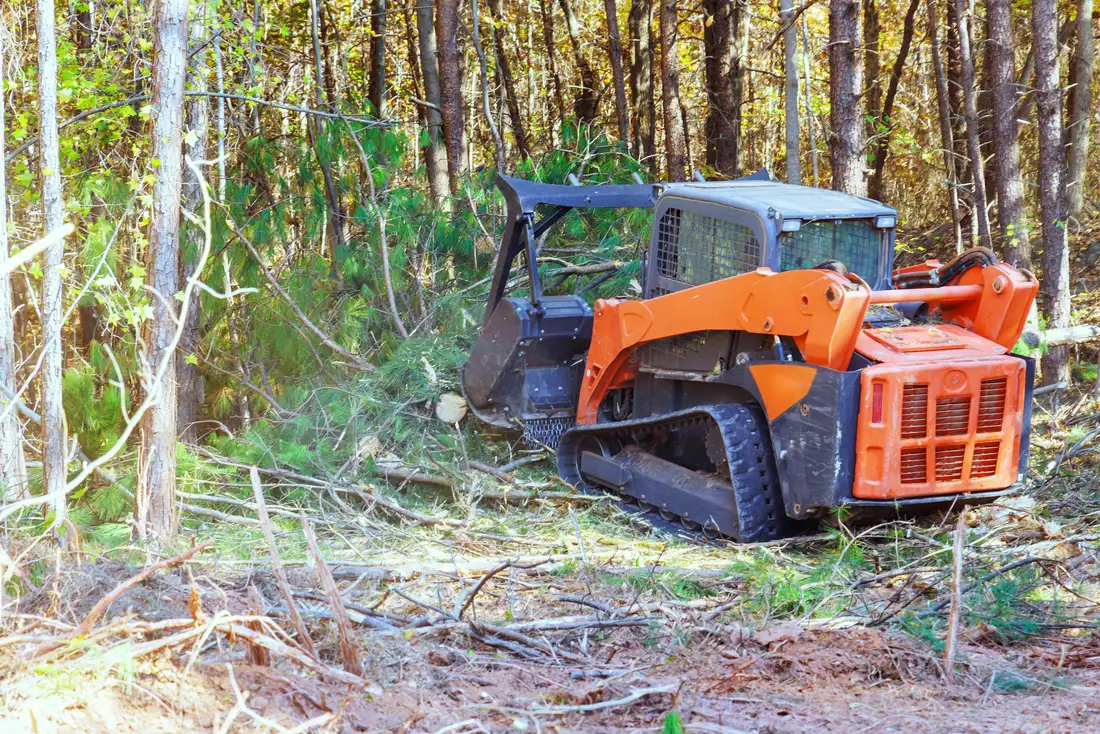
Idaho tree service contractors work a state that changes character every hundred miles. The Treasure Valley runs a dense residential and commercial canopy on irrigated ground. The panhandle above Coeur d’Alene is timber country with a homeowner base living inside it. The Snake River Plain is high desert with wind, irrigation corridors, and cottonwoods that fail in ways hardwood crews from other states do not expect. One insurance program has to answer all three.
What ties them together is fire. A large share of Idaho tree work is now some form of fuels management — defensible space clearing, hazard tree removal, understory reduction on the wildland-urban interface — and that work carries an underwriting profile that ordinary residential pruning does not. This page covers what Idaho tree service insurance includes, how the state handles workers’ compensation, what Idaho does and does not license, and where the exposures actually sit.
What Tree Service Insurance Costs in Idaho
Idaho is a competitive workers’ compensation state with an active private market alongside a state fund, and it is an NCCI jurisdiction, so tree work rates under the familiar class code 0106. Pricing tends to reflect three things: how much of the year is fuels and hazard work, how far crews travel between jobs, and whether the operation touches utility or federal contracts.
The ranges below reflect what most Idaho tree service contractors typically pay:
- General Liability Insurance: $850–$2,500 per year for a typical Idaho small operation. Panhandle operations working among high-value residential timber property tend toward the upper end.
- Workers’ Compensation Insurance: $7–$13 per $100 of payroll under class code 0106. A worked example: a crew with $200,000 of payroll typically pays $14,000–$26,000 annually.
- Commercial Auto Insurance: $1,900–$3,900 per truck per year. Idaho operations run long transits between jobs, and mileage exposure shows up in pricing more here than in compact metro states.
- Inland Marine (Equipment) Insurance: $400–$1,500 per year depending on schedule value. Operations staging at dispersed sites should read the unattended-property conditions before binding.
- Pesticide & Pollution Liability: $400–$900 per year for Idaho operations doing bark beetle treatment, injections, or right-of-way herbicide.
- Umbrella / Excess Liability: $500–$1,300 per year for a first layer above primary limits. Federal and utility vegetation contracts are the usual reason Idaho operations buy one.
Because Idaho gives operations a genuine choice between the state fund and private carriers, the spread between a well-presented submission and a poorly presented one is wider here than in states where the rate is largely fixed. For the rating factors that apply everywhere — crew size, climbing versus aerial access, fleet profile, claims history — see the national cost guide.
Workers’ Compensation in Idaho
Idaho Code § 72-301 requires an employer to secure the payment of compensation, and it names the ways that can be done: a policy from an insurer authorized by the director of the Department of Insurance to write the coverage, or self-insurance approved by the Idaho Industrial Commission and backed by deposited security. Idaho also operates a state fund that competes in the open market rather than replacing it.
That structure matters for tree services. In a monopolistic state there is one place to buy and one rate to take. In Idaho an operation can be shopped, and a safety record can be converted into money.
Class Code 0106 in Idaho
Idaho is an NCCI jurisdiction, so tree trimming, pruning and removal fall under class code 0106. The recurring problem is not the code itself but placement under the landscape gardening code, 0042, which carries a materially lower base rate. When an audit reaches the actual operations, the correction comes back as retroactive premium, and the operation that thought it was saving money spends a season paying for the difference.
What Idaho Operators Should Watch
- The obligation attaches to employees, not to a headcount threshold — seasonal groundmen count
- Uninsured subcontractors are commonly picked up as employees at audit
- Owner and officer treatment must be documented with the carrier before a loss, not after
- Experience modification begins to move pricing once there is enough history to rate
General Liability
General liability is the base of an Idaho tree care program. It answers bodily injury and property damage arising out of the work — a spar section that goes the wrong way, a chip truck that scars a driveway, a client who trips in a work zone.
Idaho policies are usually written occurrence-based rather than claims-made, with completed operations included so that a failure appearing weeks after a crew leaves is still inside the policy. Operations that give written recommendations about tree health or retention should look at professional liability separately, because advice is not an operation and the general liability form is not built to answer it.
Property values in Sun Valley, Coeur d’Alene and the Boise foothills mean a single mistake can generate a claim well beyond what a small operation would guess. Limits should be set against the property being worked near, not against revenue.
Commercial Auto
Idaho tree service fleets tend to be a pickup or two, a chip truck, a dump body, and towed equipment. Everything towed on a public road belongs on the schedule, and this is where Idaho programs most often have a hole in them.
Three failures repeat:
- A chipper or grinder is described as a trailer at binding but never actually scheduled, so a six-figure machine is uninsured while it is being pulled
- Hired and non-owned coverage is missing on an operation where employees regularly move their own vehicles between sites, which describes most Idaho crews given the distances involved
- An aerial unit is covered as a vehicle but the policy is silent on the boom while it is in operation, which is a different exposure than driving
Distance is the Idaho-specific factor. Crews running from Boise to outlying counties, or from Post Falls into the panhandle, accumulate road exposure that a metro operation does not, and underwriters read radius as a rating fact rather than a detail.
Inland Marine / Equipment Floater
An Idaho schedule usually holds saws, rigging, climbing hardware, a grinder and a chipper — property that moves daily and sits at whatever staging point the work requires. The floater is what follows it there.
The clause worth reading in Idaho is the one governing unattended property. Operations that leave a trailer at a trailhead or a remote turnout overnight are relying on a policy that may condition coverage on locked storage or attended premises, and that condition is invisible until it is applied.
Pesticide & Pollution Liability
The Idaho State Department of Agriculture licenses commercial pesticide applicators. For tree services the relevant work is bark beetle pressure — mountain pine beetle and Douglas-fir beetle both drive treatment and removal demand in Idaho — along with systemic injections and herbicide on rights-of-way.
A general liability policy excludes pollution, and a chemical application is a pollution event when it goes wrong. Contractors’ pollution liability is the form that responds to drift, overspray, an off-target application, or contamination of a water feature. Operations working near irrigation canals and the Snake River drainage carry more of that exposure than the acreage alone suggests, because a canal moves a mistake downstream faster than soil does.
Umbrella / Excess Liability
An umbrella sits above general liability, commercial auto and employer’s liability at once. In Idaho the buying trigger is usually contractual rather than voluntary: federal vegetation work, utility line clearance, and district contracts frequently require excess limits before a crew is allowed on site.
The pricing logic is favorable. A first layer of excess is inexpensive relative to the primary limits underneath it, and for an operation working near structures worth many multiples of its annual revenue, it is the cheapest way to close the gap between what a policy pays and what a loss costs.
Fuels Work Is a Different Risk Than Pruning, and Idaho Prices It That Way
Most of what separates an Idaho tree service program from a generic one comes down to a single question: how much of the year is spent on the wildland-urban interface, and under whose contract.
Defensible space clearing and hazard tree removal are not simply pruning at altitude. The ground is steeper. Trees are frequently dead or fire-weakened, which means they fail unpredictably and do not behave the way a healthy stem does under a face cut. Crews work further from definitive medical care, which changes the severity distribution of an injury without changing its frequency. And in an active fire season the work sometimes happens under time pressure inside a perimeter, which is the single worst combination of conditions this trade produces.
Three things make that work insurable on reasonable terms:
- Payroll split by what people actually do. A crew of six is not six identical exposures. Climbing and faller payroll carries the aerial and felling risk; chipper operators and haul drivers do not. Operations reporting one undifferentiated figure are rated on the least favorable assumption available.
- A written program that exists as paper. Training records, tailgate logs, and a rescue plan the crew has actually walked through. Underwriters in this space are asking whether the plan is real, and the way they test that is by asking for it.
- Contract posture stated plainly. Homeowner work, district work, and federal work carry different certificate requirements and different indemnity language. Operations that describe all three as fuels reduction leave the underwriter to assume the worst of the set.
The operations that get priced well in Idaho are not the ones doing the least dangerous work. They are the ones that can describe the dangerous work precisely.
Common Tree Service Risks in Idaho
Idaho concentrates several hazards that appear separately elsewhere.
Wildland-Urban Interface Exposure
More Idaho homes sit inside or against forest than in most states, and the tree work that follows is hazard-driven. Dead and fire-damaged stems behave differently under load, and the property being protected is often the reason the crew is there — which puts high-value structures directly in the fall zone.
Bark Beetle Mortality
Mountain pine beetle and Douglas-fir beetle activity produces standing dead timber across large parts of the state. Removal of beetle-killed trees is steady work and dangerous work: the wood is brittle, tops are unstable, and a stem that looks sound from the ground can come apart during rigging.
Steep and Broken Ground
Panhandle and central Idaho jobs frequently sit on grades that rule out an aerial lift entirely. Climbing work on steep terrain raises both the injury rate and the difficulty of getting an injured climber out, and carriers underwrite the second part as seriously as the first.
Winter Load and Spring Failure
Snow and ice loading breaks limbs through the winter, and the failures show up again in spring when saturated ground gives up root plates that held all season. Both generate emergency call-outs, which is the highest-risk work an operation does.
Wind on the Snake River Plain
The open ground of the southern plain carries sustained wind that stresses irrigation-corridor cottonwoods and poplar windbreaks. These are fast-growing, weak-wooded species planted in rows near structures and equipment, and they fail in large pieces.
Distance From Services
Long transits are an Idaho constant. Response time to an injury is a function of geography, and operations working outlying counties should treat communications and evacuation planning as part of the safety program rather than an afterthought.
Why Idaho Tree Service Owners Choose TreeGuard
We know what to do with a fuels-heavy operation. Most agencies see defensible space work on an application and treat it as a reason to decline or surcharge. It is a reason to ask better questions, and the answers usually improve the submission rather than damage it.
We get the class code right the first time. Placement under 0042 instead of 0106 looks like a saving until the audit arrives, and unwinding it costs more than doing it correctly at the start.
As an independent agency we represent 16+ A-rated carriers and shop the whole market. Idaho is a competitive state, which means a well-documented safety record is worth real money — but only if someone actually takes it to more than one underwriter.
We work in this trade only. Tree care is the whole book, not a line item in it, and that shows up in how quickly a certificate goes out and how well an underwriter understands what a spar section is.
Quotes generally come back the same business day, and most Idaho submissions are turned inside one to two hours.
Major Idaho Markets We Serve
We write tree service insurance across Idaho, with concentration in:
- Treasure Valley: Boise, Meridian, Nampa, Caldwell, Eagle, Kuna and the foothills — the state’s largest residential and commercial market, with a foothills interface component.
- North Idaho: Coeur d’Alene, Post Falls, Hayden and Sandpoint — timber-adjacent residential property, lake frontage, and high-value homes inside standing forest.
- Eastern Idaho: Idaho Falls, Rexburg, Pocatello and the upper Snake — agricultural windbreaks, university and institutional work, and winter load damage.
- Magic Valley: Twin Falls, Jerome and Burley — irrigation corridor cottonwoods, canal-side work, and wind-driven failures.
- Central Idaho and the Wood River Valley: Ketchum, Hailey and Sun Valley — high-value resort property with heavy defensible space demand.
- Lewis-Clark Valley: Lewiston and Moscow — river breaks, steep ground, and mixed rural and municipal work.
Whether the operation is one truck working the Palouse or a multi-crew outfit running fuels contracts across several counties, we can place it in Idaho.