
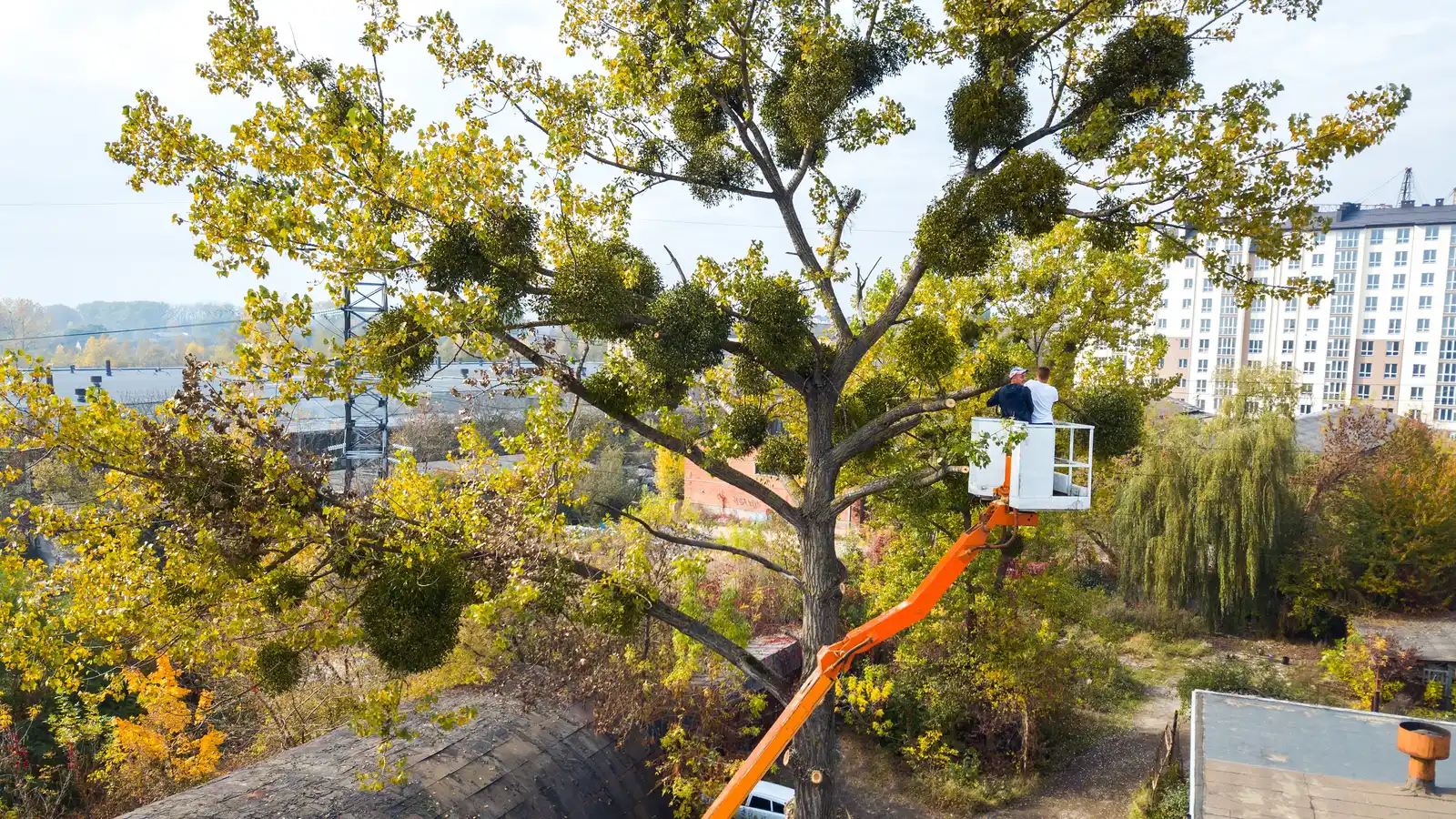
Tree service insurance typically costs $4,200 to $18,000+ per year for a small-to-mid-size operation, with most single-crew operations paying $6,000–$10,000 annually. That range is wide because pricing depends on five key variables: total payroll, the services you perform, equipment value, your state, and claims history.
This guide breaks down exactly what you’ll pay in 2026 — by coverage type and by operation size — and identifies the specific factors that drive premiums up or down. If you want a fast answer on your specific operation, get a quote here. If you want to understand the math first, read on.
How Much Is Tree Service Insurance? Why the Average Misleads
Search for the average cost of tree service insurance and you’ll get a single number. That number is close to useless for budgeting, and it’s worth understanding why before you anchor on it.
Tree care premiums are not distributed around a meaningful middle. The trade contains two operations that look nearly identical on paper — same revenue, same truck count, same state — and price very differently because one climbs and one doesn’t, or because one has three years of clean loss runs and the other has two frequency claims. An average blends a solo ground-work operator with a multi-crew utility line clearance contractor. Nobody actually pays the average.
What underwriters actually do is build your premium from a stack of independent inputs. Change one input and the whole stack moves:
- Payroll — the rating base for workers’ compensation, the largest line for anyone with employees
- What work you actually perform — trimming, removal, climbing, cranes, line clearance
- How you reach the canopy — from the ground, from a bucket, or on rope and saddle
- Your fleet and equipment schedule — what you drive and what you carry
- Where you operate — state comp posture and regulatory environment
- Your loss history — frequency first, severity second
The sections below take each of these in turn. If you want to estimate your own cost rather than borrow someone else’s average, read them as a checklist against your own operation. Every one of them is something an underwriter will ask about, and every one is something you have at least partial control over.
For state-level variation on top of these national factors, we maintain dedicated cost breakdowns for California, Texas, Florida, New York, and Ohio.
Quick Cost Snapshot by Operation Size
Here’s what most tree service contractors actually pay across all insurance lines:
| Operation Size | Typical Annual Total |
|---|---|
| Solo operator (no employees) | $2,800–$5,500/yr |
| Single crew (2–3 employees) | $6,000–$12,000/yr |
| Two-crew operation ($600K–$1M revenue) | $12,000–$25,000/yr |
| Multi-crew operation ($1M+) | $20,000–$50,000+/yr |
These figures reflect total spend across GL, workers’ comp, commercial auto, and equipment coverage. They do not include surety bonds (required in some states as a licensing condition).
Workers’ compensation is almost always the largest single line item. For a crew with $200,000 in annual payroll, WC alone runs $10,000–$22,000 depending on state and claims history. Get payroll right and everything else falls into proportion.
For a finer-grained look at what each line of coverage actually costs on a monthly and annual basis, here’s the typical 2026 breakdown for a small-to-mid-size tree service operation:
| Coverage Type | Monthly Cost | Annual Cost | Notes |
|---|---|---|---|
| General Liability ($1M/$2M) | $60–$210 | $700–$2,500 | Higher in E&S markets |
| Workers’ Compensation (per $100K payroll) | $580–$1,250 | $7,000–$15,000 | Class code 0106; varies by state |
| Commercial Auto (per vehicle) | $150–$220 | $1,800–$2,640 | Bucket trucks cost more |
| Inland Marine (Equipment) | $35–$150 | $400–$1,800 | Scales with equipment value |
| Pesticide & Pollution Liability | $35–$85 | $400–$1,000 | If doing PHC or chemical work |
| Umbrella / Excess Liability | $50–$210 | $600–$2,500 | Per $1M of additional coverage |
These ranges are what TreeGuard sees daily across our A-rated carrier panel, including specialty markets that specifically write class code 0106. Operations placed through generalist agents using standard commercial lines markets routinely pay more for the same effective coverage.
Why Tree Service Insurance Costs More Than Other Trades
Three structural reasons drive tree service premiums above what comparable contractor trades pay:
1. Workers’ compensation class code 0106 carries some of the highest rates in any trade. NCCI class code 0106 (Tree Pruning, Spraying, Repairing) rates range from approximately $5 per $100 of payroll in the most competitive states to over $20 per $100 in higher-cost states. For comparison, an office clerk’s class code (8810) typically runs under $0.30 per $100 of payroll. The difference reflects the catastrophic injury frequency in tree work — the Tree Care Industry Association tracked 243 tree care fatalities over 2020–2023, averaging about 61 deaths per year, with falls and contact with objects/equipment accounting for roughly 70%.
2. Standard carriers often decline tree service business entirely. Many general commercial carriers won’t write tree removal operations because the claim severity profile doesn’t fit their underwriting models. This pushes coverage into the Excess & Surplus (E&S) lines market, where premiums are higher, underwriting is stricter, and quote turnaround is slower.
3. Specific exposures require explicit policy endorsements. A “tree service” policy that doesn’t specifically endorse climbing, aerial work, crane operations, or utility line clearance may deny claims arising from those activities. This is why operators who buy from generalist agents often discover coverage gaps at claim time — not at bind.
Cost by Coverage Type
General Liability Insurance
General liability (GL) is the foundational policy — it covers bodily injury and property damage claims arising from your operations. For tree services, GL is specialty-rated: insurers look at aerial work, chainsaw operations, falling debris exposure, and completed operations liability.
- Solo operator: $700–$1,400/year
- Single crew: $1,200–$2,500/year
- Multi-crew ($600K–$1M revenue): $2,500–$5,000+/year
Standard limits for residential work are $1M per occurrence / $2M aggregate. Commercial accounts and municipal contracts regularly require $1M–$2M per occurrence minimums. Having Certificates of Insurance ready at the right limits is a prerequisite for landing commercial work.
Workers’ Compensation Insurance
Workers’ comp is the most expensive line item for any tree service business with employees. Tree services fall under NCCI class code 0106 (Tree Trimming and Removal) — one of the highest-rated workers’ comp classifications in the country.
- Rate: $5–$15 per $100 of payroll, depending on state and experience modifier
- $150K payroll crew: $7,500–$22,500/year
- $300K payroll operation: $15,000–$45,000/year
Why so high? The Bureau of Labor Statistics consistently ranks tree trimming and removal among the deadliest occupations in the US — fatal injury rates of 80–129 per 100,000 workers, compared to 3.4 per 100,000 across all private-sector workers. Carriers price accordingly. Misclassifying crews under the landscaping code (0042) is common and results in substantial back-premium charges at audit.
Commercial Auto Insurance
Commercial auto covers chip trucks, bucket trucks, and chipper-towing pickups for liability and physical damage. Rates depend on vehicle type, driver MVR history, operating radius, and garaging location.
- Pickup or cargo van: $1,800–$2,800/vehicle/year
- Chipper-towing truck or chip truck: $2,500–$4,000/vehicle/year
- Bucket truck: $3,000–$5,000+/vehicle/year
MVR violations — particularly CDL violations — drive commercial auto premiums sharply higher. A single DUI or reckless driving conviction can trigger a non-renewal.
Inland Marine / Equipment Insurance
Inland marine coverage protects your chainsaws, climbing systems, rigging, stump grinders, and other portable equipment — on site, in transit, and in storage. A typical mid-size tree service carries $50,000–$180,000 in portable equipment that standard commercial auto and GL policies don’t cover off-vehicle.
Equipment value scaling tiers — what most operations actually pay based on total scheduled equipment:
- Solo operator ($10K–$20K equipment): $400–$700/year
- Small crew ($30K–$80K equipment): $700–$1,500/year
- Mid-size operation ($100K–$300K equipment): $1,500–$3,500/year
- Large operation with cranes ($500K+ equipment): $3,500–$8,000+/year
Replacement cost coverage is strongly recommended over actual cash value — a three-year-old $85,000 chipper has very different ACV and replacement cost figures.
Pesticide & Pollution Liability
If you perform plant health care work — fertilization, pest treatments, chemical applications — you need pesticide and pollution liability. Standard GL policies contain absolute pollution exclusions and will not respond to chemical application claims.
- Typical cost: $400–$1,000/year for tree services with PHC work
Contractor’s pollution liability (CPL) is increasingly required by commercial accounts, municipalities, and utility companies that contract for vegetation management.
Umbrella / Excess Liability
An umbrella policy adds limits above your GL, commercial auto, and employer’s liability. For tree service companies working on commercial, institutional, or municipal accounts — or utility vegetation management — umbrella limits of $2M–$5M are frequently required by contract.
- $1M umbrella: $600–$1,500/year
- $2M umbrella: $900–$2,000/year
Dollar for dollar, umbrella is the most efficient insurance purchase available to most tree service operations. The coverage is broad, the premium is low relative to the additional limit, and it’s a requirement for the highest-revenue commercial contracts.
What Drives Tree Service Insurance Costs
Revenue and Payroll
Payroll is the WC rating base — more payroll means higher premium proportionally. GL is often rated on revenue. As operations scale from single-crew to multi-crew, insurance costs scale with them. See our scaling guide for how insurance requirements change at each revenue stage.
Crew Size and Composition
Crew size drives cost through payroll, but the composition of the crew matters independently of the headcount — and this is where operators most often misjudge their own risk profile.
Adding your first employee is the single largest structural change in a tree service insurance program. It moves you from a GL-and-auto operation into a workers’ compensation account, and class code 0106 is where the money goes. That transition is a step change, not a gradual slope. Our guide on when to hire your first employee covers the timing side of that decision.
Beyond the first hire, underwriters look at how the crew is built rather than simply how many people are on it:
- Ground-to-aerial ratio. A crew with one climber and three ground personnel prices differently than a crew with three climbers, even at identical total payroll. Payroll assigned to aerial positions carries the exposure; ground support carries less. Splitting payroll accurately by function is a legitimate and frequently missed savings opportunity.
- Crew stability and turnover. High turnover reads as elevated risk. New personnel in the first months on the job are overrepresented in tree care injury data, so a crew that turns over annually presents differently than one that has worked together for years — even with identical headcount and payroll.
- Supervision depth. Whether a qualified arborist or trained crew leader is on site during aerial operations is an underwriting question, not a formality. Operations that run crews unsupervised while the owner sells work are rated on that structure.
- Subcontractors and day labor. Uninsured subcontractors typically get picked up on your policy at audit and charged as your payroll. Operations that lean on subcontracted climbers during peak season without collecting certificates routinely get surprised by an audit bill. Collect a certificate for every sub, every time — our Certificate of Insurance guide covers what to require.
- Owner inclusion or exclusion. Whether owners and officers are included in or excluded from the workers’ comp policy changes the rated payroll. The right answer depends on your state and your own coverage needs, and it is worth revisiting at each renewal rather than defaulting to whatever was chosen at inception.
The practical takeaway: two operations with the same total payroll can present very different risks. Underwriters price the structure, not just the sum.
Climbing Work vs Bucket-Truck Work
How your crews reach the canopy is one of the strongest single predictors of workers’ compensation cost in tree care, and it is the factor most often left undiscussed when operators shop coverage.
Climbing operations carry the highest exposure. A climber on rope and saddle is suspended in the tree, operating a chainsaw at height, frequently in a position where a rigging failure, a misjudged cut, or a struck-by event from falling wood has no engineered backstop. The consequences skew catastrophic rather than minor. Underwriters know this, and operations that perform substantial climbing work are rated accordingly.
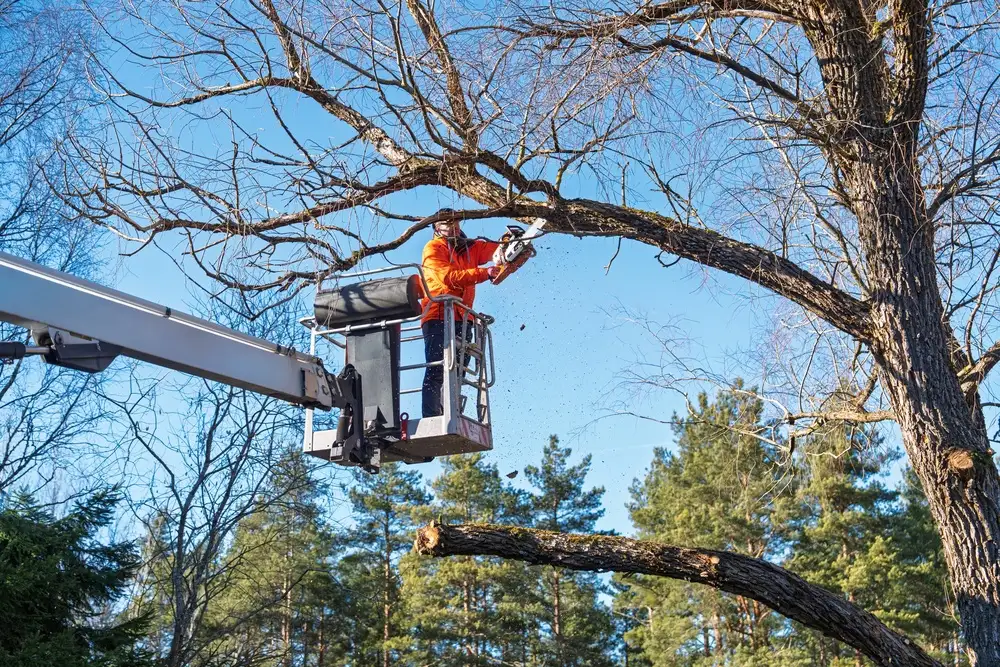
Bucket-truck work moves the operator into an engineered platform. An aerial lift provides a stable working position, a defined load path, and — critically — an established inspection and certification regime. That does not make it low-hazard work: bucket trucks introduce their own exposures around electrical contact, setup on unstable ground, outrigger placement, and the fact that the truck itself is an expensive titled asset that has to be insured on the commercial auto and inland marine side. But the injury profile is meaningfully different from free-climbing.
This creates a genuine tension in program design that most cost guides skip. Moving from climbing to bucket work tends to improve your workers’ compensation posture while increasing your commercial auto and equipment exposure. The net effect depends on your payroll-to-fleet ratio. Operations with high payroll and few assets usually benefit; operations with modest payroll and a large titled fleet may find the savings offset.
What underwriters actually want to see, regardless of which method you use:
- A written aerial rescue plan, with crews trained to execute it. Aerial rescue capability is a standing expectation for climbing operations and a frequent underwriting question.
- Documented equipment inspection. Climbing systems, ropes, saddles, and lanyards on a documented inspection and retirement schedule; aerial lifts on their required inspection cycle.
- Electrical hazard training and clearance discipline. Contact with energized conductors is a leading cause of serious injury in tree care, and it applies to both climbing and bucket operations. OSHA’s tree care resources set out the baseline requirements.
- Honest disclosure of the work mix. An operation rated as bucket-only that regularly sends climbers up is misrepresented, and that surfaces at claim time rather than at bind.
If you are transitioning between methods, raise it with your agent before the equipment purchase rather than at the next renewal. The classification and fleet consequences are easier to structure in advance.
Services Performed
Tree removal carries higher rates than trimming, which carries higher rates than stump grinding. Operations that perform removal and trimming are rated on removal exposure — underwriters don’t average. What you actually do on job sites determines your classification.
Underwriters tier service exposure roughly like this, from lowest to highest premium:
- Ground-level pruning and shrub work
- Residential trimming with bucket truck
- Climbing operations
- Tree removal
- Crane-assisted removals
- Utility line clearance
- Emergency storm response
Operations doing utility line clearance pay roughly 3–5x what residential trimming operations pay for equivalent payroll volume. Operations chasing storm response work add an additional layer because of surge payroll, unfamiliar geographies, and the structural-failure risk of storm-damaged trees.
Tree Height and Complexity
Aerial work above 25–30 feet is priced differently than low-canopy work. Crane-assisted removals create additional exposure. Some carriers surcharge for work above 60 feet or technical rigging operations in confined spaces.
Equipment and Fleet Profile
A higher equipment schedule means higher inland marine and commercial auto premiums. A $120,000 chipper carries very different insurance costs than a $30,000 one. But total scheduled value is only the starting point — the composition of the fleet and schedule drives cost as much as the sum.
On the fleet side, underwriters distinguish sharply between vehicle classes. A pickup that tows a chipper, a dedicated chip truck, and a bucket truck sit at different points on the rating scale, reflecting both the replacement cost of the unit and the severity potential when a heavy vehicle is involved in a loss. Fleet factors that move commercial auto pricing:
- Driver quality. Motor vehicle records are pulled on every listed driver, and a single serious violation can reshape the quote or trigger a non-renewal. Maintaining a written driver qualification standard — and actually declining to put people behind the wheel who fail it — is one of the few fleet levers that produces durable savings.
- Radius of operation. Local work prices differently than long-haul travel to storm work several states away. Operations that chase catastrophe response should expect the radius question and should answer it accurately.
- Garaging and overnight security. Where equipment sits overnight matters, particularly for theft-prone items. Secured yards, lighting, and telematics all factor in.
- Towing configuration. Chippers, stump grinders, and log trailers introduce hitch and towing exposure that some operators forget to disclose because the trailer isn’t self-propelled.
On the equipment side, the schedule itself needs discipline. Common problems we see:
- Stale schedules. Equipment bought mid-term and never added is uninsured. Equipment sold and never removed is premium spent on nothing. An annual schedule reconciliation catches both directions.
- Valuation basis. Replacement cost and actual cash value produce very different claim outcomes on depreciating assets like chippers and grinders, and the premium difference is usually smaller than operators expect relative to the coverage difference.
- Small tools drift. Chainsaws, rigging, and climbing gear are rarely scheduled individually and are usually covered under a blanket limit. That limit is often set at inception and never revisited, so it quietly falls behind the actual inventory.
- Rented and borrowed equipment. Cranes and specialty lifts brought in for a single job may or may not be covered depending on the form. Confirm before the crane arrives, not after.
Our inland marine guide covers the equipment side in detail.
State Workers’ Comp Posture
Workers’ compensation rates vary substantially by state — the same class code 0106 operation can cost $5–$7 per $100 of payroll in some states and $12–$15 in others. That variance is not arbitrary, and understanding its sources tells you which parts are negotiable and which are structural.
Monopolistic state funds. Four states — Ohio, North Dakota, Wyoming, and Washington — do not permit private workers’ compensation coverage. Coverage is purchased from the state fund, full stop. In those states there is no shopping the comp line: your premium is a function of the state’s rate schedule and your own experience. What you can still shop is everything else in the program, and what you can still influence is your claims experience within the fund’s rating structure. Note also that employer’s liability, which normally rides along with workers’ comp, is not provided by monopolistic funds and generally has to be picked up separately through a stop-gap endorsement — a gap that operators in those states discover surprisingly late.
Competitive states with a state fund alternative. Several states operate a fund that competes with private carriers and serves as a market of last resort. Placement with that fund typically signals that private markets declined the risk, and pricing reflects it. Getting off the fund and back into the competitive market is usually a matter of addressing the underlying reason for the decline rather than simply re-shopping.
Rating bureau differences. Most states use NCCI loss costs as the starting point. A handful — California, Pennsylvania, Delaware, New Jersey, and others — run independent rating bureaus with their own class definitions and loss costs. Class code 0106 does not necessarily mean the same thing or carry the same relativity in an independent-bureau state, which is why a multi-state operation cannot assume its home-state rate travels.
Regulatory and benefit structure. States differ in indemnity benefit levels, medical fee schedules, and how aggressively disputed claims are litigated. Those differences flow directly into loss costs for every employer in the state, and they are entirely outside your control.
If you operate across state lines, the practical consequence is that payroll must be reported by state, and the same crew generates different premium depending on where they worked. Our state pages cover the licensing and coverage posture state by state.
Experience and Claims History
Frequency matters more than severity. Two small claims often damage renewals more than one large claim because frequency signals systemic risk — a large single loss can be argued as bad luck, while a pattern reads as a process problem. Clean operations consistently access better pricing and more carrier options.
Several distinctions inside “claims history” are worth understanding, because they determine how long a given event follows you:
- Loss runs are the actual document. Carriers request three to five years of loss runs at submission. What is on them is what you are underwritten on, including open reserves on claims that have not settled. An open claim carried at a high reserve prices as though it will settle there — which is why pushing stale open claims to closure before renewal is worth the administrative effort.
- Reported-but-not-paid still counts. Incidents reported to the carrier that resulted in no payment still appear. This is the argument for a considered reporting posture on genuinely minor incidents, balanced against the obligation to report anything that could develop.
- The experience modifier lags. Your mod is calculated on a rating period that excludes the most recent policy year. A clean year does not help immediately, and a bad year keeps hurting after you have fixed the underlying problem. Improvement is real but slow, which is the argument for starting before you need the result.
- New ventures have no history at all. Operations without enough payroll history to develop a mod are rated at unity and underwritten on narrative — safety program, principal’s experience, certifications — rather than data. That makes documentation disproportionately valuable in the early years.
- Claims follow the entity, not the owner. Restructuring the business does not reset the mod where common ownership exists, and carriers check. Attempting to shed a loss history through a new entity is a well-known pattern and it is treated as one.
Certification and documented training affect this same underwriting conversation. ISA Certified Arborist credentials and TCIA accreditation give an underwriter evidence of professional standards that raw loss data cannot show, and they matter most precisely when your loss history is thin or recovering.
Crew Experience and Certifications
ISA Certified Arborists and TCIA-accredited companies receive better underwriting treatment from specialty carriers. Some carriers explicitly offer preferred rates for certified operations. OSHA tree care standards compliance documentation also factors into underwriting.
Experience Modifier
Your WC experience modifier compares your actual claims to expected claims for your payroll and class. The math is straightforward, and the dollar impact is large:
- 0.85 EMR: 15% premium discount (sustained clean safety record)
- 1.00 EMR: Industry average (baseline)
- 1.15 EMR: 15% premium increase (one or two moderate claims)
- 1.25 EMR: 25% premium increase
- 1.50 EMR: 50% premium increase (significant claims pattern)
On a $15,000 WC premium, the difference between a 0.85 and a 1.25 mod is $6,000/year. A clean three-year claims record compounds substantially — operations with disciplined claims management can save tens of thousands in WC premium over the life of an operation.
Cost by Service Type
Not all tree work is priced the same. Underwriters differentiate by service:
Tree removal — highest rates. Falling trees, aerial chainsaw work, crane operations, ground crew proximity to falling debris, and property damage potential all factor in. This is the highest-hazard service category.
Tree trimming and pruning — rated lower than removal, but still priced as aerial climbing work. Aerial operations above 25 feet carry meaningfully higher rates than ground-level landscaping. Not equivalent to mowing or mulching from an underwriting standpoint.
Stump grinding — lowest rates among tree services. Primarily ground-level mechanical work with limited aerial exposure. Operations performing stump grinding only can sometimes access lower GL tiers. Operations that do stump grinding alongside removal are still rated on removal exposure.
Tree Trimming Insurance Cost vs Tree Removal Insurance Cost
Operators often search for tree trimming insurance cost specifically, expecting it to be a distinct product from tree service insurance generally. It isn’t — the policies are the same lines of coverage. What differs is how the operation gets rated, and the gap between trimming and removal is one of the widest in the trade.
Trimming and pruning is rated below removal, but well above ground-level landscaping. The distinction that matters to an underwriter is not the word on your invoice, it’s whether crews work at height and whether wood is being brought down under control. Pruning from a bucket at moderate height is a different risk than a technical removal over a house.
Removal is rated on its worst exposure, not its average. This is the single most misunderstood point in tree care underwriting. If your operation performs both trimming and removal, you are rated as a removal operation. Underwriters do not blend the two in proportion to your revenue mix. An operation that does mostly trimming with occasional removals does not get a mostly-trimming rate.
The practical consequences:
- A trimming-only operation can access rates a mixed operation cannot — but only if it genuinely does not perform removals. This is a real business decision with real revenue implications, not a classification trick.
- Declining removal work to hold a classification rarely pencils out for established operations, because removal is typically the higher-margin service.
- Misdescribing removal work as trimming is not a savings strategy. It surfaces at audit or at claim time, and the exposure at claim time is the entire loss.
- Storm response is its own category. Emergency work on structurally compromised trees, often at night and in unfamiliar geography with surge crews, prices above routine removal regardless of how you classify your normal operations.
If your service mix is shifting — moving into removals, or deliberately narrowing to pruning and plant health care — that is a conversation to have with your agent at renewal, because the classification and the premium both follow the work you actually perform.
Arborist Insurance Cost vs Tree Service Insurance Cost
Search for arborist insurance and you will find the same policies sold under a different word. There is no separate arborist product, no distinct rating manual, and no carrier that writes one but not the other. General liability, workers’ compensation, commercial auto, and inland marine are the lines in both cases.
Where the two terms genuinely diverge is in what the person using them tends to do for a living, and that does affect cost.
“Arborist” often signals a different service mix. A practice built on diagnosis, plant health care, soil work, cabling, and preservation pruning carries a different exposure profile from one built on removals. Less time aloft with a saw, less controlled felling near structures, and less crane work all read favorably. An operation that genuinely performs that mix should make sure its policy says so, because it may be paying for removal exposure it does not have.
But the term does not shelter you from your own work. The rating follows the operations description, not the job title. A certified arborist who takes down hazard trees is rated on hazard tree removal. Underwriters do not apply a discount for the credential and then ignore what the crews actually do.
Certification is real, and it does help — just not the way people expect. ISA Certified Arborist status and TCIA accreditation are voluntary industry credentials, not licenses, and holding one does not create coverage or satisfy a customer’s insurance requirement. What they provide is evidence. Carriers underwriting this trade work from thin information — loss runs, a schedule, and whatever narrative the submission supplies. A documented credential is one of the few pieces of that narrative an underwriter can weigh, and it counts for most precisely when your loss history is short, thin, or recovering from a bad year.
Where certification is worth real money is access, not rate. Commercial specifications, municipal contracts, campus work, and utility vegetation management routinely require certified personnel on site. Those contracts are typically the higher-limit, higher-margin work — so the credential’s return usually arrives through the jobs it lets you bid rather than through a line on the declarations page.
If you are deciding whether the credential is worth pursuing, our guide on ISA certification for tree services covers what the process involves.
How to Lower Your Tree Service Insurance Costs
1. Get ISA-certified. ISA Certified Arborist credentials signal professional training to underwriters. Certified operations regularly access 5–10% preferred rates from specialty carriers and open commercial contract opportunities that require certification.
2. Build a documented safety program. Written procedures, training records, PPE requirements, and incident investigation protocols give underwriters something to evaluate beyond raw claims history. Documented safety programs generate 5–15% premium credits with many specialty tree service carriers.
3. Control your experience modifier. Your WC mod is calculated on three years of payroll and claims data. Clean years move the mod down incrementally. Deliberate claims management — knowing what to file and what to handle out-of-pocket — is a legitimate cost management strategy over the long term.
4. Bundle coverage where eligible. Some specialty carriers offer Business Owner’s Policy structures for tree services that bundle GL and inland marine at a discount. Not every operation qualifies, but it’s worth evaluating at each renewal.
5. Increase deductibles strategically. Higher deductibles (particularly on inland marine and commercial auto physical damage) can meaningfully reduce premiums. The savings make sense if you have the cash reserves to handle the deductible exposure.
6. Pay annually instead of monthly. Monthly installment plans add 6–12% in processing fees. On a $30,000 annual premium, that’s $1,800–$3,600 in pure fee savings for operations with the cash flow to pay in full.
7. Bundle multiple lines through one carrier or group. Combining GL, workers’ comp, commercial auto, and inland marine through a single carrier or carrier group typically saves 19–27% versus buying each policy separately. Independent agents who shop multiple specialty markets can structure bundles strategically.
8. Work with a specialty independent agent. A generalist agent placing one tree service policy a year doesn’t have carrier relationships, underwriting knowledge, or market access to optimize your program. A specialty agent shops your account across the carriers actively writing tree care — including the specialty markets that write class code 0106 operations — and negotiates on underwriting details that generalists don’t know to raise.
9. Review your classification annually. Misclassification runs in both directions. Operations rated as landscapers (0042) when they perform tree removal face audit back-charges. Operations over-classified for aerial work they don’t perform overpay. Annual review with your agent catches both.
Frequently Asked Questions
How much does tree service general liability insurance cost?
General liability for a tree service typically costs $700–$1,400/year for solo operators and $1,200–$2,500/year for single-crew operations. Multi-crew operations running $600K–$1M in revenue typically pay $2,500–$5,000+ for GL. Rates reflect aerial work, chainsaw operations, and falling-debris exposure specific to tree care. Commercial contracts and municipal work require higher limits that push GL costs upward.
Why is tree service insurance so expensive?
Tree service is one of the deadliest trades in the United States, with a fatality rate of approximately 110 per 100,000 workers — roughly 30 times the national average. The Tree Care Industry Association tracked 243 tree care fatalities over 2020–2023. Insurance carriers price for this catastrophic injury risk through workers’ compensation class code 0106, which carries some of the highest rates in any trade. Many standard commercial carriers decline tree service business entirely, pushing coverage into the Excess & Surplus (E&S) market where premiums are higher and underwriting stricter.
What is the cheapest insurance for a tree service business?
General liability is the cheapest single tree service policy — typically $700–$1,400 per year for $1M per occurrence / $2M aggregate coverage. But most tree service operations also need workers’ compensation, commercial auto, and inland marine. Bundling these lines through one carrier or carrier group typically saves 19–27% versus buying each policy separately.
Why is workers’ comp so expensive for tree service contractors?
Tree service work is consistently ranked among the most dangerous occupations in the US. The Bureau of Labor Statistics reports fatal injury rates of 80–129 per 100,000 workers for tree trimmers — more than 20 times the all-industry average. NCCI class code 0106 (Tree Trimming and Removal) reflects that risk with base rates of $5–$15 per $100 of payroll depending on state. Your experience modifier then adjusts that base rate up or down based on your actual claims history relative to industry average.
How much does insurance cost for a one-person tree service?
A solo operator with no employees typically pays $2,800–$5,500/year total: $700–$1,400 for GL, $1,400–$2,500 for commercial auto on one vehicle, and $400–$900 for equipment coverage. No workers’ comp is required without employees in most states — though rules vary and some states require WC even for sole proprietors performing certain work. Verify your state’s requirements before assuming you’re exempt.
Do I need separate insurance for stump grinding?
No — stump grinding is typically covered under your existing GL policy, but it must be disclosed to your insurer at policy inception. GL policies have specific operations descriptions; a policy rated only for trimming may exclude stump grinding claims. List all services you perform when getting a quote. Operations doing stump grinding without aerial removal work can sometimes access lower GL rates than full removal operations.
Can I get tree service insurance with prior claims?
Yes, but claims history directly affects pricing and carrier options. One or two prior claims typically produce a 15–30% premium surcharge at renewal. Three or more claims, or a single large loss, may move you to a non-standard or surplus lines carrier at higher premiums. The specialty tree service market includes carriers that specifically write operations with claims history — the key is working with a specialty agent who knows who’s actively underwriting your risk profile.
How much is tree service insurance?
There is no single figure, because tree care premiums are built from a stack of independent inputs rather than a flat rate. The inputs that move the number most are payroll, the services you actually perform, whether crews reach the canopy by climbing or by bucket, your fleet and equipment schedule, the workers’ compensation posture of your state, and your loss history. Two operations with identical revenue routinely price very differently on the strength of those factors alone — which is why a quote on your specific operation is more useful than any published range.
What is the average cost of tree service insurance?
An average across the trade is not a useful budgeting figure. Tree care spans solo ground-work operators and multi-crew utility line clearance contractors, and averaging them produces a number nobody actually pays. A more reliable approach is to work through the individual rating factors for your own operation — payroll, service mix, access method, fleet, state, and claims history — since those are what an underwriter will price you on.
How much does tree trimming insurance cost?
Tree trimming insurance is not a separate product from tree service insurance — it is the same lines of coverage, rated on a different exposure profile. Trimming and pruning rate below tree removal but above ground-level landscaping, because crews still work at height. The key point is that operations performing both trimming and removal are rated on removal exposure: underwriters do not blend the two in proportion to revenue mix.
Does using a bucket truck instead of climbing lower my insurance cost?
It changes where the cost sits rather than simply lowering it. Moving crews from rope-and-saddle climbing into an engineered aerial platform generally improves the workers’ compensation picture, because the injury profile of free-climbing skews more catastrophic. But a bucket truck is a titled asset that increases commercial auto and equipment exposure, and it introduces its own hazards around electrical contact and setup on unstable ground. Whether the net effect helps depends on your payroll-to-fleet ratio.
How much does arborist insurance cost?
Arborist insurance is not a separate product with its own pricing — it is the same general liability, workers’ compensation, commercial auto, and inland marine coverage sold to the tree care trade under a different word. Cost follows the operations description rather than the job title. A practice genuinely built on diagnosis, plant health care, cabling, and preservation pruning carries a lighter exposure profile than one built on removals, and should make sure its policy reflects that. But a certified arborist who takes down hazard trees is rated on hazard tree removal. Certification does not by itself reduce the rate; what it does is give an underwriter evidence of professional standards, which counts for most when loss history is thin.
How do I get a tree service insurance quote?
TreeGuard quotes tree service operations across all 48 states. Submit our online quote form or call 317-942-0549. We’ll review your payroll, services performed, equipment schedule, vehicle fleet, and any commercial contract requirements — then compare coverage across our carrier network. Most quotes come back within 1–2 business hours.
The Bottom Line on Tree Service Insurance Cost
The difference between a well-structured tree service insurance program and a poorly structured one is typically $3,000–$10,000/year at equivalent coverage levels — and the poorly structured program often has gaps that only surface at claim time.
To understand how coverage requirements change as your operation grows, see our tree service scaling guide. For job costing that treats insurance as a proper overhead line item, our pricing guide covers the rate math. Our Certificate of Insurance guide explains the documentation side for commercial and municipal accounts.
For deeper background on the industry data that drives pricing: the Bureau of Labor Statistics publishes annual fatality and injury rates for tree trimmers. TCIA and ISA publish safety standards that affect underwriting treatment. OSHA’s tree care resources cover the regulatory requirements that shape loss exposure.

More from Coverage Explained
Ready to get properly covered?
Tell us about your tree care operation and we'll compare options across our carrier network. Quote response within 1–2 hours during business hours.
Independent agency · 16+ A-rated carriers · Licensed in 48 states