
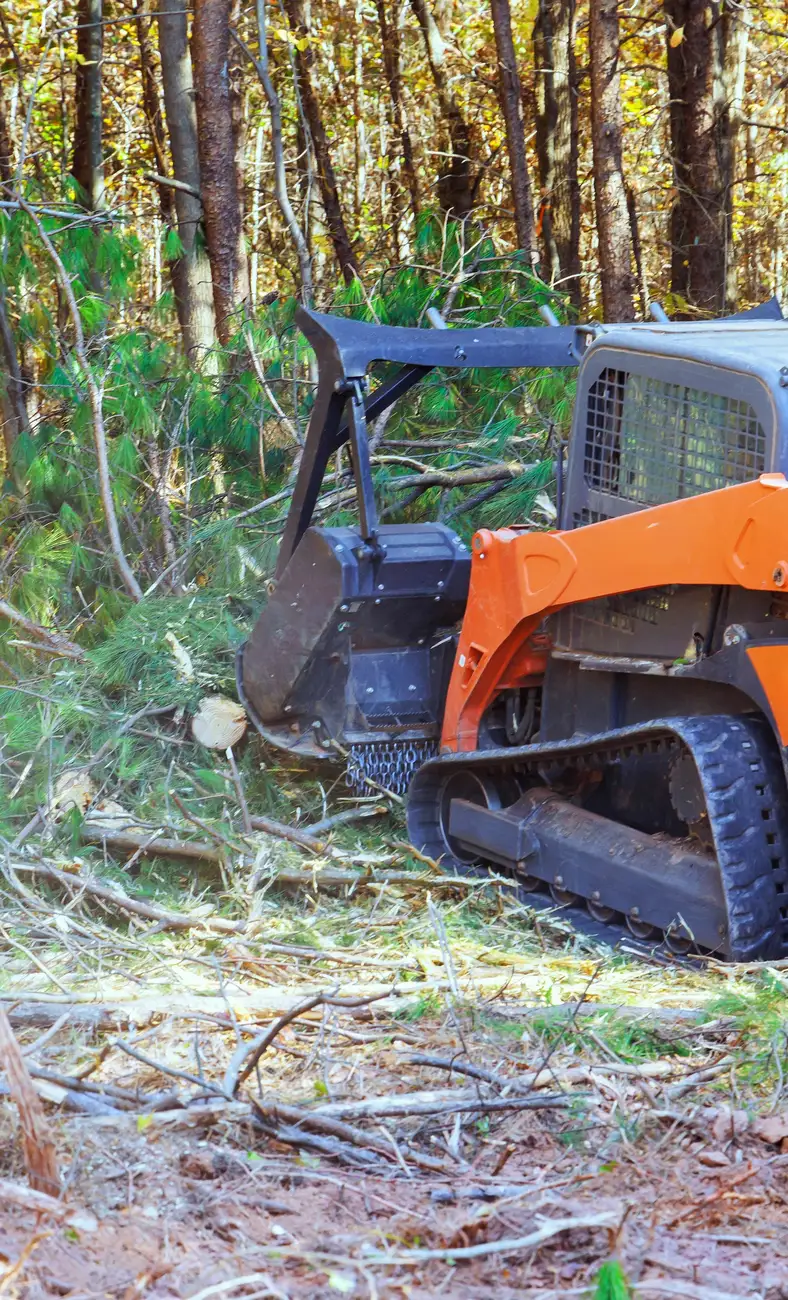
Hiring your first tree service employee is one of the highest-leverage decisions a tree service owner makes. Done right, it’s the moment your operation transitions from a job that pays you to a business that builds equity. Done wrong, it’s the moment your margins compress, your stress increases, and your cash flow tightens — sometimes permanently. The difference between the two outcomes comes down to timing, pricing readiness, and understanding the true cost of an employee.
This guide walks through the complete decision framework for hiring your first tree service employee. We cover the revenue threshold that signals readiness (and why hiring earlier usually fails), the true cost multiplier most operators get wrong, the workers’ compensation impact under class code 0106, the wage benchmarks for ground crew and climbers in 2026, and the specific red flags that mean you should wait. By the end, you’ll have a clear yes/no decision based on your operation’s actual numbers.
The framework is built from current 2026 industry data, IRS classification guidance, NCCI workers’ compensation rates, and the operational patterns we see across hundreds of tree service insurance accounts. The same principles apply whether you’re a solo bootstrap operator considering your first hire or a small operation deciding between adding an employee vs. subcontracting.
The Three Wrong Reasons to Hire
Most tree service owners hire their first employee at the wrong time, for the wrong reason. Three patterns dominate the hiring mistakes we see:
1. “I’m overwhelmed and need help.” This feels like a hiring signal, but it usually isn’t. Owner overwhelm is more often a systems problem (poor scheduling, weak estimating, no admin processes) than a capacity problem. Hiring before fixing systems just transfers stress without adding output. The owner is now overwhelmed AND managing an employee who isn’t producing efficiently because the systems still don’t exist.
2. “I want to grow.” Wanting growth doesn’t make hiring affordable. Operations under $250,000 in trailing-twelve-month revenue typically can’t support a full-time employee at sustainable margins. The fixed cost of an employee ($45,000-$70,000 fully loaded for ground crew, $65,000-$95,000 for climbers) consumes 25-40% of revenue at sub-$200K operations. That margin compression makes the business less viable, not more.
3. “I’m tired of doing it all alone.” Owner fatigue is real, but hiring isn’t always the answer. Sometimes the answer is raising prices (a properly priced operation can support owner pay of $80,000-$150,000 working solo), reducing capacity (working fewer days at higher rates), or hiring a part-time helper rather than a full-time employee. Full-time hiring is a major financial commitment — make sure it’s the right solution to the actual problem.
The right reason to hire: consistent demand exceeds your solo capacity, you’re systematically turning down work or extending lead times beyond customer tolerance, and your pricing supports the labor cost without margin compression. When all three are true, hiring isn’t just possible — it’s necessary to capture the revenue your market is offering.
The Revenue Threshold for Hiring
The single most important hiring decision factor is trailing-twelve-month revenue. Hiring at the wrong revenue level is the #1 reason small tree service operations fail in their second or third year.
The revenue thresholds that matter:
Below $150,000 TTM revenue: Almost never the right time to hire a full-time employee. The math doesn’t work. Focus on systems, pricing, and marketing. If you’re truly capacity-constrained at this revenue level, the answer is usually that you’re underpriced — see our tree service pricing guide for proper rate calculations.
$150,000-$250,000 TTM revenue: Consider part-time helpers ($15-$20/hour, 15-25 hours per week) or subcontractors before full-time hiring. A part-time ground crew helper for $300-$500 per week adds production capacity without the full burden of an employee.
$250,000 in trailing-twelve-month revenue is the minimum threshold for hiring a full-time ground crew employee. Operations at this revenue level can support one full-time helper at sustainable margins, especially if pricing is in the proper $130-$200 per crew-hour range. The first hire should typically be a ground crew helper, not a climber.
$400,000-$600,000 TTM revenue: Time to consider adding a second helper or hiring a climber. Operations at this level often run 2-3 person crews and can absorb climber wages of $60,000-$80,000 fully loaded.
$600,000+ TTM revenue: Time to think about a second crew, a dedicated estimator, or specialty hires (mechanic, office manager). The first crew should be running smoothly before adding management overhead.
These thresholds assume proper pricing. An operation generating $300,000 in revenue at $80 per crew-hour effective rates is in much worse shape than an operation generating $250,000 at $180 per crew-hour. Pricing readiness matters more than absolute revenue.
The True Cost of Your First Employee
The single biggest mistake new operators make is calculating employee cost based on hourly wage alone. The actual cost is dramatically higher. Here’s the proper calculation:
The 1.30 to 1.45 Multiplier
Your true employee cost is hourly wage multiplied by 1.30 to 1.45 depending on benefits and overhead allocation. The multiplier breaks down:
Mandatory employer-side costs (always added):
- Social Security tax: 6.2% of wages (employer portion only)
- Medicare tax: 1.45% of wages (employer portion only)
- Federal unemployment (FUTA): 0.6% of first $7,000 in wages
- State unemployment (SUTA): 1-6% of wages depending on state and experience rating
- Subtotal: ~9-15% of wages
Workers’ compensation:
- Class code 0106 (climbers, aerial work): $8-$15 per $100 of payroll = 8-15% of wages
- Class code 0042 (ground-only, qualifying): $4-$7 per $100 of payroll = 4-7% of wages
Optional benefits (if offered):
- Health insurance contribution: $300-$700/month per employee = $3,600-$8,400 annually
- Paid time off: 1-2 weeks at full pay = 2-4% of wages
- Retirement contribution: 3-6% of wages if offered
- Subtotal: 5-15% of wages
Overhead allocation (always present, often forgotten):
- Training time during ramp-up: 5-10% of first-year wages
- Equipment provided to employee: $1,500-$3,500 one-time
- Supervision time: 5-10% of wages (your time is not free)
- Payroll service fees: $30-$60/month per employee
- Vehicle wear from larger crew: $1,000-$3,000/year
- Subtotal: 10-15% of wages
Total multiplier: 1.30 to 1.45 of base hourly wage
Real-World Cost Examples
Ground crew helper at $18/hour:
- Base wage: $18.00/hour × 2,000 hours = $36,000
- Employer payroll taxes: $4,000
- Workers’ comp (0042 at $5.50/$100): $1,980
- No formal benefits in this example
- Overhead: $3,500
- Total annual cost: $45,480 ($22.74/hour fully loaded)
Experienced climber at $30/hour:
- Base wage: $30.00/hour × 2,000 hours = $60,000
- Employer payroll taxes: $7,000
- Workers’ comp (0106 at $11/$100): $6,600
- Health insurance contribution: $4,800
- PTO (1 week): $1,200
- Overhead: $7,500
- Total annual cost: $87,100 ($43.55/hour fully loaded)
The implication for pricing: if your billing rate is $150 per crew-hour and your fully-loaded employee cost is $45/hour, you have $105/hour to cover your time (estimating, supervision), equipment, overhead, and profit. If your billing rate is $90 per crew-hour, you only have $45/hour for everything else — which is barely break-even.
This is why pricing readiness matters so much before hiring. Operations that haven’t increased rates to cover the labor cost typically lose money on every employee hour.
Class Code 0106 vs Class Code 0042
Workers’ compensation is the largest variable cost of hiring tree service employees. Understanding the classification system is critical because misclassification can either cost you significantly more than necessary or expose you to serious legal liability.
NCCI Class Code 0106 (Tree Pruning, Spraying, Repairing)
This applies to any worker who climbs, operates aerial equipment, or works above ground level. Rates range from $7-$25 per $100 of payroll depending on state:
Sample 0106 rates by state in 2026:
- Connecticut: ~$7.63 per $100
- Indiana: ~$8.50 per $100
- Texas: ~$9.80 per $100
- Pennsylvania: ~$11.20 per $100
- New York: ~$15-$22 per $100
- California: ~$18-$25 per $100
NCCI Class Code 0042 (Landscape Gardening / Ground-Level Tree Work)
This applies to workers who work exclusively on the ground — chipper operators who never climb, drivers who only operate vehicles, brush haulers who stay at ground level. Rates run 30-50% lower than 0106:
Sample 0042 rates by state in 2026:
- Connecticut: ~$4.50 per $100
- Indiana: ~$5.20 per $100
- Texas: ~$6.10 per $100
- Pennsylvania: ~$6.80 per $100
- New York: ~$10-$14 per $100
- California: ~$12-$16 per $100
The Critical Caveat
If any crew member goes off the ground at a job site, the entire crew’s payroll for that job typically stays in 0106. You can’t have one climber classified at 0106 and a ground helper at 0042 if they work the same jobs. The exception: dedicated ground-only crews (e.g., a stump grinding-only crew that never climbs) can stay in 0042.
For most tree service operations with mixed work, all employees should be classified at 0106 to avoid audit problems. See our complete guide to workers’ comp class code 0106 for detailed rating information and audit considerations.
Why Classification Matters at Hiring
When you hire your first employee, you’ll need to:
- Add them to your existing workers’ compensation policy if you have one (many solo operators don’t, since most states don’t require workers’ comp on the owner)
- Properly classify them based on actual job duties
- Estimate annual payroll accurately — significant audit-time premium adjustments hit operations that under-estimated payroll at policy inception
- Update your general liability policy to reflect employee status (sometimes requires policy reissue)
Plan to add 8-15% of the employee’s annual wages as workers’ compensation cost when budgeting their fully-loaded rate.
Ground Crew Helper vs Climber/Lead Arborist
Most successful operators hire ground crew before adding climbers. Here’s why and what to look for in each role.
Ground Crew Helper (Most Common First Hire)
Typical wage: $15-$25 per hour depending on experience and chipper certification
Job description:
- Operates the chipper safely
- Drags brush from drop zone to chipper
- Hauls wood and debris
- Sets up and breaks down job sites
- Drives the truck to and from jobs
- Assists with rigging from the ground (no climbing)
Skills and experience needed:
- Physical fitness for heavy lifting
- Basic chainsaw operation (limbing only)
- Driver’s license, ideally clean record
- Reliability and punctuality
- Ability to follow safety protocols
- Willingness to learn
Why ground crew first: The owner-operator is typically the most experienced climber and adds the most value when climbing. Hiring ground crew frees the owner to focus on production climbing while a less-skilled (and less-expensive) worker handles the ground operations. The labor cost differential is substantial: $45K-$55K fully loaded for ground crew vs. $75K-$95K for an experienced climber.
Where to find ground crew: Indeed, local tree service Facebook groups, referrals from other operators, and (controversially) hiring from competitors who don’t pay competitively. The labor pool is tight in most markets, so be prepared to interview 5-10 candidates per hire.
Common mistakes:
- Hiring on price alone (low-bid candidates often have unstable work histories)
- Skipping background checks (especially MVR for any job that involves driving)
- Skimping on safety training (workers’ comp claims will follow)
- Setting unrealistic expectations (climbing readiness in week 1 isn’t realistic)
Climber/Lead Arborist (Second or Third Hire)
Typical wage: $25-$45+ per hour depending on experience and ISA certification
Job description:
- Lead the climbing/aerial work on jobs
- Make production decisions (rigging, drop zones, sequencing)
- Direct ground crew during operations
- Maintain certifications (ISA Certified Arborist preferred, EHAP for utility work)
- Sometimes serves as crew foreman with associated supervisory responsibilities
Skills and experience needed:
- 3+ years climbing experience minimum (5+ preferred)
- Demonstrated rigging proficiency
- ISA Certified Arborist or working toward certification
- Aerial rescue training
- Equipment proficiency across chainsaws, ropes, rigging
- Communication skills for crew coordination
Why climbers come second: Climber wages double the labor cost compared to ground crew. Adding a climber typically requires the operation to be running 2-3 jobs per day consistently — which usually means $400K+ TTM revenue with proper pricing. Hiring a climber too early creates significant cash drain.
Where to find climbers: ISA local chapters, TCIA member network, climber-specific Facebook groups, competitor poaching (it’s common practice in the industry), and apprenticeship development from existing ground crew (longer-term but most reliable).
Common mistakes:
- Hiring climbers without verifying actual climbing skill (interview should include a climbing demonstration on a real tree)
- Underpaying ($25/hour for an experienced ISA-certified climber loses to competitors paying $35+)
- Not providing adequate safety equipment (climbing system, helmet, climbing-specific PPE)
- Failing to verify rigging competency before assigning solo climbs
The Independent Contractor Trap
Many new tree service operators try to avoid the cost and complexity of hiring employees by paying workers as 1099 independent contractors. This approach almost always fails legal scrutiny and creates serious liability.
The IRS Three-Test Framework
The IRS uses three tests to distinguish employees from independent contractors:
Test 1: Behavioral control Do you direct how the work is done? Do you set hours, dictate procedures, provide training, or supervise day-to-day work? If yes, the worker is likely an employee.
Test 2: Financial control Do you provide tools and equipment? Do you reimburse business expenses? Do you pay regular wages rather than per-project? Do you control the worker’s profit/loss potential? If you control the financial relationship, the worker is likely an employee.
Test 3: Relationship type Is the relationship ongoing or project-based? Did you sign a contract specifying worker classification? Is the work you assign part of your core business? If the relationship is ongoing and integral to your business, the worker is likely an employee.
Why Most Tree Service Helpers Fail All Three Tests
Most tree service “1099 contractors” actually function as employees:
- Owner directs daily work and supervises (fails behavioral control test)
- Owner provides truck, chainsaws, climbing gear, all equipment (fails financial control test)
- Same workers used job after job, week after week (fails relationship test)
Calling someone a 1099 contractor and giving them a 1099 form at year-end doesn’t make them a legitimate independent contractor. The actual working relationship determines classification.
The Penalties for Misclassification
IRS penalties:
- Back payroll taxes (employer portion) for full misclassification period
- 100% penalty on top of unpaid taxes if intentional
- Interest on unpaid amounts compounded monthly
- Total exposure can easily exceed $20,000 per misclassified worker per year
State labor department penalties:
- Back unemployment insurance payments
- Additional state tax penalties
- State-specific fines (some states impose $5,000-$25,000 per misclassification violation)
Workers’ compensation insurance:
- Premium reassessment to include “contractor” payroll
- Possible policy cancellation for fraud
- Claim denial if the misclassified worker is injured (potentially leaving you personally liable for medical costs that could exceed $500,000 for a serious tree work injury)
Personal liability:
- If a misclassified “contractor” is injured and your workers’ comp denies the claim, you may be personally liable for medical expenses, lost wages, and disability — potentially exceeding the value of your home and personal assets.
When 1099 Contractors Are Legitimate
True independent contractors in tree service are rare but include:
- A specialized crane operator hired for a single job who provides their own equipment
- A stump grinding subcontractor who shows up with their own grinder for specific jobs
- A traffic control company hired for road-adjacent work
- An ISA Certified Arborist hired for a one-time tree health consultation
Common factors: they have their own businesses, their own insurance, their own equipment, and they work for multiple clients. They’re not employees in disguise.
The Pre-Hiring Checklist
Before posting your first job listing, verify all of these are in place:
Financial readiness:
- Trailing-twelve-month revenue exceeds $250,000
- Pricing supports $150+ per crew-hour effective rate
- 8+ weeks of operating expenses in cash reserves
- Backup capital available for first 60-90 days of training/ramp-up
- Existing customer demand reliably exceeds solo capacity
Operational readiness:
- Documented job processes and safety protocols
- CRM and scheduling systems in place
- Estimating system that can be taught
- Defined quality standards
- Equipment available for a 2-person crew (extra PPE, second climbing system if applicable)
Legal and insurance readiness:
- EIN obtained from IRS
- State employer registration complete
- Workers’ compensation insurance policy ready to add the employee on day one
- General liability policy reviewed for employee impact
- Commercial auto policy updated for additional drivers if applicable
- Payroll service set up (Gusto, QuickBooks Payroll, ADP, or comparable)
- Employee handbook drafted (even informally)
- I-9 and W-4 forms ready
- Direct deposit setup capability
Compliance readiness:
- OSHA 29 CFR 1910.269 training plan documented
- ANSI Z133 safety standards adopted
- Aerial rescue protocols documented (if hiring climbers)
- First aid/CPR plans in place
- Background check process defined
If any of these aren’t in place, fix them before posting the job. Hiring without proper foundation creates problems that take months to recover from.
How to Find and Evaluate Candidates
Once readiness is established, the actual hiring process follows a predictable pattern that improves with practice.
Job Posting Best Practices
Where to post:
- Indeed (largest reach, strong filtering)
- Google Jobs (free aggregator, often gets best candidates)
- Facebook (local Facebook groups, especially landscaping/tree service groups)
- ISA local chapter board (for climber positions)
- Word-of-mouth through other operators
What to include:
- Specific job title (not “tree service worker” but “Tree Service Ground Crew” or “Climbing Arborist”)
- Hourly wage range (transparency attracts better candidates than vague “competitive pay”)
- Specific job duties
- Required experience and certifications
- Schedule and overtime expectations
- Benefits offered (PTO, health insurance, retirement, equipment provided)
- Application process and timeline
What to avoid:
- Generic copy-paste job descriptions
- Vague compensation (“DOE” — depends on experience)
- Unrealistic combinations (entry-level wage + senior expectations)
- Overemphasis on “team player” language without substance
Interview Process
Phone screen (10-15 minutes):
- Confirm interest and basic qualifications
- Verify wage expectations align with offer
- Check schedule availability
- Ask about prior tree service experience
In-person interview (45-60 minutes):
- Discuss specific work history (gaps, reasons for leaving)
- Walk through hypothetical job scenarios
- Demonstrate equipment knowledge
- Discuss safety experience and training
- For climber candidates: include a climbing demonstration
Reference check (mandatory):
- Call 2-3 references, ideally former supervisors
- Ask specifically about reliability, work quality, and any safety incidents
- Verify employment dates and reasons for leaving
Background check (recommended):
- Driving record (especially MVR for any role with driving)
- Criminal background (depends on state law and risk tolerance)
- Drug screening (industry standard for safety-sensitive roles)
The 90-Day Probationary Period
Build a 90-day probationary period into every first hire’s expectations. This protects both parties:
- First 30 days: Training and skills assessment
- Days 31-60: Increasing autonomy with daily check-ins
- Days 61-90: Independent operation with weekly review
- Day 90: Formal evaluation and confirmation of ongoing employment
About 20-30% of first hires don’t make it through the probationary period. Better to identify mismatches in 60 days than to live with a poor fit for years.
Common Hiring Mistakes That Sink Operations
Five mistakes consistently cause first-hire failures:
1. Hiring before pricing readiness. Operations billing at $80-$100 per crew-hour cannot afford employees. The math doesn’t work. Fix pricing first.
2. Underestimating the loaded cost. Operators who calculate based on hourly wage alone consistently lose money on labor. Use the 1.30-1.45 multiplier.
3. Hiring a climber instead of ground crew. The owner-operator is typically the experienced climber. Adding a climber when you should add ground crew doubles labor costs without proportional revenue gain.
4. Misclassifying as 1099 contractor. The short-term tax savings are dwarfed by long-term liability when the IRS, state labor department, or workers’ comp insurer reclassifies the relationship.
5. Skipping safety training to save costs. Workers’ comp claims under class code 0106 are catastrophic. A single serious injury can drive your experience modification factor up 50-100% for three years, adding tens of thousands in premium costs.
According to Bureau of Labor Statistics data, tree work has a fatality rate roughly 30 times the national average. Safety training isn’t optional — it’s the single most important investment in a tree service operation.
Building Your First Employee for Long-Term Success
The hire isn’t the end — it’s the beginning. Operations that build employees into long-term team members systematically outperform those treating employees as disposable labor.
Investment areas that pay off:
- ISA certification support: Pay for the certification exam ($200-$300) and training materials. Workers value employer-supported development.
- TCIA training: Tree Care Industry Association safety programs reduce injuries and demonstrate professional standards.
- Equipment provision: Quality climbing systems, professional chainsaws, proper PPE — workers know when employers cut corners on equipment.
- Vehicle provision: A clean, well-maintained truck is a tangible signal of operational quality.
- Wage transparency: Communicate raise schedules clearly. Workers should know what they need to do to earn more.
- Schedule predictability: Tree service is inherently weather-dependent, but predictable scheduling outside weather events reduces turnover significantly.
Operations that lose employees frequently end up paying retention premium twice over: once in higher recruitment costs and once in productivity loss during constant ramp-up. The all-in cost of a single bad hire and replacement typically runs $15,000-$25,000.
Frequently Asked Questions
When should a tree service business hire its first employee?
Hire your first tree service employee when three conditions are simultaneously true: trailing-twelve-month revenue exceeds $250,000, you’re consistently turning down or rescheduling work due to capacity, and you have at least 8 weeks of operating expenses in cash reserves. Hiring earlier than this typically creates margin compression that takes 12-18 months to recover from. Hiring later means leaving 30-50% of potential revenue on the table due to capacity limits. The sweet spot is hiring after you’ve systematized scheduling, pricing, and customer management — not before.
How much does a tree service employee actually cost?
The true cost of a tree service employee runs 1.30 to 1.45 times their hourly wage when fully loaded. A $25/hour climber actually costs $32 to $36 per hour all-in. Ground crew helpers at $18/hour cost $23 to $26 per hour fully loaded. The multiplier includes employer-side payroll taxes (7.65% Social Security and Medicare plus 1-6% federal and state unemployment), workers’ compensation under class code 0106 ($8-$15 per $100 of payroll for tree work), benefits if offered (5-15% of wages), and overhead allocation (paid time off, training, equipment, supervision time). Most operators dramatically underestimate the multiplier and price jobs accordingly.
What’s the difference between an employee and an independent contractor for tree service?
The IRS uses three tests to distinguish employees from independent contractors: behavioral control (do you direct how work is done?), financial control (do you provide tools and reimburse expenses?), and relationship type (is the work permanent or project-based?). Most tree service helpers fail all three tests because owners typically direct daily work, provide all equipment, and use the same workers continuously. Misclassifying employees as 1099 contractors carries serious penalties including back taxes, payroll tax penalties, workers’ compensation premium reassessment, and potential personal liability for injuries. The IRS, state labor departments, and workers’ comp insurers all actively audit this. The savings from misclassification are not worth the risk.
What workers’ compensation classification applies to tree service employees?
Tree service employees fall under NCCI class code 0106 (Tree Pruning, Spraying, Repairing) for any worker who climbs, operates aerial equipment, or works above ground level. Ground-only workers who never leave the ground (chipper operators, drivers, brush haulers on the ground) may qualify for class code 0042 at lower rates. Important caveat: if any crew member goes off the ground at a job site, the entire crew’s payroll for that job typically stays in 0106. Misclassifying climbers as ground-only is insurance fraud that results in claim denials and policy cancellation. See our complete guide to class code 0106 for detailed rate information by state.
What hourly wages should I pay tree service employees in 2026?
Tree service wages in 2026 range based on role and experience. Entry-level ground crew helpers earn $15-$20 per hour. Experienced ground crew with chipper certification earn $18-$25 per hour. Entry-level climbers (1-2 years experience) earn $20-$28 per hour. Experienced climbers (3+ years, ISA certified) earn $28-$40 per hour. Lead climbers and crew foremen earn $32-$50+ per hour. Bucket truck operators earn $25-$40 per hour. Add 10-20 percent premium in high-cost-of-living markets (California, Northeast metros, Pacific Northwest). Most successful operations pay 5-15 percent above local market rates to attract and retain quality workers in a labor-tight industry.
Do I need workers’ compensation insurance before hiring my first employee?
Yes, in most states workers’ compensation insurance is legally required from day one of your first employee’s start date. Texas is the only state where private employer workers’ comp is technically optional, though government contracts and most commercial customers require it regardless. Most states require coverage to be in place before the employee starts work — operating without coverage even for a single day creates significant legal liability and can result in fines, business shutdown orders, and personal liability for injuries. Solo owner-operators are generally not required to carry workers’ comp on themselves until they hire employees, though some states require coverage for owners under certain corporate structures.
How do I know if I should hire a climber or a ground crew helper first?
Most successful operators hire ground crew first, then add climbers as the operation scales. Ground crew helpers cost less ($15-$20/hour vs $25-$35/hour for climbers), have lower workers’ compensation rates if classified under 0042, and free the owner-operator (typically the experienced climber) to focus on production climbing rather than ground work. Hiring a climber first only makes sense if the owner has transitioned to estimating and management full-time and needs production capacity. The wrong move is hiring an inexperienced climber and supervising from the ground — that creates safety risks and typically costs more than hiring an experienced ground crew helper.
Get Workers’ Comp Lined Up Before Day One
The single most important pre-hire task is having workers’ compensation coverage in place before your new employee starts. In most states, working even one day without coverage exposes you to personal liability for any injury — and tree work injuries are catastrophic. A single fall from height can produce medical bills exceeding $500,000.
TreeGuard works specifically with tree service operations to structure workers’ comp coverage that fits your specific situation. We can rate your operation under the proper class codes (0106, 0042, or split classifications where appropriate), set up pay-as-you-go billing that aligns premium with actual payroll, work with operations that have prior claims or new business challenges, and coordinate with your existing general liability, commercial auto, and inland marine coverage.
For deeper resources on building your tree service operation, our complete content library includes: the tree service pricing guide covering rate calculation that supports labor costs, the class code 0106 guide with detailed workers’ comp rating information, the tree service insurance cost guide with state-by-state breakdowns, the Certificate of Insurance guide for navigating commercial contract requirements, and the complete how-to-start guide covering the operational foundation that hiring builds on.
External resources for further reference: IRS independent contractor classification for the official three-test framework, Bureau of Labor Statistics tree workers data for industry safety context that drives workers’ comp pricing, Tree Care Industry Association for safety training and accreditation programs that reduce premium costs, International Society of Arboriculture for ISA Certified Arborist credential information, and SCORE small business hiring resources for general hiring compliance guidance applicable to any small business.

More from Running & Growing Your Business
Ready to get properly covered?
Tell us about your tree care operation and we'll compare options across our carrier network. Quote response within 1–2 hours during business hours.
Independent agency · 16+ A-rated carriers · Licensed in 48 states