Workers' Compensation for Tree Service Contractors

Tree care is one of the most physically demanding and hazardous trades in America. Workers' comp is how you protect your crew — and protect your business from catastrophic out-of-pocket exposure.

Get a Free Quote
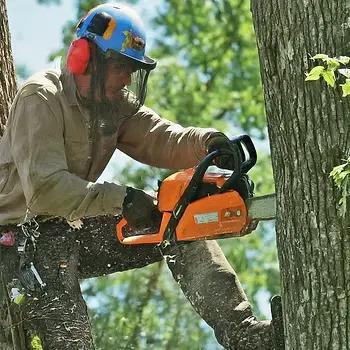
Tree service worker wearing a safety helmet and ear protection operating a chainsaw in a tree

The Reality of Tree Care Injury Risk

Tree care consistently ranks among the most dangerous occupations in the United States. Chainsaw injuries, falls from height, struck-by incidents from falling wood, and equipment accidents are all part of the occupational landscape. The Bureau of Labor Statistics regularly places tree trimming and logging among industries with the highest rates of fatal and nonfatal injuries.

For business owners, a serious employee injury without adequate workers' compensation coverage can mean paying all medical bills out-of-pocket, facing a direct lawsuit from the injured employee, and losing the employee's productivity during recovery — all at once.

Workers' compensation solves this by providing a structured benefit system: the employee receives defined benefits, and in most states, those benefits are the exclusive remedy — meaning the employee cannot also file a civil lawsuit against the employer for a work-related injury. That protection alone makes workers' comp one of the most valuable policies a tree care business can carry.

Class Code 0106: What It Means for Your Premium

Insurance carriers and state rating bureaus classify workers' compensation risk by occupation code. Tree service contractors are typically rated under NCCI class code 0106, which covers tree pruning, trimming, and spraying operations.

This class code reflects the elevated injury rates in tree care relative to other outdoor trades. The base rate for 0106 is higher than codes used for landscaping or general contracting — which is why finding a carrier that specializes in tree care matters. Carriers with deep experience in the class can offer more accurate pricing and better loss control support than generalist carriers trying to fit your business into the wrong bucket.

Your actual premium is calculated by multiplying your payroll (per $100) by the class rate, then adjusting for your experience modification factor — a multiplier based on your three-year loss history compared to average businesses in the same class. Maintaining a favorable experience mod through safety programs and proactive claims management is the most effective way to control your workers' comp costs over time.

State Requirements

Workers' compensation is regulated at the state level, and requirements vary. Most states require any employer with at least one employee to carry coverage. Some states allow sole proprietors and partners to exclude themselves from coverage, which can reduce premium costs for small operations. A handful of states operate monopolistic workers' comp systems, meaning coverage must be purchased from the state fund rather than a private carrier.

TreeGuard is licensed in 48 states and works with carriers offering workers' comp across that footprint. We'll help you navigate your state's specific requirements and identify any exclusion options available to you.

Workers' Comp Benefits Breakdown

Medical Expenses

All reasonable and necessary medical treatment for work-related injuries or illness — from emergency care through rehabilitation.

Lost Wage Replacement

Typically two-thirds of the injured employee's average weekly wage while they're unable to work, up to state maximums.

Permanent Disability Benefits

If an injury results in a permanent impairment, the employee may receive ongoing disability payments based on the severity.

Vocational Rehabilitation

If an employee can't return to tree work, some states require coverage for retraining programs to help them re-enter the workforce.

Death Benefits

If a work-related death occurs, the policy provides benefits to the employee's dependents — a real concern in the tree care industry.

Employer's Liability

Protects the business if an injured employee sues your company directly rather than — or in addition to — filing a workers' comp claim.

How to Keep Workers' Comp Costs Under Control

Workers' comp is often the largest single insurance line item for a tree care company. These are the most effective ways to manage it over time.

  • Maintain a strong safety program. Consistent use of PPE, regular toolbox talks, and documented training all demonstrate to underwriters that your operation takes safety seriously.
  • Report claims promptly. Early reporting and active management of open claims is one of the biggest drivers of favorable experience mod outcomes.
  • Consider a return-to-work program. Offering modified duty to injured employees who can work in a limited capacity reduces wage replacement costs and helps keep experience mod in check.
  • Review your payroll classifications. Make sure employees are classified under the correct code. Misclassification — even unintentional — can significantly inflate your premium.
  • Work with a specialty carrier. Carriers who know the tree care industry understand the risks and can price them more accurately than generalists, which often translates to better rates.

Workers' Comp by State

Workers' comp rules, rates, and carrier availability vary significantly by state. We write class code 0106 coverage in 48 states — select your state for details or call for a quote.

View All State Guides
Indiana Illinois Ohio Michigan Kentucky Tennessee Texas Florida Georgia North Carolina Pennsylvania New York + more states

Get a Workers' Comp Quote for Your Tree Care Business

We'll find workers' comp markets that understand class code 0106 and price your business based on your actual operations — not a generic trade category.