
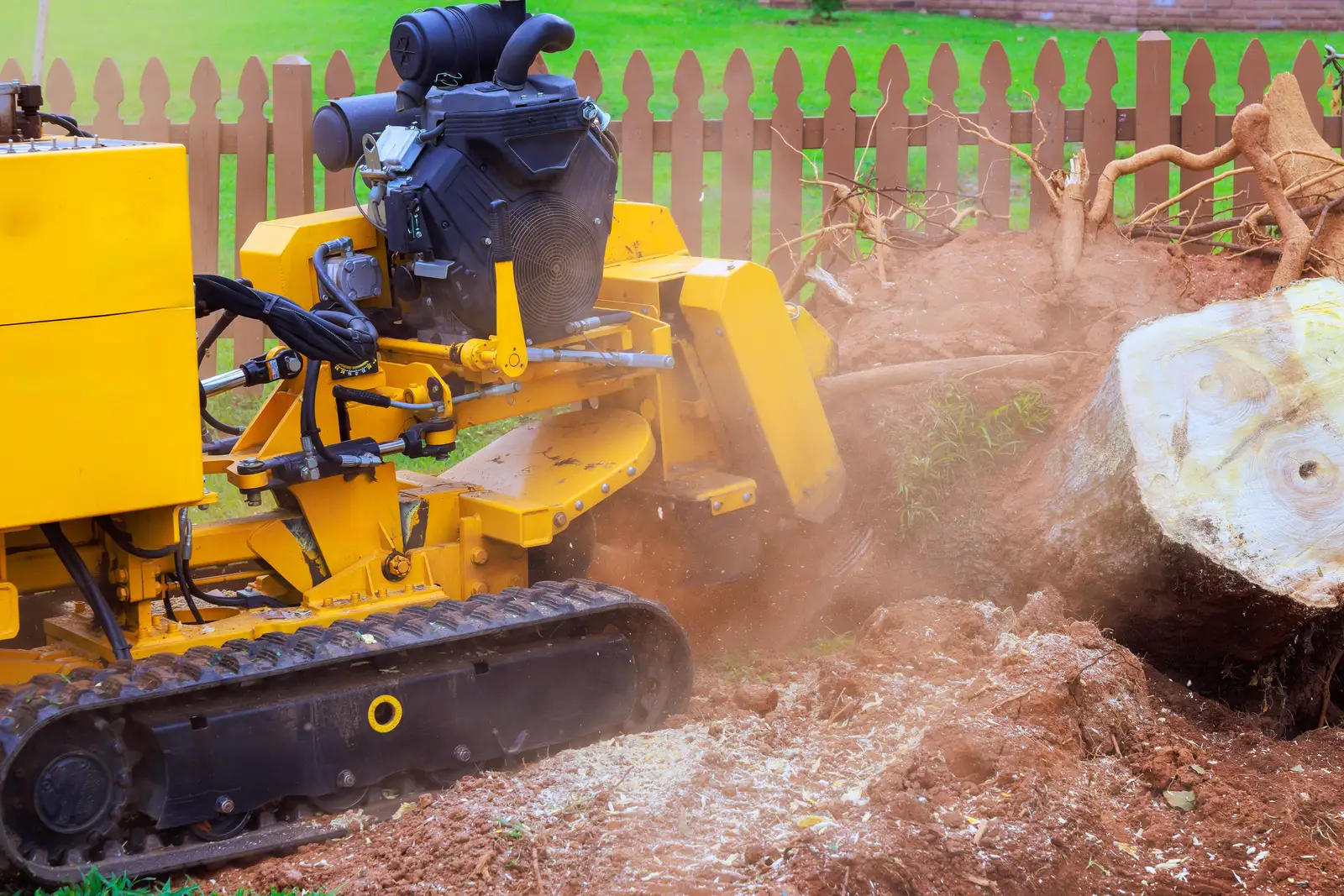
The path from $250,000 to $1,000,000 in revenue is the most challenging growth phase in a tree service business. The fundamentals that worked at $250K — owner-driven everything, informal systems, hand-shake agreements — actively prevent growth past $700K. Operations that successfully cross the $1M threshold do so by systematically replacing owner involvement with documented systems, capable team members, and disciplined financial management.
This guide walks through the complete operational playbook for scaling from $250K to $1M+ in revenue. We cover the five distinct stages of scaling (each with different challenges and requirements), the hiring sequence that actually works, the capital requirements at each stage, the systems you need before scaling and the ones you’ll build during scaling, and the specific mistakes that stall most operations between $400K and $700K. By the end, you’ll have a realistic 3-5 year roadmap for the scaling journey.
The framework reflects current 2026 economic conditions, real operational patterns we see across hundreds of tree service operations, and the proven scaling sequences used by operations that successfully cross $1M. The same principles apply whether you’re at $250K planning the next stage or at $700K trying to break through the stall point.
The Five Stages of Scaling
Scaling from $250K to $1M+ happens through five distinct stages, each with different operational requirements. Understanding which stage you’re in determines what to focus on next.
Stage 1 — $250K to $400K (Solo + Helper Operation):
- Owner does climbing, estimating, scheduling, all customer contact
- One full-time helper (ground crew)
- 8-15 jobs per month
- Single truck operation
- Basic software (Jobber, spreadsheets)
Stage 2 — $400K to $600K (Single Crew Operation):
- Owner doing less climbing, more estimating and management
- 2-person crew (climber + ground)
- 15-25 jobs per month
- Single truck or beginning of second
- Tree-specific software implementation
Stage 3 — $600K to $800K (Single Crew + Second Crew Build):
- Owner transitioning from climbing entirely
- Original crew runs independently
- Hiring/training second crew
- 25-35 jobs per month
- Software, systems, financial discipline critical
Stage 4 — $800K to $1M (Two Crew Operation):
- Owner transitioned to sales/management
- Two crews running independently
- 35-50 jobs per month
- Multiple trucks, expanded equipment
- Operations manager or crew foreman in place
Stage 5 — $1M+ (Established Multi-Crew Operation):
- Owner doing strategic/sales work
- Leadership team of 2-4 people
- Two-three crews running smoothly
- 50+ jobs per month
- Documented systems, full software stack
The transitions between stages are where most operations stall. Stage 2 to Stage 3 (the second crew build) is the highest-failure transition — many operations stall at $500K-$700K for years before successfully crossing.
Stage 1: $250K to $400K
Most operations reach $250K within 18-36 months of starting. The transition to $400K is the first scaling challenge — moving from an established solo-with-helper operation to a more sophisticated single-crew operation.
Operational profile at this stage:
- Owner: Lead climber, primary estimator, customer service, scheduling
- Helper: Ground crew (1 full-time)
- Truck: Reliable, 5-7 years old, standard equipment
- Schedule: 3-4 jobs per week
- Average ticket: $1,200-$1,800
- Owner working: 50-60 hours/week
- Net to owner: $80,000-$130,000 annually
Key challenges in this stage:
The bottleneck is owner time. You can only climb so many trees, do so many estimates, and answer so many customer calls. Adding capacity requires hiring, but you’re not yet at the revenue level to justify a second helper or a climber.
Pricing readiness matters more than volume growth. Operations stalled at $300K typically have prices 15-30% below market. Raising prices is the fastest path to $400K — same job count at higher prices reaches the threshold faster than chasing more jobs at low prices.
Systems are still informal. Estimating happens in your head, scheduling lives on a paper calendar or basic Google Calendar, customer records are in your phone. This works at this scale but creates ceiling.
Stage 1 to Stage 2 priorities:
-
Raise prices systematically. Calculate your true crew-hour rate (see our pricing guide) and raise prices to support scaling. Most operators in this stage need 10-25% price increases.
-
Implement basic software. Jobber Core ($69/month) or QuoteIQ Pro ($149/month) replaces paper calendar, spreadsheets, and manual invoicing. Saves 5-8 hours per week.
-
Build review base. Aim for 25-50 Google reviews. Implement systematic review request flow (see our marketing guide).
-
Optimize Google Business Profile. Free, but most operations at this stage have neglected profiles. 2-3 hour optimization typically increases organic leads 30-50%.
-
Hire second helper at $400K threshold. When TTM revenue hits $400K consistently, the helper-plus-helper structure can support adding a junior climber being trained up.
Capital requirement: $5,000-$15,000 for software setup, marketing investment, and equipment upgrades. Most Stage 1 operators self-fund.
Time in this stage: 12-24 months for most operations.
Stage 2: $400K to $600K
This stage represents the first significant operational transformation. Owner-as-operator becomes increasingly difficult — the volume requires delegation, but most owners resist transferring climbing and estimating.
Operational profile at this stage:
- Owner: Climbing 50-70% of jobs, all estimating, primary customer service
- Helpers: 1-2 ground crew or 1 ground crew + 1 junior climber
- Truck: Newer truck purchased or still running original
- Schedule: 4-6 jobs per week
- Average ticket: $1,500-$2,200
- Owner working: 55-65 hours/week
- Net to owner: $130,000-$200,000 annually
Key challenges in this stage:
The owner-as-operator trap intensifies. The volume requires owner involvement at every step, but this creates a hard ceiling. Operations stall here without systematic transfer of operations.
Cash flow tightens. Adding a second helper creates $40K-$60K in additional payroll, but revenue catches up gradually. The 6-12 month “growth dip” is real and predictable.
Customer expectations rise. $400K+ operations face more demanding commercial customers, larger jobs, more complex pricing. Without Certificates of Insurance infrastructure and professional systems, growth opportunities slip away.
Stage 2 to Stage 3 priorities:
-
Transition to tree-specific software. Move from Jobber Core to Jobber Connect, Arborgold, or SingleOps. Implementation takes 30-60 hours but supports 2x revenue scale.
-
Document estimating system. Write down how you actually estimate jobs. This is the foundation for transferring estimating to others later.
-
Train climber replacement. If you don’t have an experienced climber on staff, identify which helper can be developed into the lead climber role. This 12-18 month investment is critical.
-
Build commercial customer infrastructure. Get workers’ compensation, general liability, and commercial auto coverage at limits commercial customers require ($1M-$2M minimum).
-
Increase marketing investment. Move from Tier 1 organic channels only to adding Google Local Service Ads at $1,000-$2,000/month.
Capital requirement: $25,000-$60,000 for additional helper hire, equipment upgrades, software, marketing investment.
Time in this stage: 12-18 months for most operations.
Stage 3: $600K to $800K
This is the highest-failure transition. The “second crew economics” challenge defeats most operations attempting to scale past $700K. Operations that succeed at this stage typically take 18-30 months to do so.
Operational profile at this stage:
- Owner: Transitioning out of climbing, primary sales/estimating, beginning to manage
- Original crew: Foreman climber + 1-2 ground crew (running independently 60-80% of time)
- Second crew: Being recruited and trained
- Schedule: 6-9 jobs per week
- Average ticket: $1,800-$2,800
- Owner working: 50-60 hours/week (different work than before)
- Net to owner: $200,000-$280,000 annually (cash flow tighter due to second crew investment)
Key challenges in this stage:
Second crew economics are brutal. Adding a full second crew costs $80,000-$120,000/year fully loaded. Revenue catches up over 6-12 months. The 6-12 month “investment dip” requires capital reserves most operations don’t have.
Owner role transformation is jarring. After 5-10 years of climbing being the main job, transitioning to managing climbers feels uncomfortable. Most owners resist this transition.
Quality control becomes harder. With two crews running, the owner can’t be at every job site. Systematic processes and trust in the foreman become critical.
Customer expectations don’t decrease. While managing the operational complexity, customers still expect the responsiveness and quality they got when the owner was hands-on with every job.
Stage 3 to Stage 4 priorities:
-
Develop and promote crew foreman. Identify experienced climber from existing crew, increase responsibility incrementally over 6-12 months, formal foreman promotion at $25K-$40K above wage with bonus structure.
-
Build second crew systematically. Hire ground crew first (3-6 months training), then climber. Don’t try to hire complete second crew at once — too much risk and capital strain.
-
Document operational processes. Estimating playbook, customer service standards, job execution protocols, quality control standards — each documented as 5-15 page reference materials.
-
Implement financial discipline. Weekly cash flow reviews, monthly P&L analysis (including P&L by service line), quarterly strategic planning. Operations without financial discipline at this stage stall regardless of revenue.
-
Maintain working capital. Keep 60-90 days operating expenses in cash reserves throughout the scaling. Most operations that fail at this stage do so because of cash flow timing, not business model failures.
Capital requirement: $50,000-$120,000 for second crew build, equipment, additional truck, working capital.
Time in this stage: 18-30 months for most operations. This is where stalls happen.
Stage 4: $800K to $1M
Operations that successfully build the second crew typically reach $1M within 12-24 months. The remaining challenge is operational excellence and sustainability.
Operational profile at this stage:
- Owner: Sales/estimating, financial management, strategic planning, occasional climbing
- Crew 1: Foreman climber + 2 ground crew (running independently 80-90% of time)
- Crew 2: Climber + 1-2 ground crew (under foreman supervision)
- Schedule: 9-13 jobs per week across two crews
- Average ticket: $2,000-$3,200
- Owner working: 45-55 hours/week
- Net to owner: $280,000-$400,000 annually
Key challenges in this stage:
Coordination complexity grows. Two crews mean two job sites, multiple equipment trucks, different customer interactions, different quality standards to maintain.
Operational manager need emerges. The owner can’t manage two crews while also doing all sales and estimating. An operations manager hire ($50K-$80K) typically becomes necessary.
Working capital strain reaches peak. Two crews with associated equipment, payroll, and overhead create the highest fixed cost burden the operation has carried.
Stage 4 to Stage 5 priorities:
-
Hire operations manager or office manager. $50K-$80K position handling scheduling, dispatching, customer service, basic admin. Frees owner for sales and strategic work.
-
Implement comprehensive software. If still on basic platform, upgrade to Arborgold, ArboStar, or SingleOps with full feature use. Implementation is 60-100 hours but supports operations at this scale.
-
Build commercial customer pipeline. Operations at $800K+ should be 30-50% commercial work. Property management contracts, HOA contracts, municipal work all become accessible.
-
Plan capital investments. New trucks every 3-5 years, equipment refreshes, possibly first storage facility purchase. $50K-$150K capital plans become normal.
-
Build leadership team. Beyond foreman and operations manager, consider sales/estimator role and possibly marketing manager. The leadership team supports the operation past $1M.
Capital requirement: $40,000-$100,000 for operations manager hire, software upgrades, equipment investment.
Time in this stage: 12-18 months for most operations.
Stage 5: $1M+ Operations
Operations crossing $1M have systematic capabilities and operational stability. Continued growth becomes more about strategic decisions than operational execution.
Operational profile at this stage:
- Owner: Sales/strategic, occasional operations, financial management, vision
- Leadership team: Operations manager, foreman crew leaders, possibly office manager
- Crews: 2-3 crews running independently
- Office support: Office manager handling scheduling, customer service, admin
- Schedule: 12-20+ jobs per week
- Average ticket: $2,500-$4,000
- Owner working: 35-50 hours/week
- Net to owner: $300,000-$600,000+ annually
Key challenges in this stage:
Building exit-quality systems. At $1M+, the operation has significant value as a sellable business. But this only matters if systems are documented and the operation can run without the owner. Building exit-quality systems creates optionality.
Strategic decisions become harder. Growth past $1M requires strategic decisions: third crew expansion, new service offerings, geographic expansion, acquisition opportunities. These decisions have larger consequences than earlier-stage operational choices.
Owner role evolution continues. The transition from operator to manager to leader to strategic owner happens through stages. Many owners stall at $1M-$2M because they haven’t completed the transition.
Strategic priorities at this stage:
-
Document everything for transferability. Operations process manuals, training programs, customer relationship continuity, vendor relationships — all documented as 5-page minimum standards.
-
Build leadership team. Operations manager, sales manager, lead climbers, financial role, possibly marketing role. The leadership team is the operation past $1M.
-
Plan for scale or sale. Decide whether to continue scaling (potentially to $2M-$5M) or position for sale. Each path requires different operational investments.
-
Maintain quality during growth. Many operations decline in quality when scaling past $1M as systems can’t keep pace with growth. Quality maintenance requires dedicated attention.
-
Develop succession planning. Even if continuing to operate, having a plan for owner absence, retirement, or sale protects all stakeholders.
Time at this stage: Indefinite. The owner now decides next steps based on personal goals, market conditions, and operational realities.
Capital Requirements Across Scaling
Scaling from $250K to $1M typically requires $80,000-$200,000 in capital investment over 3-5 years. Here’s the realistic breakdown:
Equipment investment:
- Second truck (Year 2-3): $20,000-$40,000 used, $50,000-$80,000 new
- Equipment expansion (chainsaws, climbing systems, rigging): $5,000-$15,000 per stage
- Wood chipper upgrade: $15,000-$35,000 if upgrading from rented to owned
- Stump grinder addition: $5,000-$15,000
Working capital:
- 60-90 days operating reserves at each stage
- Stage 2: $30,000-$60,000 reserves
- Stage 3: $60,000-$120,000 reserves
- Stage 4-5: $120,000-$250,000 reserves
Hiring runway:
- New employee training/ramp-up costs $5,000-$15,000 each
- 3-6 month payroll runway before profitable: $20,000-$50,000 per major hire
- Foreman/crew lead transition costs: $10,000-$25,000 in training and pay increases
System investments:
- Software implementation: $5,000-$15,000 each upgrade
- Marketing scale: $20,000-$80,000 over scaling timeline
- Office space (if needed): $10,000-$30,000/year added cost
- Professional services (accounting, legal): $5,000-$15,000/year
Total capital requirement:
- Stage 1 to Stage 2: $25,000-$60,000
- Stage 2 to Stage 3: $50,000-$120,000
- Stage 3 to Stage 4: $30,000-$80,000
- Stage 4 to Stage 5: $20,000-$60,000
- Total $250K to $1M+: $125,000-$320,000
Most operations self-fund 50-70% of this through retained earnings during scaling. The remainder typically comes from SBA loans, equipment financing, or HELOCs. See our tree service business cost guide for current 2026 financing options.
Hiring Sequence That Works
Operations that successfully scale follow a predictable hiring sequence. Departing from this sequence is the second-most common cause of scaling stalls (after capital strain).
Hire 1 (at $250K-$300K): Second ground crew helper. Typical wage $18-$22/hour. Frees owner from cleanup work to focus on climbing, estimating, customer service.
Hire 2 (at $400K-$500K): Junior climber/lead helper. Typical wage $22-$28/hour. Owner trains them up to climbing role over 12-18 months. Critical for transitioning owner out of climbing.
Hire 3 (at $500K-$650K): Crew foreman/lead climber promotion. Promote junior climber to foreman role at $50K-$75K base. Frees owner from daily climbing supervision.
Hire 4 (at $650K-$800K): Second crew build. Hire ground crew first ($18-$22/hour), then climber for second crew ($25-$35/hour). 6-12 month build process.
Hire 5 (at $800K-$1M): Operations manager. $50K-$80K role handling scheduling, dispatching, customer service, basic admin. Frees owner for sales and strategic work.
Hire 6 (at $1M+): Sales/estimator dedicated role. $50K-$90K plus commission. Takes estimating off the owner’s plate for highest-leverage owner time use.
Hire 7 (at $1M+): Office manager or admin. $35K-$55K handling customer service, scheduling, accounts receivable, marketing coordination.
Critical principles:
- Hire before you “need” to (typically 2-3 months early)
- Promote from within whenever possible (better cultural fit)
- Pay 5-15% above market to attract and retain quality
- Build career progression paths that exceed competitors
- Invest in ongoing training (ISA, TCIA, internal development)
For deeper context on hiring decisions, see our first employee hiring guide.
Common Scaling Mistakes
Five mistakes consistently stall operations between $400K and $700K:
1. Underpricing during growth. Owners hesitate to raise prices fearing volume loss, but the math always favors price increases. Operations scaling at $80-$100/crew-hour rates have constant cash flow stress; operations scaling at $150-$200/crew-hour rates have capital reserves to support growth.
2. Hiring climbers too early. Adding climbers at $300K-$400K creates margin compression. Most operations should add second helpers (lower cost) and develop them into climbers over 12-18 months rather than hiring experienced climbers at premium wages.
3. Skipping documentation. Operations relying on owner memory and ad-hoc processes can’t transfer operations to new hires effectively. The 30-50 hours invested in documenting processes during scaling pays back 10-20x in operational efficiency.
4. Inadequate working capital. Scaling requires capital reserves for the inevitable cash flow timing mismatches. Operations attempting to scale with under 30 days reserves typically experience 6-12 month stalls when seasonal slowdowns or unexpected costs hit.
5. Owner refusing to delegate. The owner-as-operator trap is the single biggest scaling obstacle. Operations stall when the owner clings to climbing, estimating, customer service, and admin work past the point where systematic transfer is possible.
Frequently Asked Questions
How long does it take to scale a tree service from $250K to $1M?
Most tree service operations that successfully scale from $250K to $1M take 3-5 years to do so. Faster growth is possible but creates significant risk: capital strain, operational chaos, quality decline, and key employee burnout. Operations growing 30-50% annually consistently outperform operations attempting 100%+ annual growth — slower growth allows systems to mature, employees to develop, and capital reserves to compound. The fastest sustainable path: $250K Year 1, $400K Year 2, $600K Year 3, $850K Year 4, $1.1M Year 5 — roughly 30-50% annual growth with manageable strain on systems.
What’s the biggest obstacle to scaling a tree service business?
The owner-as-operator trap is the single biggest scaling obstacle. Operations stall at $400K-$700K because the owner remains the most experienced climber, primary estimator, customer service contact, and operations manager simultaneously. Scaling past $700K requires the owner to systematically transfer climbing, then estimating, then daily operations management to other team members — a 12-24 month transition that most owners resist. Operations that successfully scale past $1M have an owner who has transitioned to strategic roles (sales, marketing, financial management, vision) while operational roles are handled by capable team members.
How much capital do I need to scale a tree service from $250K to $1M?
Scaling from $250K to $1M typically requires $80,000-$200,000 in capital investment over the 3-5 year scaling timeline. This includes: $30,000-$70,000 for second crew equipment (additional truck, climbing systems, chainsaws), $20,000-$50,000 for hiring runway (3-6 months of payroll for new hires before they’re profitable), $10,000-$30,000 for upgraded software and systems, $20,000-$50,000 for marketing investment to drive demand for additional crews. Operations that try to scale without adequate capital reserves typically experience 12-18 month stalls when cash flow tightens. Maintain 60-90 days of operating reserves throughout the scaling timeline.
When should I add a second crew to my tree service business?
Add a second crew when three conditions are simultaneously true: trailing-twelve-month revenue exceeds $500,000, you’re consistently turning down work or extending lead times beyond 3-4 weeks during normal seasons, and you have at least 12 weeks of operating reserves. The second crew economics: second crew costs $80,000-$120,000/year fully loaded (helper + climber + equipment), which requires $200,000-$300,000 in additional revenue to justify at standard tree service margins. Most operations are ready for second crews at $500K-$700K revenue with proper systems in place. Hiring earlier creates margin compression; hiring later means significant lost revenue.
How do I hire and retain a leadership team in tree service?
Building a leadership team in tree service typically requires 3-5 years and follows a predictable sequence. First leadership hire (Year 2-3): Crew foreman/lead climber promoted from existing team — pays $50K-$75K and frees the owner from daily climbing. Second hire (Year 3-4): Operations manager or office manager handling scheduling, customer service, and admin — pays $45K-$70K. Third hire (Year 4-5): Sales/estimator dedicated to estimating and customer relationships — pays $50K-$90K plus commission. Retention requires above-market pay (5-15% above local averages), clear career progression, ongoing training (ISA certifications, TCIA training), and ownership-style accountability. Operations that scale past $1M consistently have leadership teams of 2-4 key people.
What systems do I need to scale a tree service to $1M+?
Operations scaling past $1M require five core systems: 1) Documented processes for estimating, scheduling, customer service, job execution, and quality control (each 5-15 pages), 2) Tree service software platform (Arborgold, Jobber, ArboStar) handling jobs, customers, invoicing, 3) QuickBooks or comparable accounting with weekly bookkeeping and monthly financial review, 4) Marketing systems with attribution tracking and consistent lead generation, 5) Financial management with weekly cash flow reviews, monthly P&L analysis, and quarterly strategic planning. Operations without these systems typically stall at $500K-$700K because the owner can’t manage growth complexity manually.
What’s the biggest financial mistake when scaling a tree service business?
Underpricing during growth is the biggest financial mistake. Owners hesitate to raise prices fearing they’ll lose volume, but the math always works against them: scaling at $80-$100 per crew-hour rates means hiring employees produces marginal profit while increasing operational complexity. The right approach: raise prices 8-15% before each scaling stage (before adding second crew, before adding leadership team, before adding third crew). Operations that scale at proper pricing have working capital, quality teams, and growth resilience. Operations that scale at low prices have constant cash flow stress and stagnation. See our complete pricing guide for the rate calculations that support scaling.
Insurance Scales With the Operation
Operations growing from $250K to $1M face fundamentally different insurance requirements at each stage. What was adequate at $250K becomes dangerously inadequate at $1M. The most successful scaling operations coordinate insurance growth with operational growth.
Stage-specific insurance requirements:
- Stage 1-2 ($250K-$600K): Basic general liability ($1M), commercial auto, workers’ compensation at first hire, basic inland marine for owned equipment.
- Stage 3 ($600K-$800K): Increase GL to $2M, expand workers’ comp as crew grows, add umbrella policy ($1M-$5M), refine COI infrastructure for commercial customers.
- Stage 4-5 ($800K+): $2M-$5M GL, $5M-$10M umbrella, comprehensive pesticide and pollution for plant health care work, dedicated risk management.
TreeGuard works with growing tree service operations to coordinate insurance with the scaling timeline. We can structure coverage that grows with revenue, support contract requirements that emerge at each stage, provide Certificates of Insurance for the commercial customers that growing operations attract, and ensure the operation’s risk profile matches its growth stage.
For deeper resources on scaling your tree service operation, our complete content library includes: the marketing guide covering lead generation that drives scaling demand, the software guide covering the platforms that support scaling operations, the hiring guide covering the team development that enables scaling, the pricing guide covering rate calculations that support scaling capital requirements, and the Certificate of Insurance guide for navigating commercial contracts that scaling operations pursue.
External resources for further reference: Small Business Administration scaling resources for general scaling guidance, Bureau of Labor Statistics for tree workers safety data that affects scaling insurance costs, Tree Care Industry Association for industry resources and accreditation that strengthens scaling credibility, International Society of Arboriculture for ISA Certified Arborist credentials that support scaling team development, and SCORE business mentoring for free mentorship from retired executives experienced in service business scaling.

More from Running & Growing Your Business
Ready to get properly covered?
Tell us about your tree care operation and we'll compare options across our carrier network. Quote response within 1–2 hours during business hours.
Independent agency · 16+ A-rated carriers · Licensed in 48 states