Umbrella & Excess Liability for Tree Service Contractors

A single large claim can exhaust your primary liability limits. Umbrella insurance adds another layer of protection — and it's often the difference between a recoverable loss and a business-ending one.

Get a Free Quote
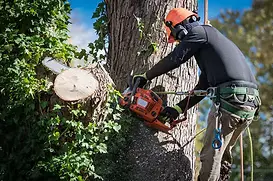
Tree service worker with safety harness and chainsaw removing a large tree

What Umbrella Insurance Does

An umbrella policy sits above your primary liability policies and responds when a claim exhausts your underlying limits. Think of it as a backup layer: your general liability policy pays up to $1 million, and then your umbrella takes over for everything beyond that — up to the umbrella limit.

"Follow-form" is the key term to understand. A properly structured umbrella follows the terms of your underlying policies — it covers the same types of claims, with the same exclusions. Once the underlying limits are exhausted, the umbrella takes over without gaps. Ask your agent to confirm your umbrella is follow-form and that all your underlying policies are properly scheduled on it.

When Your Primary Limits Aren't Enough

Tree care companies work near some of the most expensive assets their clients own. A 90-year-old oak next to a $1.2 million home. Power lines over a busy commercial street. A large removal over a neighbor's attached garage. The liability exposure in these situations can easily reach — and exceed — a $1 million GL limit in a single incident.

Consider a scenario where a tree being removed drops across three vehicles in a neighbor's driveway, damaging all three, injuring a pedestrian, and knocking out power to a commercial building for two days. The resulting property damage, bodily injury, and business interruption claim could produce a seven-figure loss. A $1 million GL policy would be exhausted quickly. Without an umbrella, the excess comes out of the business — or out of your personal assets.

An umbrella with a $2 million limit typically costs a fraction of what the underlying GL costs. For the amount of protection it adds, umbrella is one of the best-value policies available to a tree care business.

Contract Requirements

Beyond protection from catastrophic losses, umbrella coverage is often required by contract. Here's what tree care companies commonly encounter:

  • Municipalities and government agencies typically require $2M to $5M in combined liability limits for any contractor working in public right-of-way.
  • Commercial property managers and HOAs increasingly require $2M per occurrence as a minimum before approving any tree work on managed properties.
  • Utility line clearance contracts often specify $5M or higher in combined liability limits and may require the umbrella to be listed as a named additional insured.
  • Large residential clients — particularly in high-value areas — may ask for certificates showing $2M in limits before allowing work to begin.

Having an umbrella in place means you can meet these requirements without restructuring your entire insurance program every time a new contract comes up.

Umbrella Coverage Across Your Program

Umbrella coverage adds limits above each of these underlying policies. Here's how it applies.

General Liability

The umbrella extends above your GL each-occurrence and aggregate limits once either is exhausted.

Commercial Auto

Umbrella adds limits above your commercial auto liability limit for accidents involving your vehicles.

Employer's Liability

The employer's liability section of your workers' comp policy is typically a scheduled underlying policy — umbrella can add limits here as well.

What to Know Before You Buy

Is an umbrella the same as excess liability?

Not exactly, though the terms are often used interchangeably. A true umbrella may provide broader coverage than the underlying policies in some cases, while excess liability strictly follows the terms of the underlying policy. For most tree care operations, a follow-form commercial umbrella is the right product.

Does umbrella cover workers' compensation?

Not the workers' comp benefits themselves — those are statutory and unlimited in most states. However, umbrella can sit above the employer's liability section of a WC policy, which has its own limits and covers certain direct lawsuits by injured employees.

How much does umbrella coverage cost?

A $1 million umbrella for a small to mid-sized tree care operation commonly runs $500–$1,500 per year. The cost relative to the coverage added makes it one of the most efficient insurance purchases available. Exact pricing depends on underlying limits, loss history, and carrier.

Can I get an umbrella without buying the underlying policies through the same carrier?

Yes, in most cases. An umbrella doesn't need to come from the same carrier as your GL or auto. However, you must ensure all underlying policies are properly listed on the umbrella's schedule of underlying insurance — your agent should verify this.

Umbrella Coverage by State

Municipal contract requirements and carrier options for umbrella coverage vary by state. We write tree service umbrella policies in 48 states — select your state for details.

View All State Guides
Indiana Illinois Ohio Michigan Kentucky Tennessee Texas Florida Georgia North Carolina Pennsylvania New York + more states

Add an Umbrella to Your Coverage Program

We'll structure umbrella coverage that properly layers over your GL, auto, and workers' comp — so there are no gaps when a large claim hits.