
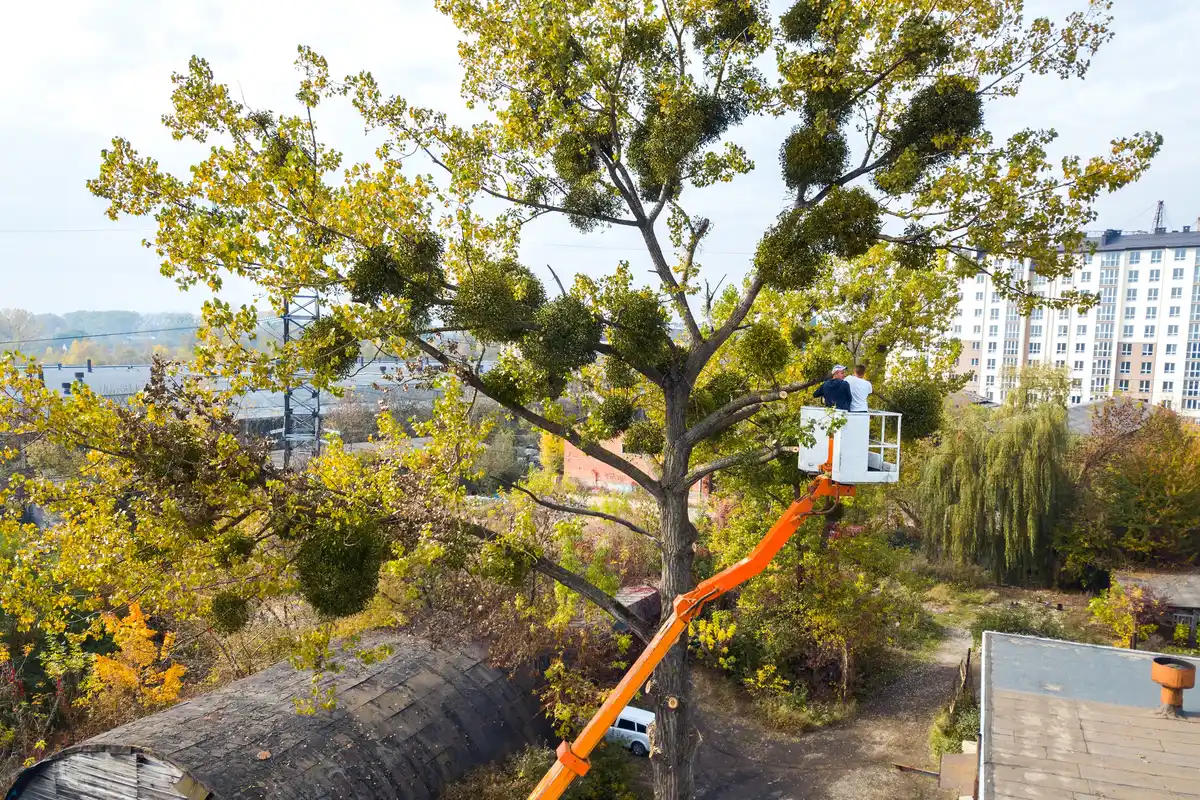
The U.S. tree care industry generates over $20 billion in annual revenue — and the average tree care business earns $553,405 per year, with over 60% exceeding $1 million annually. Tree service is one of the most profitable trades in America when run properly, with owner-operator margins typically running 30 to 50 percent. But it’s also one of the most dangerous, capital-intensive, and regulated trades to enter. Done wrong, the same business that makes operators rich can bankrupt them in a single accident.
This guide covers everything you need to launch a tree service business in 2026: realistic startup costs, the equipment you actually need versus what marketers tell you to buy, state-by-state licensing requirements, insurance essentials, business structure decisions, pricing, and the marketing strategies that actually generate jobs. It’s written from the perspective of an insurance agency that works with tree service contractors across 48 states every day — so you’ll get the candid view of what works and what trips up new operators.
If you’re serious about starting a tree service business, this is the playbook.
Is a Tree Service Business Right for You?
Before spending a dollar, an honest self-assessment matters. Tree service combines high physical risk, significant capital requirements, year-round customer demand, and regulatory complexity. The operators who succeed share some common characteristics:
You should consider starting a tree service business if:
- You have prior experience in arboriculture, landscaping, or related outdoor trade work
- You’re comfortable with physical work at heights and with dangerous equipment
- You can secure $10,000–$50,000 in startup capital without taking on crushing debt
- You’re in a market with moderate-to-high tree density (suburban and rural areas with mature trees)
- You’re prepared to be on-call for emergency storm response work
- You’re willing to invest 2–3 years before consistently earning above-trade wages
Reconsider if:
- You have no prior experience in tree work and aren’t willing to spend 6+ months learning the trade properly first
- You’re in a metropolitan area where tree work is dominated by large established companies
- You can’t secure proper insurance (a non-negotiable starting requirement)
- You’re risk-averse — tree work has a fatality rate roughly 30 times the national average
- You’re looking for passive or semi-passive income (this is hands-on operator work)
The single biggest mistake new operators make is starting without prior experience. Tree work isn’t intuitive, and learning by doing with paying customers leads to property damage, injuries, and reputational ruin. The best path: work for an established tree care operation for 1–2 years before launching your own.
How Much Does It Cost to Start a Tree Service Business?
Starting a tree service business costs $10,000 to $50,000 for most new operators in 2026, with three distinct tiers based on operation type:
| Operation Type | Total Startup Cost | What’s Included |
|---|---|---|
| Bootstrap solo operator | $10,000–$20,000 | Used truck, basic chainsaws, climbing gear, rented chipper, basic insurance |
| Standard small operation | $25,000–$50,000 | Reliable used truck, full equipment package, owned chipper, full insurance, basic marketing |
| Fully-equipped operation | $75,000–$150,000+ | New or near-new truck, complete equipment fleet, stump grinder, business systems, professional marketing |
Here’s a realistic line-item breakdown for a standard small operation launching in 2026:
Truck and primary vehicle: $8,000–$15,000 for a used heavy-duty pickup (F-350 or similar). Don’t finance — buy cash to avoid debt during startup.
Wood chipper: $3,500–$7,000 for a used 6-inch capacity chipper. Avoid the $1,500 homeowner models — they break constantly. Rent for the first 90 days if cash-constrained.
Chainsaws and equipment: $4,000–$6,000 for two professional chainsaws (Stihl MS 261 and MS 462 or equivalent), climbing saddle and ropes, rigging gear, and hand tools.
Safety equipment: $500–$1,000 for hard hat with face shield, chainsaw chaps, gloves, eye protection, and first aid kit.
Insurance: $4,000–$10,000 first-year cost for general liability, commercial auto, inland marine, and workers’ compensation if you have employees. See our tree service insurance cost guide for detailed breakdowns.
Business formation: $100–$500 for LLC formation, depending on state. Don’t operate as sole proprietorship — the personal liability exposure isn’t worth the $400 savings.
Licensing and permits: $500–$1,500 depending on state. Some states require contractor licenses for jobs above certain dollar thresholds.
Marketing: $1,000–$2,000 for website setup, Google Business Profile optimization, vehicle signage, business cards, and yard signs.
Working capital: $5,000–$10,000 minimum to cover fuel, maintenance, payroll, and personal expenses while building a customer base. New tree service businesses typically take 3–6 months to reach steady cash flow.
The bootstrap approach (renting expensive equipment, minimum insurance, used truck, no employees) gets you operational for around $15,000. The standard approach (owning core equipment, proper insurance, basic crew) runs $30,000–$50,000.
Step 1: Get the Right Experience First
The hard truth: starting a tree service business without prior experience leads to injuries, lawsuits, and bankruptcy. Tree work has a fatality rate of approximately 110 per 100,000 workers according to Bureau of Labor Statistics data — roughly 30 times the national average. Operators who skip the learning phase don’t just risk their own lives; they risk killing employees, damaging property worth more than they earn in a year, and creating insurance claims that follow them for a decade.
The right experience-building paths:
1. Work for an established tree care company (best path). 1–2 years as a ground crew member, then 1–2 years as a climber. By the end, you’ll understand pricing, scheduling, customer management, equipment maintenance, and the realities of running crews. Most successful tree service business owners came up this way.
2. Complete an arboriculture training program. Community colleges, vocational schools, and the International Society of Arboriculture offer formal training. Pursue ISA Certified Arborist certification — it requires three years of arboriculture experience plus passing a comprehensive exam, but the credential pays for itself many times over in pricing power and contract access.
3. Take TCIA-affiliated training. The Tree Care Industry Association offers safety training, climber competency programs, and management resources. TCIA Accreditation for established companies provides a competitive edge in commercial bidding.
Critical safety certifications worth pursuing before launching:
- ISA Certified Arborist — the foundational credential
- CPR/First Aid — required by some commercial contracts and a baseline safety requirement
- Aerial Lift/Bucket Truck operator certification — increasingly required for commercial work
- Electrical Hazards Awareness Program (EHAP) — required for any work near power lines
Step 2: Choose Your Business Structure
The legal structure you choose protects (or fails to protect) your personal assets if something goes wrong. For tree service operations, this matters enormously — a single fall claim or property damage incident can exceed $500,000.
Limited Liability Company (LLC): The standard choice for tree service businesses. Costs $100–$500 to form depending on state. Provides legal separation between business liabilities and personal assets. Pass-through taxation keeps things simple. Highly recommended for nearly all tree service operators.
Sole Proprietorship: Don’t do this. The cost savings (typically $200–$400) aren’t remotely worth the unlimited personal liability exposure. One claim can take your house, your savings, and your future earnings.
S-Corporation: Can offer tax advantages once you’re consistently earning $80,000+ in net income — pays salary plus distributions, reducing self-employment tax. Talk to a CPA before electing S-corp status; the administrative complexity isn’t worth it for early-stage operations.
C-Corporation: Generally not appropriate for small tree service businesses unless you’re seeking outside investment.
Steps to form your LLC:
- Choose a business name and verify availability with your Secretary of State
- File Articles of Organization with your state
- Get an Employer Identification Number (EIN) from the Internal Revenue Service at no cost
- Open a business bank account separate from personal accounts
- Get business credit cards in the LLC’s name to keep finances cleanly separated
Step 3: Get Proper Licensing and Permits
Tree service licensing varies dramatically by state. Some states have specific arborist or tree service licenses. Most require general business and contractor licenses with revenue or per-job thresholds. Always check your state contractor licensing board and your municipality before starting any work.
Seven states currently require specific tree service or arborist licenses:
- California (Qualified Applicator’s License if using regulated pesticides)
- Connecticut (state arborist license)
- Hawaii (specific tree care licensing)
- Louisiana (state-specific requirements)
- Maine (specific tree care licensing)
- Maryland (state-specific requirements)
- Rhode Island (state-specific requirements)
Most NCCI states (including Indiana, Ohio, Florida, Texas, Pennsylvania, Kentucky, Michigan, Illinois, Georgia, North Carolina, and Virginia) require general contractor licensing for jobs above specific dollar thresholds:
- Virginia: Department of Professional and Occupational Regulation (DPOR) contractor license required for any contract over $1,000
- Pennsylvania: Home Improvement Contractor (HIC) registration required for residential jobs over $5,000
- Most other states: Contractor license required for jobs over $500–$5,000
Beyond state licensing, common requirements:
- General business license from your city or county
- Sales tax permit if your state taxes services
- Worker’s compensation registration if you’ll have employees
- Commercial driver’s license (CDL) for vehicles over 26,001 lbs (most bucket trucks require CDL)
- Pesticide applicator license if you’ll do herbicide treatment work
The licensing landscape is the most-overlooked startup item. Operating without proper licenses can result in fines, stop-work orders, and personal liability that bypasses your LLC protection.
Step 4: Get the Right Insurance
Insurance is non-negotiable for tree service businesses. Tree work is classified as one of the highest-risk trades in the workers’ comp system under class code 0106. Operating without coverage exposes you to claims that can exceed $500,000 in medical costs alone.
Required and highly recommended coverage for new tree service businesses:
General liability insurance — $1 million minimum (most commercial contracts require $2 million per occurrence). Covers third-party bodily injury and property damage claims. Annual cost: $1,500–$3,000 for new operations.
Workers’ compensation — Required by law in 47 of 48 states (Texas is the exception, but most operators carry coverage anyway). Costs $7–$15 per $100 of payroll under class code 0106. Operating without workers’ comp when required is a criminal offense in addition to civil penalties.
Commercial auto insurance — Required for business vehicles. Personal auto policies don’t cover business use. Annual cost: $1,800–$2,640 per vehicle.
Inland marine (equipment) insurance — Protects your chainsaws, chippers, climbing gear, and equipment while in transit, on job sites, or stored off-premises. Annual cost: $600–$1,000 for typical small operations.
Umbrella/excess liability — Extra coverage above your primary limits. Increasingly required for commercial contracts. Annual cost: $500–$2,500 per $1 million of additional coverage.
Pesticide and pollution liability — Required if you’ll do any herbicide treatment, plant health care, or spray work. Annual cost: $400–$900.
Total annual insurance cost for typical new tree service operation: $4,000–$10,000. Established operations with crews and multiple vehicles run $20,000–$45,000 annually. See our complete tree service insurance cost breakdown for detailed figures.
When commercial clients hire you, they’ll require a Certificate of Insurance (COI) proving your coverage. Choose an insurance agent who specializes in tree service operations — they’ll structure your policy with blanket additional insured and primary/non-contributory endorsements that let COIs issue within hours instead of days.
Step 5: Buy the Essential Equipment
Buy used. Rent expensive equipment until volume justifies purchase. The biggest financial mistake new operators make is buying full-priced new equipment before they have steady revenue.
Essential startup equipment (Phase 1 — Day 1 operations):
- Used pickup truck with towing capacity ($8,000–$15,000): F-250 or F-350 with proper trailer hitch. Diesel preferred for towing capacity. Avoid financing during startup.
- Two professional chainsaws ($500–$1,000 each): Stihl MS 261 (light work) and MS 462 (heavy removal), or Husqvarna equivalents. Avoid homeowner-grade saws.
- Climbing saddle and ropes ($1,500–$3,000): Proper arborist-grade climbing system from Petzl, Buckingham, or similar.
- Rigging equipment ($1,000–$2,000): Lowering devices, rigging blocks, slings, and friction savers.
- Safety equipment ($500–$1,000): Hard hat with face shield, chainsaw chaps, climbing gloves, eye protection, first aid kit.
- Hand tools ($500–$1,000): Hand saws, pole saws, loppers, pruners, and basic tool kit.
Phase 2 equipment (add as revenue grows):
- Used wood chipper ($3,500–$15,000): 6-inch capacity minimum for residential work, 12-inch for commercial. Rent until you’re consistently doing 10+ jobs requiring chipping per month.
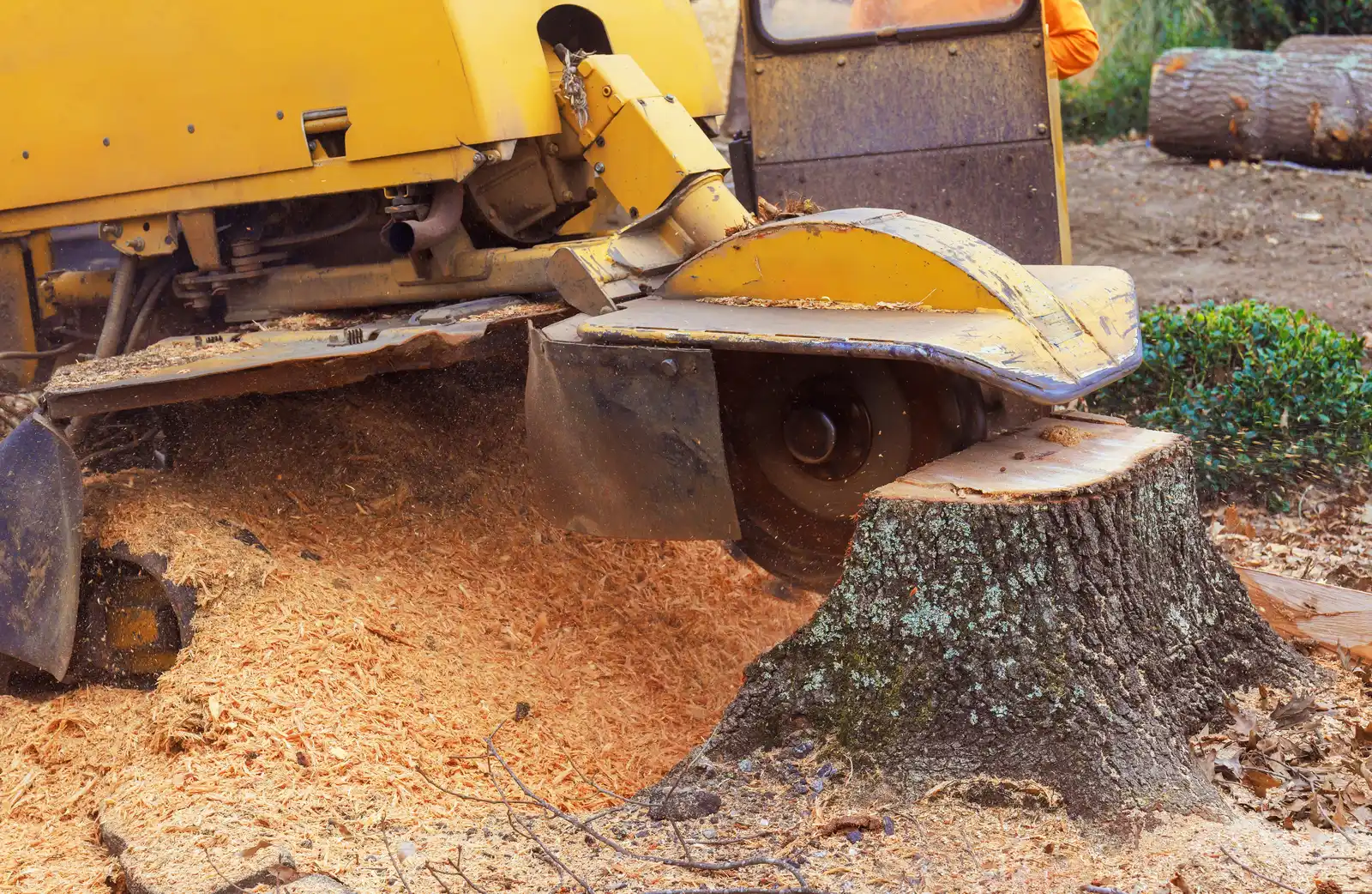
- Stump grinder ($5,000–$25,000): Major investment that should follow demand. Rent or sub out stump grinding initially.
- Trailer for hauling brush and equipment ($2,000–$8,000): Dump trailers preferred for efficient cleanup.
Phase 3 equipment (established operations):
- Bucket truck ($25,000–$80,000 used): Major operational upgrade that opens commercial work but requires CDL operator and significant maintenance budget.
- Crane access (rental relationship or owned): Crane work is the highest-margin tree service work but requires specialized expertise and insurance endorsements.
Equipment buying tips:
- Buy used from established tree care companies upgrading their fleet — equipment is typically well-maintained and substantially discounted
- Avoid auctions for chainsaws and chippers (often hard-used and poorly maintained)
- Always inspect bucket trucks with a heavy equipment mechanic before purchase
- Build a maintenance reserve from day one — tree care equipment fails frequently and replacement costs can derail operations
Step 6: Set Your Pricing
Tree service pricing is where most new operators undercharge themselves into bankruptcy. The common pattern: new operator prices 20–30% below established competitors to win jobs, doesn’t cover true costs, burns out within 18 months. The correct pattern: price at market rate or slightly above, deliver exceptional service, build a reputation for quality.
Tree service pricing methods:
Per-job estimates (most common): Quote a fixed price for the entire job based on tree size, location, complexity, and disposal needs. Best for client clarity and cash management.
Hourly pricing ($75–$150+ per person, per hour): Used for unclear-scope jobs and emergency work. Charge crew hourly rates that cover wages, equipment, insurance, and overhead.
Per-foot pricing for trimming: Used for utility line clearance and large-scale trimming contracts. Typically $5–$15 per linear foot of canopy trimmed.
Typical 2026 tree service pricing ranges:
| Service | Typical Price Range |
|---|---|
| Small tree removal (under 30ft) | $300–$700 |
| Medium tree removal (30–60ft) | $700–$1,500 |
| Large tree removal (60–80ft) | $1,500–$3,000 |
| Hazardous/complex removal | $3,000–$8,000+ |
| Tree trimming (medium tree) | $300–$800 |
| Stump grinding (per stump) | $100–$400 |
| Emergency storm response | 1.5–2x standard pricing |
| Crane-assisted removal | $2,000–$10,000+ |
Pricing principles for new operators:
-
Price 10–20% above market average, not below. If you’re the cheapest, you attract the worst customers — those who demand more, complain constantly, and leave bad reviews.
-
Always inspect before quoting. Photo or sight-unseen quotes lead to undercharging and dangerous surprises on-site.
-
Cover your true cost per hour. A new operator’s true cost per crew hour is typically $90–$130 (wages + equipment + insurance + overhead). Pricing must cover this plus profit margin.
-
Charge for travel time on distant jobs. Free travel kills small-operator economics fast.
-
Require deposits on large jobs. 25–50% deposit on jobs over $2,000 prevents surprise cancellations and protects against bad clients.
Step 7: Marketing and Getting Your First Jobs
New tree service operations need 3–5 jobs per week minimum to survive. Here’s how to generate jobs without spending $10,000 on marketing:
Phase 1 (months 1–3): Free and low-cost lead generation
- Google Business Profile: Set up immediately with photos, service areas, and customer reviews. This is the single highest-ROI marketing activity for local services.
- Yard signs at completed jobs: Place a yard sign at every completed job (with customer permission). Neighbors are your highest-converting prospects.
- Door hangers in storm-damaged neighborhoods: Within 2 hours of major storms, canvass affected areas with door hangers offering emergency tree removal. Storm response is the highest-margin work and can generate 6 months of regular customers.
- Networking with landscape companies: Most landscapers hit a working-height limit (typically 8–10 feet) where their insurance no longer covers them. Become their go-to tree referral.
- Real estate agent relationships: Agents need quick tree work for properties going on the market. Build relationships with local agents.
Phase 2 (months 3–12): Paid marketing investment
- Local SEO and tree service website: A proper website with location-specific landing pages drives organic traffic. Budget $1,000–$3,000 for setup and $200–$500/month for SEO maintenance.
- Google Local Service Ads: Pay-per-lead advertising that appears at the top of local search results. Budget $500–$2,000/month depending on market competitiveness.
- Google Search Ads: Targeted ads for “tree removal [city]” and similar high-intent queries. Budget $1,000–$3,000/month.
- Facebook ads (limited use): Facebook generates awareness but rarely produces qualified leads for tree services. Skip until you’ve maxed out Google channels.
Phase 3 (year 2+): Commercial contracts and recurring revenue
- Property management company outreach: Direct contact with commercial property managers offering competitive bids on tree maintenance contracts. Builds recurring revenue.
- Municipal contractor registration: Register with cities for tree service approved provider lists. Requires comprehensive insurance and often ISA certification.
- HOA contracts: Annual maintenance contracts with HOAs provide steady seasonal revenue.
Sales follow-up is critical: 80% of tree service estimates require 5+ touchpoints after the initial estimate to close. New operators who quote and never follow up close 20–30% of estimates. Operators with systematic follow-up (text within 24 hours, call within 72 hours, follow-up at 1 week and 2 weeks) close 60–75% of estimates. The difference is the entire spread between failed and successful tree service businesses.
Common Mistakes That Kill New Tree Service Businesses
Five mistakes that destroy new tree service operations:
1. Skipping insurance to save money. A single property damage claim or workplace injury without coverage ends most new operations permanently. Operating without workers’ comp when required is a criminal offense in most states.
2. Underpricing to win jobs. New operators who price 20–30% below established competitors win volume but don’t cover true costs. Burnout follows within 12–18 months.
3. Buying expensive equipment too early. New operators who finance new bucket trucks and stump grinders in year 1 end up with debt service consuming all profit. Buy used, rent expensive equipment, and only purchase when consistent volume justifies the investment.
4. Operating as a sole proprietorship. The personal liability exposure isn’t worth the $400 savings. One serious claim takes your house and savings.
5. Going solo without prior experience. Tree work isn’t intuitive. Learning by doing on customer property leads to property damage claims, injuries, and reputation destruction. The 1–2 year apprenticeship at an established company is the cheapest education available.
Realistic Year-by-Year Growth Trajectory
What does realistic growth look like for a well-executed tree service startup?
Year 1: $80,000–$150,000 revenue. Solo operator with one helper. Building customer base, reputation, and Google reviews. Operating at break-even or slight loss after equipment depreciation. Net to owner: $40,000–$70,000.
Year 2: $200,000–$400,000 revenue. Small crew (3–4 people), expanded equipment, growing referral base, basic commercial work. Net to owner: $80,000–$140,000.
Year 3: $400,000–$800,000 revenue. Two crews, bucket truck operations, established commercial relationships, recurring contracts. Net to owner: $150,000–$280,000.
Year 5: $800,000–$1,500,000 revenue. Multiple crews, significant commercial work, possible crane operations, established brand. Net to owner: $250,000–$500,000+.
These figures assume systematic growth, proper pricing, and reinvestment of profits into equipment, marketing, and talent. Operators who pull all profit out for personal use plateau quickly. Operators who reinvest 30–50% of profit into growth typically hit $1M revenue by year 3.
Frequently Asked Questions
How much does it cost to start a tree service business?
Starting a tree service business costs $10,000 to $50,000 for most new operators in 2026. A bootstrap operation with basic equipment, a used truck, and minimum insurance can launch for $10,000 to $20,000. A standard setup with chipper and proper equipment runs $25,000 to $50,000. A fully-equipped operation with bucket truck and stump grinder can require $75,000 to $150,000+.
Is a tree service business profitable?
Yes — tree service is one of the most profitable trades when run properly. Owner-operator margins typically run 30 to 50 percent, with average tree care businesses generating $553,405 in annual revenue per industry data. Over 60 percent of established tree care companies exceed $1 million in annual revenue. The combination of high demand, premium pricing for skilled work, and barriers to entry makes the industry attractive.
Do I need a license to start a tree service business?
License requirements vary by state. Seven states currently require specific tree service or arborist licenses: California, Connecticut, Hawaii, Louisiana, Maine, Maryland, and Rhode Island. Most other states require only a general business license, though contractor licenses may be needed for jobs over a dollar threshold (typically $500 to $5,000). Always check your state contractor licensing board and your municipality before starting work.
Do I need to be a certified arborist to start a tree service business?
ISA Certified Arborist certification is not legally required in most states, but it is highly recommended. Certification requires three years of arboriculture experience plus passing a comprehensive exam. Benefits include access to commercial and municipal contracts that require certification, higher pricing power, lower insurance premiums, and stronger client trust. Most successful tree service operations have at least one ISA-certified arborist on staff.
How much money can I make owning a tree service business?
A solo operator with a helper typically generates $60,000 to $120,000 in annual revenue. A small crew operation runs $150,000 to $300,000. Established small businesses run $300,000 to $1 million. Larger operations with multiple crews exceed $1 million annually, and the largest tree service companies generate $10 million or more. Net profit margins for owner-operators run 30 to 50 percent.
What insurance does a tree service business need?
Tree service businesses need at minimum: general liability insurance ($1 million minimum, often $2 million required by commercial contracts), workers’ compensation if you have employees (required in 47 of 48 states except Texas), commercial auto for business vehicles, and inland marine for equipment. Operations doing herbicide work need pesticide and pollution liability. Total insurance costs range from $4,000 to $12,000 per year for small operations and $20,000 to $45,000 for crews with multiple trucks.
What equipment do I need to start a tree service business?
Essential startup equipment includes: a used pickup truck with towing capacity ($8,000 to $15,000), two professional chainsaws ($500 to $1,000 each), climbing gear including saddle and ropes ($1,500 to $3,000), safety equipment including hard hat and chaps ($500 to $1,000), and a used wood chipper ($3,500 to $7,000) or rental until volume justifies purchase. Optional equipment as you grow: stump grinder ($5,000 to $15,000), bucket truck ($25,000 to $80,000).
Get Tree Service Business Insurance
Once you’re ready to launch, getting properly insured is the most important early business decision you’ll make. Tree service is one of the most highly-rated trades in the workers’ comp system, and most generalist agents don’t understand the coverage requirements specific to tree care operations.
TreeGuard structures policies for tree service businesses specifically. We work with new operators across 48 states, helping you get coverage that actually fits your operation — not over-insured for risks you don’t have, not under-insured for the catastrophic claims that can end a business. Most quotes come back within 1–2 hours during business hours.
For deeper resources on running and growing your tree service business, additional authoritative resources include: U.S. Small Business Administration startup guidance, the International Society of Arboriculture for certifications and training, the Tree Care Industry Association for safety standards and accreditation, and BLS occupational outlook for workforce data.

More from Starting a Tree Service Business
Ready to get properly covered?
Tell us about your tree care operation and we'll compare options across our carrier network. Quote response within 1–2 hours during business hours.
Independent agency · 16+ A-rated carriers · Licensed in 48 states