
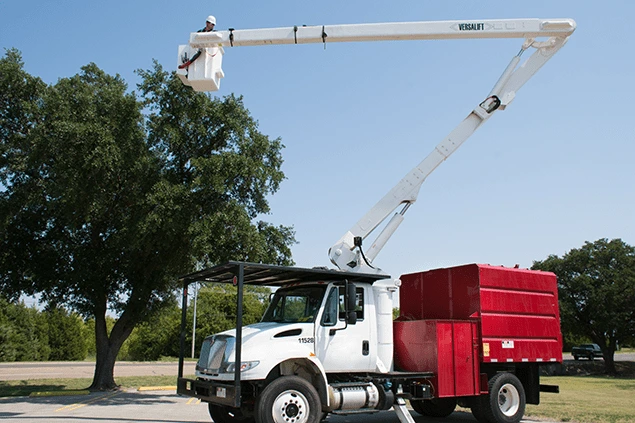
Why Personal Auto Doesn't Cover Business Use
Many tree care business owners — especially those just starting out — assume their personal auto insurance extends to their work trucks. It doesn't. Personal auto policies specifically exclude vehicles used primarily for business purposes, which means any claim arising from work-related driving could be denied outright.
Commercial auto insurance is designed for business vehicle use. It accounts for the higher mileage, the weight of the vehicles, the hazardous loads being transported, and the likelihood of multiple drivers operating the same vehicle. If you're using any vehicle for your tree care operations, it needs to be on a commercial auto policy.
Hired and Non-Owned Auto: Don't Leave a Gap
Even if your company doesn't own every vehicle used in your operations, you can still be held liable when something goes wrong. Hired auto coverage responds when an employee is driving a vehicle the company rented or borrowed. Non-owned auto coverage responds when an employee uses their personal vehicle on company business and causes an accident that exceeds their personal policy limits.
Both coverages are inexpensive to add and close real gaps that tree care companies face regularly. If your employees ever drive to pick up supplies, go to a bank, or visit a second job site in their own truck, you have non-owned auto exposure right now.
Scheduling Your Equipment Correctly
Chippers and trailers need to be explicitly scheduled on your commercial auto policy to be covered. A trailer that's being towed by a scheduled vehicle isn't automatically covered — it needs its own entry. We regularly see tree care companies that have been paying premium for years, only to discover during a claim that their $80,000 chipper wasn't on the policy.
Work with your agent to walk through every piece of equipment that moves on the road and confirm it's properly scheduled. This is where specialty knowledge matters — a generalist agent may not know to ask about the chipper.