
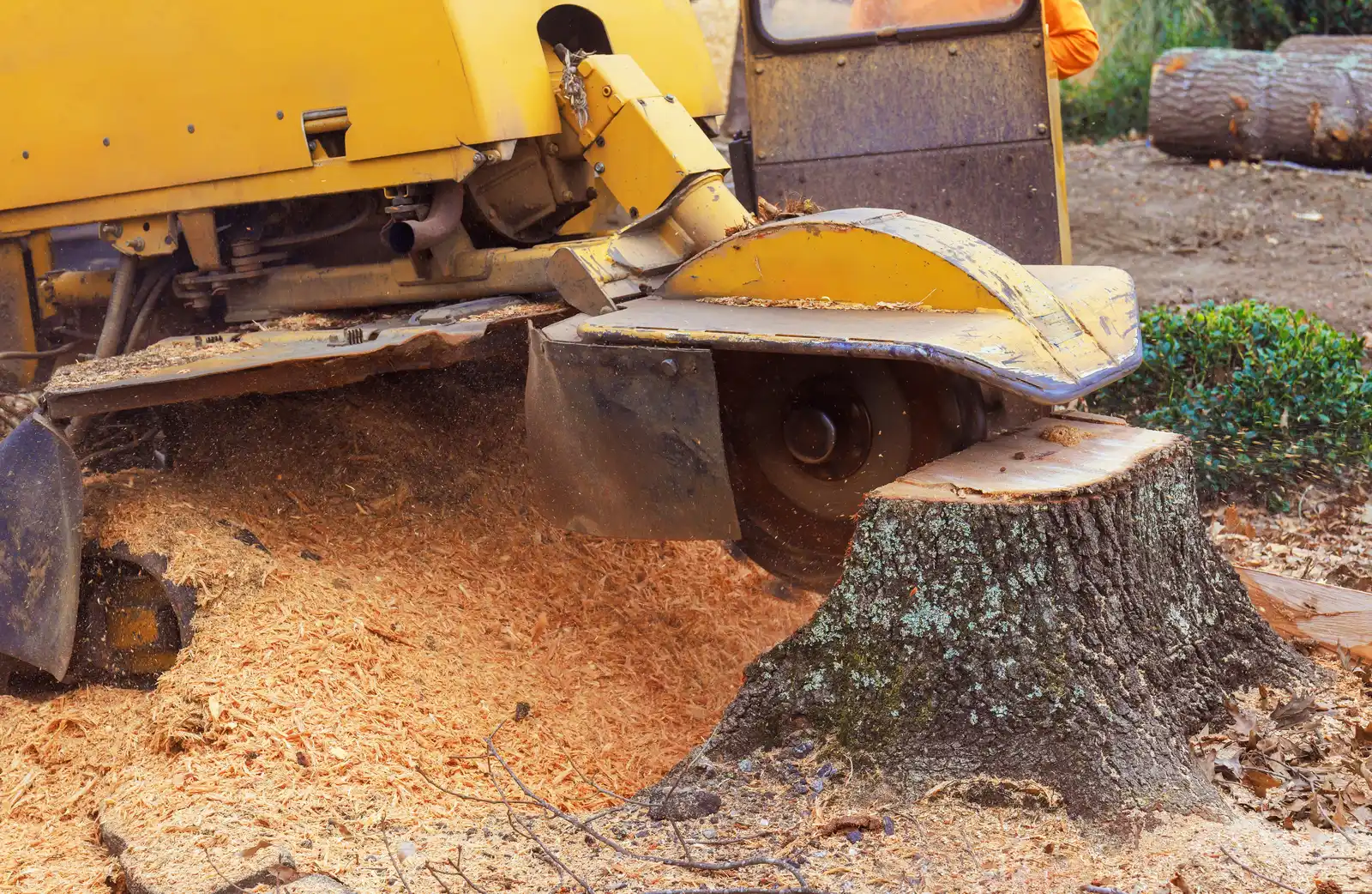
General liability insurance for tree service contractors covers third-party bodily injury, property damage, and completed operations claims arising from tree care work — typically with $1M–$2M per occurrence limits. It’s the foundational policy every tree service operation needs, but what it covers (and critically, what it doesn’t) is frequently misunderstood by contractors who discover the gap at claim time.
This guide covers exactly what GL pays for, what it excludes, the limits you need to win commercial work, real claim examples with payout ranges, and how GL fits into a complete tree service insurance program.
What General Liability Actually Covers
GL pays for four specific categories of claims. Understanding each one prevents the surprises that happen when an actual claim occurs.
Bodily Injury to Third Parties
If a bystander, customer, or neighbor is injured as a result of your tree work, GL covers their medical bills, lost wages, pain and suffering damages, and your legal defense costs if they sue. This includes:
- A pedestrian struck by debris during a roadside tree removal
- A homeowner who trips over equipment staged on their property
- A neighbor injured when a limb falls into their yard
- A passerby hit by material ejected from your chipper
The critical limitation: “third party” means anyone except your employees. Employee injuries are covered by workers’ compensation, not GL — a distinction that costs operations dearly when they confuse the two.
Property Damage to Third-Party Property
If your tree work damages property belonging to someone else, GL pays for repair or replacement. Real examples:
- A large limb falls through a customer’s roof during removal
- Your truck or equipment damages a customer’s driveway, fence, or landscaping
- A tree you’re removing falls into a neighbor’s yard and damages their fence or vehicle
- Debris from a grinding operation breaks a nearby vehicle’s windshield
The key qualifier: “third-party.” Property in your care, custody, or control — including the tree you’re hired to remove — is typically excluded. That exclusion matters more than most contractors realize.
Completed Operations Coverage
Completed operations covers claims that arise after a job is finished and you’ve left the property. If you remove a tree in March and the customer claims in August that the root grinding disrupted a buried irrigation line, completed operations is what responds.
This coverage is essential for tree service work because root systems, underground utilities, and soil stability issues often surface weeks or months after work is complete. Occurrence-based GL policies — strongly preferred over claims-made policies for contractors — maintain completed operations coverage as long as the policy was active when the work was done.
Personal and Advertising Injury
GL also covers claims for libel, slander, copyright infringement, and similar non-physical harms. This matters most if your marketing makes comparative statements about competitors or uses images or content you don’t own. It’s a minor component for most operations but is included in standard GL.
What General Liability Does NOT Cover
Equally important as what GL covers is what it excludes. Most coverage gaps in tree service operations trace directly to assuming GL covers more than it actually does.
Employee Injuries
The most dangerous misconception in the industry. GL does not cover your workers if they’re injured on the job. Workers’ compensation covers employee injuries — medical care, lost wages, and disability benefits. Without WC, an injured employee can sue you personally for negligence, and GL explicitly won’t defend you because employer liability is excluded.
Your Own Tools and Equipment
GL doesn’t cover theft of or damage to your own equipment — chainsaws, climbing gear, rigging, chippers, stump grinders. That’s what inland marine insurance (an equipment floater) covers. If your $80,000 chipper is stolen from a job site, GL pays nothing toward replacing it.
Your Commercial Vehicles
Vehicle accidents are covered by commercial auto insurance, not GL. If your chip truck is in an accident en route to a job, GL doesn’t respond. Commercial auto does. This is another gap that surprises contractors who assumed their GL covered everything at and around the job site.
Pollution and Chemical Claims
Standard GL policies contain absolute pollution exclusions. If you apply herbicides, pesticides, or fertilizers and they drift onto a neighbor’s property, damage their landscaping, or contaminate soil, your GL will not pay the claim. Pesticide and pollution liability is a separate policy that fills this gap. Tree services performing plant health care are particularly exposed to this exclusion and often don’t find out until after a claim is denied.
Professional Liability / Arborist Errors
If you recommend removing a tree that a customer later claims was healthy and valuable, or if you make an incorrect diagnosis that causes a tree to die, that’s a professional liability (errors and omissions) claim — not GL. A separate professional liability endorsement or policy is required.
Property in Your Care, Custody, or Control
The care, custody, and control exclusion bars GL from covering damage to property you’re working on. If you’re hired to trim a mature ornamental and damage it in the process, that claim typically won’t be covered. Some specialty GL carriers offer limited CCC buyback endorsements — ask about it explicitly.
Typical Coverage Limits for Tree Service
Standard: $1M Per Occurrence / $2M Aggregate
Most residential and light commercial work requires $1M per occurrence / $2M aggregate. This means GL pays up to $1M on any single claim and up to $2M across all claims in a policy year. For single-crew residential operations, these limits are adequate for most situations.
The per-occurrence limit is what appears on your Certificate of Insurance — the number your customers and contracts actually check.
When You Need Higher Limits
- Municipal street-tree contracts: Often require $2M per occurrence
- Utility and line-clearance work: Frequently requires $5M+ total with umbrella
- Hospital systems, universities, corporate campuses: $2M–$5M per occurrence common
- Government contracts: Vary by agency, often $2M minimum
The most efficient path to higher limits is an umbrella policy — $1M–$5M of additional coverage above primary GL at a fraction of the per-dollar cost of primary coverage.
Real Claim Examples
Falling Limb Through Roof — $47,000. A crew removing a large oak drops a limb section that punctures the customer’s roof decking and damages a skylight. Roof repair: $39,000. Customer’s temporary hotel stay while repairs are completed: $8,000. GL paid the full $47,000 plus defense costs when the homeowner filed suit alleging negligence.
Debris Injures Bystander — $135,000. A roadside chip-truck operation launches debris that strikes a pedestrian’s leg, requiring surgery and three months of recovery. Medical bills, lost wages, and pain-and-suffering settlement: $135,000. GL covered the full settlement plus attorney fees.
Neighbor’s Fence and Vehicle — $31,000. During a large removal, a limb falls on the neighboring property’s fence and a parked car. Fence replacement: $5,200. Vehicle repair: $25,800. GL paid the $31,000 claim.
Completed Operations — Drainage — $19,500. Two months after a stump grinding job, the customer claims the grinding disrupted a French drain system causing flooding in the basement. GL’s completed operations coverage paid the $19,500 remediation.
How Much Does Tree Service GL Cost?
GL is typically the least expensive line item in a tree service insurance program — workers’ comp and commercial auto usually cost more per dollar of risk transferred. Quick 2026 ranges:
- Solo operator: $700–$1,400/year
- Single crew (2–3 employees): $1,200–$2,500/year
- Multi-crew ($600K–$1M revenue): $2,500–$5,000+/year
For full pricing across all coverage lines, see our tree service insurance cost guide.
How GL Fits Into a Complete Program
GL is the foundation — but tree service operations need the full stack. A complete program covers:
- GL — third-party bodily injury and property damage (this guide)
- Workers’ compensation — employee injuries (WC requirements guide)
- Commercial auto — vehicle accidents (commercial auto guide)
- Inland marine — equipment and tools (equipment coverage guide)
- Pesticide/pollution liability — for PHC work (pesticide coverage guide)
- Umbrella/excess — additional limits above all primary policies
Understanding where each policy starts and stops is the difference between a program that protects your operation and one that has gaps waiting to become uncovered claims. Our Certificate of Insurance guide covers the documentation side.
External references: TCIA and ISA publish industry risk management resources that provide context for the exposure GL underwriters are rating.
Frequently Asked Questions
What is general liability insurance for tree service?
General liability insurance for tree service contractors covers third-party claims for bodily injury and property damage arising from your tree care operations. It covers damage your work causes to other people’s property, injuries to bystanders and customers, and claims from completed jobs — including falling limbs, debris damage, and accidental damage to structures, vehicles, and landscaping.
How much general liability coverage do tree service contractors need?
Most tree service contractors should carry at least $1M per occurrence / $2M aggregate. Residential work typically requires $1M minimum. Commercial accounts — property management, HOAs, municipalities — typically require $1M–$2M per occurrence. Utility and municipal contracts can require $5M+ combined with umbrella/excess. Carrying limits below what contracts require disqualifies you from the work entirely.
Does general liability cover damage to the tree I’m working on?
No. GL covers damage to third-party property — not property in your care, custody, or control. The tree you’re hired to work on is excluded from standard GL policies under the care, custody, and control exclusion. Some specialty GL policies offer limited CCC coverage — ask specifically when quoting.
Does general liability cover my employees if they get hurt?
No. GL covers third-party bodily injury, not employee injuries. Workers’ compensation covers employee injuries — medical bills, lost wages, and disability. Operating without WC when you have employees exposes you personally to negligence lawsuits that GL explicitly won’t defend.
What’s the difference between general liability and workers’ comp for tree service?
GL covers third-party claims — property you damage, people outside your crew you injure. Workers’ comp covers your employees — medical care and lost wages when they’re hurt on the job. Both are essential for tree service operations with employees. GL without WC creates a gap: injured employees can sue you personally when WC isn’t in place.
Can I get general liability without workers’ comp?
Yes — they’re separate policies. You can purchase GL without WC. But most commercial contracts and municipalities require proof of both. If you have employees, operating without WC is illegal in most states regardless of what other insurance you carry. Verify your state’s requirements before assuming you’re exempt.

More from Coverage Explained
Ready to get properly covered?
Tell us about your tree care operation and we'll compare options across our carrier network. Quote response within 1–2 hours during business hours.
Independent agency · 16+ A-rated carriers · Licensed in 48 states