
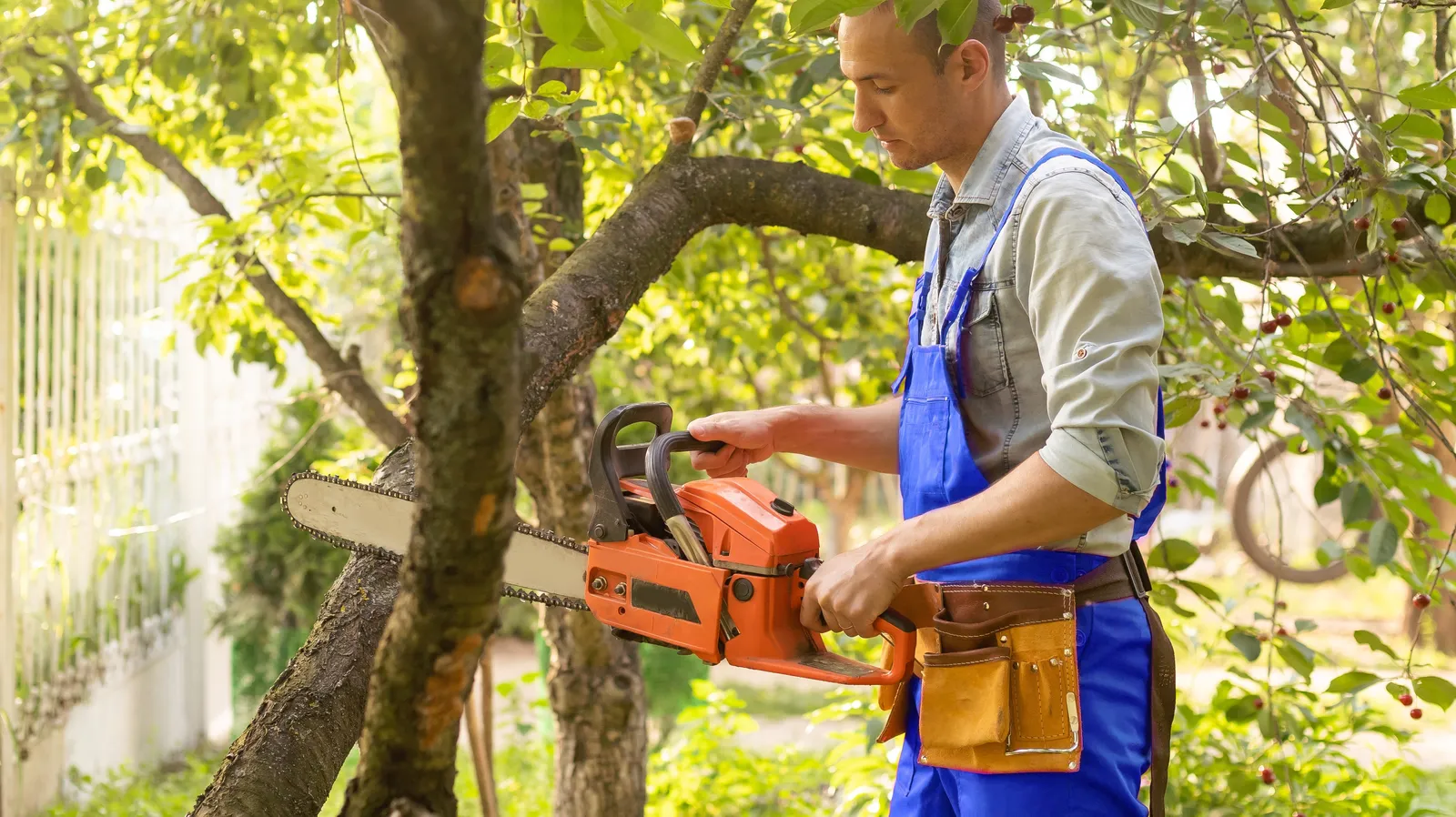
In nearly every state, tree service contractors are legally required to carry workers’ compensation insurance the moment they hire their first W-2 employee. Even sole operators often need it to win commercial contracts. The question isn’t really whether you need workers’ comp — it’s what it costs, what happens without it, and how to manage the expense over time.
This guide covers state requirements, why tree service WC costs what it does, real premium ranges by crew size, the consequences of operating without coverage, and specific strategies for managing the cost.
When Workers’ Compensation Is Required
Workers’ compensation laws are state-specific, but the general framework is consistent across nearly all 48 continental states:
One-employee threshold (most states). The majority of states — including Texas as a notable exception — require WC from the moment you have one W-2 employee. “Employee” includes full-time, part-time, and seasonal workers. The first hire triggers the requirement.
Sole proprietors. Most states do not require WC for sole proprietors with no employees. However, many commercial customers, property management companies, HOAs, municipalities, and institutional accounts contractually require WC proof regardless of your legal obligation. If you want to bid commercial and government work, effective WC coverage is functionally required even where it’s not legally mandated.
Corporate officers and LLC members. Rules vary significantly by state. In some states, corporate officers can exclude themselves from WC coverage. In others, they’re automatically included. Tree service operations with multiple owners should verify how their state handles officer exclusions.
Four monopolistic states. Ohio, North Dakota, Wyoming, and Washington operate state-fund workers’ comp systems where coverage can only be purchased through the state — not from private carriers. Tree services operating in these states must enroll in the state fund; private-market WC policies are not available.
Subcontractors. This is where operations get caught. Most states treat uninsured subcontractors as employees for WC purposes — their payroll gets added to your WC rating base at audit, and you’re responsible for coverage if they’re injured on your job site. Always collect certificates of insurance showing active WC from every subcontractor.
Why Tree Service Workers’ Comp Is Among the Most Expensive
Tree service workers’ compensation is priced under NCCI class code 0106 — one of the highest-rated codes in the workers’ comp system. The reason is straightforward: tree work kills and injures workers at rates that are exceptional even by construction trade standards.
The Bureau of Labor Statistics consistently reports fatal injury rates of 80–129 per 100,000 workers for tree trimmers and pruners — compared to approximately 3.4 per 100,000 across all private-sector workers. That’s 25–38 times the all-industry fatality rate. For context, roofers — another high-hazard trade — have fatal injury rates around 40–52 per 100,000. Tree work is roughly twice as dangerous.
The specific risk factors that drive class code 0106 rates:
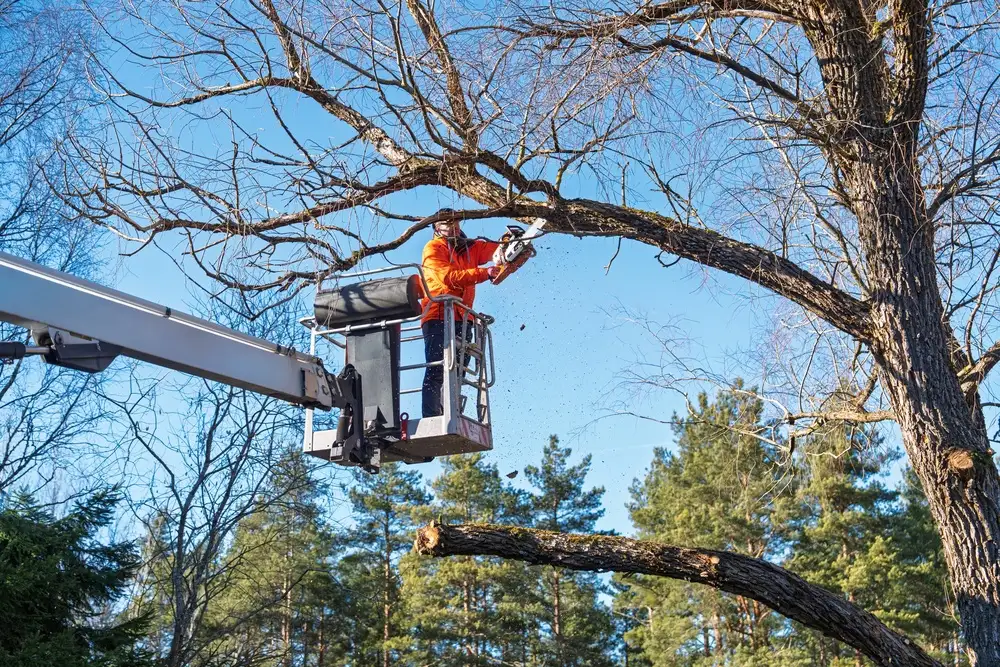
- Aerial work: Climbing and working at height creates fall exposure that most trades don’t face
- Chainsaw operations at elevation: Cutting wood while suspended creates a risk profile unlike anything in landscaping or general construction
- Falling objects: Trees, limbs, and wood sections that fall unpredictably create strike hazards for ground crew
- Remote and urban environments: Operations in both dense residential areas and remote locations create distinct hazard patterns
- Weather-driven emergency work: Storm response work — some of the highest-hazard tree work performed — happens under the worst conditions at the worst times
For deeper context on class code 0106 specifically, see our dedicated class code 0106 guide.
Workers’ Comp Costs for Tree Service in 2026
Workers’ comp premium is calculated as: (Payroll ÷ 100) × Rate × Experience Modifier
Base rates under class code 0106 vary significantly by state, typically ranging from $5.00–$15.00 per $100 of payroll. States with historically high claims experience (Northeast, Pacific Northwest, some Midwest states) run toward the higher end. Some lower-risk states run closer to $5–$7.
Real annual ranges by operation size:
| Payroll | Rate Range | Annual WC Premium |
|---|---|---|
| $75,000 (solo + 1 helper) | $5–$15/$100 | $3,750–$11,250 |
| $150,000 (2-person crew) | $5–$15/$100 | $7,500–$22,500 |
| $250,000 (3-4 person crew) | $5–$15/$100 | $12,500–$37,500 |
| $400,000 (5-6 person crew) | $5–$15/$100 | $20,000–$60,000 |
Your experience modifier (mod) adjusts these base rates up or down based on your actual claims history compared to the industry average. A 1.0 mod is average. A 0.80 mod means 20% below average — and 20% lower premium. A 1.30 mod means 30% above average. A mid-size operation with a 0.80 mod versus a 1.30 mod can be paying $10,000–$15,000/year differently on the same payroll.
WC is almost always the largest single line item in a tree service insurance program — larger than general liability, commercial auto, and equipment combined for most operations. See our full insurance cost guide for the complete picture.
What Happens Without Workers’ Comp
Operating without required WC creates four distinct exposures, each serious:
1. Regulatory penalties. Most states assess fines per-day-per-employee for WC non-compliance. Typical penalties: $1,000–$10,000 per violation. Stop-work orders halt operations until coverage is secured. In some states, WC non-compliance is a criminal misdemeanor.
2. Personal lawsuit exposure. Without WC, injured employees can sue you directly for negligence. WC’s workers’ compensation exclusive remedy protection — which bars employees from suing their employer — disappears when WC isn’t in place. A serious injury claim without WC can be a business-ending lawsuit.
3. Contract disqualification. Commercial customers, property management companies, municipalities, and government contracts verify WC coverage before awarding contracts and at renewal. Operating without WC disqualifies you from commercial work regardless of capability or price.
4. Uninsured subcontractor liability. If you use subcontractors who aren’t insured and one is injured on your job site, you’re potentially on the hook for their medical care and lost wages — plus the regulatory penalties for their uncovered status.
How to Lower Workers’ Comp Costs
Build your experience modifier down. The mod is calculated on three years of payroll and claims. Clean years move it down; claim years move it up. A deliberate approach to claims management — understanding what to file and when — shapes your mod over time. Operations that maintain below-1.0 mods pay substantially less on the same payroll.
Implement documented safety programs. ISA-certified crews, written safety protocols, PPE requirements, and regular training give underwriters something tangible to evaluate. The ISA Certified Arborist credential and TCIA accreditation both signal professional safety culture to WC underwriters. Some carriers offer explicit safety credits.
Work with carriers who specialize in tree care. Generalist WC carriers often surcharge tree service work because they don’t understand the risk profile well. Specialty carriers like Amerisafe, focused on hazardous trades, price tree service WC more accurately and often more competitively for operations with clean safety records.
Verify classification every year. Misclassification under the landscaping code (0042) seems to save money — until audit. When auditors discover actual operations include aerial work and removal, they reclassify and back-charge the difference. Getting correctly classified from the start avoids audit surprises.
Keep subcontractor COIs current. Uninsured subcontractors added to your rating base at audit is one of the most common and preventable premium increases. A simple subcontractor COI collection system eliminates this exposure entirely.
Workers’ Comp and Your Full Insurance Program
Workers’ comp doesn’t stand alone. A complete tree service insurance program includes WC alongside general liability (third-party claims), commercial auto (vehicle accidents), inland marine (equipment), and optionally pesticide/pollution coverage for PHC operations.
The interaction between policies matters. GL explicitly excludes employee injury claims. WC explicitly covers employees and creates the exclusive remedy protection that bars most employee lawsuits. These policies work as a system — gap in one creates exposure in another.
For documentation requirements when bidding commercial and government work, see our Certificate of Insurance guide.
Frequently Asked Questions
Do I need workers’ comp if I’m a sole proprietor with no employees?
In most states, WC is not legally required for sole proprietors with no employees. However, most commercial customers, municipalities, HOAs, and institutional accounts require proof of WC as a contract condition regardless of legal obligation. Verify both your state’s requirements and your specific contracts’ requirements before assuming you’re exempt.
Do 1099 subcontractors need to be on my workers’ comp policy?
Potentially yes. In most states, subcontractors without their own WC policy may be treated as your employees for premium calculation purposes at audit — meaning their payroll gets added to your rating base. This is a common audit finding that results in significant back-premium charges. Collect certificates of insurance showing active WC from every subcontractor before work begins.
How much does workers’ comp cost for tree service in 2026?
Tree service WC under class code 0106 runs $5–$15 per $100 of payroll depending on state and experience modifier. A crew with $200,000 in annual payroll typically pays $10,000–$22,000/year. It’s almost always the largest line item in the total insurance program.
Why is tree service workers’ comp so expensive?
The Bureau of Labor Statistics reports fatal injury rates of 80–129 per 100,000 workers for tree trimmers — more than 20 times the all-industry average. NCCI class code 0106 reflects that exceptional hazard with rates among the highest in the construction and maintenance trades.
Can I drop workers’ comp in the off-season?
No — or at least not safely. WC policies are annual contracts. Mid-term cancellation leaves employees uninsured and can violate contracts with commercial customers. Operations with seasonal payroll fluctuations can often adjust premium through audits rather than canceling coverage.
What is class code 0106 and why does it matter?
Class code 0106 is the NCCI workers’ comp classification for tree trimming and removal operations. It’s one of the highest-rated codes in the system due to tree work’s exceptional fatality and injury rates. Operations misclassified under the landscaping code (0042) face significant back-premium charges at audit when actual aerial operations are discovered.

More from Coverage Explained
Ready to get properly covered?
Tell us about your tree care operation and we'll compare options across our carrier network. Quote response within 1–2 hours during business hours.
Independent agency · 16+ A-rated carriers · Licensed in 48 states