
When insurers say no to workers’ comp for tree trimming employees, the usual path is a specialty agent who knows the tree care programs first, then your state’s assigned risk plan or state fund as the backstop that exists so employers can still meet the legal requirement. A decline from one or two insurers is common in this trade and rarely means coverage cannot be found.
Many tree service owners hit this wall when they hire their first employee, after a bad claim, or when their insurer leaves the market. The legal requirement does not wait, and many customers will not let a crew on site without a certificate. This guide explains why declines happen, where coverage comes from, and how to move back to better options over time.
Why Insurers Say No
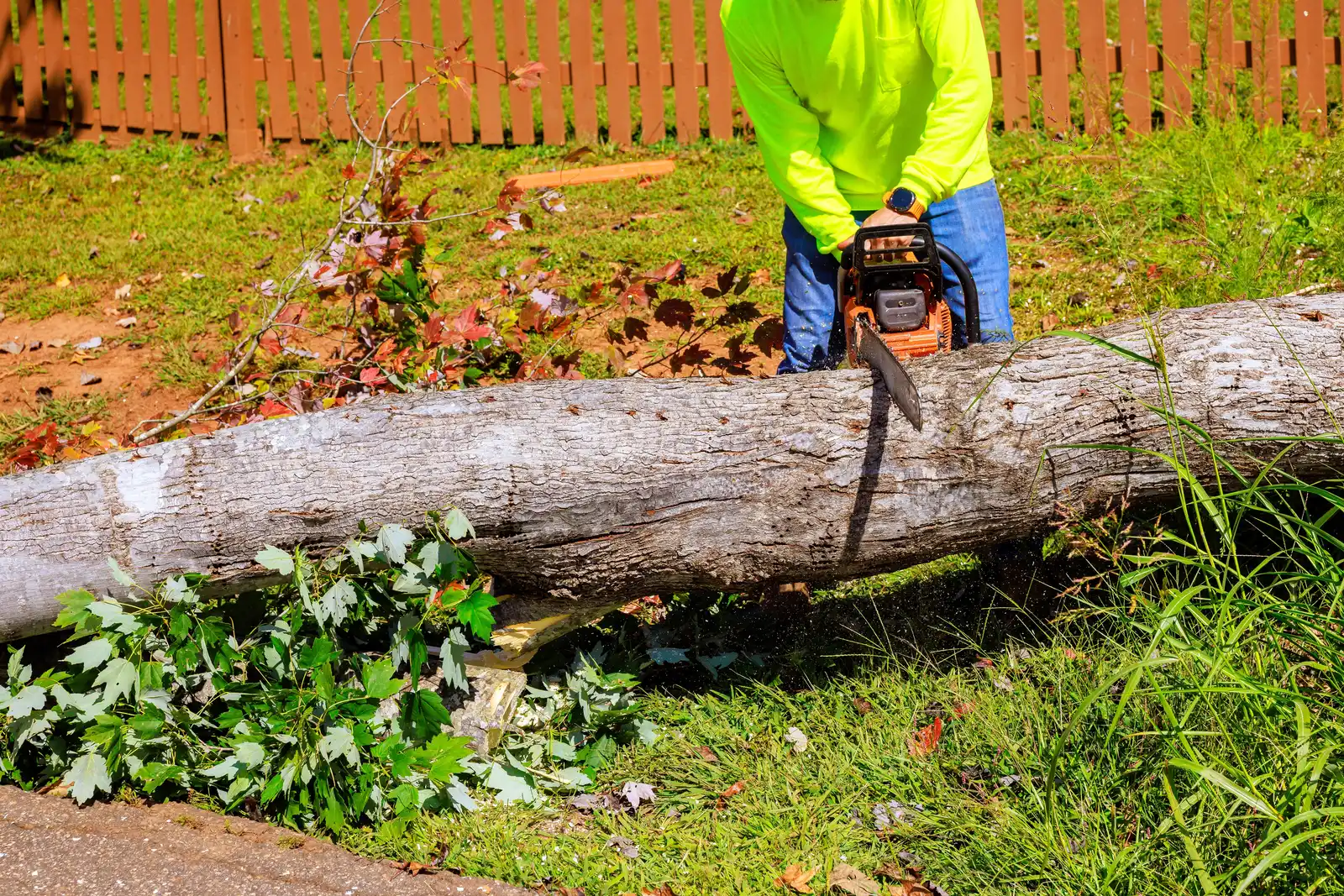
Tree trimming involves climbing, chainsaws, falling limbs, chippers, and work near power lines. Injuries can be severe, and that makes many insurers cautious. Declines are most common for:
- New businesses with no loss history to rate.
- Companies with recent claims, especially serious ones.
- Operations with heavy removal or line-clearance work.
- Payroll that is hard to verify, including heavy use of cash or subcontractors.
- Insurers that have reached their limit on tree care accounts in a state.
Our post on whether tree service contractors need workers’ comp covers when the coverage is required.
Option One: A Specialty Agent
Workers’ comp for tree care is a niche market. A general agent who sends the account to a few standard insurers will collect declines. An agent who places tree services regularly knows which insurers and programs want the business, which ones package workers’ comp with liability and auto, and how to present the account. Our guide to tree service insurance programs and supplemental applications explains what those programs ask.
What helps the submission:
- Accurate payroll by classification, separating office, ground, and climbing work.
- A written safety program and training records.
- Loss runs for the past several years, with notes on any claims.
- A clear description of the work, including how much is near power lines.
Option Two: The Assigned Risk Plan or State Fund
Most states run a residual market, often called the assigned risk plan, so employers who cannot get coverage in the voluntary market can still meet the legal requirement. In many states, the National Council on Compensation Insurance administers the plan, and its assigned risk plan listing shows which states it serves and how to reach each one. A few states run monopolistic state funds or competitive state funds instead.
The assigned risk plan is a safety net, not a destination. Pricing is often higher, payment terms can be stricter, and some plans add surcharges. But it keeps you legal and working while you build the record that brings insurers back. NCCI’s article on insuring the uninsurable explains how the residual market fits into the system.
Option Three: A PEO
A professional employer organization takes over payroll and HR for your employees and can cover them under its own workers’ comp program. Some tree services use this route. Many PEOs avoid high-hazard trades, though, and joining one changes how you handle payroll, hiring, and benefits. Read the contract, understand what happens to coverage if you leave, and make sure certificates will satisfy your customers.
What Not to Do
Some owners try to avoid the problem rather than solve it. These shortcuts usually make things worse:
- Calling employees subcontractors. Workers who are treated as employees under state law are usually covered by your workers’ comp obligation whatever you call them. Audits and claims expose the mismatch.
- Misclassifying climbers as ground or landscape workers. A lower rate today becomes an audit bill and a claim dispute tomorrow.
- Working without coverage while you shop. Penalties for going without required coverage can be severe, and an uninsured injury can sink the business.
Moving Back to the Voluntary Market
Insurers watch how accounts behave in the assigned risk plan. A year or two of accurate payroll, prompt claim reporting, and a clean loss record makes the account attractive again. Steps that help:
- Report injuries the same day and stay in contact with injured workers.
- Offer light-duty work so injured employees can return sooner.
- Document training on climbing, saw safety, chipper operation, and electrical hazards.
- Hold regular safety meetings and keep the sign-in sheets.
- Review your class codes with your agent each year. Our post on the workers’ comp class code for tree services explains how tree work is usually classified.
Ask your agent to re-market the account well before renewal each year.
Paying for Coverage You Can Afford
Workers’ comp in the assigned risk plan can be expensive, and some owners struggle with the deposit. Ask your agent about payment options, including pay-as-you-go plans that bill premiums based on actual payroll each pay period. These can ease cash flow and reduce the chance of a large audit bill.
Experience Rating
Once your business is large enough, your own loss history starts to adjust your premium through experience rating. A clean record lowers the adjustment over time, and a run of claims raises it. Experience rating rewards exactly the habits that move an account out of the assigned risk plan: safety, prompt reporting, and return-to-work programs. Ask your agent when your business will first qualify and how claims are weighed.
Questions to Ask Your Agent
- Which tree care programs have you placed accounts with recently?
- What would make my account more attractive to them next year?
- Are my payroll classifications correct?
Illustrative Example
This is a hypothetical, labeled example, not a real account. A two-crew tree service is non-renewed when its insurer stops writing tree care. Two other insurers decline. The owner’s agent places the workers’ comp through the state’s assigned risk plan so the company can keep working, then spends the year collecting training records and documenting a return-to-work program. At the next renewal, the agent submits the account to a tree care program, which offers coverage in the voluntary market.
Frequently Asked Questions
Why do insurers decline workers’ comp for tree trimming companies?
Tree work is one of the higher-hazard trades for injuries, so many insurers limit how much of it they write. New businesses without loss history, companies with recent claims, and operations that do climbing or removal work near power lines are declined most often.
What is the assigned risk plan for workers’ comp?
It is the market of last resort that most states maintain so employers who cannot find coverage in the voluntary market can still meet the legal requirement. Some states run it through a state fund instead. Coverage is usually available, though pricing and service can be less favorable.
Can a specialty agent find workers’ comp after a decline?
Often, yes. Agents who place tree care regularly know which insurers and programs write it, and some programs package workers’ comp with general liability and auto for tree services. A decline from one insurer says little about the whole market.
Is a PEO an option for workers’ comp?
Sometimes. A professional employer organization can cover employees under its own workers’ comp program, but many PEOs avoid high-hazard trades like tree work, and the arrangement changes how payroll and HR are handled. Review the contract carefully before joining one.
What can I do to get better workers’ comp options next year?
Classify payroll accurately, keep written safety and training records, report and manage claims promptly, return injured workers to light duty when possible, and build a clean loss history. Insurers look at all of these when an account comes back to the voluntary market.
The Bottom Line on Workers’ Comp After a Decline
A decline is a starting point, not a dead end. Work with an agent who knows tree care, use the assigned risk plan if you must, and build the record that brings better options back. Visit our workers’ compensation coverage page, then request a quote to start.

More from Coverage Explained



Ready to get properly covered?
Tell us about your tree care operation and we'll compare options across our carrier network. Quote response within 1–2 hours during business hours.
Independent agency · 16+ A-rated carriers · Licensed in 48 states