
The most common question new tree service operators ask isn’t about technique or licensing — it’s about money. How much does it actually cost to start a tree service business in 2026? The honest answer is that it depends on what kind of operation you’re building, but the realistic range is $10,000 to $150,000+, with most successful operators launching in the $25,000 to $40,000 range.
This guide breaks down every line item: what each piece of equipment costs, what insurance runs in year one, the licensing and business formation expenses most guides skip over, the marketing budget you’ll need to actually generate jobs, and the working capital required to survive the slow first 90 days. We’ll also cover financing options — including current 2026 SBA loan rates, equipment financing terms, and the funding strategies that work best for new operators.
Whether you’re planning to bootstrap with $15,000 or pursue a fully-equipped launch with $100,000+ in capital, this is the budget reality check you need before quitting your day job.
The Three Tiers of Tree Service Business Startups
Tree service startups fall into three distinct tiers based on capital deployed and operational scope. Understanding which tier matches your situation determines everything else — the equipment you buy, the financing you need, and the timeline to profitability.
| Tier | Total Startup Cost | Equipment | Time to Break-Even |
|---|---|---|---|
| $15,000 bootstrap | $10,000–$20,000 | Used truck, basic saws, rented chipper | 60–90 days |
| $30,000 standard | $25,000–$50,000 | Reliable used truck, owned chipper, full equipment | 90–180 days |
| $100,000+ full operation | $75,000–$150,000+ | New/near-new truck, complete fleet, stump grinder, possibly bucket truck | 12–24 months |
The right tier depends on three factors: how much capital you have access to, whether you’ll be a solo operator or run a crew, and how aggressive your growth timeline is. Most successful tree service operations start at the bootstrap or standard tier and scale up as cash flow supports it. Operators who jump straight to the full operation tier often struggle with debt service consuming early profits.
The biggest mistake new operators make is buying expensive equipment too early. New chainsaws, new chippers, and especially new bucket trucks have terrible depreciation curves — typically losing 30–40% of their value in the first three years. Buying used from established operations upgrading their fleet captures most of that depreciation as savings.
Tier 1: The $15,000 Bootstrap Startup
The bootstrap tier is the lowest-capital path into the tree service business. It’s appropriate for operators with prior experience, limited startup capital, and willingness to rent equipment until volume justifies purchase. Done right, you can be operational and profitable within 60–90 days with $15,000 of personal capital.
Detailed bootstrap budget:
| Line Item | Cost Range | Notes |
|---|---|---|
| Used pickup truck | $8,000–$12,000 | F-250 or F-350 with hitch, cash purchase |
| Two professional chainsaws | $1,000–$1,500 | Stihl MS 261 + MS 462 (used) or Husqvarna equivalents |
| Climbing saddle and ropes | $800–$1,500 | Petzl, Buckingham, or similar — used acceptable |
| Rigging equipment | $500–$1,000 | Lowering devices, blocks, slings |
| Safety equipment | $400–$700 | Hard hat, chaps, gloves, eye protection |
| Hand tools | $300–$500 | Hand saws, pole saws, loppers |
| Insurance (first year) | $2,500–$4,000 | $1M general liability + commercial auto |
| LLC formation | $100–$500 | Varies by state |
| Business licenses and permits | $300–$800 | City + state requirements |
| Basic marketing | $500–$1,000 | Google Business Profile, yard signs, business cards |
| Working capital reserve | $1,000–$2,000 | Fuel, dump fees, unexpected expenses |
| Total | $15,400–$25,500 |
Bootstrap operators rent the wood chipper at $200–$400 per day until they’re consistently doing 8+ jobs per month requiring chipping. They subcontract stump grinding at $75–$150 per stump until volume justifies a $5,000 used grinder. Workers’ comp is deferred until hiring the first employee — solo operators in most states aren’t required to carry it on themselves, though some states require it regardless.
Bootstrap startup pros:
- Lowest financial risk if business doesn’t work
- Faster path to break-even due to low fixed costs
- Forces operational discipline from day one
- Easy to recover capital and exit if needed
Bootstrap startup cons:
- Can’t take jobs requiring owned chipper (some commercial)
- Equipment limitations restrict job size
- Truck reliability becomes a real problem if it breaks down
- Limited capacity to scale without major capital injection
Most successful tree service operations started at this tier. The discipline of operating lean for the first 6–12 months teaches pricing, scheduling, and customer management before scaling complexity. See our complete guide on how to start a tree service business for the operational playbook that pairs with this budget.
Tier 2: The $30,000 Standard Startup
The standard tier is where most new tree service operations launch. With $25,000–$50,000 in capital, you can own your core equipment, carry proper insurance, hire a part-time helper, and handle most residential and small commercial work. This is the sweet spot for operators with modest savings and prior trade experience.
Detailed standard budget:
| Line Item | Cost Range | Notes |
|---|---|---|
| Used pickup truck (better quality) | $12,000–$18,000 | Lower mileage, better towing capacity |
| Two professional chainsaws | $1,500–$2,000 | New or near-new Stihl/Husqvarna |
| Climbing saddle and ropes (full system) | $1,500–$2,500 | Complete arborist climbing kit |
| Rigging equipment (full kit) | $1,000–$1,500 | Lowering devices, blocks, slings, friction savers |
| Safety equipment | $500–$1,000 | Full PPE, including helmets for crew |
| Hand tools | $500–$800 | Complete tool kit |
| Used wood chipper (6-inch) | $4,500–$7,000 | Owned, capacity for daily use |
| Trailer | $2,500–$4,000 | Dump trailer preferred |
| Insurance (first year) | $4,500–$7,500 | $1M GL + commercial auto + inland marine + workers’ comp if hiring |
| LLC formation + operating agreement | $300–$800 | LLC + attorney review of operating agreement |
| Business licenses and permits | $500–$1,200 | City, state, and any specialty licenses |
| Marketing launch budget | $1,500–$3,000 | Website, GBP, signage, initial Google Ads |
| Working capital reserve | $3,000–$5,000 | 60–90 days of operating expenses |
| Total | $33,800–$54,300 |
The standard tier builds a tree service operation that can handle 3–8 jobs per week reliably, generating $80,000–$200,000 in year-one revenue if marketing executes well. The owned chipper opens up commercial work that bootstrap operators can’t handle competitively — properties where renting equipment daily would kill margins.
Insurance at the standard tier typically includes general liability with $1M per occurrence limits, commercial auto for the truck, inland marine for chipper and equipment coverage when off-premises, and workers’ compensation if hiring a helper. Coverage costs vary significantly by state — operators in Texas and Indiana typically pay less than operators in Florida or Georgia due to claim frequency differences. See our tree service insurance cost guide for state-by-state breakdowns.
Tier 3: The $100,000+ Full Operation Startup
The full operation tier targets operators who want to launch ready for commercial contracts, bucket truck work, and crew operations from day one. Capital requirements run $75,000–$150,000+, and break-even timelines extend to 12–24 months due to higher fixed costs. This tier is appropriate for experienced operators backed by significant savings, partnerships, or financing.
Detailed full operation budget:
| Line Item | Cost Range | Notes |
|---|---|---|
| Reliable truck (newer used or new) | $25,000–$55,000 | Heavy-duty diesel, new or 2–3 years old |
| Used bucket truck (optional) | $25,000–$45,000 | Opens commercial work, requires CDL |
| Wood chipper (12-inch capacity) | $15,000–$30,000 | Commercial-grade for larger jobs |
| Stump grinder | $5,000–$15,000 | Self-propelled or towable |
| Trailer + dump trailer | $5,000–$10,000 | Equipment hauling capacity |
| Two professional chainsaws + backup | $2,000–$3,000 | Full chainsaw fleet |
| Climbing system + backup | $3,000–$5,000 | Two complete climbing systems |
| Rigging equipment (complete kit) | $2,500–$4,000 | Multiple lowering devices, blocks |
| Safety equipment (crew) | $1,500–$3,000 | PPE for 4–6 person crew |
| Hand tools (complete shop) | $1,000–$2,000 | Full hand tool inventory |
| Insurance (first year) | $8,000–$15,000 | Full coverage including umbrella |
| LLC formation + business setup | $1,000–$2,500 | Includes attorney, accountant setup |
| Business licenses and permits | $800–$2,000 | Multiple jurisdictions, contractor licenses |
| Marketing launch budget | $5,000–$15,000 | Professional website, branding, initial paid ads |
| Software and systems | $1,500–$3,000 | CRM, scheduling, accounting, communications |
| Working capital reserve | $10,000–$25,000 | 4–6 months of operating runway |
| Total | $110,300–$229,500 |
The full operation tier is highly capital-intensive but enables operations to compete for high-value commercial contracts that smaller operators can’t access. Property management companies, municipal contracts, and utility line clearance work all require comprehensive insurance, certified arborists on staff, and equipment fleets that signal credibility.
According to Bureau of Labor Statistics data, tree work has a fatality rate roughly 30 times the national average — and this risk profile drives insurance costs significantly higher at the full operation tier. Workers’ comp under class code 0106 typically costs $7–$15 per $100 of payroll, meaning a $200,000 annual payroll generates $14,000–$30,000 in workers’ comp premium alone.
The full operation tier is rarely the right starting point for first-time business owners. Most operators who succeed at this scale built their operations from the bootstrap or standard tier first, using profits and credit history from the first 1–2 years to fund the equipment fleet expansion.
Vehicle Costs: The Single Biggest Line Item
For most tree service startups, the truck represents 30–40% of total startup costs — the largest single line item. Getting the truck decision right is critical because a wrong truck cripples operations from day one.
What you actually need from a tree service truck:
- Towing capacity: 8,500+ pounds for chipper and dump trailer
- Payload capacity: 1,500+ pounds for crew, equipment, and brush
- Reliability: Reliable cold starts, dependable operation in extreme weather
- Maintenance access: Common parts availability, mechanic familiarity
- Bed size: 6.5+ foot bed for hauling brush and equipment
Recommended truck options for tree service:
| Truck Type | Used Price | New Price | Best For |
|---|---|---|---|
| Ford F-250 (used, 5–7 years) | $15,000–$25,000 | $48,000–$65,000 | Standard residential operations |
| Ford F-350 (used, 5–7 years) | $18,000–$30,000 | $55,000–$75,000 | Heavy hauling, commercial work |
| Ford F-450 (used) | $25,000–$45,000 | $70,000–$95,000 | Full operation tier, dump beds |
| Chevy Silverado 2500HD (used) | $14,000–$24,000 | $48,000–$68,000 | Standard residential operations |
| Ram 2500/3500 (used) | $15,000–$28,000 | $52,000–$80,000 | Standard to commercial operations |
| Used dump truck | $20,000–$45,000 | $80,000–$140,000 | Operations doing significant hauling |
| Used bucket truck | $25,000–$80,000 | $120,000–$300,000+ | Commercial and utility work |
Buying tips for tree service trucks:
-
Always buy a diesel for towing. Diesel engines provide the torque needed for chipper towing and last 200,000–400,000 miles with proper maintenance. Gas engines work but have shorter lifespans under heavy towing duty.
-
Avoid financing your first truck. Cash purchase eliminates monthly payments and gives flexibility to upgrade or replace. Operators financing a $40,000+ truck on a 5-year note add $700–$900 monthly to fixed costs that consume early profits.
-
Inspect with a heavy equipment mechanic. Tree service trucks have hard lives. Pre-purchase inspection ($150–$300) catches transmission issues, frame damage, and electrical problems that can cost $5,000+ to fix.
-
Budget for immediate maintenance. Plan $1,500–$3,000 within the first 90 days for tires, brakes, fluids, and any deferred maintenance the previous owner left.
Equipment Costs: Where Most Operators Underbudget
Beyond the truck, tree service equipment costs add up faster than most new operators expect. Here’s a realistic breakdown of what professional-grade equipment costs in 2026.
Chainsaws:
- Stihl MS 261 (light to medium work): $700–$900 new, $400–$600 used
- Stihl MS 462 (heavy removal work): $1,200–$1,400 new, $700–$900 used
- Husqvarna 562XP equivalent: $750–$950 new, $450–$650 used
- Backup chainsaw: Plan for $400–$600 used
Climbing system (complete):
- Climbing saddle (Petzl, Buckingham, ART): $400–$700
- Climbing rope (150–200 ft): $300–$500
- Mechanical Prusik or similar: $200–$400
- Carabiners, slings, lanyards: $300–$500
- Helmet with face shield: $150–$250
- Total complete climbing system: $1,350–$2,350
Rigging equipment:
- Lowering device (Hobbs, Port-A-Wrap, etc.): $200–$500
- Rigging rope (1/2”–5/8”, 200 ft): $300–$500
- Rigging blocks (2–3): $300–$600
- Slings, straps, and accessories: $200–$400
- Total rigging kit: $1,000–$2,000
Wood chipper costs (the biggest equipment decision):
- Used 6-inch chipper (Vermeer BC600XL or similar): $4,000–$7,000
- Used 9-inch chipper (Vermeer BC900XL or similar): $8,000–$15,000
- Used 12-inch chipper (Vermeer BC1500 or similar): $15,000–$30,000
- New 6-inch chipper: $18,000–$28,000
- New 12-inch chipper: $35,000–$55,000
The chipper decision is one of the most consequential cost decisions you’ll make. Renting at $200–$400 per day for the first 60–90 days makes sense if you’re doing 4 or fewer jobs per week. Once you’re consistently doing 6+ jobs per week, owning becomes cheaper. The math: a $5,000 used chipper used 5 days a week amortizes at $20–$25 per day vs. $250+ rental, paying for itself in 3–4 months.
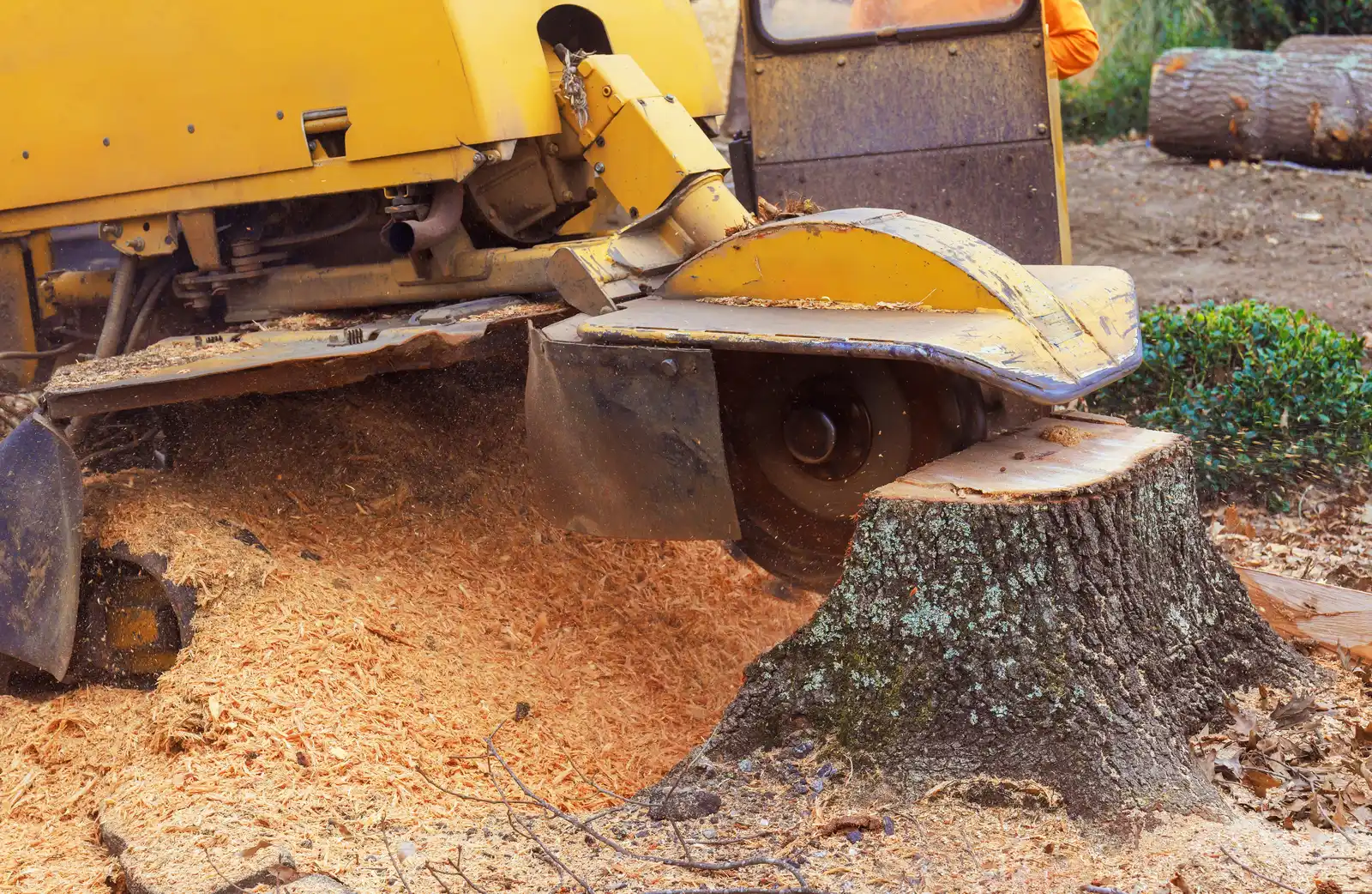
Stump grinder costs:
- Used handheld grinder (e.g., Vermeer SC30): $3,000–$5,000
- Used towable grinder (Vermeer SC252 or similar): $5,000–$10,000
- Used self-propelled grinder (Vermeer SC372 or similar): $8,000–$18,000
- New towable grinder: $18,000–$28,000
- New self-propelled grinder: $28,000–$45,000
Hand tools complete kit:
- Pole saws (manual + powered): $300–$600
- Hand pruners and loppers: $200–$400
- Rope bags, throw lines: $150–$300
- Wedges, axes, mauls: $150–$300
- Tarps and ground protection: $200–$400
- Total complete hand tool kit: $1,000–$2,000
Tree Care Industry Association standards recommend specific safety certifications for operators using climbing systems and rigging equipment. Most operators pursuing TCIA accreditation budget an additional $1,500–$3,000 in year-one training costs beyond equipment.
Insurance Costs: Year One Reality
Insurance is where many new tree service operators get sticker shock. Tree work is one of the highest-rated trades in the workers’ comp system, and most generalist agents either decline to quote or quote at 2–3x the rates a specialty agent would offer. Here’s realistic 2026 first-year insurance costs:
| Coverage Type | Bootstrap Tier | Standard Tier | Full Operation Tier |
|---|---|---|---|
| General liability ($1M/$2M) | $1,500–$2,500 | $1,800–$3,200 | $2,500–$5,000 |
| Workers’ compensation | N/A (solo) | $2,000–$5,000 | $8,000–$25,000 |
| Commercial auto (1 vehicle) | $1,800–$2,400 | $2,000–$2,800 | $2,200–$3,500 |
| Inland marine (equipment) | $300–$600 | $600–$1,000 | $1,200–$2,500 |
| Umbrella/excess | $0–$500 | $500–$1,200 | $1,500–$3,500 |
| Pesticide and pollution | $0 (if not applicable) | $400–$800 | $600–$1,500 |
| Total first-year insurance | $3,600–$6,000 | $7,300–$14,000 | $16,000–$41,000 |
Several factors drive insurance costs higher than these baselines:
State-specific factors: Operators in Florida, Texas, and Pennsylvania often pay 15–30% more due to claims history and storm exposure. Operators in Indiana, Ohio, and Kentucky typically benefit from lower base rates.
Experience factor: New operators with no prior tree service operations history pay 20–40% premium over established operators with clean claims records. After 3 years of clean operations, premiums typically drop 20–30%.
Equipment value: Higher-value equipment fleets ($50,000+) require higher inland marine limits and drive umbrella requirements up.
Crew size: Solo operators face significantly different insurance landscapes than crew operations. Adding the first employee triggers workers’ compensation requirements and typically adds $2,000–$5,000 in annual premium for a single employee under class code 0106.
Commercial contract requirements: Operations targeting commercial work need to plan for higher limits ($2M general liability minimum, $5M+ umbrella) and the Certificate of Insurance (COI) infrastructure to support those contracts. Operations starting at the standard or full operation tier often add $2,000–$4,000 in premium just to meet typical commercial insurance requirements.
Licensing, Formation, and Compliance Costs
Most “how much to start” guides drastically underestimate the licensing and compliance side. Here’s realistic 2026 costs across the most common categories:
Business formation:
- LLC formation (state filing): $50–$500 depending on state (California is highest, Indiana is mid-range)
- Operating agreement (DIY): $0
- Operating agreement (attorney-reviewed): $500–$1,500
- Federal EIN (Internal Revenue Service): Free
- State tax registration: $0–$200
Business licenses:
- General business license (city/county): $50–$300 annually
- State sales tax permit: $0–$150
- Contractor licenses (where required): $200–$1,500 application + bonds
Specialty licenses (state-dependent):
- ISA Certified Arborist exam: $200–$300 (highly recommended, not legally required in most states)
- Pesticide applicator license: $50–$150 + exam fees
- Commercial driver’s license (if needed for bucket truck): $50–$200
State-specific examples for context:
- Virginia DPOR contractor license: $295 application + $385 every 2 years renewal + $50–$100 jurisdiction fees
- Pennsylvania Home Improvement Contractor (HIC): $50 application + $50 every 2 years renewal
- California Qualified Applicator’s License: $90 examination + $90 license + $190 annual renewal
- North Carolina general contractor: $75 application + $50 annual renewal (Class C limited license)
Total typical first-year licensing and compliance costs: $500–$2,500 depending on state and operation type. Operations crossing state lines (common in border markets) need to budget for licensing in each state, which can add $1,000–$3,000 quickly.
Marketing Launch Budget: What Actually Works
New tree service operators routinely overspend on the wrong marketing channels. Here’s where the budget should actually go in year one:
Highest-ROI marketing investments (in order):
-
Google Business Profile (free): The single most important marketing asset for local services. Setup is free. Time investment is 4–8 hours including photos and initial review collection.
-
Branded vehicle signage ($300–$800): Magnetic or vinyl-applied signage on the truck. This converts the truck into a moving billboard generating 3–5 leads per week in busy markets.
-
Yard signs ($200–$500): Small signs placed at completed jobs. Highest-converting marketing for residential tree service — neighbors are 5–10x more likely to convert than cold leads.
-
Door hangers for storm response ($300–$500): 1,000 quality door hangers cost $300–$500 and drive significant emergency revenue when distributed in storm-affected neighborhoods within 2 hours of weather events.
-
Basic website ($500–$2,000): A simple, mobile-optimized website with location pages, service descriptions, contact information, and reviews. Avoid anything fancier in year one — most operators waste $5,000+ on overdesigned sites that don’t convert better than $1,000 simple ones.
-
Google Local Service Ads ($500–$2,000/month, when ready): Pay-per-lead ads at the top of local search results. Start at $500/month after Google Business Profile is established.
Lower-priority marketing (skip in year one):
- Facebook ads: Generates awareness but rarely produces qualified residential leads
- Print advertising: Low ROI for local trades
- Logo design beyond basics: $50 Fiverr logo works fine in year one
- Professional photography: Use phone photos until revenue justifies professional shoots
Realistic year-one marketing budget by tier:
- Bootstrap tier: $1,000–$2,500 total
- Standard tier: $3,000–$8,000 total
- Full operation tier: $10,000–$25,000 total
Year 1 Ongoing Costs: Beyond the Startup
Many guides focus only on startup costs and ignore the ongoing operating costs that determine whether the business actually survives year one. Here’s a realistic monthly operating budget for a standard tier solo operator with one part-time helper:
| Monthly Cost | Bootstrap Tier | Standard Tier | Full Operation Tier |
|---|---|---|---|
| Insurance | $300–$500 | $600–$1,200 | $1,400–$3,500 |
| Vehicle fuel | $400–$700 | $600–$1,000 | $1,200–$2,500 |
| Vehicle maintenance | $150–$300 | $200–$500 | $400–$1,000 |
| Equipment maintenance/consumables | $150–$300 | $250–$500 | $500–$1,000 |
| Phone, internet, software | $100–$200 | $150–$300 | $300–$600 |
| Marketing | $100–$300 | $300–$800 | $800–$2,500 |
| Storage/yard rent | $0 (home-based) | $300–$1,000 | $1,500–$3,500 |
| Accounting and legal | $100–$200 | $150–$400 | $400–$800 |
| Payroll (excluding owner) | $0 | $2,000–$4,000 | $8,000–$20,000+ |
| Total monthly burn rate | $1,300–$2,500 | $4,550–$9,700 | $14,500–$35,400+ |
Critical insight: Year-one revenue must cover both the monthly burn rate AND your personal living expenses. A solo operator at the standard tier with $5,000/month in personal expenses needs $9,500–$14,700 in monthly revenue just to break even — meaning 8–15 jobs per month at $1,000–$1,500 average ticket sizes.
This is why working capital reserves matter so much. New operations often experience 3–6 month gaps between strong revenue months due to seasonality, weather, or marketing ramp-up. Operations without 60–90 days of working capital reserves often fail not because the business model is broken, but because cash flow timing kills them before momentum builds.
Financing Your Tree Service Startup
Most new tree service operators self-fund their startups through personal savings. But for operators looking at the standard or full operation tier, financing can be the difference between launching properly and starting too lean. Here are the realistic financing options in 2026:
SBA 7(a) Loans
The most flexible SBA program. Loan amounts up to $5 million. Used for working capital, equipment purchases, and business acquisition. Current 2026 rates run approximately 9.5%–11.5% (Prime + 2.25% to Prime + 4.75% depending on loan size). Repayment terms up to 10 years for working capital, 25 years for real estate.
Requirements:
- 10% to 20% equity injection (you contribute 10-20% of project cost)
- Personal credit score 680+ typically required
- 2–3 years of business or industry experience
- Business plan with financial projections
- Personal financial statement
Timeline: 4–8 weeks for approval and funding. Use SBA Lender Match to find approved lenders in your area.
Best for: Standard or full operation tier startups with $50,000–$500,000 capital needs.
SBA 504 Loans
Specifically designed for major fixed-asset purchases — vehicles, large equipment, and real estate. Loan amounts through SBA portion up to $5.5 million. Typical structure: borrower contributes 10%, SBA covers 40%, private lender funds 50%.
Requirements:
- 10% down payment
- Job creation requirement: 1 job per $90,000 financed
- Tangible net worth under $20 million
Current 2026 rates: 5%–7% range (lower than 7(a) due to fixed-rate structure tied to 10-year Treasury notes).
Best for: Major equipment purchases over $100,000 — bucket trucks, large chippers, or commercial real estate.
Equipment Financing
Equipment dealers and specialty lenders offer financing specifically for tree service equipment. Typically requires 10%–20% down with 60-month repayment terms. Faster than SBA loans (24–72 hours) but at higher rates (8%–18% in 2026).
Best for: Specific equipment purchases when speed matters more than rate. Common for chipper and stump grinder financing.
Business Lines of Credit
Revolving credit lines from $25,000 to $500,000+ for established businesses. Pay interest only on funds drawn. Online lenders fund within 24–72 hours but at higher rates. Banks offer better rates but require established business history.
Current 2026 rates: 8%–25% depending on lender and credit profile.
Best for: Working capital for cash flow gaps, not initial startup capital.
HELOC Against Personal Residence
Home equity line of credit against a primary residence. Typically the lowest cost financing option (Prime + 0.5%–2% in 2026). Risks personal residence as collateral.
Best for: Operators with significant home equity who want low-cost financing and accept the personal risk.
Personal Credit Cards (Use Cautiously)
0% intro APR business credit cards (typically 12–18 months) can fund $20,000–$50,000 in startup costs interest-free if paid off before the intro period ends. After intro, rates jump to 22%–29%.
Best for: Bootstrap tier startups confident they can pay off within the intro period.
Key 2026 financing principles:
-
Match financing duration to asset life. Don’t finance equipment with a 7-year life on a 2-year credit card. Don’t finance working capital with a 10-year SBA loan.
-
Keep total monthly debt service under 25% of projected revenue. A solo operator projecting $15,000/month should keep debt service under $3,750/month maximum.
-
Maintain 90 days of cash reserves separate from operating capital. Equipment financing should never deplete the cash buffer below this floor.
-
Get personal financing in place before starting the business. Personal credit lines are easier to qualify for while still W-2 employed than after starting the business.
For deeper context on SBA loan options for service businesses, the Small Business Administration’s funding programs guide provides current details on available programs and qualification requirements. The Federal Reserve Economic Data Prime Rate page tracks the rate that drives most SBA and bank loan pricing.
ROI and Break-Even Reality
When does a tree service business start making money back? The honest answer is faster than most other businesses — but only with proper execution.
Cash flow break-even (monthly):
- Bootstrap tier: 60–90 days, typically 4–6 jobs per month
- Standard tier: 90–180 days, typically 8–12 jobs per month
- Full operation tier: 12–18 months, typically 15–25 jobs per month
Total startup investment recovered:
- Bootstrap tier: 6–12 months of profitable operation
- Standard tier: 12–24 months of profitable operation
- Full operation tier: 24–48 months of profitable operation
Typical year 1 financial outcomes by tier:
| Tier | Year 1 Revenue | Year 1 Net to Owner | Year 1 ROI |
|---|---|---|---|
| Bootstrap ($15K) | $60,000–$120,000 | $25,000–$60,000 | 167%–400% |
| Standard ($30K) | $120,000–$250,000 | $50,000–$110,000 | 167%–367% |
| Full Operation ($100K) | $250,000–$500,000 | $80,000–$200,000 | 80%–200% |
These figures assume good execution: proper pricing, systematic marketing follow-up, controlled expenses, and 4–6 jobs per week in a market with reasonable demand. Operators who underprice, skip marketing, or run high overhead routinely fail to hit these benchmarks.
Years 2–3 typically deliver: 30–50% revenue growth as referrals compound and Google Business Profile reviews accumulate. By year 3, well-run tree service operations typically reach $400,000–$800,000 in annual revenue with 30–45% margins.
Industry benchmarks confirm the trajectory: average tree care businesses generate $553,405 per year in revenue, and over 60% of established operators exceed $1 million in annual revenue. The path from startup to $1M+ revenue typically takes 3–5 years of disciplined operations.
Frequently Asked Questions
How much does it cost to start a tree service business in 2026?
Starting a tree service business costs between $10,000 and $150,000 in 2026, depending on the operation type. A bootstrap solo operator can launch for $10,000 to $20,000 using used equipment and rentals. A standard small operation runs $25,000 to $50,000 with owned core equipment. A fully-equipped operation with bucket truck, stump grinder, and full crew capability runs $75,000 to $150,000+. Most new operators successfully launch in the $25,000 to $40,000 range.
What is the cheapest way to start a tree service business?
The cheapest path is the bootstrap approach at approximately $10,000 to $15,000. This includes a used pickup truck ($8,000-$12,000), basic chainsaws and climbing gear ($2,000-$3,000), minimum insurance ($2,000-$3,000), LLC formation ($100-$500), and basic licensing ($300-$800). You rent the wood chipper for the first 90 days and subcontract stump grinding until volume justifies ownership. Most operators using this approach are profitable within 60-90 days.
Can I start a tree service business with no money down?
Starting with zero capital is nearly impossible because insurance, licensing, and basic equipment are all required upfront. However, you can minimize personal cash with: SBA 7(a) loans (10-20% down, up to $5 million), equipment financing (10-20% down, finance the rest), business credit cards for working capital, or a HELOC against your home. Realistic minimum personal cash needed is $3,000-$5,000 even with maximum financing because lenders require equity injection.
What ongoing monthly costs should I budget for in year one?
Year one ongoing costs typically run $3,500 to $7,000 per month for a solo operator. This includes insurance ($300-$800/month), fuel and vehicle maintenance ($600-$1,200), equipment maintenance and consumables ($200-$500), software and phone ($150-$300), marketing ($200-$800), accounting and legal ($150-$400), and storage/shop space ($300-$1,500). Crew operations with employees add $4,000-$8,000+ per employee in wages, payroll taxes, and workers’ compensation.
How long does it take to break even on a tree service business?
Most well-run tree service startups break even on monthly cash flow within 3-6 months and recover total startup investment within 12-18 months. Bootstrap operations often hit cash flow break-even faster (60-90 days) due to lower fixed costs. Fully-equipped operations may take 12-24 months to recover initial CAPEX. The break-even target is typically 3-5 jobs per week at average ticket sizes of $800-$1,500 for residential work.
What are the largest startup expenses for a tree service business?
The five largest expense categories are: vehicle ($8,000-$55,000+, often 30-40% of total startup costs), equipment package ($4,000-$30,000), insurance ($4,000-$10,000 first-year cost), wood chipper ($3,500-$30,000 if owned vs. rented), and stump grinder ($5,000-$25,000 if added). Together these typically represent 70-85% of total startup costs. Working capital, licensing, marketing, and business formation make up the remainder.
How can I finance a tree service business startup?
Common financing options include: personal savings (most common), SBA 7(a) loans up to $5 million for working capital and equipment, SBA 504 loans for major equipment purchases over $50,000, equipment financing with 10-20% down through equipment dealers and specialty lenders, business lines of credit ($25,000-$500,000 from banks and online lenders), HELOC against personal residence, and seller financing if buying an existing operation. SBA loans offer the best rates (typically 5%-10% in 2026) but require 4-8 weeks for approval. Equipment financing and online lenders fund within 24-72 hours but at higher rates (8%-25%).
Get Tree Service Insurance Quoted Before You Launch
Of every line item in your startup budget, insurance is the one that can change most based on who you work with. The same operator with the same equipment in the same state can pay 30–50% different premiums between a generalist agent and a specialty tree service agent — because specialty agents understand which carriers actually want tree service business and how to structure policies to meet contract requirements.
TreeGuard structures policies for tree service operations specifically. We work with new operators across 48 states, helping launch budgets stay realistic instead of getting blindsided by quotes from carriers that don’t understand the trade. Most quotes come back within 1–2 hours during business hours.
For operators ready to dig deeper, our complete resources include the tree service insurance cost guide with state-by-state breakdowns, the Certificate of Insurance guide for navigating commercial contracts, and the complete how-to-start guide covering operations beyond the budget side.
External resources for further reference: U.S. Small Business Administration funding programs for current SBA loan details, Bureau of Labor Statistics tree workers data for industry safety context, IRS startup deduction guidance for tax planning on startup costs, Federal Reserve Prime Rate for current financing rate context, and Tree Care Industry Association for safety and accreditation standards.

More from Starting a Tree Service Business
Ready to get properly covered?
Tell us about your tree care operation and we'll compare options across our carrier network. Quote response within 1–2 hours during business hours.
Independent agency · 16+ A-rated carriers · Licensed in 48 states