
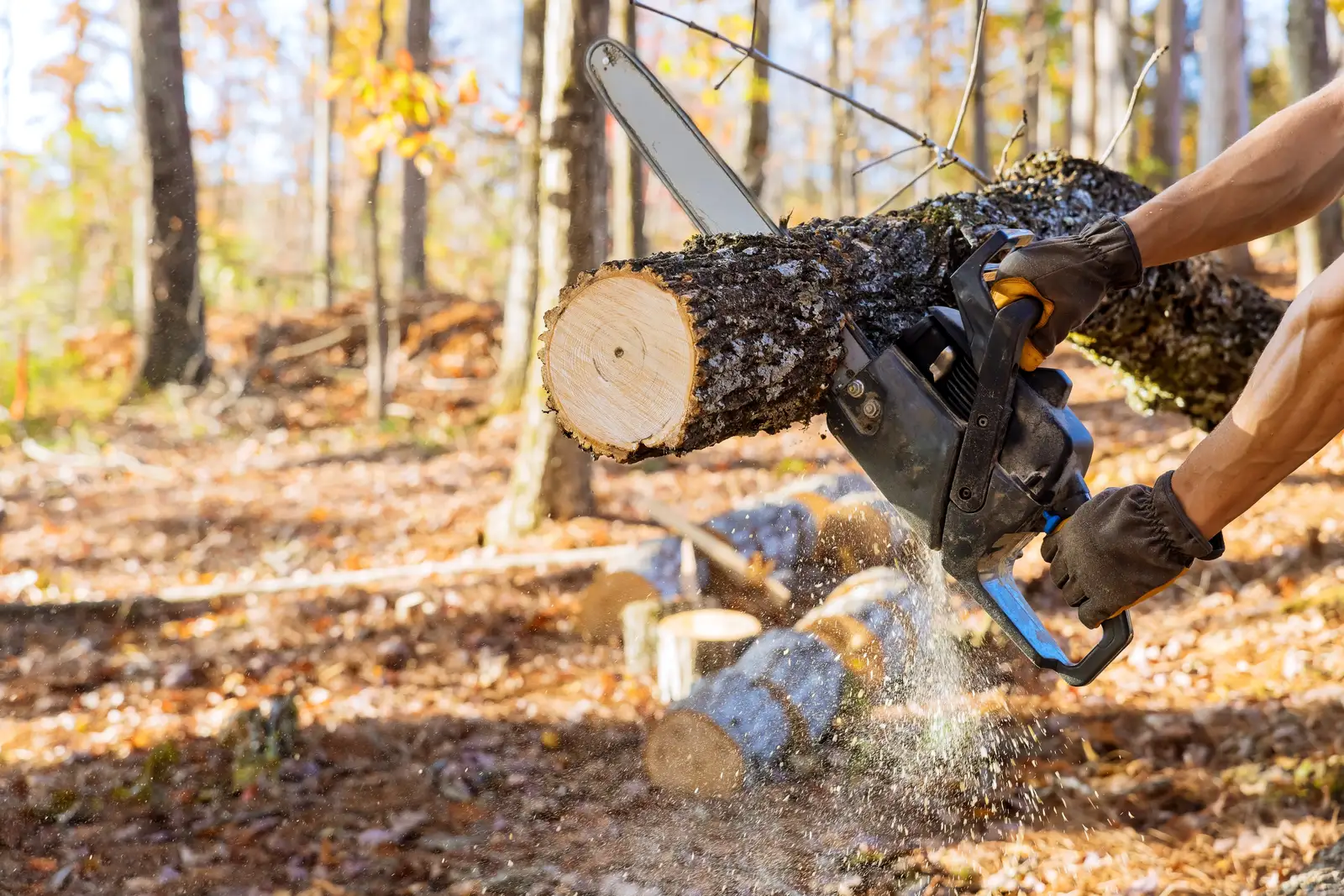
New Mexico is a wide, high, dry state where the tree work concentrates in narrow bands — irrigated urban canopy in Albuquerque and Las Cruces, the cottonwood bosque along the Rio Grande, pinyon and juniper across the middle elevations, and conifer in the Sangre de Cristo, Jemez and Sacramento ranges. Crews cover long distances between those bands, and the species and hazards change completely as they do.
The insurance picture carries one feature that sets New Mexico apart from nearly every state around it. Workers’ compensation here is not automatically triggered by hiring a single employee. It has a headcount threshold — with an exception attached to contractor licensing that can remove the threshold entirely. Getting that pair of rules right is the most consequential decision a New Mexico tree service owner makes about insurance, and it is the reason this page spends more time on the statute than most.
What Tree Service Insurance Costs in New Mexico
New Mexico is an NCCI jurisdiction, so tree work rates under class code 0106, and workers’ compensation is written in a competitive private market. Pricing responds to headcount and payroll structure, the share of bosque and post-fire removal work, working radius, and whether the operation carries an applicator license.
The ranges below reflect what most New Mexico tree service contractors typically pay:
- General Liability Insurance: $850–$2,500 per year for a typical New Mexico small operation. Santa Fe and Albuquerque North Valley work near high-value property tends toward the upper end.
- Workers’ Compensation Insurance: $7–$13 per $100 of payroll under class code 0106. A worked example: a crew with $200,000 of payroll typically pays $14,000–$26,000 annually.
- Commercial Auto Insurance: $1,900–$3,900 per truck per year. Long transits between population centers put real mileage on a New Mexico fleet, and radius is rated.
- Inland Marine (Equipment) Insurance: $400–$1,500 per year depending on schedule value, with abrasive dust and UV exposure shortening the useful life of covered property.
- Pesticide & Pollution Liability: $400–$900 per year for operations doing injections, borer treatment or herbicide under a state applicator license.
- Umbrella / Excess Liability: $500–$1,300 per year for a first excess layer, usually driven by municipal, tribal, laboratory or federal contract requirements.
New Mexico rewards precision in how an operation describes itself, because the workers’ compensation obligation is not uniform across all employers the way it is in most states. For the rating factors that apply everywhere, see the national cost guide.
Workers’ Compensation in New Mexico
This is the section every New Mexico tree service owner should read twice.
NMSA 1978 § 52-1-6 applies the Workers’ Compensation Act to employers of three or more workers. That is a real threshold, and it is genuinely unusual — most states attach the obligation to the first employee hired. A New Mexico operation with an owner and one groundman may sit outside the compulsory scope of the act.
The same section then removes that threshold for a defined group: the act applies to all employers engaged in activities required to be licensed under the Construction Industries Licensing Act, regardless of the number of employees. The headcount rule and the licensing rule work together, and only the second one is under the owner’s control.
What Follows for a Tree Service
- A business that prunes, removes and grinds is generally not performing a licensed construction activity, so the three-worker threshold is the operative rule
- A business that also installs irrigation systems, builds landscape structures, or clears ground as part of a construction project may be inside the licensing requirement, and coverage is then required from the first employee
- The New Mexico Workers’ Compensation Administration administers the system and handles employer compliance
- As an NCCI state, tree operations classify under 0106, and misplacement under 0042 produces the same retroactive audit correction it produces everywhere else
Being outside the compulsory scope is not the same as being protected. It means the state will not force the purchase — not that an injured employee has no claim against the business.
The Licensing Exception That Can Remove the Three-Worker Floor
The threshold in § 52-1-6 is the single most misunderstood rule in New Mexico tree care, because owners hear the first half and stop.
The first half is genuinely favorable. Three or more workers brings an employer inside the act. Below that, the compulsory obligation may not attach at all, which is why some small New Mexico operations run for years without a policy and without a compliance problem.
The second half undoes it for anyone doing licensed construction activity. If the work performed requires a license under the Construction Industries Licensing Act, the act applies regardless of headcount. Coverage is required from the first employee, and the operation that believed itself exempt has been non-compliant for the entire period.
What makes this hazardous for tree services specifically is that the boundary runs through the middle of a normal service list rather than around it. Consider a two-person operation:
- Prunes, removes trees, grinds stumps. No licensed construction activity engaged. The three-worker threshold governs.
- Adds an irrigation installation for a landscape customer. Now the operation is performing work in territory the Construction Industries Division licenses, and the exception is live.
- Takes a lot-clearing job attached to a residential build. Same problem, and the general contractor will almost certainly demand a certificate anyway.
The practical position is straightforward. Any New Mexico operation relying on the three-worker threshold should be able to state precisely which services it performs and confirm that none of them requires a CID license — and it should revisit that answer whenever it adds a service line, because the exemption is a description of today’s work, not a permanent status.
The safer route, and the one most established operations take, is voluntary coverage. It settles the compliance question permanently, supplies employer’s liability that no general liability policy contains, and removes an objection from every commercial customer that asks for a certificate.
General Liability
General liability answers bodily injury and property damage arising out of New Mexico tree operations — a failed rigging point, a limb into a portal roof, a passerby in a bosque trail work zone.
Policies are typically occurrence-based with completed operations included. Operations issuing written assessments or retention recommendations should look at professional liability separately, since advice is not an operation.
Adobe and traditional construction in Santa Fe and the Albuquerque North Valley is expensive and slow to repair, and vigas, portals and parapets damage in ways that ordinary framing does not. Limits belong set against that repair cost rather than against job value.
Commercial Auto
New Mexico fleets run pickups, chip trucks, aerial units and towed equipment across some of the longest routine distances in the lower 48.
The recurring gaps:
- Towed chippers and grinders never scheduled after being described as trailers
- Hired and non-owned coverage absent where employees drive personal vehicles between distant sites
- Aerial units insured for road use with nothing addressing the boom while deployed
New Mexico adds two of its own. Interstate corridors carry heavy commercial truck traffic at speed, which raises severity when a collision happens. And uninsured motorist exposure in the state is significant enough that uninsured and underinsured limits deserve deliberate attention rather than a default selection.
Inland Marine / Equipment Floater
The floater follows portable property to the site — saws, rigging, climbing hardware, grinders and chippers.
New Mexico is hard on that property in a specific way: fine abrasive dust gets into everything, and ultraviolet exposure at altitude degrades ropes, slings and synthetic rigging faster than operators expect. Life-safety equipment should be inspected and retired on schedule regardless of appearance, and the floater should be written on replacement cost so that a scheduled retirement is not a financial decision.
Pesticide & Pollution Liability
The New Mexico Department of Agriculture handles pesticide compliance and licenses commercial applicators. For tree services the work runs to systemic injections, borer and scale treatment on stressed trees, and herbicide for salt cedar and Russian olive control.
Standard general liability excludes pollution, so a drift, overspray or misapplication claim needs contractors’ pollution liability. The exposure in New Mexico concentrates along water. The Rio Grande, the Pecos, and the acequia systems that irrigate much of the state carry a mistake downstream quickly and through property held by many parties, and invasive species control frequently happens directly alongside them.
Umbrella / Excess Liability
An umbrella adds limit above general liability, commercial auto and employer’s liability at once. In New Mexico the buying trigger is usually a contract — municipal accounts, tribal work, national laboratory and federal facility contracts, and utility vegetation management all commonly require excess limits before a crew is cleared to work.
A first excess layer costs a small fraction of the underlying program, which makes it the least expensive way to bring a limit set years ago in line with the property a crew now works beneath.
Common Tree Service Risks in New Mexico
Rio Grande Bosque Work
The bosque is a dense riparian cottonwood corridor carrying invasive salt cedar and Russian olive, restricted access, heavy public use and continuous fuel loading. Cottonwood sheds large limbs without warning, and a pollution-sensitive waterway sits directly beneath the work.
Post-Fire Hazard Removal
Fire activity around Ruidoso, the Jemez and the Sacramento range produces standing fire-damaged timber. Weakened stems do not hinge predictably, and post-fire removal is among the highest-severity work in the trade.
Pinyon and Juniper Mortality
Drought stress and bark beetle pressure have produced widespread pinyon mortality across the middle elevations. Dead standing wood is brittle and unreliable under rigging.
Monsoon Microbursts
Summer monsoon outflow generates sudden, localized, high-intensity wind. The resulting emergency work happens fast, in poor conditions, on already compromised trees.
Drought-Stressed Urban Canopy
Limited water in Albuquerque, Las Cruces and Rio Rancho leaves mature planted canopy under chronic stress. Declining trees fail more often and shift the work mix toward removals.
Elevation and Distance
An operation can work desert floor and mountain conifer in the same week. Long transits and remote job sites lengthen the interval between an injury and definitive care, which is what drives claim severity.
Why New Mexico Tree Service Owners Choose TreeGuard
We get the threshold question right. The three-worker rule and the licensing exception have to be answered together, and an operation that has only heard the first half is carrying a risk it does not know about.
We watch the service list, not just the headcount. Adding irrigation or construction-tied clearing can change a New Mexico operation’s legal position, and that is a conversation worth having before the work is sold rather than after an audit.
As an independent agency we represent 16+ A-rated carriers and shop the account across the market rather than defending a single appetite.
We work only in tree care. That is why bosque work, post-fire removal and applicator status are described accurately on the submission, and why the class code is 0106 at binding instead of after an audit.
Most New Mexico submissions are quoted within one to two business hours.
Major New Mexico Markets We Serve
We write tree service insurance statewide, with concentration in:
- Albuquerque Metro: Albuquerque, Rio Rancho, Corrales and the North Valley — the largest urban canopy in the state, plus bosque corridor work.
- Santa Fe and North Central: Santa Fe, Española and Los Alamos — high-value property, traditional construction, laboratory and institutional contracts, and interface fuels work.
- Las Cruces and the Mesilla Valley: Las Cruces, Anthony and Sunland Park — pecan and agricultural tree work alongside a growing residential market.
- Four Corners: Farmington, Aztec and Bloomfield — energy sector accounts, high desert species and long service radius.
- Eastern Plains: Clovis, Portales, Roswell and Hobbs — windbreak work, agricultural accounts and severe wind exposure.
- Southern Mountains: Ruidoso, Alamogordo and Cloudcroft — conifer work, defensible space and post-fire hazard removal.
Whether the operation is a two-person crew working Santa Fe or a multi-truck outfit running bosque contracts through the middle Rio Grande, we can place it in New Mexico.