
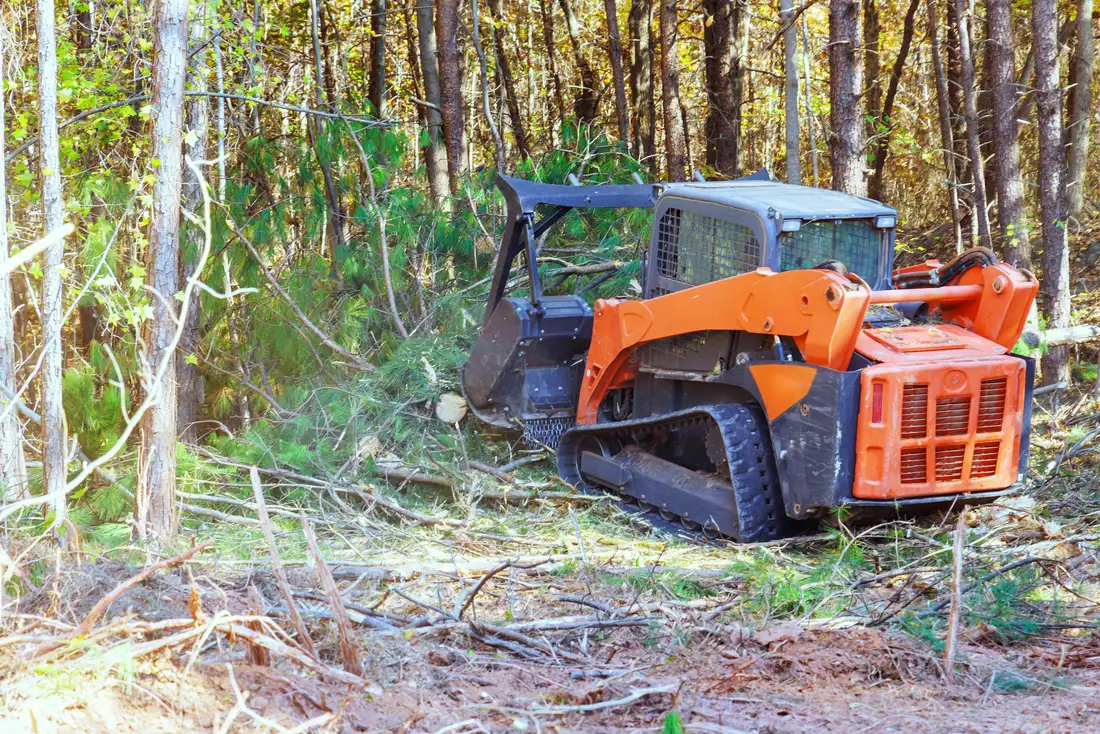
Maine is the most heavily forested state in the country, and that fact cuts against the tree care business rather than for it. Where trees are the background condition of the entire landscape, paid tree work concentrates hard into the places where trees threaten something — the Portland and Casco Bay suburbs, the older mill-town street canopy of Lewiston, Auburn and Bangor, the coastal properties from Kittery to Bar Harbor, and the utility corridors that keep power on across a very large, very wooded state.
Two things then shape the insurance picture. Maine licenses arborists individually, with a trigger point most operators get wrong, and the state’s severe weather arrives as ice rather than wind. This page covers the licensing regime in detail, what a Maine program costs, and how a working-forest state produces a tree care book unlike its neighbors.
What Tree Service Insurance Costs in Maine
Maine is a competitive market on every line, workers’ compensation included, and its loss costs have moved downward in recent filing cycles. Pricing tracks crew size, equipment schedule and loss history the way it does regionally.
The ranges below reflect what most Maine tree service contractors typically pay:
- General Liability Insurance: $850–$2,500 per year for a typical Maine small operation. Coastal and Casco Bay work, where property values run well above the state norm, sits at the top of the range.
- Workers’ Compensation: $7–$13 per $100 of payroll, rated on class code 0106 against loss costs the Bureau of Insurance approves. A worked example: a crew with $200,000 of payroll typically pays $14,000–$26,000 annually.
- Commercial Auto Insurance: $1,900–$3,900 per truck per year — Maine radius is long by New England standards, and winter conditions run close to five months.
- Inland Marine (Equipment) Insurance: $400–$1,500 per year, scaling with scheduled value and how far equipment travels from the yard.
- Pesticide & Pollution Liability: $400–$900 per year for operations treating under a Board of Pesticides Control applicator license.
- Umbrella / Excess Liability: $500–$1,300 per year for a first excess layer, commonly required by municipal, utility and coastal property management contracts.
None of these lines is where a Maine program most often goes wrong. That distinction belongs to the arborist license, which is both a legal requirement and, through its financial responsibility condition, an insurance one. For the rating factors that apply in every state, see the national cost guide.
Workers’ Compensation in Maine
Maine requires coverage from the first employee, and the state administers the system through the Maine Workers’ Compensation Board rather than a court.
Tree work classifies under code 0106. Maine uses NCCI as its advisory rating organization; NCCI files loss costs with the Maine Bureau of Insurance, insurers may modify those loss costs and add their own expense and profit factors, and the resulting rates are subject to Bureau review and approval. That structure is why Maine is genuinely shoppable: two carriers working from identical loss costs can land meaningfully apart.
The recurring exposures for this trade are the familiar ones with a Maine edge:
- Seasonal crew count from day one. Maine tree work is sharply seasonal, and a groundman hired for a six-week storm cleanup is an employee for coverage purposes.
- Subcontractors surface at audit. A crew brought in without its own certificate is likely to be treated as payroll at the tree work rate.
- Independent contractor status is a documented question, not an assumption, and the paperwork needs to exist before the injury rather than after it.
The Maine Arborist License: The Trigger Is Leaving the Ground
Maine is one of a small number of states that licenses arborists, and the way it draws the line is specific enough that operators routinely misjudge which side of it they are on.
7 M.R.S. § 2179 provides that a person may not advertise, consult, solicit, contract or in any way engage for compensation in the business of an arborist, or make representation as being able to do so, without being licensed. Advertising is enough. An operation running ads for tree work before it holds a license is already in violation.
What the Statute Actually Covers
Section 2173 defines an arborist as a person who, for compensation, takes down or fells, diagnoses or evaluates the condition of shade or ornamental trees; solicits, recommends or supervises the treatment of those trees; or in any manner or for any purpose treats or cares for them.
The phrase carrying the most weight is treats or cares for, which the same section defines as the pruning, trimming and shaping of trees when the care requires the person to leave the ground. It also includes installing lightning protection and cabling or bracing.
So the boundary runs like this. Felling a tree is arborist work at any height. Diagnosing or evaluating a tree is arborist work from the ground. Pruning becomes arborist work at the moment a worker leaves the ground — by ladder, by rope, or in a bucket. A crew doing ground-level shrub and low-limb work sits outside the definition; the same crew on a ladder does not.
The Exemptions Are Narrower Than They Sound
Section 2174 lists five exemptions, and the one that matters operationally is the second: any individual performing labor or services in connection with trees on a site where a licensed arborist is present. That makes the Maine license a supervision requirement in practice. A groundman does not need a license on a supervised job; an unsupervised crew is not covered because the owner holds a license elsewhere.
The others cover work on your own or your regular employer’s property; public and utility employees in their regular duties, plus contractors engaged during emergencies causing public hardship; scientific specialists such as plant pathologists, entomologists and foresters, limited to consultation, advisory and diagnostic work for a fee; and highway contractors removing trees under construction or maintenance contracts, along with general contractors removing interfering shade or ornamental trees in the conduct of their regular business.
One exemption that no longer exists is worth naming, because outdated guidance still repeats it: § 2180 once exempted tree removal in municipalities under 2,500 people. It was repealed in 2001.
Licensing Is Individual, Examined, and Insured
Section 2181 permits a license only to an individual who is at least 18, is specifically qualified, passes an examination, and gives proof of financial responsibility in amounts determined under department rule — administered as an insurance affidavit. Licenses are issued as regular, covering all normal arborist operations, or restricted to the areas stated on the license.
Section 2175 backs it with a civil violation carrying a forfeiture of up to $500 for each day the violation continues. A season of unlicensed operation is not a single penalty.
General Liability
General liability answers bodily injury and property damage arising out of Maine tree operations, occurrence-based with completed operations included.
The pressure point is the coast. Cape Elizabeth, Falmouth, Camden, Boothbay and Mount Desert Island carry property values that bear no relationship to the state median, on lots where large conifers stand close to houses that are empty much of the year. A single property damage claim there can exceed an operation’s annual revenue.
Operations providing written condition reports or retention advice — which the arborist statute expressly treats as arborist work — should carry professional liability separately, since a general liability form answers the work and not the opinion.
Commercial Auto
Maine fleets cover more ground than the map suggests, and they do it on winter roads for nearly half the year.
What we find missing, in order of frequency: towed chippers that never made it onto the schedule; hired and non-owned coverage, which matters more here because Maine crews cover distance in personal vehicles; and boom operation on the aerial device, insured for the drive and unaddressed for the work.
The state-specific factor is the season. Frost heave, black ice, and long stretches of unlit two-lane road between jobs produce single-vehicle winter losses that have nothing to do with traffic density. That makes comprehensive coverage and honest physical damage limits worth more in Maine than a frequency-based read of the loss run would imply.
Inland Marine / Equipment Floater
Portable equipment is covered by the floater wherever it goes — job site, transit, and wherever it spends the night.
Maine adds two conditions. Deep winter cold is hard on engines, hoses and synthetic rigging, and it makes brittle failure a real mode. Coastal salt air corrodes chains, bar rails and fittings continuously, and corrosion is generally excluded as wear rather than covered as damage. Write the schedule on a replacement cost basis and read the unattended-property terms before a remote job requires leaving a grinder out.
Pesticide & Pollution Liability
The Maine Board of Pesticides Control licenses commercial applicators — and unusually, Maine runs pesticide regulation through a dedicated board rather than folding it into a department division. The arborist license and the applicator license interact: the board may treat an arborist license as evidence of qualification in certain categories, but treating for pests and diseases still requires the commercial applicator license.
General liability excludes pollution, so drift, overapplication and off-target injury need contractors’ pollution liability. Maine’s exposure runs through water: applications near the many lakes, ponds and salmon-bearing streams, and near organic farms and orchards, can become regulatory matters as well as neighbor claims.
Umbrella / Excess Liability
An umbrella adds limit above general liability, commercial auto and employer’s liability simultaneously.
In Maine the triggers are utility line clearance contracts, municipal and county work, and coastal property management portfolios that specify $2 million or more. A first layer costs a fraction of the underlying program.
A Working-Forest State Produces an Unusual Tree Care Book
The instinct is to assume that the most forested state in the country must also be the strongest tree care market in the country. The opposite is closer to true, and understanding why explains how a Maine submission should be built.
Paid arboriculture exists where trees have targets. In most of Maine they do not — the trees are the landscape, they fall where they stand, and nobody pays to manage them. The commercial forest is a different industry entirely, running on logging classifications, different equipment and different economics. What that leaves is a tree care market compressed into a narrow band: the southern suburbs, the coast, the mill-town street canopies, and the utility corridors.
Three consequences follow for an operation and its insurer.
The work is concentrated and competitive. A large share of the state’s paid tree work happens within an hour of Portland, which means density of competition rather than distance is the pricing pressure in the south, while operators north and east cover enormous territory for a thinner book.
The species mix is coniferous and it fails differently. White pine, spruce and hemlock dominate much of the working canopy. Conifers snap rather than tear, offer less predictable hinge wood, and shed large tops under ice load without the warning signs a declining hardwood gives. Rigging assumptions carried over from a hardwood state get people hurt here.
The line between arborist work and logging is a real boundary, not a semantic one. It separates two licensing regimes, two classification families, and two very different insurance programs. An operation that drifts into lot clearing and salvage on the strength of owning a mulcher has changed what it is, and the program needs to change with it. That conversation belongs at the quote rather than at the claim.
Common Tree Service Risks in Maine
Ice Storms
Freezing rain rather than snow is Maine’s defining severe-weather mode. Ice loads unions until they fail across wide areas at once, and the removal work happens on surfaces that are still iced.
Conifer Failure Under Load
Pine, spruce and hemlock snap rather than tear and drop large tops with little warning. Hinge behavior is less predictable than in hardwood.
Coastal Salt and Wind
Salt spray and onshore wind drive crown decline along the coast and islands, near very high-value structures.
Winter Operations
Short daylight, frozen ground, deep snow around tree bases and unreliable starts compress the working day and raise the risk in it.
Standing Dead Ash
Emerald ash borer has reached Maine’s ash. Standing dead ash is brittle, fails unpredictably under rigging, and is more dangerous to take down than the live tree was.
Why Maine Tree Service Owners Choose TreeGuard
We treat the arborist license as part of the insurance conversation, because in Maine it literally is one — § 2181 conditions the license on proof of financial responsibility. An operation whose coverage lapses has a licensing problem as well as a coverage gap, and the two get fixed together or not at all.
We ask where the ground line falls in the actual work. An operation that has convinced itself it only prunes from the ground, while running a bucket three days a week, has a compliance exposure it has not priced.
As an independent agency we represent 16+ A-rated carriers and shop the whole program. Maine loss costs are filed and approved centrally but carriers price off them independently, which is exactly the market structure that rewards shopping.
We work in tree care only. That is why class code 0106 is right at the outset, why the conifer share of the book gets described accurately, and why the logging boundary gets raised before an operation crosses it.
Most Maine submissions are quoted within one to two business hours.
Major Maine Markets We Serve
We write tree service insurance statewide, with concentration in:
- Greater Portland: Portland, South Portland, Scarborough, Falmouth and Cape Elizabeth — the largest and most competitive market in the state, with high-value coastal accounts.
- Lewiston, Auburn and the Androscoggin Valley: mature mill-town street canopy and municipal contracts.
- Bangor and the Penobscot Valley: regional commercial and institutional accounts across a large rural territory.
- The Midcoast: Brunswick, Bath, Camden and Rockland — seasonal high-value property and island work.
- Augusta and the Kennebec Valley: state government accounts and small-city canopy.
- York County and the Southern Tier: Sanford, Biddeford, Saco and Kittery — commuter growth and coastal exposure.
Whether the operation is one truck working Aroostook County or a multi-crew company across Greater Portland, we can place it.