
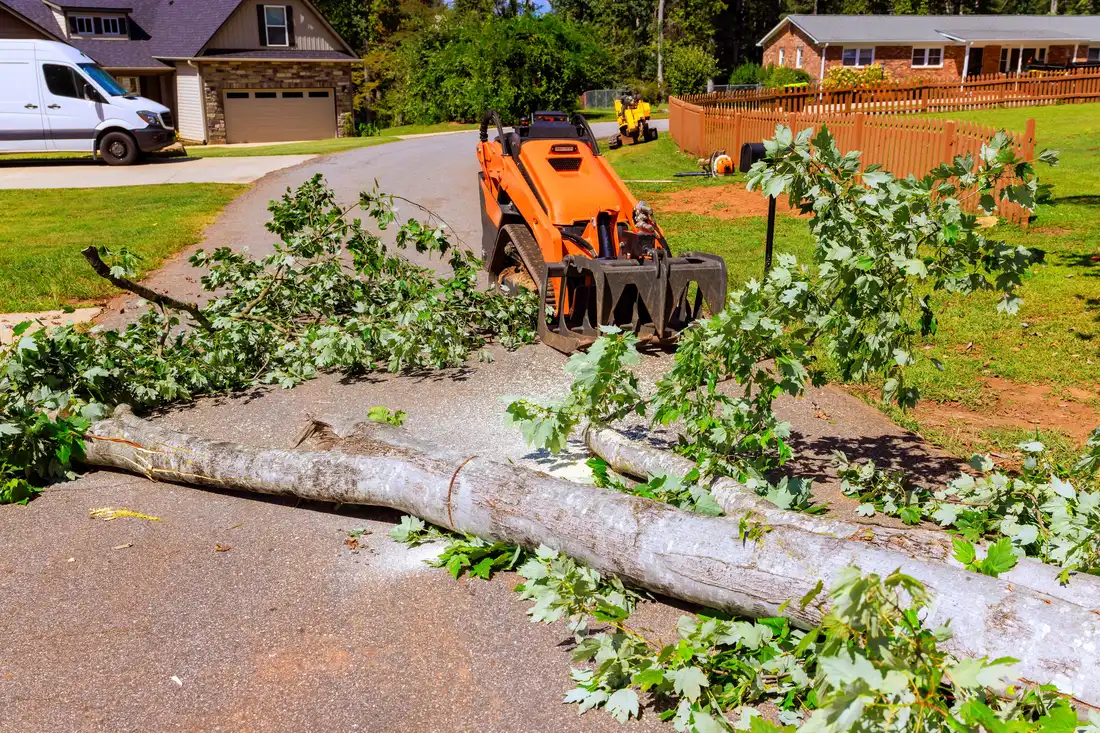
When a tree removal job damages property or hurts someone, make the site safe, photograph everything, and report it to your agent or carrier the same day without admitting fault. Which policy responds depends on what was harmed: a customer’s property, a crew member, a vehicle on the road, or your own equipment.
Tree removal insurance claims go better when the first hour is handled well. Most of what an adjuster needs can be gathered at the site in minutes, and most of what goes wrong later traces back to a delay, a missing photo, or a promise made in the driveway. This guide is written for the tree service owner, with a section near the end for homeowners who are dealing with damage from a contractor’s work.
The First Hour at the Site
Work through these in order.
- Stop and make it safe. Halt the job, secure hanging wood, and keep people away from the area. If a power line is involved, stay clear and call the utility.
- Get help for anyone hurt. Call emergency services when needed. Injuries come before everything else on this list.
- Photograph before you move anything. Take wide shots and close shots: the tree, the rigging, the damage, the equipment position, and the surroundings.
- Collect names. The customer, any neighbor whose property is involved, and anyone who saw it happen.
- Write down what happened while the crew remembers it: who was doing what, the sequence, the weather, and the time.
- Prevent further damage. Tarp an opened roof or board a broken window if it can be done safely, and keep the receipts.
- Call your agent or carrier the same day.
One thing to leave out: do not tell the customer you will pay for it, and do not argue about fault. Be courteous, say you are reporting it to your insurer, and give them your contact information. Deciding who is responsible is the insurer’s job, and statements made at the site can complicate it.
Which Policy Responds
A single incident can touch several policies. Sort it by what was harmed.
Customer or third-party property and injuries fall under general liability. This is the claim most people mean when they search for tree removal insurance claims: a trunk on a roof, a limb through a fence, a crushed shed next door. Our guide to what general liability covers for a tree service explains the limits and common exclusions.
Crew injuries fall under workers’ compensation. Report these quickly, and ask your agent what your state expects from an employer after a workplace injury. For the most serious injuries, OSHA publishes its own instructions on how to report a fatality or severe injury.
Vehicle accidents on the road fall under commercial auto.
Damage to or theft of your own equipment falls under inland marine.
If the claim is large, your umbrella policy may also need notice. Your agent will know which carriers to notify, which is one more reason to make that call first.
What the Adjuster Will Ask For
After you report, the insurer assigns an adjuster. Expect requests for:
- Your account of what happened, and often a recorded statement
- Photos and video from the site
- The contract, estimate, or work order for the job
- Names of the crew on site and anyone who saw the incident
- Details of any subcontractor or crane company involved, with their certificate of insurance
- Repair estimates, if the customer has them
Answer plainly and stick to what you know. If the adjuster asks about something you did not see, say so. Keep a file with every document and note the date of each conversation.
If a subcontractor caused the damage, their insurer may be the one that should pay. That is only practical when you collected their certificate before the job. Our certificate of insurance guide explains what to collect and why.
What Not to Do
- Do not wait. Late notice is one of the few things that can put coverage at risk on an otherwise covered claim.
- Do not start permanent repairs on the customer’s property before the insurer has seen the damage. Emergency protection is fine; a new roof is not.
- Do not sign anything the customer or their insurer sends you without sharing it with your adjuster.
- Do not discuss it on social media.
- Do not assume a small incident is too minor to mention. Tell your agent and decide together how to handle it.
How a Claim Affects Your Insurance Afterward
Underwriters review loss history when they price a renewal or a new policy. A paid claim can affect your options, and the effect depends on the size of the loss, the kind of work involved, and the rest of your record. Our post on how much tree service insurance costs lists claims history among the factors that shape pricing.
What you do after the loss matters too. Write a short account of what went wrong and what you changed: a new rigging practice, added training, a different approach to removals near structures. OSHA’s page on tree care hazards and solutions is a useful reference when you review procedures. Give that account to your agent, who can put it in front of underwriters at renewal.
If You Are the Homeowner
Some readers arrive here because a contractor’s tree work damaged their home. Here is what to expect.
- Ask the contractor for their liability insurer and a claim number. A legitimate company will report the damage and give you both.
- Expect a call from that insurer’s adjuster, who will inspect the damage and review estimates.
- You can also call your own homeowners insurer. It may handle the repair under your policy and then pursue the contractor’s insurer. Ask your insurer how your deductible is treated if it does.
- Document everything: photos, repair estimates, and written communication with the contractor.
- Protect the property from further damage, and keep receipts for emergency work.
If an insurer is not responding, your state insurance department can help. The National Association of Insurance Commissioners explains how state insurance departments assist consumers.
Illustrative Example
This is a hypothetical, labeled example, not a real claim. A crew is lowering a section of trunk when a rigging point fails and the wood lands on a detached garage. The foreman stops the job, confirms nobody is hurt, photographs the scene, and calls the owner, who reports it to the agent that afternoon. The crew tarps the roof. The adjuster inspects the damage, and the garage repair is handled under the general liability policy. At renewal, the owner gives the agent a short written summary of the incident and the new rigging inspection step the company added.
Frequently Asked Questions
What should I do first when a tree removal job damages property?
Stop work, make the area safe, and check that nobody is hurt. Then photograph everything before anything is moved, take the customer’s contact details, and call your agent or carrier the same day. Do not promise to pay or say whose fault it was. Your policy asks you to report promptly and let the insurer investigate.
Which insurance policy pays when a tree service damages a house?
Damage to a customer’s house or a neighbor’s property is generally a general liability claim. An injured employee is a workers’ compensation claim. A crash involving your truck on the road is a commercial auto claim, and damage to your own equipment is an inland marine claim. One incident can involve more than one policy.
Should I pay for small damage myself to avoid a claim?
Some owners do pay for minor repairs, but tell your agent before you decide. Most policies require notice of an incident, and a small problem can grow once a contractor opens the wall or the customer’s insurer gets involved. Reporting an incident is not always the same as having a paid claim on your record.
Will a tree removal claim raise my insurance cost?
Claims history is one of the things underwriters look at, so a paid claim can affect what you are offered at renewal. How much depends on the size and type of loss, your overall record, and what you did afterward. Underwriters respond well to a clear account of what happened and what you changed.
I am a homeowner. Whose insurance pays if a tree service damages my house?
Ask the contractor for their general liability insurer and claim number, and expect that insurer’s adjuster to contact you. You can also report the damage to your own homeowners insurer, which may pay under your policy and then seek recovery from the contractor’s insurer. Keep photos, estimates, and all written communication.
The Bottom Line on Tree Removal Insurance Claims
Make it safe, document it, report it the same day, and let the insurer sort out responsibility. If you are unsure whether your current policies would respond to the removals you take on, look at our tree removal insurance page or request a quote and we will review them with you.

More from Coverage Explained



Ready to get properly covered?
Tell us about your tree care operation and we'll compare options across our carrier network. Quote response within 1–2 hours during business hours.
Independent agency · 16+ A-rated carriers · Licensed in 48 states