
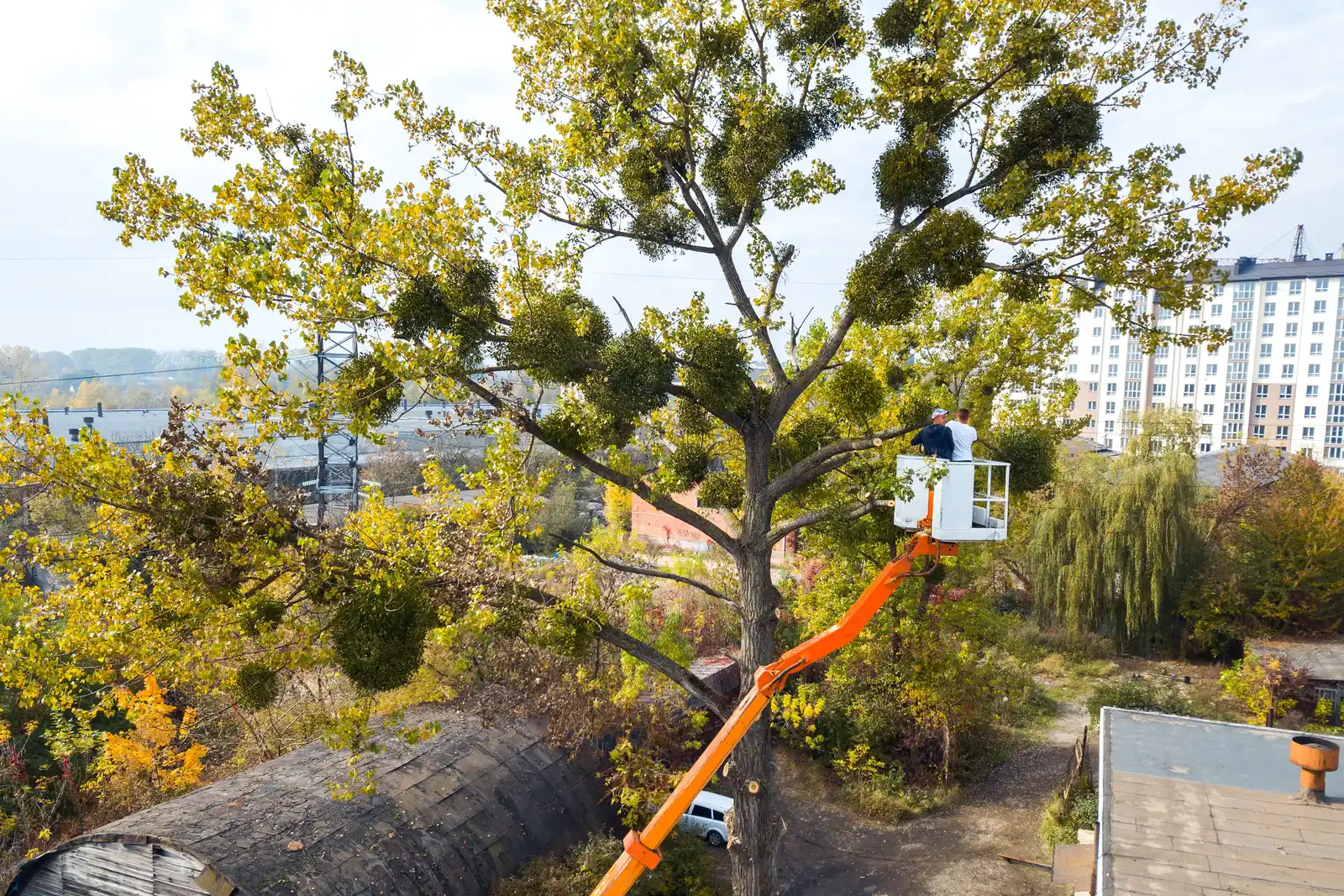
New Jersey tree care businesses must register with the Board of Tree Experts and carry general liability insurance at a minimum the Board sets, plus workers’ compensation for employees or approved self-insurance, with a new certificate of insurance sent to the Board at renewal. Registration also requires at least one full-time Licensed Tree Expert or Licensed Tree Care Operator and an NJTC number on every service vehicle and in all advertising.
New Jersey has a detailed system for tree care. Businesses register, individuals are licensed, and insurance is part of staying registered. This guide explains how the pieces fit together and how to keep your coverage aligned with the Board’s requirements.
Registration and Licensing
The New Jersey Board of Tree Experts explains on its what businesses must do page that a tree care business must hold a Business Registration Certificate, known as an NJTC number, to provide tree care services for hire. A business may not advertise tree care services without registration.
Each registered business must have at least one full-time licensed individual:
- Licensed Tree Expert (LTE), or
- Licensed Tree Care Operator (LTCO),
depending on the services the business provides. Check the Board’s pages for which license fits your work.
Insurance Requirements
The Board requires registered businesses to carry:
- General liability at a minimum amount the Board sets. Check the Board’s page for the current minimum, and ask your agent whether higher limits make sense for your work.
- Workers’ compensation for employees, or approved self-insurance.
A new certificate of insurance goes to the Board at renewal. Tell your agent the certificate is for the Board so it is completed correctly, and send it before your registration renews.
Vehicle and Advertising Rules
The Board requires the NJTC number on every service vehicle, on at least two sides. Advertising must include the business name and the NJTC registration number. Build these into your truck lettering, website, estimates, and social media.
These rules make it easy for customers and inspectors to check a company, and they make it obvious when a company is not registered.
Keeping Insurance and Registration in Step
The same timing problems that trip up licensed businesses in other states apply here:
- Line up renewal dates for insurance and registration on the same calendar.
- Start the insurance renewal early so the new certificate is ready before registration renews.
- Send the certificate to the Board whenever coverage changes, including a change of insurer.
- Never let coverage lapse, because a lapse can put the registration at risk.
What Customers Look For
The Board’s guidance on what consumers should look for encourages homeowners to check for the NJTC registration number. Careful customers will also ask for a certificate of insurance. Have your agent send certificates directly to customers who ask; our certificate of insurance guide explains what a good one shows.
Beyond the Required Coverage
The Board’s requirements are the floor. A New Jersey tree service usually also needs:
- Commercial auto for trucks, chippers, and trailers.
- Inland marine for saws, climbing gear, and machines.
- Umbrella limits for municipal, commercial, and utility contracts.
Our New Jersey tree service insurance page covers the state’s market, and our guide to whether you need a license for a tree service business compares licensing across states.
When the Licensed Person Leaves
Because registration depends on at least one full-time licensed individual, the departure of that person can put a business in a difficult spot. Owners who rely on a single licensed employee should plan ahead: encourage a second employee to earn a license, keep the owner’s own license current, and understand from the Board’s pages what a business must do if its licensed individual changes. A gap in licensing can affect the business’s ability to work and advertise, and it can raise questions from customers and insurers.
Subcontractors and Storm Help
After major storms, New Jersey tree services often bring in subcontractors or work alongside out-of-state crews. Before anyone works under your contract, collect their certificates of insurance and check their registration status. Uninsured subcontractors can end up on your workers’ comp audit, and unregistered ones can create problems with customers and the Board. Our post on out-of-state storm work covers the insurance side for traveling crews.
Municipal and Utility Work
Towns, counties, and utilities in New Jersey often require more than the Board’s minimums: higher liability limits, umbrella coverage, additional insured status, and waivers of subrogation. Read each contract’s insurance section before bidding and send it to your agent. Having certificates ready that meet both the Board’s requirements and the contract’s terms keeps the work moving.
Starting a New Jersey Tree Service
If you are starting out, plan registration, licensing, and insurance together. You will need a licensed individual, a registration, and proof of insurance before you can advertise. Our guide to what insurance you need to start a tree service business walks through the first program, and our guide to how to start a tree service business covers the rest of the setup.
Questions to Ask Your Agent
- Does my general liability limit meet the Board’s current minimum?
- Will you send a new certificate to the Board at every renewal?
- Does my policy describe all the tree care services we provide?
- Are all trucks, chippers, and trailers on the auto policy?
- Do my limits meet what towns and utilities require?
Keeping these answers current means renewal season is routine rather than a scramble.
Illustrative Example
This is a hypothetical, labeled example, not a real account. A New Jersey tree service adds a second crew and a new truck. The owner adds the truck to the auto policy but forgets to letter the NJTC number on both sides. A customer notices the bare truck and asks whether the company is registered. The owner has the truck lettered that week and adds vehicle lettering to the checklist for every new truck.
The example shows that registration rules reach past paperwork into daily operations. Truck lettering, website footers, and estimates all carry the registration number, and each new truck, page, or form is a chance to miss it. A simple checklist for every new vehicle and every new piece of advertising keeps the business in line with the Board and reassures customers who know what to look for.
Frequently Asked Questions
Do tree care businesses need to register in New Jersey?
Yes. The New Jersey Board of Tree Experts explains that a tree care business must hold a Business Registration Certificate, known as an NJTC number, to provide tree care services for hire, and may not advertise tree care services without registration.
What licenses does a New Jersey tree care business need?
The Board requires registered businesses to have at least one full-time licensed individual, either a Licensed Tree Expert or a Licensed Tree Care Operator, depending on the services provided.
What insurance does New Jersey require for tree care businesses?
The Board requires general liability insurance at a minimum amount it sets, and workers’ compensation for employees or approved self-insurance. A new certificate of insurance goes to the Board at renewal. Check the Board’s pages for the current minimum.
Do I have to display my NJTC number?
Yes. The Board requires the NJTC number on every service vehicle, on at least two sides, and advertising must include the business name and the NJTC registration number.
How can a New Jersey homeowner check a tree service?
The Board explains what consumers should look for, including the NJTC registration number. Ask for the number and a certificate of insurance sent by the company’s agent.
The Bottom Line on New Jersey Tree Care Insurance
In New Jersey, insurance is part of registration. Carry general liability at the Board’s minimum and workers’ comp, send certificates to the Board at renewal, and display your NJTC number everywhere. Request a quote and we will set up certificates that satisfy the Board.

More from Starting a Tree Service Business

Ready to get properly covered?
Tell us about your tree care operation and we'll compare options across our carrier network. Quote response within 1–2 hours during business hours.
Independent agency · 16+ A-rated carriers · Licensed in 48 states