
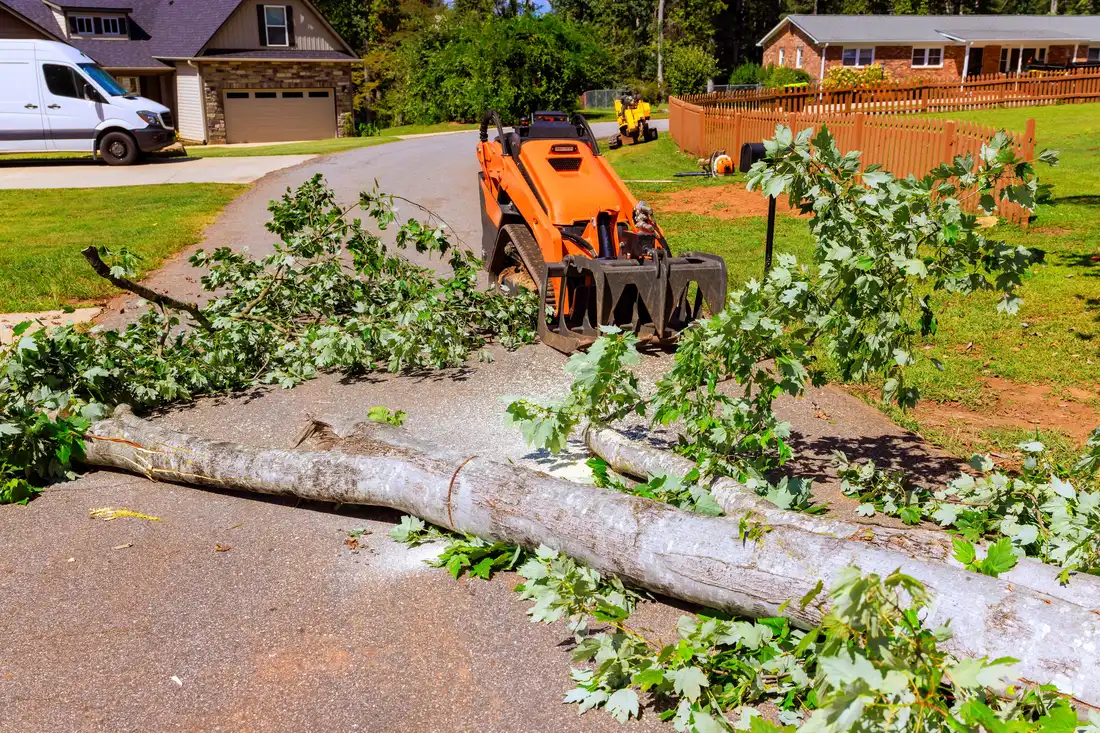
Who pays for tree removal after a storm depends on what the tree hit and whose tree it was: when a tree falls on a covered structure, the property owner’s own homeowners policy usually pays to remove it from the structure and repair the damage, subject to the deductible and limits. A tree that falls without hitting anything is often the owner’s own expense, and a neighbor or the city may be responsible when the tree was visibly dead or neglected.
After a big storm, these questions land on tree services as much as on insurers. Homeowners call wanting to know whether insurance will pay before they agree to a price. This guide explains how the answer usually works, so homeowners know what to expect and tree service owners can set fair expectations.
Start With What the Tree Hit
A tree on a covered structure. When a storm drops a tree on a house, garage, or fence, most homeowners policies cover the damage and the cost to remove the tree from the structure, subject to the deductible. The removal of the rest of the tree, the stump, and the debris in the yard may be treated differently.
A tree across the driveway. Some policies help with removing a tree that blocks a driveway or a ramp needed for access, even if it did not damage a structure, often with a separate, smaller limit.
A tree that hit nothing. If the tree landed harmlessly in the yard, many policies do not pay to remove it. The cleanup becomes a normal expense for the property owner.
Whose Tree Was It?
Homeowners are often surprised that ownership of the tree matters less than they expect. When a healthy tree falls in a storm, the loss is generally treated as an act of nature, and each owner’s own insurance handles the damage on their own property. That holds even if the tree came from next door.
Ownership matters more when the tree was obviously dead, diseased, or leaning dangerously, and its owner ignored it. In that case, the damaged homeowner’s insurer may pay the claim and then try to recover the cost from the neighbor, or the neighbor’s insurer. Photos of the tree before the storm and any written warnings help.
When the City Is Involved
Trees on public property and in the right of way are generally the city’s or county’s responsibility. If a street tree falls on a house or car, report it to your insurer and to the city right away. Claims against a local government often have short deadlines and their own forms. A homeowner who waits for the insurance claim to finish before contacting the city can miss the window.
The National Association of Insurance Commissioners explains how homeowners insurance coverage, perils, limits, and deductibles work, and its consumer article on reading the fine print after a storm covers documentation, temporary repairs, and the risks of signing away insurance benefits.
How Much Insurance Pays for Tree Removal
There is no single number. What a homeowners policy pays depends on the policy wording, the limits for debris and tree removal, the deductible, and whether a covered structure was damaged. Some policies set a separate limit for tree and debris removal; others fold it into the dwelling coverage. If the damage is small, the deductible may exceed the claim.
For homeowners, the practical step is to call the insurer or agent before agreeing to an expensive removal, describe exactly where the tree landed, and ask what the policy covers. For tree services, it means not quoting a job as covered by insurance.
What Tree Services Should Tell Customers
Storm work puts tree services in the middle of their customers’ insurance claims. A few habits keep everyone on solid footing:
- Do not promise that insurance will pay. Say that the insurer decides and that you will provide what the adjuster needs.
- Itemize the invoice. Separate removing the tree from the structure, hauling debris, removing the rest of the tree, and stump grinding. Adjusters often treat these differently.
- Document the job. Photos before, during, and after help the customer’s claim and protect you.
- Be careful with assignment-of-benefits forms. Having the customer sign over insurance benefits to your company can create disputes and, in some states, legal restrictions. Talk with your own advisor before using them.
- Have your own certificate ready. Customers dealing with insurers will often be asked whether the tree service is insured.
Our guide to tree removal insurance claims covers what happens when the tree service itself causes damage, which is a different question from storm damage.
When the Tree Service Damages Something During Cleanup
Storm cleanup is dangerous work, and damage during the cleanup is not the same as damage from the storm. If your crew drops a section on the house while removing a storm-damaged tree, the homeowner’s insurer may look to your general liability policy. Make sure that policy is written for tree work and that you report incidents promptly. Our emergency tree removal insurance page covers the coverage storm crews need.
Illustrative Example
This is a hypothetical, labeled example, not a real claim. After a summer storm, a healthy oak from next door falls across a homeowner’s garage roof and into the backyard. The homeowner’s own insurer pays to remove the tree from the garage and repair the roof, less the deductible. The rest of the tree in the yard is treated separately under the policy’s tree removal terms. The tree service provides an itemized invoice and photos, which the adjuster uses to sort what the policy covers from what the homeowner pays.
Frequently Asked Questions
Who pays for tree removal after a storm?
It depends on what the tree hit and whose tree it was. When a tree falls on a covered structure, the property owner’s own homeowners policy usually pays to remove it from the structure and repair the damage, subject to the deductible and limits. A tree that falls in the yard without hitting anything is often the owner’s own cost. A neighbor or the city may be responsible when the tree was visibly dead or neglected.
Does homeowners insurance cover tree removal if nothing was damaged?
Often not. Many homeowners policies pay to remove a fallen tree only when it damages a covered structure or blocks a driveway or access ramp, and some limit that coverage to a stated amount. A tree that lands harmlessly in the yard is usually the homeowner’s expense. The policy wording decides, so read it or ask the insurer.
My neighbor’s tree fell on my house. Who pays?
Usually your own homeowners insurer pays for your damage first, regardless of whose tree it was, because the storm caused the loss. If the tree was dead, diseased, or obviously hazardous and your neighbor ignored it, your insurer may try to recover from the neighbor. Keep photos and any earlier warnings you gave the neighbor.
Does the city pay when a city tree falls on my property?
Sometimes. Cities are generally responsible for trees on public property and rights of way, but claims against a city often have short notice deadlines and their own rules. Report the damage to your insurer and to the city promptly, and ask the city how to file a claim.
What should a tree service tell customers about storm claims?
Explain that their insurer decides what it pays, give an itemized invoice that separates removal from the structure, debris hauling, and stump work, and document the job with photos. Avoid promising that insurance will cover the bill, and be careful about signing over the customer’s insurance benefits.
The Bottom Line on Who Pays After a Storm
What the tree hit decides most of the answer, whose tree it was decides the rest, and the policy wording decides the amount. If you run a tree service that takes on storm work, request a quote and make sure your own coverage is ready for the cleanup.

More from Coverage Explained



Ready to get properly covered?
Tell us about your tree care operation and we'll compare options across our carrier network. Quote response within 1–2 hours during business hours.
Independent agency · 16+ A-rated carriers · Licensed in 48 states