
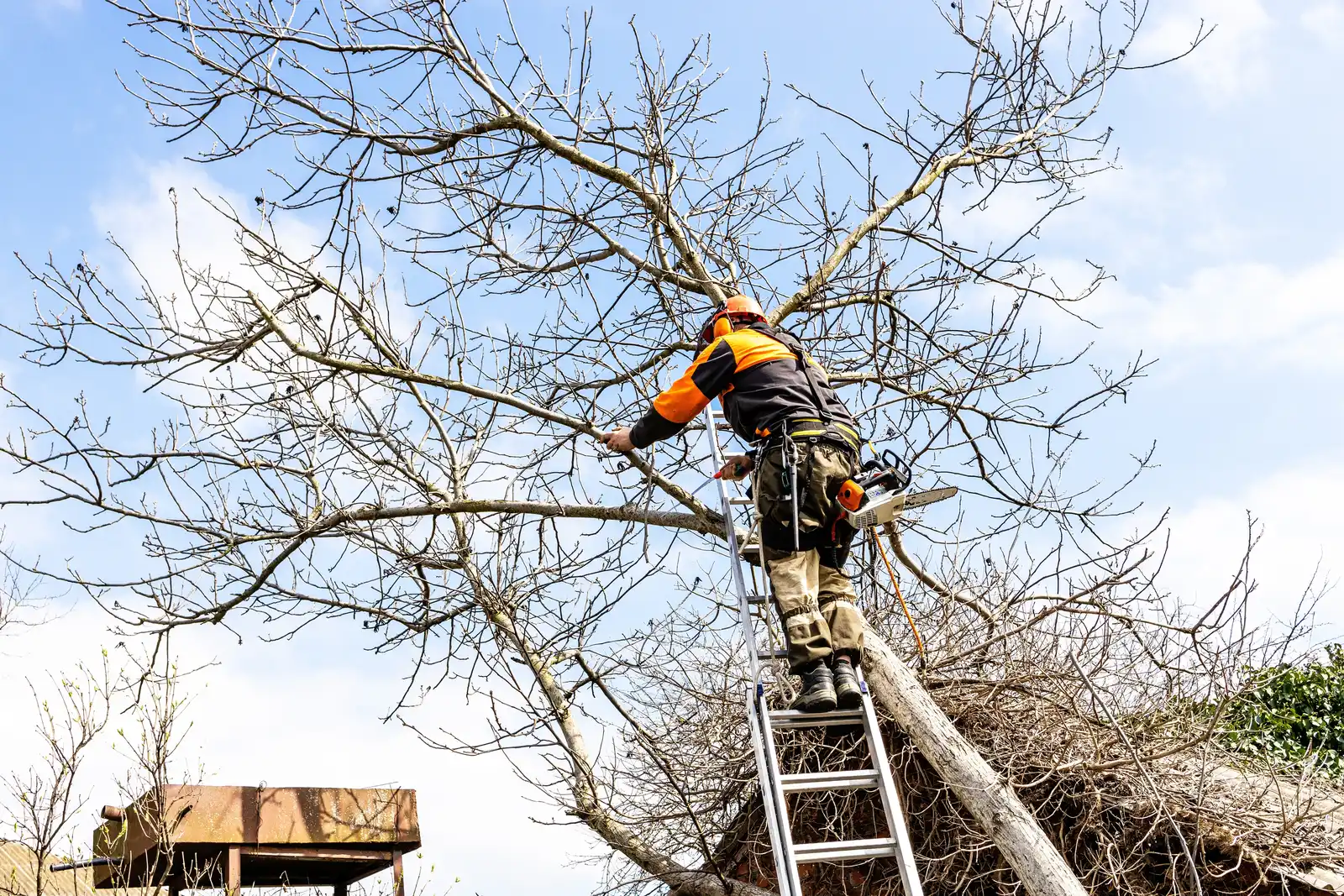
Tree service equipment stolen from a job site is usually covered when it is listed on an inland marine or contractors equipment policy that includes theft, and the theft meets the policy’s conditions. General liability does not cover your own equipment, and commercial auto covers the truck and scheduled trailers, not the saws and gear inside them.
Equipment theft is one of the most common losses in tree work. Chippers parked overnight, saws left in an open truck bed, a stump grinder on a trailer in front of a house: thieves know what tree gear is worth and how quickly it can be sold. This guide explains how the coverage works, the conditions that trip owners up, and what to do in the first hours after a theft.
Which Policy Covers Stolen Equipment
Inland marine is the policy built for equipment that moves between jobs. It covers saws, climbing gear, rigging, grinders, and other machines on the job, in transit, and in storage, including theft when the policy includes it.
Commercial auto covers the truck and, when they are listed, towed units like chippers and equipment trailers. Comprehensive coverage on a scheduled unit can respond to theft of the unit itself. It does not cover the tools inside.
General liability covers damage you cause to others. It does not cover your own equipment.
Our guide to inland marine insurance for tree service equipment explains how the policy is set up in detail.
Conditions That Trip Owners Up
Most denied theft claims trace back to a handful of conditions. Read your policy for each one:
- Unlisted equipment. Many inland marine policies cover only the items listed on a schedule, with a smaller blanket amount for unscheduled tools. A new grinder that was never added may not be covered.
- Out-of-date values. Equipment insured at an old value pays the old value.
- Unattended vehicles. Some policies cover theft from an unattended truck or trailer only if it was locked and there are visible signs of forced entry.
- Unexplained disappearance. Equipment that simply goes missing, with no evidence of theft, is often excluded.
- Employee theft. Theft by your own employees is commonly excluded or limited.
- Overnight storage. Some policies set conditions for equipment left on job sites overnight.
Reducing the Chance of Theft
Underwriters ask how you protect equipment, and good answers help with both pricing and claims:
- Lock trucks, trailers, and toolboxes every time, even for a short stop.
- Use hitch locks and wheel locks on chippers and trailers left overnight.
- Engrave or mark equipment and keep a list of serial numbers with photos.
- Park in lit, visible areas, or bring equipment back to the yard.
- Consider GPS trackers on high-value machines.
- Keep the yard fenced, lit, and, if possible, on camera.
What to Do Right After a Theft
- Call the police and get a report number. Insurers usually require one.
- Report the theft to your agent or insurer the same day.
- List every stolen item with its serial number, photos, and purchase records.
- Check whether any stolen items were rented, and notify the rental company.
- Arrange replacement equipment so crews can keep working, and keep the receipts.
Some inland marine policies include coverage for renting replacement equipment while you wait, and some do not. Ask before you need it.
Rented Equipment
When a rented chipper or grinder is stolen, the rental agreement usually makes you responsible. Inland marine policies can cover rented or leased equipment, but often with a separate limit. Check that the limit is high enough for what you rent and whether continuing rental charges are covered. The National Association of Insurance Commissioners’ glossary of insurance terms defines inland marine and related coverage terms, and its small business insurance guide explains how business property coverage works.
Keep the Schedule Current
The single best protection is a current equipment list. Walk the yard and trucks at least once a year with your schedule in hand, add new equipment the day it arrives, and update values for older machines. Our guide to how much insurance a tree service should have covers how equipment coverage fits with the rest of the program.
Scheduled Items Versus Blanket Coverage
Inland marine policies usually cover equipment in two ways. Scheduled items are listed one by one, each with its own value: the stump grinder, the mini skid steer, the climbing kit if it is worth enough to list. Blanket coverage is a single amount that applies to smaller tools that are not listed, often with a cap on what it pays for any single item.
The trap is a machine that outgrew the blanket. A new saw or a set of rigging can fit comfortably under blanket coverage, but a new grinder or loader almost never does. If an expensive machine is stolen and was never scheduled, the policy may pay only up to the per-item cap on the blanket, or nothing at all. When you buy, finance, or lease a machine, send the details to your agent that day, not at renewal.
Actual Cash Value or Replacement Cost
Ask how a stolen item will be valued. Actual cash value pays what the equipment was worth at the time of the theft, after depreciation. Replacement cost pays what it costs to buy a comparable new item, subject to the policy’s terms. For a crew that depends on a machine to keep working, the difference can decide whether you replace it right away or limp along with rentals. Neither choice is wrong, but you should know which one you bought.
Theft From the Shop or Yard
Theft at your own yard or shop is a slightly different question. Equipment stored at a location you own or rent may be covered by your inland marine policy, by a commercial property policy, or by both, depending on how they are written. Tools stored inside a building are often treated as business property at that location. Machines parked outside in a fenced yard are usually inland marine items. Review both policies together so that nothing falls between them, and make sure the yard address is listed where the policy requires it.
Illustrative Example
This is a hypothetical, labeled example, not a real claim. A tree service leaves a stump grinder on a trailer in front of a customer’s house overnight, locked to the truck with a hitch lock. The trailer and grinder are gone by morning. The owner files a police report, calls the agent that morning, and sends serial numbers and photos. Because the grinder was scheduled on the inland marine policy at a current value and the trailer was on the auto policy, both are covered, less the deductibles.
Frequently Asked Questions
Is tree service equipment stolen from a job site covered by insurance?
Usually yes, if the equipment is listed on an inland marine or contractors equipment policy that covers theft, and the theft meets the policy’s conditions. General liability does not cover your own equipment, and commercial auto covers trucks and scheduled trailers, not the tools on them.
Does commercial auto cover tools stolen from my truck?
Generally no. Commercial auto covers the vehicle and, if scheduled, towed units like chippers and trailers. Saws, climbing gear, rigging, and hand tools inside the truck are usually covered by an inland marine policy instead.
Why would a theft claim be denied?
Common reasons include equipment that was never listed on the policy, values left out of date, a theft from an unattended vehicle that does not meet the policy’s conditions such as signs of forced entry, unexplained disappearance, or theft by an employee where the policy excludes it.
What should I do right after equipment is stolen?
Report it to the police and get a report number, report it to your agent or insurer the same day, list each stolen item with serial numbers and photos, and keep the purchase records. Then arrange replacement equipment so crews can keep working.
Does inland marine cover rented equipment that gets stolen?
It can, if the policy includes rented or leased equipment coverage. Rental agreements often make the renter responsible for theft. Check the limit for rented equipment and whether it covers the rental charges while a replacement is found.
The Bottom Line on Stolen Equipment
List every machine, keep values current, read the theft conditions, and lock everything every time. Request a quote with your equipment list and we will check that what you own is covered if it disappears.

More from Coverage Explained



Ready to get properly covered?
Tell us about your tree care operation and we'll compare options across our carrier network. Quote response within 1–2 hours during business hours.
Independent agency · 16+ A-rated carriers · Licensed in 48 states