
To get stump grinding insurance in Oregon, start with your Construction Contractors Board licensing, because the CCB ties a license to liability insurance and a bond; then add commercial auto for the truck and trailer, inland marine for the grinder itself, and workers’ compensation if you have employees. An agent who writes tree work can place the whole program at once and match it to what the CCB asks for.
Stump grinding looks simple next to tree removal, and underwriters do treat it as a lower-height exposure. But the grinder throws debris, cuts below grade where utilities run, and works right next to houses, patios, and cars. This guide walks through the steps in order, with the Oregon details that matter.
The Steps, in Order
Check your CCB licensing first
Oregon’s Construction Contractors Board licenses contractors doing construction-related work, and its licensing generally reaches tree service operations, including stump grinding. The CCB’s page on getting a CCB license explains the steps, training, insurance, and bond involved. Your license class determines what the CCB requires, so settle the class before you buy coverage. Our Oregon tree service insurance page covers how licensing and workers’ comp fit together in the state.
Keep both the insurance and the bond active. A lapse in either can affect your license.
Place general liability written for stump grinding
General liability is the policy that answers when the grinder damages something or someone. Make sure it describes stump grinding and any tree work you also do; a landscaping policy may not fit. Set the limit at what the CCB and your best customers require, whichever is higher.
Cover the truck, trailer, and grinder
The truck and any trailer go on commercial auto. A towed grinder or the trailer that carries it should be listed so it is covered on the road. The grinder itself, whether towed or tracked, belongs on inland marine, which covers theft and damage on the job, in transit, and in storage.
Add workers’ comp when you hire
Oregon requires workers’ compensation once you have employees, and CCB licensing expects it to stay in force. Oregon has a state-chartered workers’ comp insurer that competes with private insurers, so you have several options.
What Underwriters Ask About Stump Grinding
Expect questions that show how you control the main risks:
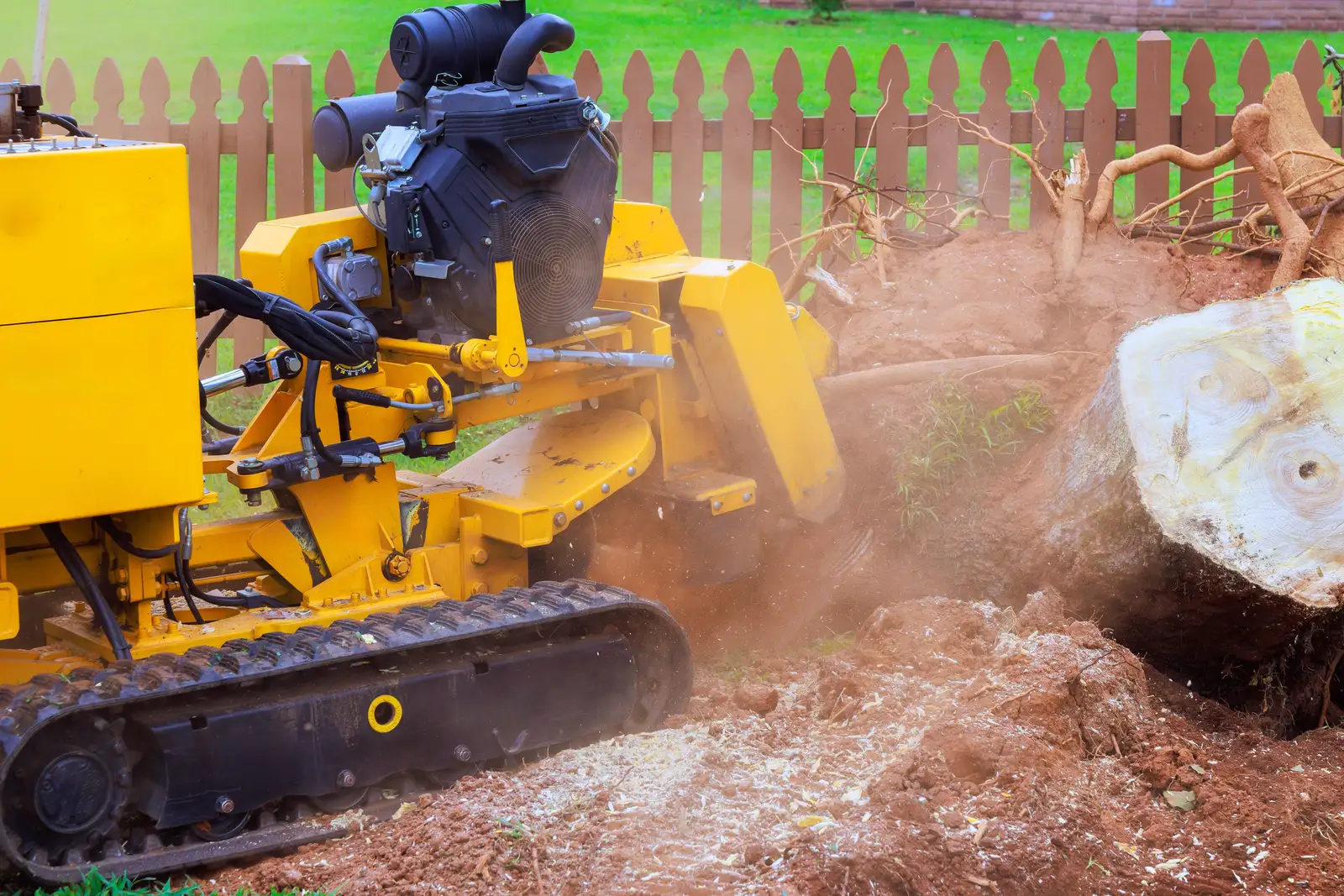
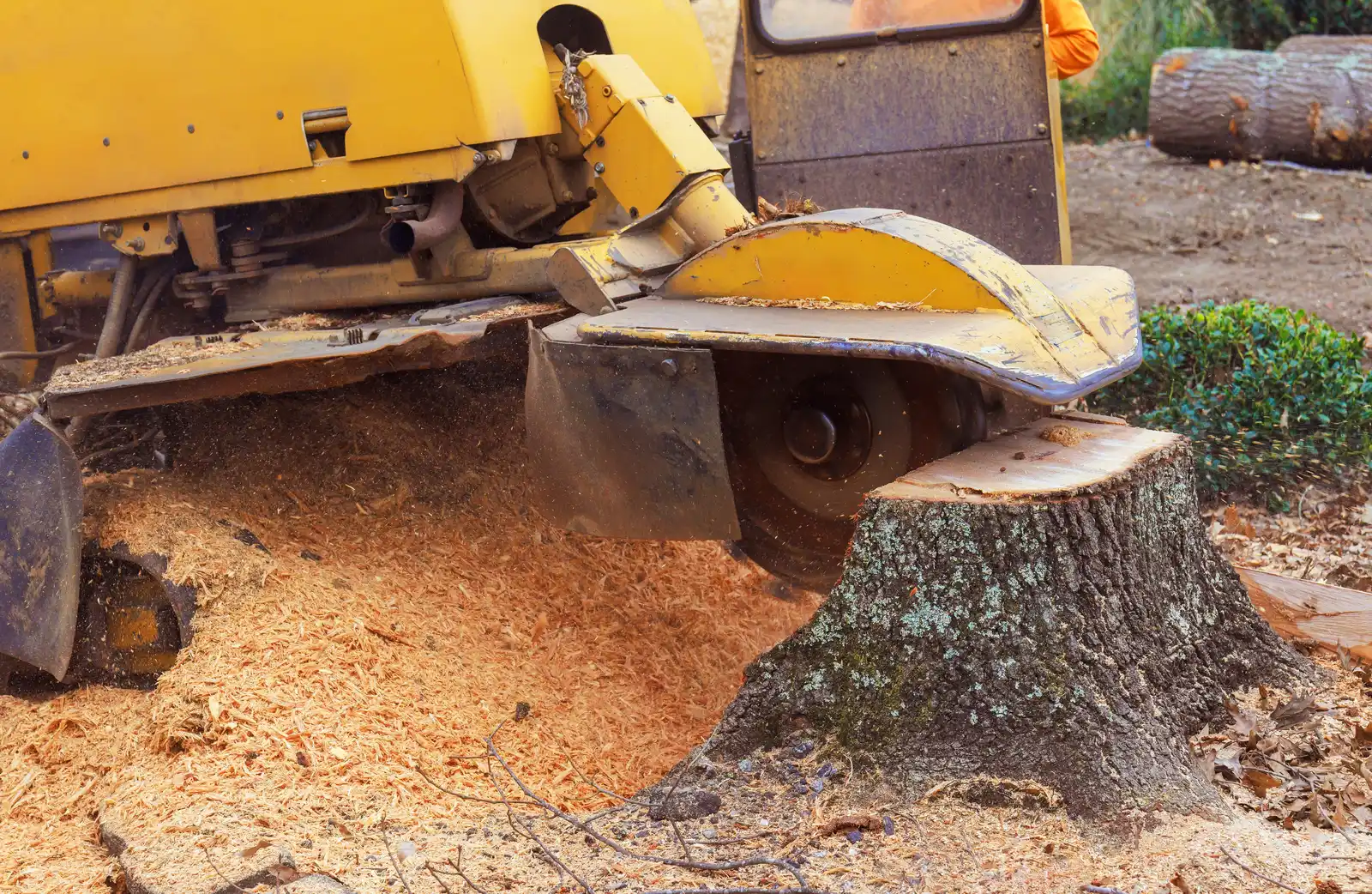
- Flying debris. Do you use guards or screens, and how far do you keep people back? Broken windows, damaged siding, and dinged cars are among the most common grinding claims.
- Buried utilities. Grinding below grade can strike gas, power, water, and communications lines. Oregon’s Utility Notification Center explains when locates are requested in its frequently asked questions for Oregon’s call-before-you-dig system. Make locate requests part of your routine where they apply.
- What is near the stump. Irrigation, sidewalks, patios, and foundations are easy to damage when the stump sits close to them.
- The rest of your work. If you also trim or remove trees, say so. The policy needs to describe all of it.
Oregon Conditions to Plan For
Wet Willamette Valley winters mean soft ground, rutted lawns, and equipment working near saturated soil. Coastal storms and Cascade wind events create bursts of storm cleanup work, and southern Oregon’s wildfire season raises the stakes for sparks from equipment in dry conditions. None of these change the core program, but they shape the questions underwriters ask and the claims you are most likely to see.
Choosing the Best Options for a Stump Grinding Business
The best program is the one that matches your actual work. A stump-grinding-only business needs liability, auto, equipment, and workers’ comp when it hires. A company that grinds stumps after its own removals needs those same pieces written for full tree work. Our stump grinding insurance page covers the coverage in detail, and our guide to how to get tree service insurance quotes explains what to have ready.
What Customers and Contracts Ask For
Homeowners associations, property managers, landscapers who subcontract grinding, and municipalities often set their own insurance terms. Expect to be asked for:
- A certificate of insurance sent by your agent before the job.
- The customer named as an additional insured on your general liability policy.
- Proof of workers’ compensation if you have employees.
- Limits higher than the CCB minimum for commercial work.
If you subcontract for a landscaper or tree service, they will often require the same terms they agreed to with their own customer. Our guide to tree service insurance requirements explains the common terms.
What Shapes the Price
Stump grinding insurance is priced on the same factors as other tree work, weighted to your operation: payroll and its classification for workers’ comp, sales and the type of work for general liability, the truck and trailer for auto, and the grinder’s value for equipment coverage. A clean claims history, written safety practices, and a routine for utility locates all help.
Working Across the State Line
Crews in the Portland area often take jobs across the river in Washington, and southern Oregon crews may work into northern California. Each state has its own licensing and workers’ comp rules, and Washington runs its own state system for workers’ compensation. Before you take work across a state line, ask your agent how your policies respond there and what the other state requires of contractors.
Illustrative Example
This is a hypothetical, labeled example, not a real claim. A stump grinding operator in the Willamette Valley grinds a stump next to a homeowner’s driveway. A chip flies past the screen and cracks a car window across the street. The operator photographs the scene, gets the car owner’s information, and reports it to the agent that day. The repair is handled under the operator’s general liability policy, and the operator adds a second screen and a wider clear zone for jobs near parked cars.
Frequently Asked Questions
How do I get stump grinding insurance in Oregon?
Start with your Construction Contractors Board licensing, because the CCB ties licensing to insurance and a bond. Then get general liability written for stump grinding, commercial auto for the truck and trailer, inland marine for the grinder, and workers’ compensation if you have employees. An agent who writes tree work can place all of it together.
Does a stump grinding business in Oregon need a CCB license?
Oregon’s Construction Contractors Board licenses contractors doing construction-related work, and its licensing generally reaches tree service operations. Check the CCB’s licensing guidance for your type of work, because the license class you hold affects the bond and insurance it requires.
What are the biggest liability risks for stump grinding?
Flying debris that breaks windows or damages vehicles, buried utilities hit below grade, damage to irrigation, walkways, and foundations near the stump, and injuries to bystanders who get too close. Underwriters ask about all of these.
Is my stump grinder covered by my auto policy?
A trailer-mounted grinder or the trailer carrying it should be listed on your commercial auto policy for road use. Damage to or theft of the grinder itself is usually covered by inland marine or an equipment floater, which follows it on the job and in storage.
Do I need to request utility locates before grinding stumps in Oregon?
Grinding can reach below grade where utilities run. Oregon’s Utility Notification Center runs the state’s call-before-you-dig system and explains when locates are requested. Check its guidance for the depth and type of work you do, and make it part of your job routine.
The Bottom Line on Oregon Stump Grinding Insurance
Settle the CCB license class, then build the program around it: liability written for grinding, auto for the truck and trailer, inland marine for the machine, and workers’ comp when you hire. Request a quote and we will match your coverage to what the CCB and your customers require.

More from Starting a Tree Service Business
Ready to get properly covered?
Tell us about your tree care operation and we'll compare options across our carrier network. Quote response within 1–2 hours during business hours.
Independent agency · 16+ A-rated carriers · Licensed in 48 states