
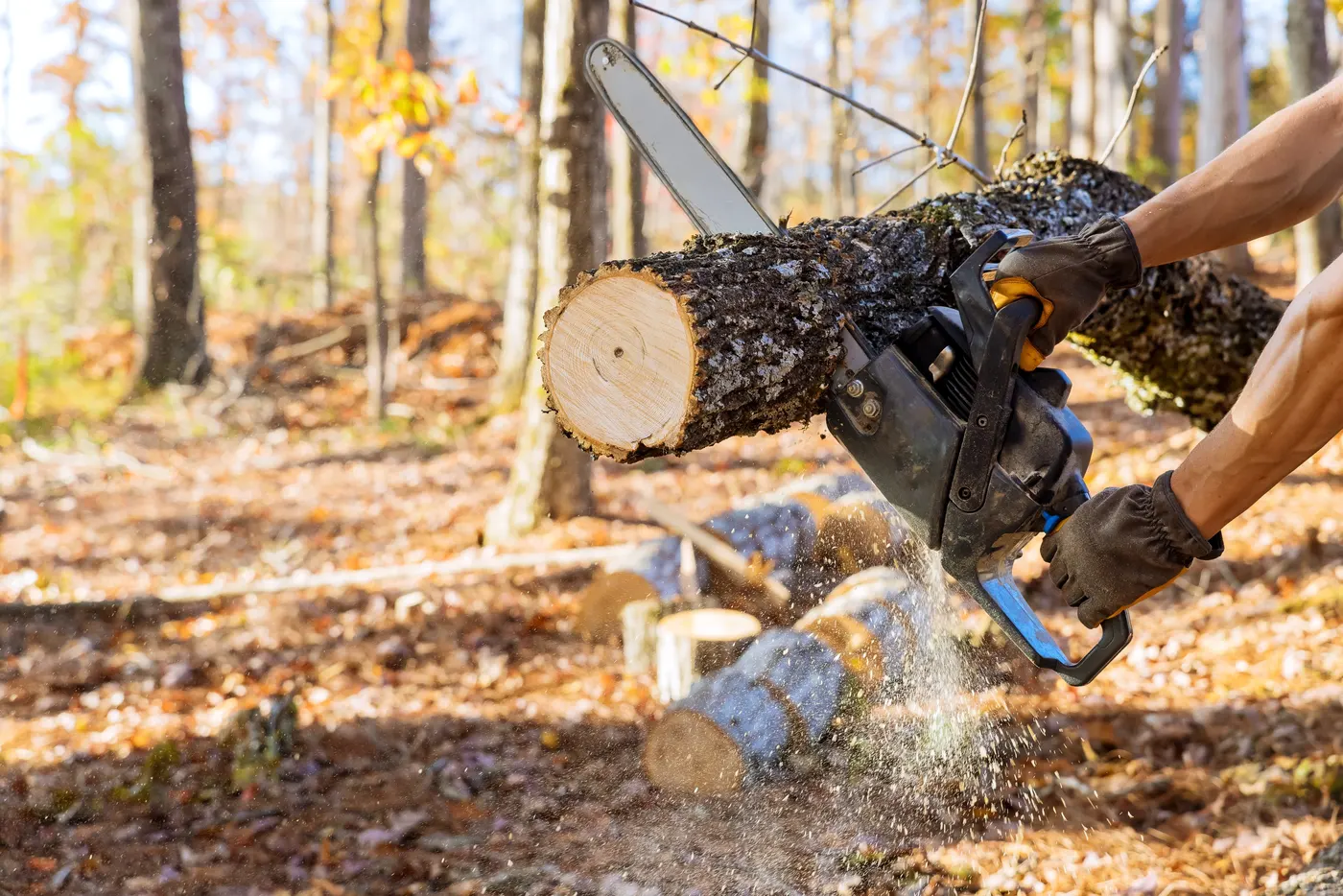
Logging and tree service insurance are rated differently because they are different operations: logging means harvesting timber in forests with heavy machinery and selling logs to mills, while tree service means trimming and removing trees around homes, businesses, and utilities, where the claims are falling limbs on property and climbing injuries. Insurers classify, price, and underwrite the two separately, so a tree service that takes on logging jobs needs to tell its agent first.
The line between the two can blur. A removal crew that drops big trees and sells the logs, or a land clearing outfit that harvests a woodlot before grading, can drift into logging without noticing. This guide explains how insurers see the difference and what to do when your work crosses over.
How the Operations Differ
Logging happens in forests and woodlots. Crews fell, limb, buck, and skid trees with chainsaws, feller bunchers, skidders, forwarders, and loaders, then haul logs to mills. The main risks are injuries from falling trees and machines, remote sites far from medical help, equipment fires and rollovers, and log trucks on rural roads.
Tree service happens around people and property. Crews climb, rig, and remove trees near houses, cars, power lines, and roads. The main risks are damage to nearby property, injuries to the public, climbing falls, chipper injuries, and electrical contact.
Why Rating Differs
Liability. A tree service’s biggest liability exposure is damage to the property around the tree. A logger working in a forest has less of that, but has other exposures, such as damage to neighboring timber, roads, and streams.
Workers’ comp. Classification systems generally separate logging from tree pruning and removal, and the classification follows the work each employee actually does. Our post on the workers’ comp class code for tree services explains how tree work is commonly classified. Your agent and your state’s rating bureau determine which classes apply.
Equipment. Logging equipment is heavy, specialized, and expensive, often working far from roads and help. Tree service equipment is smaller and moves between residential job sites.
Auto. Log trucks hauling to mills are rated differently from tree service trucks running between neighborhoods.
When a Tree Service Crosses Into Logging
Common ways it happens:
- A removal crew starts selling large logs to a mill or a log buyer.
- A land clearing job includes harvesting merchantable timber before grading.
- A landowner asks the crew to thin a woodlot and keep the proceeds.
- Storm work turns into salvage harvesting in forested areas.
Each of these can change how an insurer sees the operation. Tell your agent before taking the job. A policy written for tree trimming and removal may not respond the way you expect to a claim from a timber harvest.
Safety Rules
The Occupational Safety and Health Administration covers logging hazards on its logging safety topic page, and its logging operations standard sets requirements for logging in general industry. Tree care work is addressed through other guidance, including OSHA’s tree care hazards and solutions page. Knowing which rules apply to the work you do is part of getting insurance right.
Building a Program for Mixed Work
If your business does both tree work and some logging or timber harvesting:
- Describe both operations to your agent, with an honest split of revenue and payroll.
- Track payroll by type of work so workers’ comp classifications match reality.
- Schedule all equipment, including any harvesting machines, on inland marine.
- List log trucks and trailers on commercial auto and describe their use.
- Confirm the liability policy covers both kinds of work, or place the logging work separately.
Some specialty markets write mixed operations; others want logging and tree work kept apart. An agent who knows both can find the right fit. Our workers’ compensation coverage page and our land clearing insurance page cover related coverage.
Selling Logs From Removals
Selling logs from removal jobs to a mill or log buyer does not automatically make a tree service a logger. Many removal crews sell large, clean logs as a way to offset disposal costs. The question is scale and purpose: occasional sales of logs from removals look like tree work, while going into a woodlot to harvest timber for sale looks like logging. Tell your agent if log sales become a regular part of the business, and track that revenue separately.
Storm Salvage
After major wind and ice storms, landowners sometimes hire tree services to salvage downed timber from forested land. That work combines the hazards of storm cleanup with the hazards of logging: hung trees, root plates under tension, and heavy machines in rough terrain. It may also look more like logging to an insurer than ordinary storm work does. Before taking salvage jobs, talk with your agent about how the work will be classified and covered.
Land Clearing Is Its Own Category
Clearing land for development sits between the two. It may involve felling and hauling logs, but the goal is a cleared site, not a timber harvest. Our guide to who writes insurance for land clearing and grading companies covers how insurers treat that work.
Questions to Ask Your Agent
- Does my policy describe every kind of work I do, including any logging or salvage?
- How should payroll be split between tree work and timber work?
- Are harvesting machines and log trucks listed on the right policies?
- Would a separate policy for logging work be better than adding it to my tree service program?
Illustrative Example
This is a hypothetical, labeled example, not a real account. A tree service with a strong removal business is asked by a rural landowner to thin a woodlot and sell the timber to a nearby mill. Before agreeing, the owner calls his agent. The agent explains that his tree service policy and workers’ comp classifications do not anticipate timber harvesting, and arranges coverage for the job with the payroll for that work tracked separately.
The phone call before the job is the whole point. Insurers can usually accommodate mixed work when they know about it in advance. The trouble comes when a tree service drifts into timber harvesting without telling anyone and then has a serious injury or a damaged machine on a job its policy never anticipated. A short conversation up front costs little and avoids that kind of dispute.
Frequently Asked Questions
What is the difference between logging and tree service insurance?
Logging insurance is built for harvesting timber in forests, with heavy machinery, remote sites, and products sold to mills. Tree service insurance is built for trimming and removing trees around homes, businesses, and utilities, where the main risks are falling limbs on property and climbing injuries. Insurers classify and rate them separately.
Can a tree service do logging work under its tree service policy?
Not automatically. If a tree service starts harvesting timber, its insurer may treat that as a different operation. Tell your agent before taking logging jobs so liability, equipment, and workers’ comp are written for the work.
How is workers’ comp classified for logging versus tree work?
Workers’ comp classification systems generally separate logging from tree pruning and removal, and the classification follows the work each employee actually does. Your agent and state rating bureau determine which classes apply.
Is clearing a lot the same as logging?
Not always. Clearing a building lot and hauling the logs may be treated as land clearing or tree removal. Harvesting merchantable timber from a woodlot for sale to a mill looks more like logging. The details of the job matter, so describe them to your agent.
What OSHA rules apply to logging?
OSHA has a logging operations standard for general industry, and its logging safety pages describe the main hazards. Tree care work is addressed through other OSHA guidance. Which rules apply depends on the work.
The Bottom Line on Logging vs. Tree Service Insurance
Logging and tree work are rated differently because the risks are different. If your crew drifts into timber harvesting, tell your agent before the first tree falls. Request a quote and describe every kind of work you do.

More from Coverage Explained



Ready to get properly covered?
Tell us about your tree care operation and we'll compare options across our carrier network. Quote response within 1–2 hours during business hours.
Independent agency · 16+ A-rated carriers · Licensed in 48 states