
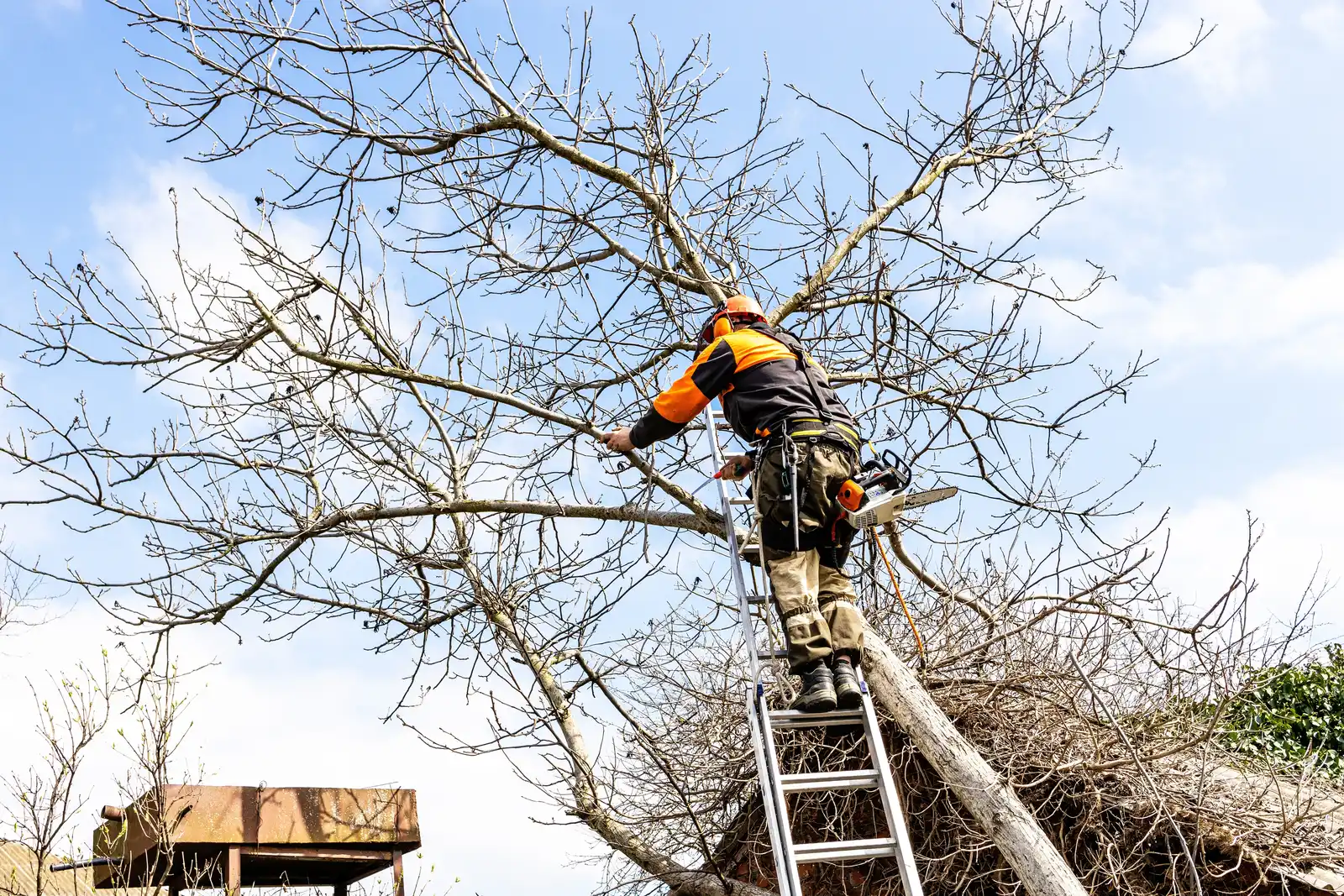
Palm tree trimming insurance in Florida starts with general liability written for tree and palm work, workers’ compensation for climbers and ground crews, commercial auto for trucks and lifts, and inland marine for equipment, usually topped with an umbrella for condominium and HOA contracts. The claims that shape the program are falling fronds and coconuts on cars and screen enclosures, lift damage to pavers, and climber falls.
Palms are everywhere in Florida, and keeping them trimmed is steady work for tree services and specialty palm crews. Condominium associations, HOAs, resorts, and homeowners all want fronds and seed pods removed before hurricane season. This guide explains how insurance works for palm trimming and what insurers ask.
The Exposures Behind Palm Work
Falling debris. Heavy fronds, seed pods, and coconuts can crack windshields, dent roofs, tear screen enclosures, and chip pool decks. These are general liability claims. Make sure the policy describes palm trimming.
Climbers. Some crews climb palms with spikes or climbing gear; others work from bucket trucks or lifts. Falls and lift accidents are workers’ compensation claims.
Lifts and trucks. Bucket trucks and lifts can crack pavers, rut lawns, and damage irrigation. They also need coverage on the road and on the job.
Power lines. Palms often grow near service drops and distribution lines. Electrical contact is one of the most serious hazards in tree work.
Climbing Versus Lifts
Insurers ask how you reach the crown. Climbing crews and lift crews have different injury profiles, and some insurers price them differently. Accurate answers on the application matter more than the method itself.
For lift work, the Occupational Safety and Health Administration explains safe use of aerial lifts in its aerial lift guidance, and its tree care hazards and solutions page covers climbing, falls, and electrical hazards. Insurers often ask about training on both.
If you run bucket trucks, our post on bucket truck insurance for Florida tree services covers how they are insured, and our bucket truck insurance page explains the coverage we write.
Workers’ Comp in Florida
Florida requires many employers to carry workers’ compensation. The Florida Office of Insurance Regulation explains the state’s workers’ compensation insurance rules. Condominium associations, HOAs, and property managers commonly require proof of workers’ comp from every contractor, whatever its size.
Classify payroll accurately. Palm trimming is usually tree work for workers’ comp purposes, and misclassifying climbers as landscape workers can lead to audit bills and disputed claims.
Condominium and HOA Contracts
Much palm work in Florida is for associations. Their contracts often require:
- Liability limits above a basic policy, often met with an umbrella.
- Additional insured status for the association and its management company.
- Proof of workers’ comp.
- Waivers of subrogation and specific certificate wording.
Send each contract to your agent before you sign. Our post on insurance for tree services that work for HOAs and property managers covers these contracts in detail.
Hurricane Season
Before storms, associations and homeowners rush to trim palms. After storms, the work shifts to removals, leaning palms, and debris. Both bring payroll spikes. Report them to your agent so the audit does not bring a surprise. Check whether your trucks and equipment carry separate named-storm deductibles, and plan where equipment will ride out a storm.
Our Florida tree service insurance page and our Florida cost guide cover the state’s market, including storm exposure.
Protecting Pools, Lanais, and Screen Enclosures
Florida homes and condominiums put pools, lanais, and screen enclosures right under the palms. Those are some of the most expensive things a falling frond or coconut can hit. Crews that protect them avoid the most common claims:
- Lower heavy material on a rope instead of dropping it near enclosures or pool decks.
- Cover pool edges and decks with plywood or mats where material will land.
- Clear patio furniture, grills, and planters from the drop zone.
- Walk the site with the owner or property manager before work and photograph existing damage to screens and pavers.
- Keep residents and guests out of the work zone, especially at condominiums and resorts.
Coconuts and Seed Pods
Many associations want coconuts and seed pods removed before they fall on their own. That work is part of what customers pay for, and it is also where much of the damage happens. A coconut dropped from height carries a lot of force. Train climbers to lower them or drop them only into a cleared zone, and never over cars, screens, or people.
Equipment on Soft Ground
Florida lawns are often sandy or saturated, and bucket trucks and lifts can sink, rut lawns, or crack pavers and driveways. Use ground mats, check for septic systems and irrigation lines before setting up, and ask about driveway weight limits. Damage to the property from equipment is usually a general liability claim, and avoiding it protects your loss history.
Debris and Disposal
Palm fronds are fibrous and bulky. Hauling them takes truck space, and some disposal sites handle them separately. Make sure trucks and trailers used for hauling are on the auto policy and that loads are secured.
Licensing
Licensing for tree work varies by state, county, and city, and specialized services such as pesticide treatments for palms can require their own licenses. Check local rules, and see our guide to whether you need a license for a tree service business.
Questions to Ask Your Agent
- Does my general liability policy describe palm trimming, including coconut and seed pod removal?
- How are my climbers classified for workers’ comp?
- Are lifts and bucket trucks covered on the road and while operating?
- Do my trucks and equipment carry separate named-storm deductibles?
Illustrative Example
This is a hypothetical, labeled example, not a real claim. A palm crew trims coconut palms around a condominium pool before hurricane season. A coconut bounces off the pool deck and tears a screen enclosure panel. The association files a claim with the crew’s general liability insurer, which describes palm trimming. Because the crew’s agent had already added the association as an additional insured and issued the certificate the contract required, the claim proceeds without a coverage dispute.
The claim itself was small. What made it routine was preparation: a policy that described palm work, an endorsement the contract required, and a certificate already on file with the association. Crews that do the paperwork before the season starts spend their storm-season energy on the work, not on arguing with adjusters and property managers about who is covered.
Frequently Asked Questions
What insurance does a palm tree trimming business in Florida need?
General liability written for tree and palm work, workers’ compensation for climbers and ground workers, commercial auto for trucks and lifts, inland marine for equipment, and usually an umbrella for condominium, HOA, and commercial contracts.
Is palm trimming rated differently from other tree work?
Palm trimming is generally treated as tree work for insurance, but insurers ask how it is done. Climbing palms with spikes or climbing gear, working from bucket trucks, and working near pools, lanais, and power lines all affect how an insurer sees the account.
Does Florida require workers’ comp for palm trimming companies?
Florida requires many employers to carry workers’ compensation, and the Florida Office of Insurance Regulation explains the state’s rules. Customers such as condominium associations and property managers commonly require it regardless.
What are common claims for palm trimming companies?
Falling fronds, seed pods, or coconuts damaging cars, roofs, screen enclosures, and pool areas; damage from lifts and trucks on pavers and lawns; and climber falls and lift accidents.
How does hurricane season affect palm trimming insurance?
Pre-storm trimming brings a rush of work, and post-storm cleanup brings removals and debris hauling. Payroll can jump, so report it to your agent, and check whether your equipment coverage carries separate named-storm deductibles.
The Bottom Line on Palm Tree Trimming Insurance
Describe palm work on the liability policy, classify climbers correctly, cover the lifts, and line up certificates before hurricane season. Request a quote and include the associations you work for.

More from Coverage Explained
Ready to get properly covered?
Tell us about your tree care operation and we'll compare options across our carrier network. Quote response within 1–2 hours during business hours.
Independent agency · 16+ A-rated carriers · Licensed in 48 states