
To get arborist insurance in New York City, put workers’ compensation in place for any employees, carry general liability written for tree work with limits that satisfy your customers and any city-related contracts, schedule your trucks on commercial auto, and be ready to show proof of insurance when you apply for NYC Parks tree work permits for street or park trees. The city adds requirements that most of the state does not.
New York City is one of the most demanding places in the country to insure tree work. Trees stand inches from brownstones, cars, and storefronts. Much of the work happens in the street. Permits, city contract terms, and tight urban job sites all shape the insurance program. This guide covers the steps and the city-specific details.
The Steps
Cover your crew
New York’s Workers’ Compensation Board explains which businesses must carry workers’ compensation and how it decides who counts as an employee. Tree crews with employees should expect to need workers’ compensation, and customers will ask for proof. The Board also administers disability and paid family leave benefits; ask your agent which apply to your payroll.
Cover the public
General liability must describe tree work, not landscaping. In the city, the property within reach of a falling limb is unusually valuable, so set limits from your largest customers’ contracts and the jobs you take on. Many commercial and building-management customers also require an umbrella.
Cover trucks and gear
Trucks, chippers, and trailers go on commercial auto. Saws, climbing gear, and rigging go on inland marine. Theft from trucks and trailers parked on city streets is common, so check what your equipment policy requires for theft to be covered.
Get the permit
NYC Parks requires a tree work permit for many kinds of work on or near city street trees and parkland trees. Its tree work permit page explains when a permit is needed and how to apply. Expect permitting and city-related contracts to ask for proof of insurance, and sometimes for the city to be named on your policy.
What Makes City Tree Work Different
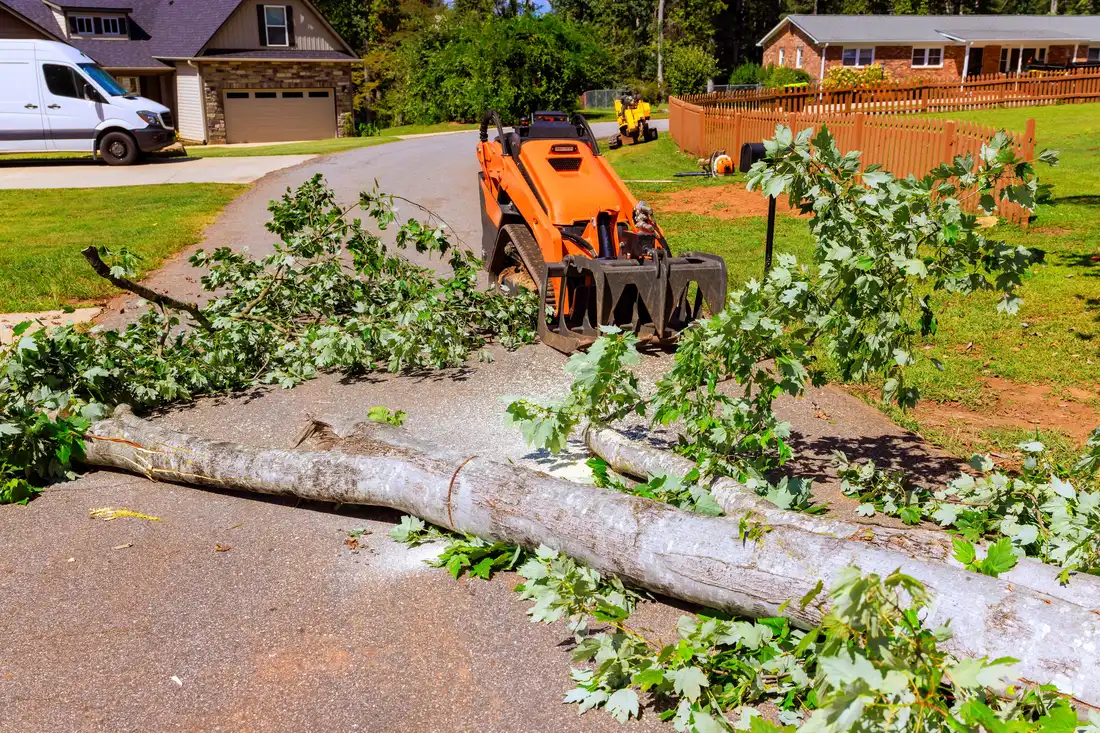
The street is part of the job site. Closing a lane, staging a chipper, or setting outriggers on a city street can bring permits and contract requirements with it, often including naming the city or a property owner as an additional insured.
Climbing replaces the bucket. Where a bucket truck cannot be positioned, the work is climbed. Underwriters ask about climbing practices and training.
Removals are complex. Removals between buildings often involve cranes, traffic control, and protecting neighboring property. If you use a crane, your liability policy must allow it; our post on what insurance a tree service needs for a crane covers that.
Plant health care is regulated by the state. Pesticide applications require state certification, and they usually call for pesticide and pollution coverage on top of general liability.
Consulting Arborists in the City
Many New York City arborists assess trees, write reports for building owners and developers, and monitor trees on construction sites rather than climbing. That work needs professional liability for the advice itself, plus general liability for site visits. Our guide to consulting arborist insurance explains how the two fit together.
Outside the Five Boroughs
The rest of New York State does not have the city’s layer of permits, but the core program is the same. Our New York tree service insurance page covers statewide requirements, Long Island, and upstate markets.
Working for Building Owners and Managers
Much of the city’s private tree work is done for co-op and condo boards, building management companies, and commercial landlords. Their contracts are often stricter than homeowners’ requests:
- Certificates sent before the job, often to the managing agent.
- The building owner, the managing agent, and sometimes the board named as additional insureds.
- Waiver of subrogation and primary wording on your liability policy.
- Workers’ compensation proof for every company on site.
- Specific limits and an umbrella.
Many building managers keep a standard insurance requirements sheet. Ask for it with the job, and send it to your agent before you agree to the work. Our guide to tree service insurance requirements explains each of these terms.
Common Claims on City Jobs
City tree work produces a familiar set of claims: limbs or sections falling onto parked cars, damage to building facades, windows, railings, and sidewalks, and injuries to pedestrians who walk into a work zone. Theft of equipment from trucks and trailers parked overnight is common too. Clear work zones, spotters, careful rigging, and locked storage reduce most of them.
Subcontractors and Crane Companies
City removals often bring in other companies: a crane service, a traffic control firm, or another tree crew for a large job. Each should provide its own certificate showing liability, auto, and workers’ compensation before it arrives. Building managers will often ask for those certificates too, and some require every company on site to name the building as an additional insured. Collect them in advance, keep them with the job file, and check the dates. An uninsured subcontractor can become your claim and your payroll at audit.
Getting a Quote
To quote a New York City tree service, an agent will want your payroll by type of work, the services you perform, how much is climbing, crane, or street work, your trucks and equipment, any permits you hold, the building managers and contracts you work under, and your claims history. Having those ready lets the agent take the account to insurers that write urban tree work.
Illustrative Example
This is a hypothetical, labeled example, not a real claim. A Brooklyn tree service prunes a large street tree in front of a brownstone under a NYC Parks permit. A rigged limb swings wider than planned and cracks the brownstone’s cornice. The owner photographs the damage, reports it to the agent that day, and the repair is handled under the company’s general liability policy. The building’s managing agent, already named as an additional insured for the job, receives the claim information directly.
Frequently Asked Questions
How do I get arborist insurance in New York City?
Put workers’ compensation in place for any employees, get general liability written for tree work with limits that meet your customers’ contracts, schedule your trucks on commercial auto, cover your equipment, and be ready to show proof of insurance for NYC Parks tree work permits and city-related contracts.
Do I need a permit to work on street trees in New York City?
NYC Parks requires a tree work permit for many kinds of work on or near city street trees and parkland trees. Its tree work permit page explains when a permit is needed and how to apply. Private trees on private property follow different rules.
Is workers’ comp required for arborists in New York?
New York’s Workers’ Compensation Board explains which businesses must carry workers’ compensation for their workers. Tree work crews with employees should expect to need it, and customers almost always ask for proof.
What makes arborist insurance in New York City different?
Dense property values close to every tree, work in public streets that can require permits and naming the city on your policy, climbing where bucket trucks cannot reach, crane removals in tight spaces, and theft from trucks and trailers parked on city streets.
Do consulting arborists in New York City need different insurance?
Arborists who mainly assess trees and write reports need professional liability for their advice, plus general liability for site visits. If they also do physical tree work, they need the full tree service program as well.
The Bottom Line on NYC Arborist Insurance
Cover the crew, the public, and the equipment, set limits from your biggest customers’ contracts, and have proof ready for the permit. Request a quote with the kinds of jobs you take on in the city, and we will build the program around them.

More from Starting a Tree Service Business
Ready to get properly covered?
Tell us about your tree care operation and we'll compare options across our carrier network. Quote response within 1–2 hours during business hours.
Independent agency · 16+ A-rated carriers · Licensed in 48 states